Silesian and Kashubian dialects are the two names that come up the moment anyone asks "does Poland just speak Polish?" The honest answer is more complicated than a language-learning app will tell you. Standard Polish is what you're studying and what every official document uses, but it sits on top of a patchwork of regional speech — and two of those varieties, Silesian and Kashubian, are distinct enough that they've become the subject of an actual, ongoing political fight in the Polish parliament.
One of them already has legal recognition. The other has been vetoed by two different Polish presidents in the last two years, most recently in February 2026. If you've spent any time learning standard Polish, understanding what Silesian and Kashubian dialects actually are — and why the difference between "dialect" and "language" has become a genuine national controversy — fills in a piece of the picture that most textbooks skip entirely.
This guide breaks down where each one is spoken, how different they really sound from the Polish you're learning, and why the debate over their status keeps landing back in front of the president's desk.
Silesian and Kashubian Dialects: Not the Same Kind of "Different"
Before getting into either one individually, it's worth being clear that Silesian and Kashubian dialects aren't two versions of the same phenomenon. They come from different linguistic families within Polish's West Slavic branch, they're spoken in completely different parts of the country, and — critically — Polish law treats them completely differently.
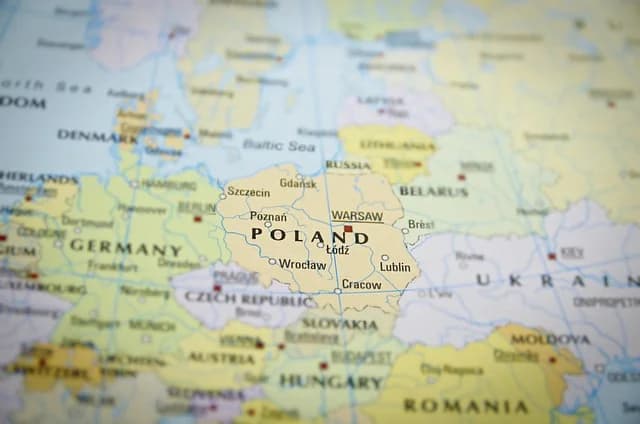
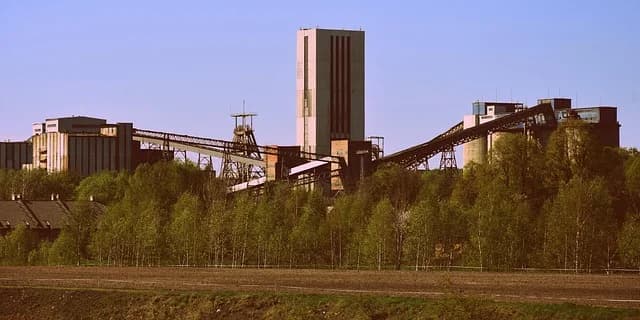
Kashubian is spoken along the Baltic coast in the Pomeranian region, in and around the city of Gdańsk. Silesian is spoken hundreds of kilometers south, in Upper Silesia near the Czech border, an industrial coal-mining region with its own complicated 20th-century history of shifting between German and Polish control.
Linguists broadly agree that Kashubian is genuinely a separate West Slavic language, distinct enough from Polish that a Polish speaker often can't parse written Kashubian on sight. Silesian is the much more contested case — some linguists call it a dialect of Polish, others argue it has developed into its own language, and Polish politics has turned that academic disagreement into a proxy war over national identity.
Kashubian: The Regional Language Poland Already Recognizes
Kashubian (kaszëbsczi jãzëk in its own spelling) is the only regional language Poland officially recognizes, a status it's held since 2005 under Poland's law on ethnic minorities and regional languages. It's spoken by roughly 87,600 people as a primary home language, with as many as 366,000 able to speak it at some level, concentrated in Kashubia along the coast west of Gdańsk.
Kashubian Regional Language: Origins and Sound
Kashubian evolved as its own branch of West Slavic between the 13th and 15th centuries, developing separately from Polish rather than splitting off from it later. That separate development shows up clearly in its sound system — Kashubian has nine oral vowels plus two nasal vowels, more than standard Polish, along with a distinctive softening of consonants linguists call "Kashubization."
Written Kashubian uses spelling conventions unusual enough that native Polish speakers often struggle to read it even when the underlying vocabulary is largely Polish-derived. Calling it simply a "Kashubian regional language" undersells how different it looks on the page — a Polish speaker seeing a Kashubian road sign for the first time often assumes it's a typo before realizing it's an entirely separate linguistic system.
The 19th-century activist Florian Ceynowa is generally credited as the figure who first pushed for Kashubian to be treated as a language worth preserving in writing, rather than left as unrecorded regional speech. That preservation effort has paid off institutionally: since 1991, more than 17,000 students across over 400 schools have studied Kashubian, typically as a three-hour weekly elective, and five communes in the Pomeranian region use it as an official administrative language alongside Polish.

Silesian: Poland's Most Politically Contested Dialect
Silesian is where things get genuinely heated. It's spoken by roughly 460,000 people according to Poland's most recent census, concentrated in Upper Silesia — the Silesian and Opole voivodeships in southwestern Poland, spilling slightly into the northeastern Czech Republic.
Silesian Language Poland: Vocabulary and Origins
Unlike Kashubian, Silesian's status as a "real language" versus "a dialect of Polish" isn't settled among linguists, and the disagreement runs largely along non-linguistic lines. Silesian shares roughly 56% of its vocabulary with neighboring Lesser Poland dialects, with the remaining 44% distinctly its own — including a substantial layer of German loanwords, a legacy of the region's long stretch under German and Austrian administration before it returned to Poland after World War II.
A Silesian speaker might use gyszynk for "gift" (from the German Geschenk) where standard Polish uses prezent, one small example of a Silesian language Poland vocabulary shaped by centuries on a shifting border. Other everyday Silesian words — like using "yes" or greetings borrowed and reshaped from German neighbors — mark out the region's speech as audibly distinct the moment you cross into Upper Silesia from anywhere else in the country.
Silesian did pick up one marker of international linguistic legitimacy: it was assigned its own ISO 639-3 language code, szl, in 2007, and Google Translate added Silesian support in 2024. Neither of those, however, has settled the political question — which is where the last two years of Polish news come in.
Why the Polish Parliament Keeps Fighting Over Silesian's Status
Twice in two years, Poland's parliament has passed a bill granting Silesian official regional-language status — the same status Kashubian already holds — and twice, a Polish president has vetoed it.
The first attempt passed in 2024 as part of the governing coalition's platform, and was vetoed by then-president Andrzej Duda, who argued that most linguists still classify Silesian as a Polish dialect rather than a separate language.
The second attempt passed the Sejm again on January 9, 2026, cleared the Senate weeks later, and was vetoed a second time — this time by President Karol Nawrocki, who took office in 2025. Nawrocki's stated reasoning, reported by Notes From Poland, centered on both the unresolved linguistic classification and a broader concern about avoiding what he called "artificial divisions" within Poland's national community.
Supporters of recognition — including the Chair of Poland's own Language Council — counter that Silesian has become significantly more standardized over the past two decades, with an expanding body of literature and media, arguably surpassing the conditions Kashubian met back when it received recognition in 2005. Opponents, particularly on the political right, have framed recognition as a security-adjacent issue tied to the region's German-influenced history, arguing it risks encouraging regional separatism near Poland's western border.
This whole back-and-forth is really Poland's version of polish dialects explained through live political stakes rather than a textbook footnote. Whichever side eventually wins, the fight itself tells you something real about how seriously Poland takes the line between "dialect" and "language" — it's not an abstract linguistics debate here, it's a live political one that's reached the president's desk twice in under two years.
Polish Dialects Explained: Where Silesian and Kashubian Fit In
Poland has several regional dialect groupings beyond just these two — Masovian, Lesser Poland, and Greater Poland dialects all exist, but none of them carry the same political weight because none of them are seriously proposed as separate languages. Silesian and Kashubian stand out specifically because the gap between "regional accent" and "distinct language" is wide enough, in both cases, that it became a genuine legal question rather than just a matter of local pride.
Will Silesian and Kashubian Dialects Confuse a Polish Learner?
If you're studying standard Polish, the honest answer is: probably not, in daily practice. Silesian and Kashubian dialects are regional, and the vast majority of interactions — media, official documents, most conversations outside their specific home regions — happen in standard Polish. You won't accidentally stumble into Kashubian while ordering coffee in Warsaw.
Where it matters is context, not comprehension. If you travel to Upper Silesia, you may hear vocabulary and rhythm that sounds noticeably different from what you studied — don't assume you've suddenly forgotten everything you know. And if you ever see Kashubian road signs or hear it spoken in Pomerania, recognize that you're not looking at a Polish typo; you're looking at a genuinely different, officially protected language sitting inside Poland's borders.
Knowing that these varieties exist — and that Poles themselves are actively arguing about how to classify one of them — makes you a more informed learner than someone who assumes "Polish" is a single, uniform thing spoken identically from Gdańsk to Kraków.
Quick Signs You've Left Standard Polish Behind
A handful of practical cues tell you when you've crossed from standard Polish into one of these regional varieties. In Kashubia, watch for road signs and place names carrying extra diacritics and letter combinations that don't show up in standard Polish spelling — bilingual signage is common near Kashubian-speaking towns. In Upper Silesia, listen for vocabulary that sounds partly German — words like gyszynk instead of prezent, or a generally softer, faster rhythm to everyday speech than you'll hear in Warsaw or Kraków.
Neither variety will show up in your textbook exercises or your app's listening drills, since both are built around standard Polish. That's expected and fine — the goal isn't to learn Silesian or Kashubian alongside standard Polish, just to recognize them for what they are if you happen to encounter either one while traveling.
Common Questions About Silesian and Kashubian Dialects
Is Silesian a language or a dialect of Polish? Linguists are genuinely divided, and the disagreement has become politically loaded rather than purely academic. Silesian has its own ISO 639-3 code (szl) and roughly 44% vocabulary distinct from neighboring Polish dialects, but Poland's government has twice vetoed legislation that would grant it official regional-language status, with both vetoes citing its unsettled linguistic classification.
Is Kashubian a language or a dialect? Kashubian is classified by linguists as a distinct West Slavic language, not a Polish dialect, and has held official regional-language status in Poland since 2005 — making it the only language with that legal status in the country.
Where are Silesian and Kashubian spoken? Silesian is spoken in Upper Silesia, in southwestern Poland's Silesian and Opole voivodeships near the Czech border. Kashubian is spoken in Kashubia, along the Baltic coast west of Gdańsk in the Pomeranian Voivodeship.
Can standard Polish speakers understand Silesian and Kashubian? Silesian is largely comprehensible to Polish speakers, since it shares most of its grammar and roughly 56% of its vocabulary with neighboring Polish dialects — most Poles from outside the region can follow a Silesian conversation even if some words trip them up. Kashubian is considerably harder — its distinct spelling conventions and vowel system mean many Polish speakers struggle to read it even when some vocabulary looks familiar, and spoken Kashubian at full speed can be close to unintelligible to an outsider.
Do schools teach Silesian or Kashubian? Kashubian has been taught in Polish schools since 1991, with over 17,000 students across 400+ schools currently studying it as a weekly elective. Silesian has no equivalent official school program, since it lacks the regional-language status that would formally support one.
Why does the Polish government keep vetoing Silesian's recognition? Two separate presidents — Andrzej Duda in 2024 and Karol Nawrocki in 2026 — vetoed nearly identical bills, both citing the lack of linguistic consensus on whether Silesian is a dialect or a language, alongside concerns from parts of the political right about regional identity and Silesia's German-influenced history near Poland's western border.
Are there other regional dialects in Poland besides Silesian and Kashubian? Yes — linguists also identify Masovian, Lesser Poland, and Greater Poland dialect groups, along with various mixed dialects in Poland's eastern and western regions shaped by 20th-century population shifts. None of these carries the same political weight as Silesian or Kashubian, since none is seriously proposed for separate-language status; they're understood as regional accents and vocabulary variation within Polish rather than distinct linguistic systems.
Key Facts: Silesian vs. Kashubian at a Glance
| Silesian | Kashubian | |
|---|---|---|
| Region | Upper Silesia (SW Poland, near Czech border) | Kashubia (Baltic coast, near Gdańsk) |
| Speakers | ~460,000 (2021 census) | ~87,600 primary; ~366,000 total speakers |
| Legal status | Not recognized — vetoed 2024 and 2026 | Officially recognized regional language since 2005 |
| ISO 639-3 code | szl (assigned 2007) | csb |
| Vocabulary vs. Polish | ~56% shared with neighboring dialects | Distinct spelling/grammar, harder to read |
| Taught in schools | No formal program | Yes — 17,000+ students, 400+ schools since 1991 |
Silesian and Kashubian dialects aren't a footnote to standard Polish — they're a live reminder that "Poland" and "Polish" aren't the single uniform thing a beginner's course can make them look like. One has already earned formal recognition and a place in the classroom; the other is still fighting for it, one veto at a time.
Either way, knowing they exist rounds out your sense of what "speaking Polish" actually spans across the country. It also explains a detail that surprises a lot of learners: fluency in standard Polish doesn't automatically mean you'll understand every road sign or every conversation you overhear once you leave the country's major cities, and that gap has nothing to do with your own progress.
If you want to sharpen your ear for how standard pronunciation works before regional variation enters the picture, master Polish pronunciation is the natural next stop, and if slang and informal speech interest you, Polish slang you'll actually hear on the street covers the modern, everyday end of that same spectrum.