Disco polo will find you in Poland whether you're looking for it or not — at a village fair, blasting from a car radio, or, most reliably, at a wedding reception at 11pm when the DJ finally gives up on anything subtle. It's simple, repetitive, unapologetically cheesy dance music, and it is completely inescapable at Polish family celebrations regardless of anyone's actual musical taste.
Understanding disco polo matters for anyone spending real time in Poland, because it isn't a fringe subculture — it's a genuine mainstream institution with its own television history, its own class politics, and a genuine 2016 comeback moment watched by millions. Dismissing it as a joke means missing one of the more interesting stories in modern Polish pop culture.
This guide covers what disco polo actually is, where it came from, why it became the default soundtrack of Polish weddings specifically, how it went from mocked to mainstream, and the artists and vocabulary worth knowing before your first wesele.
What Is Disco Polo?
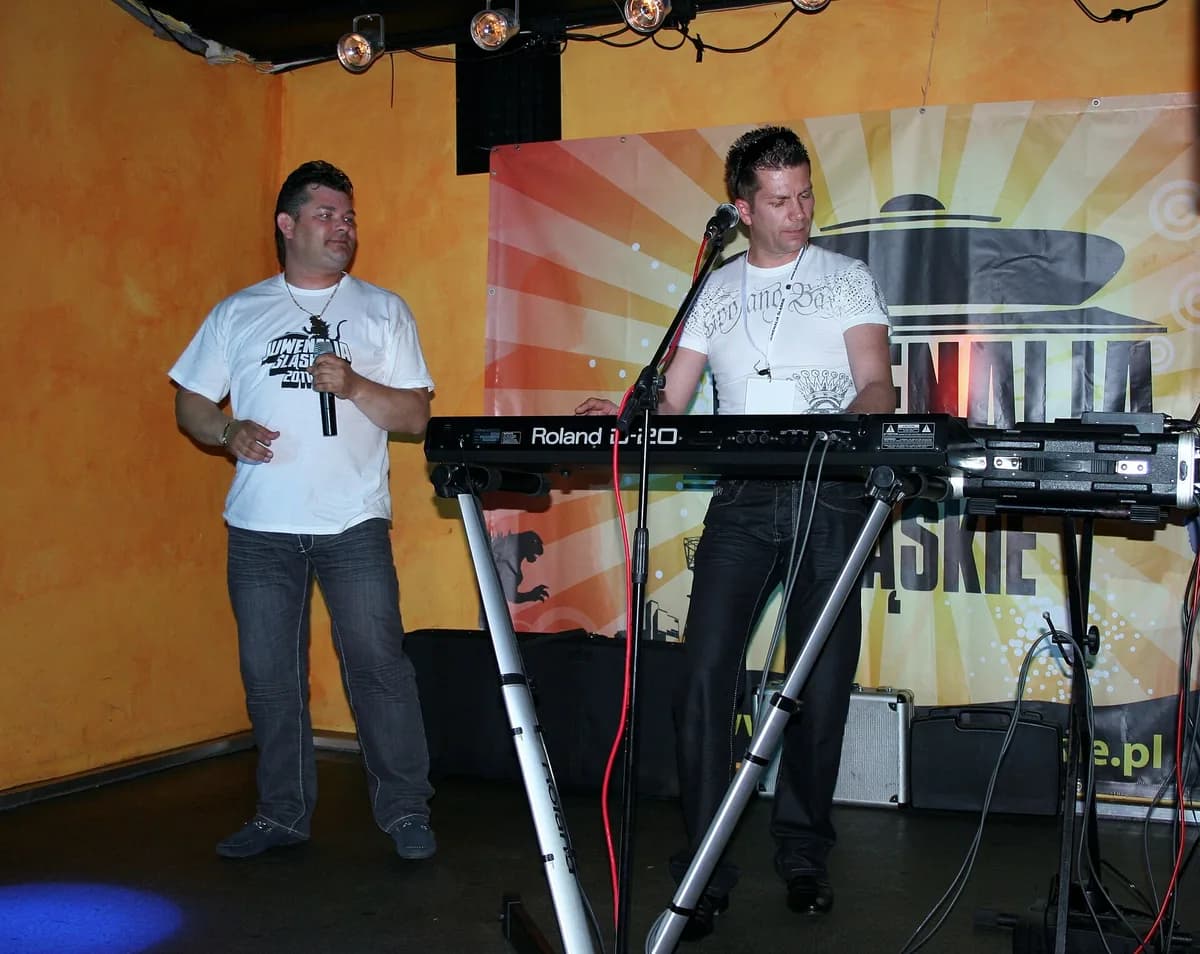
Photo: Karol Głąb, CC BY-SA 3.0, via Wikimedia Commons.
Disco polo is a Polish dance-pop genre built on simple melodies, steady 4/4 rhythms, and lyrics almost always about love, longing, or having a good time — the Polish PWN dictionary itself defines it plainly as a Polish variant of disco music with simple tunes and often ribald lyrics. Musically, it blends the steady, folk-derived rhythms of rural Polish wedding bands with cheap, accessible electronic instruments: synthesizers, drum machines, and keyboard presets standing in for a full band.
That folk-wedding-band origin is the whole story in miniature. It wasn't invented by a record label chasing a trend — it grew directly out of the electronic instruments that wedding and festival bands started adopting in place of accordions and acoustic guitars, keeping the same repertoire of sentimental, danceable folk-pop songs but with a cheaper, more portable setup. The genre kept that DNA even as it became a commercial phenomenon in its own right.
Where Disco Polo Came From
The genre emerged in Poland in the late 1980s, initially known by far less flattering names: muzyka chodnikowa ("sidewalk music") or muzyka podwórkowa ("backyard music"), both references to where the cassettes were actually sold — from street stalls and bazaar tables, not record shops. Bayer Full, founded in 1984, and Top One, formed in 1986, are generally credited as the genre's pioneers, joined in the early 1990s by acts like Akcent, Atlantis, Boys, and Fanatic.
The name "disco polo" itself wasn't coined until 1993, by Sławomir Skręta, owner of Blue Star Records — the first label built specifically around the genre — as a tongue-in-cheek Polish answer to Italo disco, according to Wikipedia's overview of disco polo. That rebrand mattered: it turned a scrappy street-cassette scene into something with a marketable identity, right as Poland's post-communist transition created exactly the kind of open, deregulated market a genre like this needed to explode.
Timing explains a lot of what happened next. Communism's collapse in 1989 also collapsed the old state-controlled distribution system for music, radio, and television, leaving a genuine vacuum that a scrappy, self-funded genre with no gatekeepers to answer to was perfectly positioned to fill. Bands could record cheaply, press their own cassettes, and sell directly at markets and festivals without needing approval from any state cultural institution — a level of independence that would have been unthinkable just a few years earlier.
How Polsat Turned Disco Polo Into a National Obsession
Television is what took it from regional cassette stalls to genuine national phenomenon. The commercial broadcaster Polsat launched two dedicated shows — Disco Relax in December 1994 and Disco Polo Live in February 1996 — each producing its own official hit lists and giving the genre a level of polished, mainstream visibility it had never had before.
The results were dramatic. Popularity peaked between 1995 and 1997, saturating Polish radio, television, and provincial nightlife all at once. The boom didn't last, though — commercial fatigue set in through the early 2000s, and by August 2002 Polsat cancelled both flagship shows, leaving a generation of bands without their main platform and the scene without its mainstream home.
Disco Polo Festivals and Where to Hear It Live
Even during the genre's quieter years, dedicated festivals kept the live scene alive outside of television entirely. The National Festival of Music and Dance, held annually in Ostróda from 1996 to 2011, was for over a decade the largest gathering of its kind, drawing performers and fans from across the country to a single weekend event built entirely around the genre.
Since 2011, that role has largely passed to the Disco Hit Festival in Kwakowo, near Kobylnica in northern Poland, which continues to draw thousands of attendees every summer. These festivals matter for a reason beyond nostalgia: they're proof that a loyal, committed fanbase kept showing up in person throughout the exact years the genre was supposedly dead or embarrassing on national television — the live audience never actually went anywhere.
Why Disco Polo Owns the Wedding Dance Floor
Disco polo's wedding dominance isn't incidental — it's the genre returning to its actual roots. Since the songs were built from folk wedding-band repertoires in the first place, they're structurally suited to exactly that setting: simple, predictable chord progressions that a live band (or a DJ) can adapt on the fly, steady danceable tempos that work for guests aged 8 to 80, and lyrics simple and repetitive enough that an entire room can sing along after hearing the chorus once.
That's a genuinely rare combination at a multi-generational family event. A wedding DJ playing complex, unfamiliar music risks losing half the room; the genre's whole design philosophy — simple melody, big feelings, an obvious beat — means grandparents and teenagers end up on the same dance floor at the same time, which is exactly why it became the default rather than an afterthought.
Live wedding bands still lean on it heavily too, and often in a way that loops the genre's history back on itself. A four-piece playing a Saturday wesele will frequently perform the electronic-era hits on live instruments — guitar, bass, drums, and an accordion or keyboard synth standing in for the original synthesizers — which means the "electronic dance music" your parents' generation associates with the 1990s often gets performed acoustically at the exact kind of event it was originally modeled on.
For a foreign guest, the practical upshot is simple: don't expect to sit this one out. Polish wedding etiquette treats the dance floor as a shared, communal space rather than something only confident dancers participate in, and disco polo's whole point is that everyone already half-knows the words and the beat. Refusing to join in reads less like shyness and more like a missed opportunity — the entire genre exists specifically so that nobody has an excuse not to dance.
The Comeback: Zenon Martyniuk and the 2016 Sylwester Moment
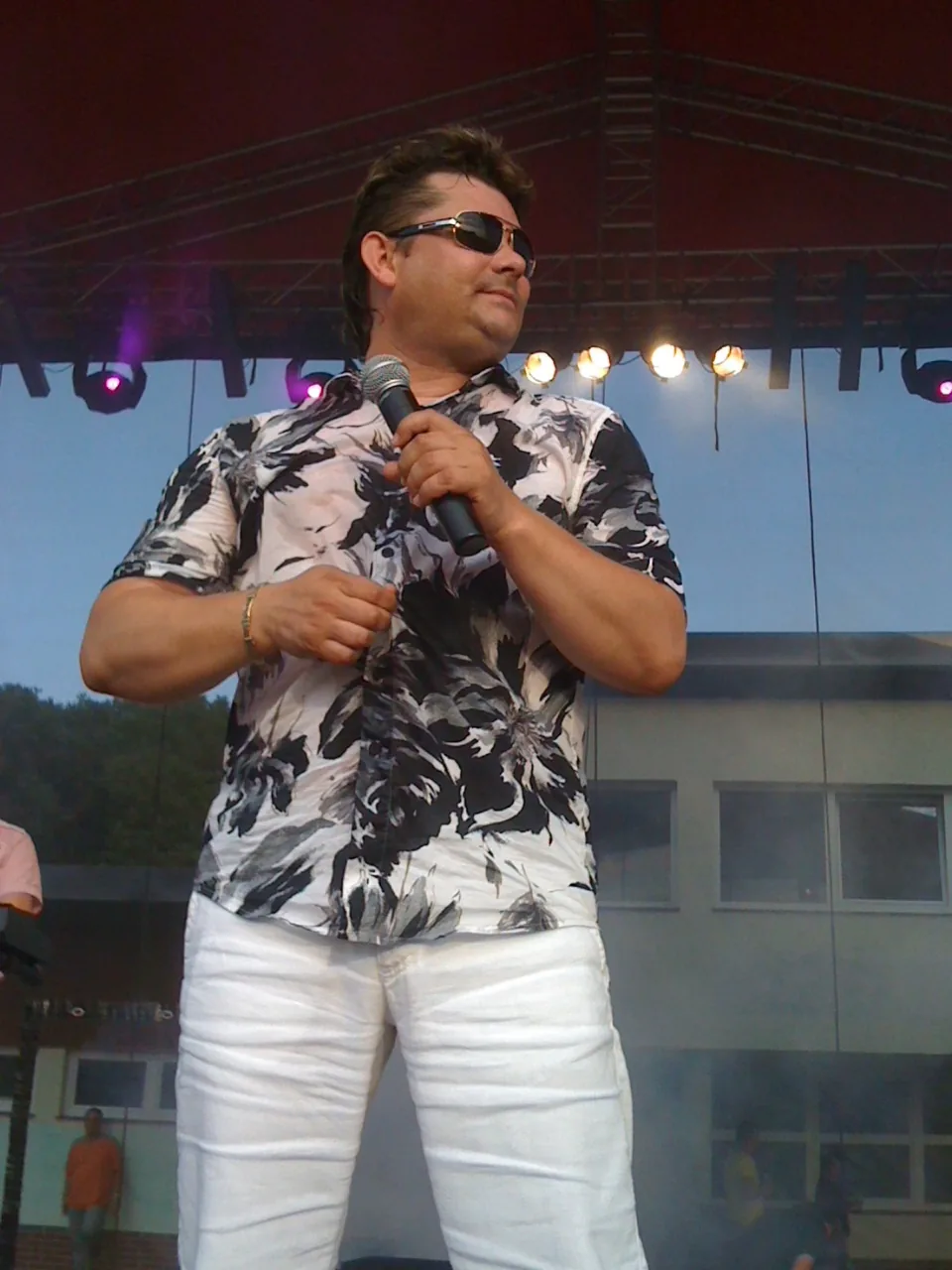
Photo: Fauno, public domain, via Wikimedia Commons.
After years of being an ironic punchline for educated, urban Poland, its rehabilitation has a specific date attached to it. On New Year's Eve 2016, national broadcaster TVP invited Zenon Martyniuk — frontman of Akcent, pictured here — to perform on the main stage of its enormous, nationally televised Sylwester celebration in Zakopane. The broadcast was watched by millions, and the head of Telewizja Polska publicly expressed relief that the genre was, at last, "no longer ironically hated."
That moment mattered because of who was watching, not just how many. A genre that had spent two decades being publicly mocked by media tastemakers was suddenly being platformed by the state broadcaster's single biggest night of programming — a genuine, hard-to-fake signal that the cultural tide had turned, or at least that pretending to hate disco polo had stopped being socially mandatory.
Kitsch or Culture? Disco Polo's Class Divide
The genre has spent most of its existence caught in a very specific Polish class argument. Urban, educated, media-adjacent Poland treated it for years as a "symbol of kitsch and primitivism," favoring Western rock and pop instead — while it remained consistently, overwhelmingly popular among working-class and rural audiences who never stopped buying the cassettes or requesting the songs at weddings.
That divide hasn't fully disappeared even after 2016, but it has softened noticeably, and the genre's staying power outside Poland is arguably the strongest evidence of how real its emotional pull actually is. A nostalgic revival took hold among the Polish diaspora in the UK starting around 2015, with organizers reporting events drawing over a thousand attendees across cities from Aberdeen to Peterborough. For recent immigrants specifically, hearing it abroad reportedly feels like "being back home" — a strikingly different function than the "cheesy wedding music" reputation it carries inside Poland itself.
That contrast is worth sitting with for a second: the same songs that get an eye-roll from a Warsaw media professional can bring a homesick construction worker in Manchester to tears at a Saturday night event. Taste hierarchies rarely survive contact with actual homesickness, and disco polo's UK afterlife is a genuinely clean example of exactly that.
Disco Polo Artists You Should Know (And How to Say Their Names)
A handful of names come up constantly once you start paying attention to the genre, and — like most Polish proper nouns — they're far easier to say once you've seen them broken down phonetically.
| Artist | Pronunciation | Notable for |
|---|---|---|
| Zenon Martyniuk | ZEH-non mar-TIN-yook | Frontman of Akcent; the face of the 2016 mainstream comeback |
| Akcent | AHK-tsent | One of the genre's most consistently popular acts since the early 1990s |
| Bayer Full | BYE-er fool | Founded 1984; widely credited as a founding pioneer of the genre |
| Weekend | WEE-kend | Formed 2000 in Sejny; one of the biggest acts of the genre's 2010s wave |
| Boys | boys | Founded 1990 in Prostki; among the earliest wave of disco polo acts |
| Piękni i Młodzi | PYENK-nee ee MWOH-jee | "Beautiful and Young"; founded 2010, blends disco polo with dance-pop |
If you'd like more practice with Polish names and their trickier sounds generally, our guide to famous Polish people covers the same kind of pronunciation ground with a different cast of names.
Learn Polish From Disco Polo Lyrics
The genre's simplicity is a genuine gift to beginner learners, even if that's not why the songs were written that way. The genre leans hard on a small, repeated vocabulary of love, longing, and celebration — words like miłość (love), serce (heart), tęsknię (I miss/long for), and kochanie (darling, sweetheart) show up constantly across the genre's biggest hits, sung slowly enough and repeated often enough that they're genuinely easier to pick out by ear than most contemporary Polish pop.
That repetition is exactly what makes it useful listening practice: put one on in the background, and you'll start recognizing the same handful of emotional, high-frequency words appear again and again, in the same simple grammatical patterns, song after song.
If talking about music and hobbies in Polish is something you want to build on beyond just recognizing a few words, this lesson is a natural next step:
Hobbies & Free Time
Frequently Asked Questions
What is disco polo? A Polish dance-pop genre built on simple melodies, steady danceable rhythms, and sentimental lyrics, blending folk wedding-band traditions with electronic instruments.
When did disco polo start? In the late 1980s, originally called "sidewalk music" (muzyka chodnikowa), with the name "disco polo" itself coined in 1993.
Why is disco polo played at every Polish wedding? Because it grew directly out of folk wedding-band repertoires — its simple, predictable structure and broad appeal across ages makes it ideal for a multi-generational dance floor.
Who are the biggest disco polo artists? Zenon Martyniuk and Akcent, Bayer Full, Weekend, Boys, and Piękni i Młodzi are among the genre's most recognized names across different eras.
Is disco polo considered embarrassing or uncool in Poland? It has historically been dismissed as kitsch by urban, educated Poland, though that stigma has softened significantly since Zenon Martyniuk's 2016 national television performance.
What happened to disco polo in the 2000s? Its early-90s boom faded through commercial fatigue, and Polsat cancelled its two flagship disco polo TV shows in 2002, leaving the genre without its main platform for years.
Is disco polo popular outside Poland? Yes, especially among the Polish diaspora — a UK revival beginning around 2015 has drawn events with over a thousand attendees in cities across the country.
Is disco polo good for learning Polish vocabulary? Its simple, repetitive lyrics about love and celebration make it genuinely useful listening practice, even though that wasn't the original intent behind the songwriting style.
Where can I hear it performed live today? The Disco Hit Festival in Kwakowo has run every summer since 2011 and remains the genre's biggest annual live gathering, alongside countless smaller local festivals and, of course, weddings.
Is disco polo the same thing as Italo disco? No, though it was named as a tongue-in-cheek nod to Italo disco in 1993. It draws far more directly from Polish folk and wedding-band traditions than from the Italian genre it was jokingly named after.
Did any single event mark the genre's mainstream acceptance? Zenon Martyniuk's performance at TVP's nationally televised 2016 New Year's Eve broadcast in Zakopane is generally treated as the clearest single turning point, watched by an audience of millions.
Disco polo's whole arc — mocked, massive, cancelled, then quietly rehabilitated on national television — makes it one of the more telling stories in modern Polish pop culture. Whether you end up loving it or just tolerating it politely from the edge of the dance floor, understanding why it's there in the first place turns an inescapable wedding soundtrack into something genuinely worth paying attention to.