Myslovitz is the Polish rock band that got one of Hollywood's most in-demand cinematographers to turn down Martin Scorsese — for a music video. Through the late 1990s and early 2000s they were the biggest alternative band in Poland by a wide margin: quadruple Fryderyk winners, MTV Europe Music Award recipients, and the first Polish rock act EMI ever pushed into 27 countries at once. Almost none of that reputation crossed into English-speaking territory, which means most people outside Poland have never heard a single Myslovitz song, despite the band sharing festival stages with Iggy Pop, Travis, and Simple Minds.
The band's own story reads like one of the melancholic, cinema-obsessed songs they built a career on: four guys from a grimy Silesian coal town who took their name from that town's old German spelling, spent a decade being compared to Oasis and Radiohead, then watched their following collapse into a slow, two-decade churn of lineup changes after their frontman walked away to start his own festival.
Who Is Myslovitz? Where the Name Comes From
Artur Rojek started the band in 1992 under the name "The Freshmen," borrowed from the 1990 Marlon Brando film — a fittingly cinematic first choice for a group that would spend its whole career naming albums and songs after movies. In 1994, the band renamed itself Myslovitz, adopting the historical German-era spelling of Mysłowice, their hometown in the Upper Silesia coal-mining region of southern Poland.
The gesture followed a well-worn rock tradition — American bands like Chicago and Boston had long since named themselves after unglamorous hometowns — but it was a genuinely odd choice for four Polish twentysomethings in the early '90s, when provincial industrial towns weren't exactly a source of local pride. Rojek has said the band was initially ambivalent about Mysłowice; naming themselves after it, in the old spelling nobody used anymore, was as much a joke as a tribute.
The classic lineup that formed around Rojek included guitarist Wojciech Powaga, bassist Jacek Kuderski, and drummer Wojciech "Lala" Kuderski, with guitarist and keyboardist Przemek Myszor joining in 1996. None of them, by Rojek's own account, could really play when they started — he's described the early band as fans of Ride and the Stone Roses who "couldn't play the guitar at all." Their self-titled 1995 debut, produced by British producer Ian Harris (previously known for his work with Joy Division and New Order), was named Poland's Debut of the Year anyway, and drew immediate comparisons to Oasis.
That debut's success wasn't a fluke the band coasted on. With Myszor now in the lineup, 1996's Sun Machine actually outsold it, driven by "Peggy Brown" and "Z twarzą Marilyn Monroe" — songs that pushed the group's early jangly guitar sound toward something moodier. A year later, Z rozmyślań przy śniadaniu ("Ruminations at Breakfast") went further still, trading the earlier records' brightness for the introspective, cinema-soaked lyrics that would define the band's signature style for the next decade. It also produced "To nie był film" ("It Wasn't a Movie"), a Fryderyk-winning single written for the film Młode wilki ½ whose violent imagery drew genuine controversy in the Polish press at the time.
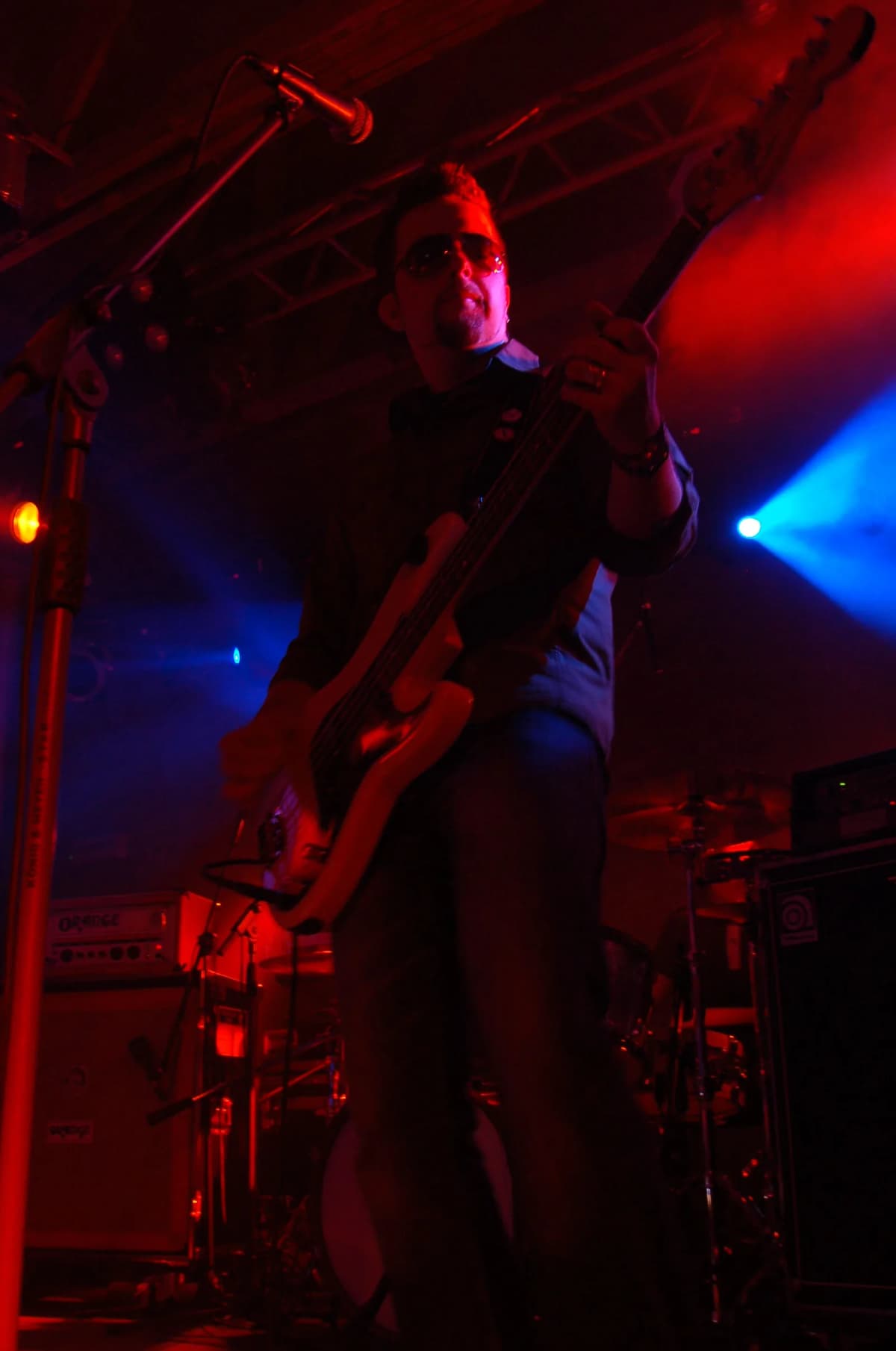
Photo: Lilly M, CC BY-SA 2.5, via Wikimedia Commons.
The Breakthrough: How Myslovitz Swept the 1999 Fryderyk Awards
Myslovitz spent the rest of the '90s building toward something bigger, releasing Sun Machine (1996) and Z rozmyślań przy śniadaniu (1997) while growing steadily more introspective and cinematic in style. The real turning point came in 1999 with Miłość w czasach popkultury ("Love in the Time of Pop Culture") and its lead single, "Długość dźwięku samotności" ("The Length of the Sound of Solitude") — a song that became, and largely remains, the band's signature.
The album went double-platinum in Poland, selling over 300,000 copies, and at that year's Fryderyk Awards — Poland's equivalent of the Grammys — Myslovitz walked away with more statuettes than any other act: Band of the Year, Rock Album of the Year, and Song of the Year, among others, according to the official Fryderyk 1999 awards archive. No other artist that year came close to matching the sweep.
That kind of dominance in a single national scene rarely makes it past the language barrier, and Myslovitz's didn't — not yet. What changed everything wasn't the music itself, but who agreed to shoot its video.
Artur Rojek: The Frontman Who Got an Oscar Winner to Turn Down Scorsese
For the "Długość dźwięku samotności" video, Myslovitz's label brought in Janusz Kamiński — the Polish-born cinematographer who had already won two Academy Awards for Schindler's List and Saving Private Ryan, and who shot nearly every Steven Spielberg film of the era. Kamiński reportedly turned down an offer from Martin Scorsese around the same time in order to direct the Myslovitz video instead — a genuinely strange flex for a mid-sized Polish rock band, and one that still sounds implausible until you remember Kamiński was Polish himself, shooting a video for a Polish band, in a moment when Polish alternative rock had real momentum behind it.
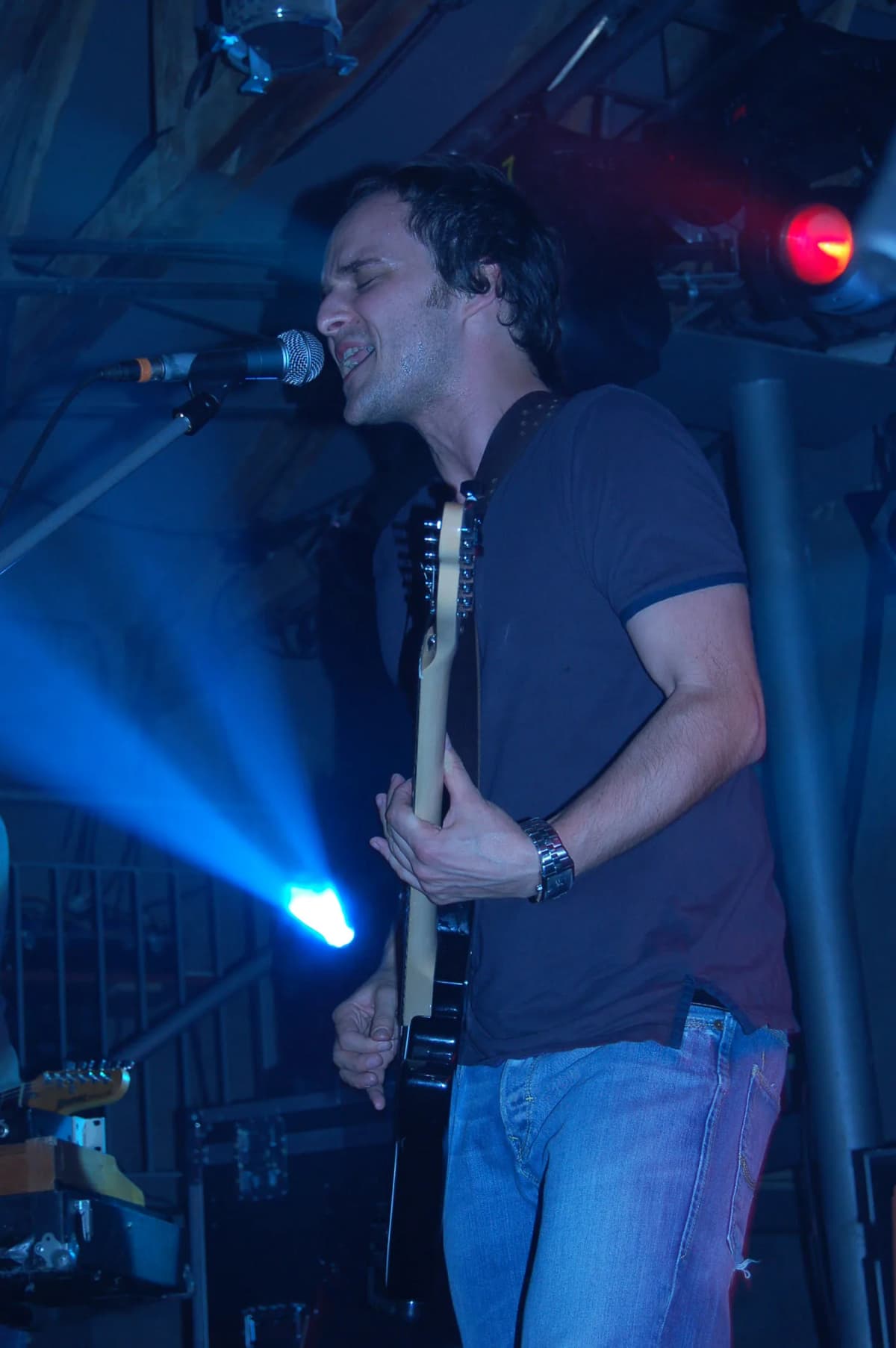
Photo: Lilly M, CC BY-SA 2.5, via Wikimedia Commons.
The video got heavy rotation on MTV Europe, and Artur Rojek — until then just the frontman of a band famous mostly within Poland's own borders — became something closer to a national celebrity, the kind of figure whose next label deal and next collaborator choices actually made news outside the music press.
Korova Milky Bar and Myslovitz's Push Into 27 Countries
Myslovitz's 2002 album took its name from Korova Milky Bar, the drug-laced milk dispensary from Stanley Kubrick's A Clockwork Orange — on-brand for a band that had spent a decade treating pop culture as raw material rather than background noise. The record was darker and more melancholic than anything they'd released before; guitarist Przemek Myszor described Poland at the time as "a place where very strange things happen... full of crisis... very dark," which the album's tone reflects more than the lyrics ever spell out directly.
Korova Milky Bar went platinum in Poland, and in November 2002 the band signed to EMI's Pomaton label for an international push that released an English-language version of the album in 27 countries — an almost unheard-of level of backing for a Polish rock act at the time. The band picked up MTV Europe Music Awards for Best Polish Act in both 2002 and 2003, played the Montreux Jazz Festival, and opened for Iggy Pop and Simple Minds before touring alongside Travis and Skunk Anansie's Skin. None of it produced a real crossover hit in English-language markets — but for a few years, this Silesian coal-town band got closer to that outcome than any Polish rock act before or since.
Two years later, in December 2004, the band followed up with Skalary, mieczyki, neonki — an album built from psychedelic instrumental outtakes left over from the Korova sessions. It's the strangest record in the catalog by a wide margin: largely wordless, heavily textured, and closer in spirit to Radiohead's Kid A era or Pink Floyd's soundtrack work than to anything on Polish radio at the time. It didn't chart the way Korova Milky Bar had, but it's the album critics and longtime fans tend to point to now as evidence the band was never just chasing MTV airplay.
Life After the Peak: Rojek, OFF Festival, and a Rotating Frontman
Myslovitz kept releasing albums through the 2000s — Happiness Is Easy (2006) debuted at number one in Poland and went platinum — but the band's commercial peak had already passed. In April 2012, after two decades leading the group, Artur Rojek left Myslovitz entirely to focus on OFF Festival, an alternative and independent music festival he'd founded in 2006 and continued directing full-time.
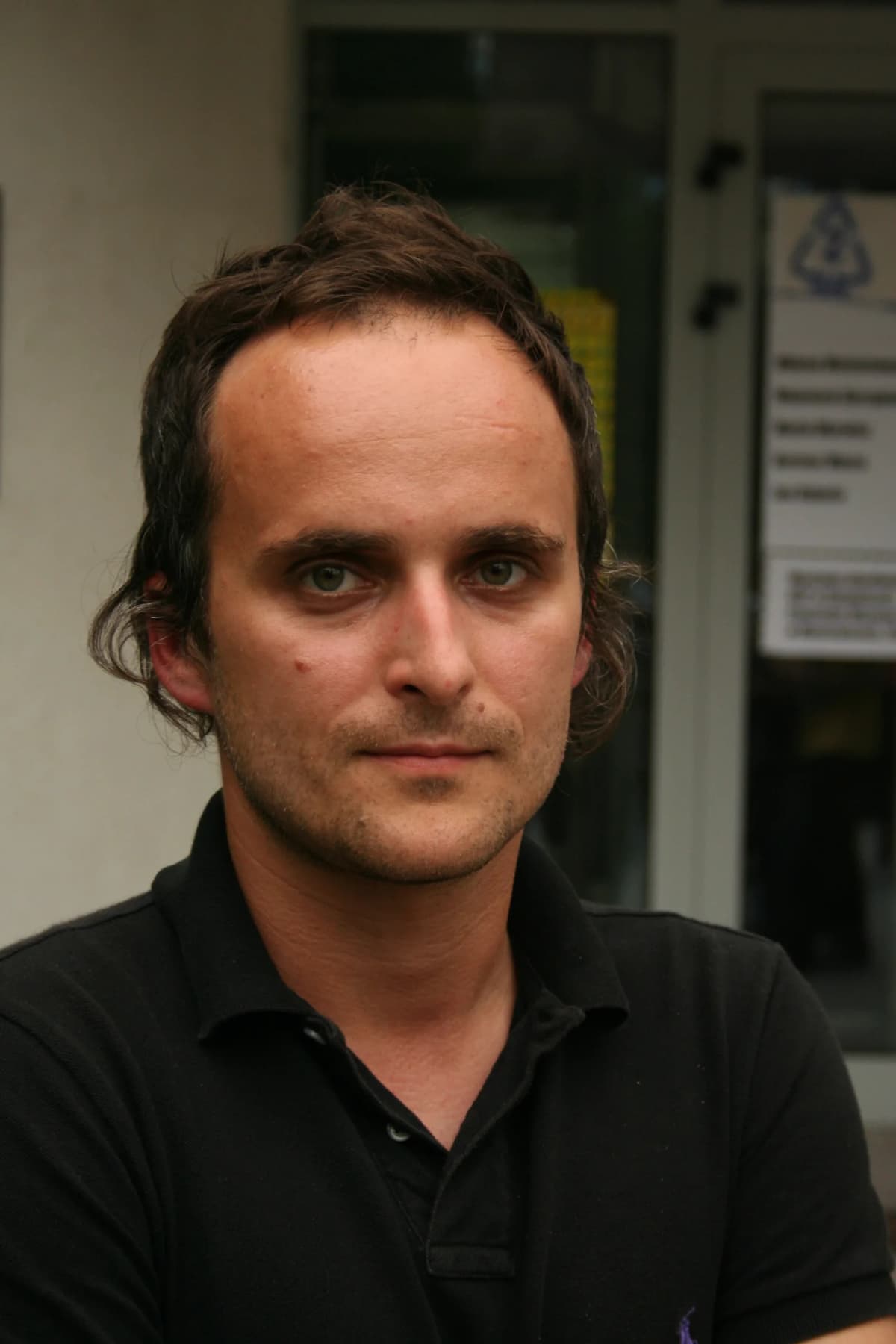
Photo: Przykuta, CC BY-SA 3.0, via Wikimedia Commons.
There's a neat symmetry to that move that's easy to miss: OFF Festival's first years, before it relocated to Katowice's Dolina Trzech Stawów in 2010, were actually held in Mysłowice — the same unglamorous coal town the band had named itself after eighteen years earlier. Rojek didn't leave the Myslovitz story behind so much as redirect it into festival programming, championing exactly the kind of alternative and shoegaze-adjacent acts — similar in spirit to Poland's own Klimt — that never got anything close to the MTV push Myslovitz once had.
Singer Michał Kowalonek took over vocals after Rojek's departure and stayed exactly six years, leaving in April 2018. Under Kowalonek, the band kept charting — Nieważne jak wysoko jesteśmy... (2011) hit number one and went gold, while 1.577 (2013) reached number eight — proof that Polish audiences hadn't simply been following Rojek personally. Mateusz Parzymięso became the band's third lead vocalist in 2019, and the group has continued releasing music since, including 2023's Wszystkie narkotyki świata, with the three founding instrumentalists — Powaga and both Kuderskis — still anchoring the lineup more than thirty years after they were fans who, in Rojek's own words, "couldn't play the guitar at all."
Where to Listen to Myslovitz Today
Myslovitz's catalog is fully available on the major streaming platforms, including Spotify and Apple Music. Miłość w czasach popkultury and Korova Milky Bar are the two essential entry points — the first for "Długość dźwięku samotności" itself, the second for a colder, more Radiohead-indebted sound that holds up better than most Britpop-adjacent records from the same era. Listeners already into Poland's more recent alternative and shoegaze revival will recognize a direct line back to what Myslovitz was doing with texture and atmosphere twenty-five years earlier.
The Town That Shares the Band's Name
Mysłowice itself has never quite escaped its association with the band, for better or worse — a post-industrial city of around 70,000 people that most Poles now know at least partly because a rock band once thought naming themselves after it was a good joke. Founded in the Middle Ages and shaped for over a century by coal mining, the town spent decades as the kind of place young Poles left rather than referenced in interviews. The band's decision to keep its old German-era name front and center, long after most residents had stopped using that spelling for anything else, turned an unglamorous detail of local history into a permanent piece of the group's identity.
The town hall still stands much as it did when the band was forming down the road; nothing about it suggests it was ever meant to end up namechecked in music press across a dozen countries. Visitors who make the trip today looking for some kind of shrine to the band's history won't find one — there's no museum, no plaque, nothing beyond the town's ordinary municipal buildings and the fact that everyone locally already knows exactly why the name sounds familiar.
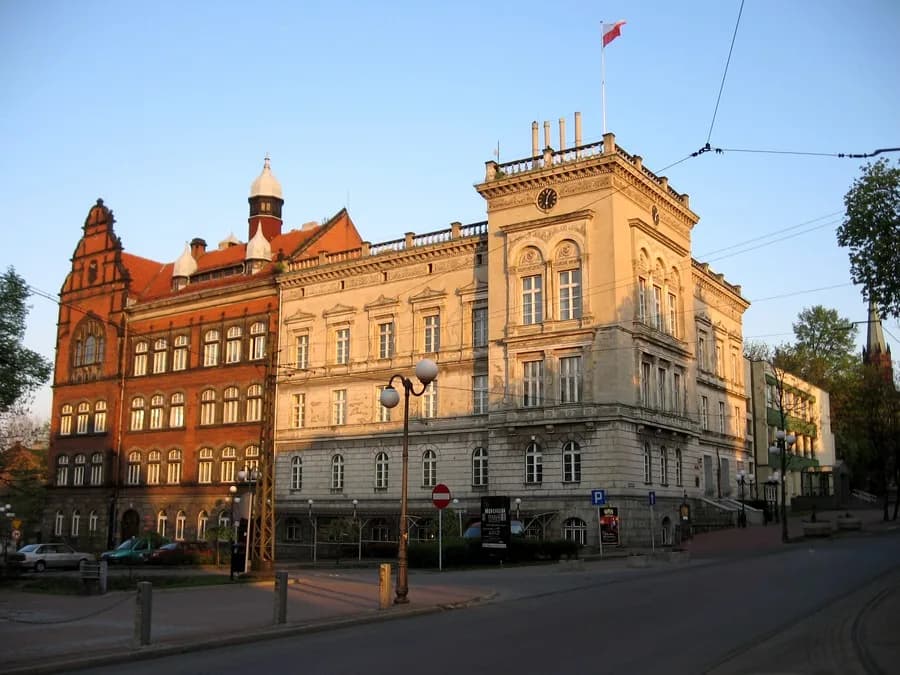
Photo: Dombia, CC BY-SA 3.0, via Wikimedia Commons.
Myslovitz's Musical Style and Legacy
Critics reaching for comparisons over the years have landed on Oasis for the early records, Radiohead and Pink Floyd for the Korova-era material, and shoegaze acts like Ride for the atmosphere underneath almost everything the band recorded. None of those comparisons quite land on their own — the through-line is really Rojek's habit of writing lyrics that read like film treatments, full of specific, cinematic images rather than the vaguer emotional language most rock lyricists default to. That's arguably why directors and cinematographers gravitated toward the band's videos in a way that seemed disproportionate to their actual chart size internationally.
The band's clearest legacy in Poland isn't really its own catalog, though — it's the alternative scene Rojek went on to build through OFF Festival, and the space that scene created for younger Polish guitar bands who never had to fight for the kind of mainstream airplay this group spent a decade earning. Acts like eM and Lili Marlene are usually cited as direct descendants of the sound the band pioneered in the late '90s, a fairly rare thing for a rock band from a coal-mining town of 70,000 people to be credited with starting.
Frequently Asked Questions
What does the name Myslovitz mean? Myslovitz is the historical German-era spelling of Mysłowice, the band's hometown in the Upper Silesia coal-mining region of southern Poland. They adopted the name in 1994, having formed in 1992 under the name "The Freshmen."
What is Myslovitz's biggest song? "Długość dźwięku samotności" ("The Length of the Sound of Solitude"), from the 1999 album Miłość w czasach popkultury, is the band's signature hit and won Song of the Year at the 1999 Fryderyk Awards.
Is it true an Oscar-winning cinematographer directed a Myslovitz video? Yes. Janusz Kamiński, the two-time Academy Award-winning cinematographer behind Schindler's List and Saving Private Ryan, directed the music video for "Długość dźwięku samotności," reportedly turning down an offer from Martin Scorsese to do it.
Why did Artur Rojek leave Myslovitz? Rojek left the band in April 2012, after twenty years as frontman, to focus full-time on OFF Festival, the alternative music festival he founded in 2006.
Is Myslovitz still active? Yes. The band has continued through several lineup changes — Michał Kowalonek and later Mateusz Parzymięso took over lead vocals after Rojek's departure — and released their most recent album, Wszystkie narkotyki świata, in March 2023.
Did Myslovitz ever break through internationally? Not commercially, though they came closer than most Polish rock acts: EMI released an English-language version of Korova Milky Bar in 27 countries in 2002–2003, and the band toured with Travis, Simple Minds, and Skunk Anansie, but no single crossed over into major English-language charts.
What kind of music does Myslovitz play? Alternative and indie rock with strong Britpop and shoegaze influences — critics have compared the early records to Oasis and the later, moodier material to Radiohead and Pink Floyd, all tied together by cinematic, image-heavy lyrics that read more like film treatments than typical rock songwriting.
Thirty years on, Myslovitz is still the strangest kind of success story: a band whose biggest music video was directed by one of the most sought-after cinematographers on Earth, whose frontman quietly rerouted his career into shaping Poland's entire alternative music scene, and whose name most non-Poles still can't place — even if, for a few years around 2002, EMI's marketing budget genuinely believed the rest of the world was about to learn it.