The Witcher's Polish origins surprise almost everyone who first hears about them. Geralt of Rivia, Ciri, Yennefer, and an 85-million-copy-selling video game franchise didn't come out of an American or British studio — they came from a Polish fantasy author writing short stories for a Warsaw magazine in 1986, and a small Polish game studio nobody outside the country had heard of.
That studio, CD Projekt Red, is now one of the biggest video game developers in the world, and The Witcher 3: Wild Hunt alone has sold roughly 60 million copies. But the story behind how it all started is stranger, and considerably more Polish, than the games or the Netflix show ever let on — right down to a $9,500 rights deal the original author has spent years publicly regretting.
This is a look at the real people, places, and folklore behind the franchise: who Andrzej Sapkowski actually is, the Slavic myths his monsters come from, the actual Polish castle used for filming, and a specific Polish swear word that became a genuine meme thanks to the games' voice acting.
Who Is Andrzej Sapkowski?
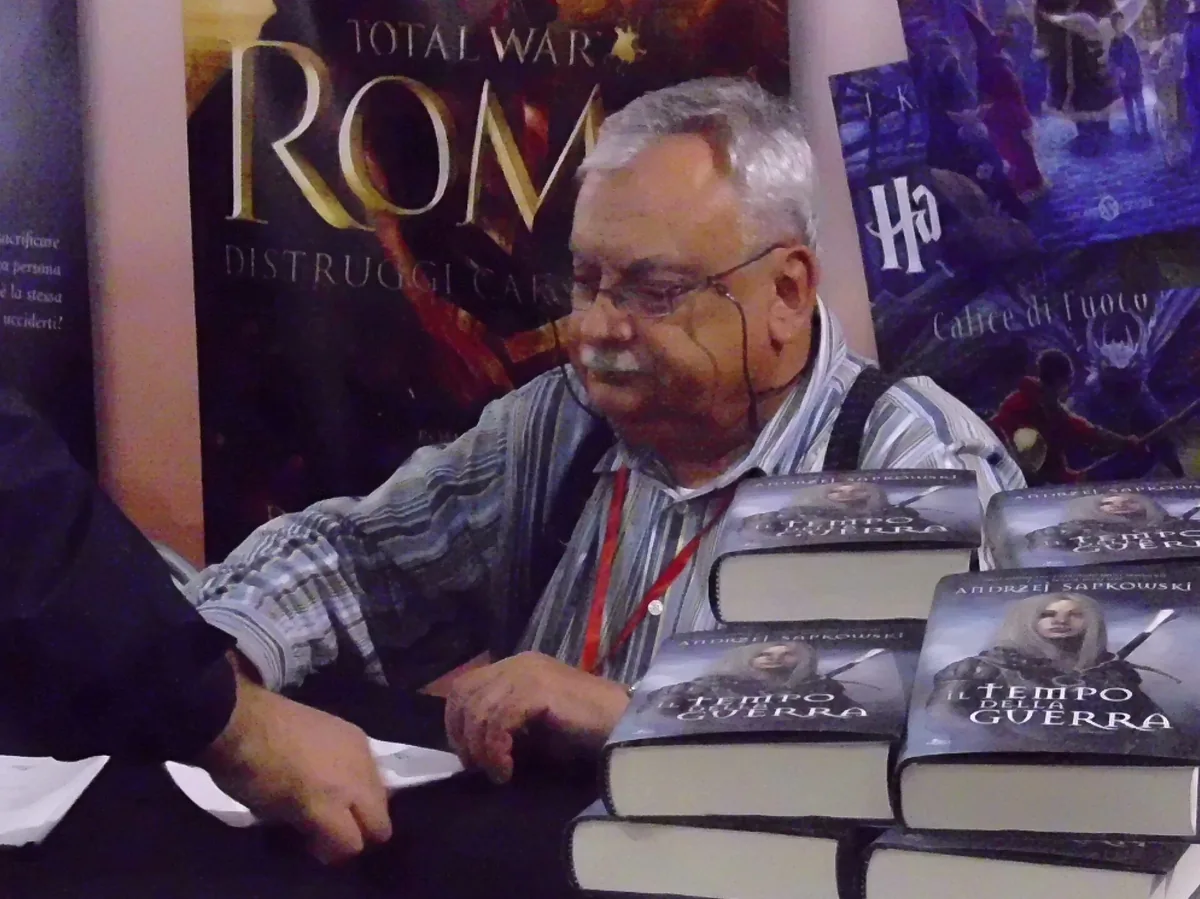
Photo: Alessio Sbarbaro, CC BY-SA 3.0, via Wikimedia Commons.
Andrzej Sapkowski published the first Witcher short story, titled simply "Wiedźmin" ("The Witcher"), in Fantastyka, Poland's leading fantasy and science-fiction magazine, back in 1986, according to Wikipedia's overview of the author. It was an immediate hit with both readers and critics, and Sapkowski kept expanding the world across short story collections and, eventually, a five-book saga that made him one of Poland's most successful authors — all well before any video game existed.
That's worth sitting with for a second: Geralt, Ciri, and the entire Continent existed as a purely literary, distinctly Polish phenomenon for over a decade before CD Projekt Red ever got involved. The games didn't invent this world; they adapted an already-beloved one.
The $9,500 Deal That Became Gaming's Most Famous Regret
In 1997, a small, then-unproven Polish studio called CD Projekt approached Sapkowski about making a game based on his books. Rather than accept a royalty deal tied to sales, Sapkowski insisted on a flat, one-time payment of 35,000 Polish złoty — worth about $9,500 at the time — paid out in two installments of 15,000 and 20,000 złoty. He reportedly had little faith that a small Polish studio could turn his books into a successful game, so he took the guaranteed cash instead of a gamble on royalties.
There's an oddly charming detail buried in that first contract negotiation, too: Sapkowski rejected CD Projekt's initial draft agreement because it misspelled Geralt's name as "Gerald." It's a small thing, but it says something about how carefully he was guarding the material even while agreeing to hand over the game rights for what would turn out to be a rounding error compared to the eventual payoff.
It's worth remembering just how unproven CD Projekt actually was in 1997. This wasn't an established studio with a track record Sapkowski could reasonably bet on — it was a small Warsaw-based company still years away from founding the CD Projekt Red development arm that would eventually make the games. Turning down royalties in favor of guaranteed cash wasn't an irrational decision at the time; it was a completely defensible bet against a studio with no finished games to its name.
That flat fee looked like a reasonable, even generous, deal in 1997. It looks very different after The Witcher 3 alone sold 60 million copies and turned CD Projekt Red into a multi-billion-dollar company. In October 2018, Sapkowski formally demanded an additional 60 million złoty — roughly $16 million — in back royalties, arguing under Polish copyright law that he'd never been fairly compensated for a franchise that had grown far beyond anything either side anticipated in 1997.
CD Projekt initially called the demand groundless, but the two sides reached an amicable, undisclosed settlement on 20 December 2019, reportedly for considerably less than Sapkowski's original ask, according to Game Developer's coverage of the settlement.
The Real Slavic Folklore Behind the Monsters
Sapkowski has always pushed back a little against a purely "Slavic" label for his work, pointing to Tolkien and Arthurian legend as equally large influences. Even so, several of the franchise's most memorable monsters come directly from real Polish and wider Slavic folklore, not invented fantasy lore.
The striga — a curse-born, predatory undead creature that can only be cured if someone survives a night in its presence until the third crowing of the rooster at dawn — is drawn from a specific 19th-century Polish folk tale recorded by writer Roman Zmorski. Sapkowski kept the core structure of that original myth largely intact when he adapted it, down to the exact dawn-crowing condition for breaking the curse.
The kikimora, a household or swamp spirit turned monstrous, comes straight from Slavic folklore more broadly, as does the leshy, a forest guardian spirit known for leading travelers astray in the woods. The games' Noonwraiths are based on the południca, a Polish folkloric figure who wanders fields at midday inflicting harm on unlucky villagers — a genuinely specific piece of Polish rural superstition rather than generic fantasy dressing. Even the King of the Wild Hunt, Eredin, draws heavily on Koschei, a recurring villain figure across Slavic legend usually rendered in English as "Koschei the Deathless."
What's notable is how much of this folklore Sapkowski left essentially recognizable rather than filing down into generic fantasy tropes. A Polish reader encountering the striga or the południca in his books isn't meeting an invented monster dressed in a folkloric name — they're meeting the same creature their grandmother might have warned them about, transplanted into a much bigger, more violent story. That fidelity to the source material is part of why Polish readers responded to the books so strongly decades before any international audience got a version of the story at all.
Geralt's Real Polish Name (and How to Say It)
In the original Polish books and games, Geralt of Rivia is written as Geralt z Rivii — the "z" simply meaning "of" or "from," the same way it works in ordinary Polish sentences. The witcher's Polish title, Wiedźmin, is the actual original name of both the first short story and the franchise as a whole; "The Witcher" is the English translation CD Projekt adopted specifically to reach an international audience once the games started development.
Wiedźmin is pronounced roughly "VYEDJ-meen" — worth knowing if you ever want to ask a Polish gamer about it in something closer to the original. The word itself is a masculine coinage built on wiedźma, the ordinary Polish word for "witch" — Sapkowski essentially invented a male counterpart to an existing word, which is part of why the original title carries a slightly different flavor than the English "witcher" (a word that barely existed in English before the books and games popularized it).
Other character and place names carry similar Polish roots that get flattened in translation. Ciri's full name, Cirilla, and the in-world naming conventions throughout the books lean on real Polish and Slavic naming patterns rather than the more generic fantasy-name conventions found in a lot of English-language fantasy fiction — another small sign of how specifically rooted this universe is in a real linguistic tradition, even once it's been fully translated and voiced in English.
The Kurwa Meme: Poland's Loudest Voice Acting Export
The original Polish voice of Geralt, actor Jacek Rozenek, recorded a version of the character that Polish players still regard as the definitive one — arguably more so than the English dub most international fans grew up with. Part of that reputation comes down to a very specific, very Polish reason: the Polish-language version of the games leans hard into Polish swearing, and one clip in particular, Geralt shouting "o kurwa, uważaj" ("oh f—, watch out"), has taken on a life of its own online as a standalone meme sound clip.
It's a small, funny footnote, but a genuinely useful one if you're learning Polish: kurwa is by a wide margin the single most versatile and frequently used swear word in the language, and hearing it deployed with this much comic emphasis in a blockbuster game is a pretty memorable way to learn that lesson. If you want the fuller picture of how the word works, and the rest of Poland's colorful vocabulary of curses, our guide to Polish swear words breaks it all down with a full pronunciation table.
Where The Witcher Was Actually Filmed: Ogrodzieniec Castle
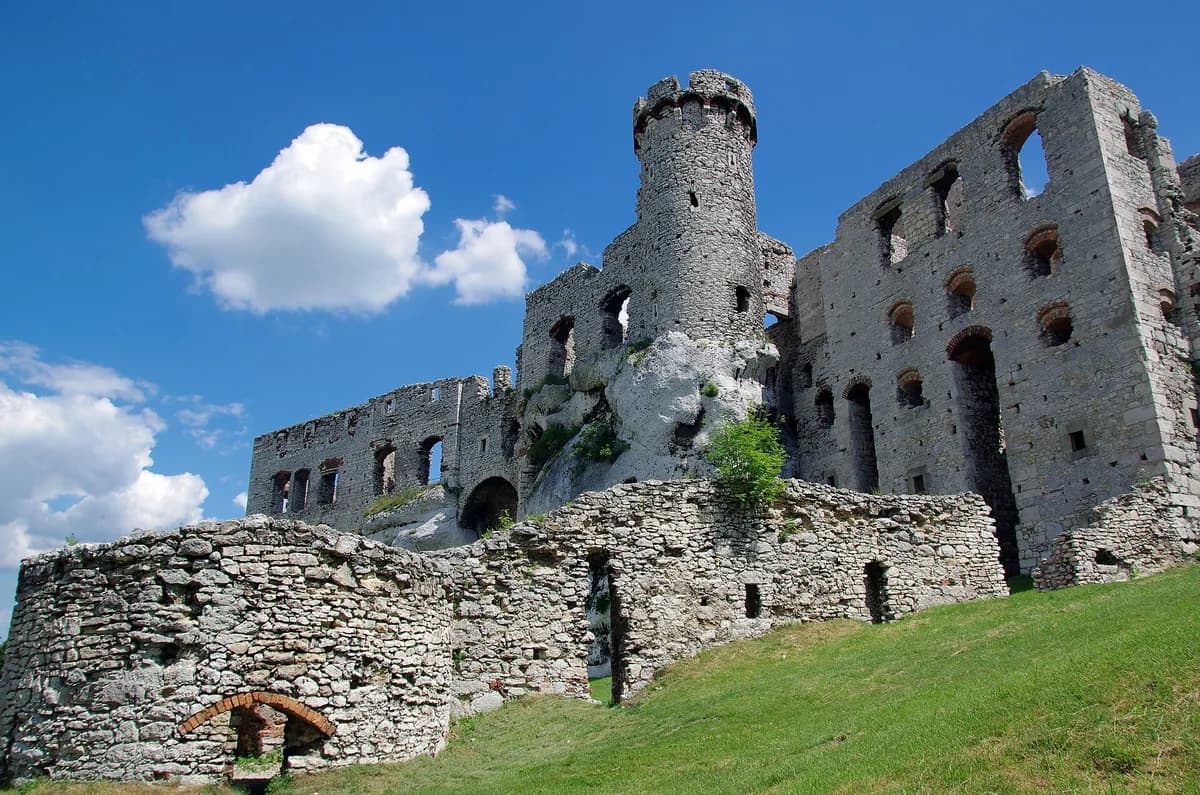
Photo: Jakub Hałun, CC BY-SA 3.0, via Wikimedia Commons.
The Netflix adaptation didn't need to invent a fantasy backdrop from scratch — Poland already had one waiting. The ruins of Ogrodzieniec Castle, a genuine 14th-to-16th-century fortress near Kraków in the Polish Jura region, served as a filming location for the show's Battle of Sodden Hill sequence in its first season.
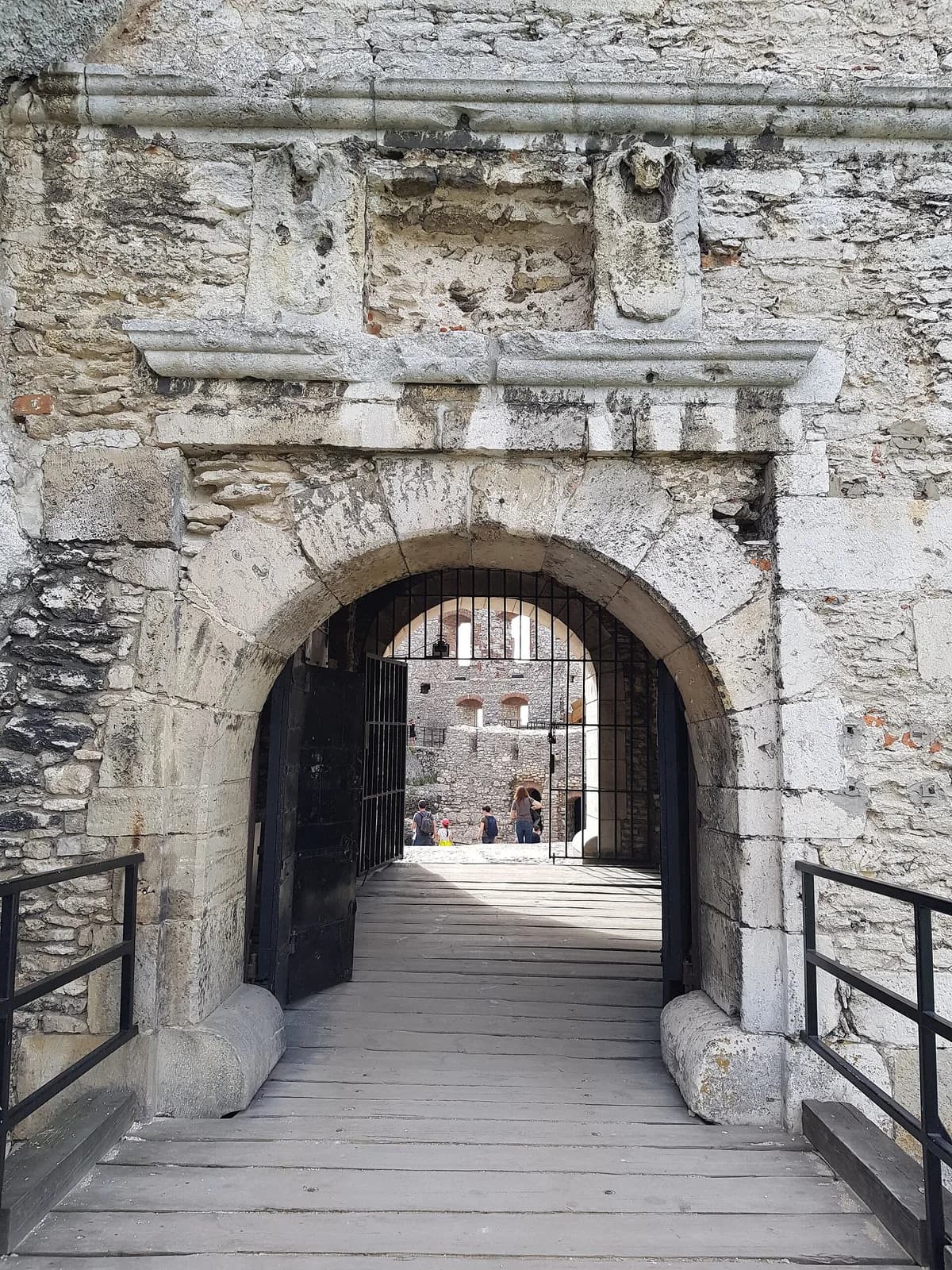
Photo: Konarski, public domain (CC0), via Wikimedia Commons.
The show's popularity turned the real castle into a genuine tourist draw, with international visitors making the trip specifically because of its Witcher connection — a rare case of a fantasy production boosting tourism to an actual, centuries-old Polish historical site rather than a purpose-built set.
How The Witcher Turned Poland Into a Gaming Superpower
CD Projekt Red, founded in 2002, was a modest, largely unknown studio when it secured Sapkowski's flat-fee deal in 1997. Five years and one licensing agreement later, the first Witcher game launched in 2007, built in part by reusing code from a cancelled Baldur's Gate project the studio had been developing. It took two more entries, but by the time The Witcher 3: Wild Hunt released in 2015, CD Projekt Red had become the most valuable video game company in Central and Eastern Europe and one of the largest in the world, with the Witcher franchise's total sales now sitting at roughly 85 million copies across all three main games.
That success reshaped the Polish economy's relationship with its own gaming industry, which now employs more than 10,000 people across Polish studios and functions as a genuine source of the country's cultural soft power abroad — an unlikely legacy for a franchise that started with one skeptical author taking a flat fee because he didn't think the games would amount to much.
It's a genuinely unusual pipeline when you lay it out end to end: a magazine short story in 1986, a skeptical author's flat-fee deal in 1997, a studio reusing cancelled code from an entirely different game to build its first release in 2007, and by 2015 a sequel so successful it turned that same studio into one of the most valuable game developers on the planet. Very few entertainment franchises can trace a line that direct from "regional literary hit" to "global industry powerhouse," and almost none of them do it from a starting point as unassuming as a Polish fantasy magazine most English-language fans have still never heard of.
Frequently Asked Questions
Is The Witcher actually Polish? Yes — it originated as a series of short stories and novels by Polish author Andrzej Sapkowski, starting in 1986, and the video games were developed by the Polish studio CD Projekt Red.
How much did Sapkowski originally sell the game rights for? 35,000 Polish złoty (about $9,500), paid in two installments, in a 1997 flat-fee deal that excluded royalties.
Did Sapkowski ever get more money after the games became huge hits? He demanded an additional 60 million złoty (about $16 million) in 2018, and the dispute was resolved through an undisclosed settlement in December 2019.
What is Geralt's name in the original Polish version? Geralt z Rivii, and the franchise's original Polish title is Wiedźmin, meaning "the witcher."
Are the Witcher's monsters based on real folklore? Many are — the striga comes from a specific 19th-century Polish folk tale, the południca inspired the Noonwraith, and Eredin draws on the Slavic legend of Koschei.
Where was the Netflix Witcher show filmed? Several scenes, including the Battle of Sodden Hill, were filmed at the real ruins of Ogrodzieniec Castle in Poland's Polish Jura region.
Why is "kurwa" associated with The Witcher? The original Polish voice actor's line "o kurwa, uważaj" became a standalone meme sound clip online, drawing attention to how central that word is in everyday Polish swearing.
How successful are the Witcher games? The three main games have sold a combined 85 million copies, with The Witcher 3: Wild Hunt alone accounting for roughly 60 million of them.
Few franchises have a founding story this strange: a skeptical author, a broke Polish studio, a flat fee that became a running joke in the games industry, and a body of folklore most players never realize is genuinely, specifically Polish. Once you know the real story, it's hard to watch Geralt swear his way across the Continent the same way again.