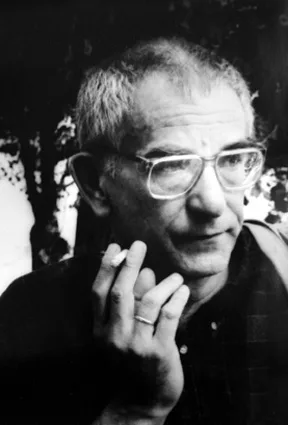
Adam Mickiewicz and Pan Tadeusz: Meet Poland's National Poet
Adam Mickiewicz is the name Poles reach for first when the question is "who's your greatest writer," and yet outside Poland almost nobody recognizes it. He never won a Nobel Prize — the prize didn't exist yet when he died in 1855 — but every Polish schoolchild can still recite the opening line of his epic poem Pan Tadeusz from memory, and his statue stands in the main square of nearly every major Polish city.
That gap between international obscurity and domestic reverence is exactly what makes Mickiewicz worth understanding. He wasn't just a poet; he was a symbol of Polish identity at a moment when Poland itself didn't officially exist on the map, wiped off it by three occupying empires. Understanding Mickiewicz means understanding how literature can hold a nation together when its government can't.
Who Was Adam Mickiewicz? Meet the Polish National Poet
Adam Bernard Mickiewicz was born on December 24, 1798, in a village near Navahrudak — then part of the Polish-Lithuanian Commonwealth, now in modern-day Belarus. That birthplace matters more than it might seem: Mickiewicz grew up in a region where Polish, Lithuanian, and Belarusian identities overlapped, and he spent his life describing himself as a Lithuanian who wrote in Polish, a distinction that still confuses readers unfamiliar with the region's tangled history.
He's remembered today as Poland's national poet, one of the "Three Bards" of Polish Romanticism, and the author of Pan Tadeusz, the closest thing Poland has to a national epic. But none of that fame came easily, and almost none of it happened while Poland was free.
Growing Up Between Empires: Mickiewicz's Early Life
By the time Mickiewicz was born, Poland had already been carved up by Russia, Prussia, and Austria in a series of partitions that erased it from the map entirely. He grew up as a subject of the Russian Empire, studying at the University of Vilnius, where Polish culture survived underground even as the state that once protected it did not.
At university, Mickiewicz co-founded the Philomaths, a secret student society devoted to Polish language, literature, and — quietly — resistance to Russian rule. It was exactly the kind of organization the Tsarist authorities were watching for, and in 1823, at twenty-five years old, Mickiewicz was arrested for his involvement.
Arrest, Exile, and the Making of a Romantic Poet
The Russian authorities didn't imprison Mickiewicz for long, but they did something arguably more effective at neutralizing him: they exiled him to central Russia, forbidding his return to his homeland. He spent years in Odessa, Moscow, and St. Petersburg, moving in literary circles, publishing poetry, and absorbing a political education that would sharpen into something much angrier once he finally reached Western Europe in 1829.
He never went home again. Mickiewicz settled first in Rome, then Paris, living the rest of his life as a political émigré — a status shared by tens of thousands of Poles after failed uprisings against Russian rule, and one that gave Polish Romanticism its defining, homesick intensity. Exile is the emotional engine behind nearly everything Mickiewicz wrote after 1829, including Pan Tadeusz itself.
The Three Bards of Polish Romanticism: Mickiewicz, Słowacki, and Krasiński
Mickiewicz is the most famous of what Polish literary history calls the "Three Bards" (Trzej Wieszcze) — the trio of 19th-century poets who defined Polish Romanticism: Mickiewicz, Juliusz Słowacki, and Zygmunt Krasiński. All three wrote from exile, all three grappled with a homeland under foreign occupation, and all three are still required reading in Polish schools today.
What sets Mickiewicz apart, even within that group, is reach. Słowacki and Krasiński are revered inside Poland but rarely read outside it. Mickiewicz, through Pan Tadeusz, produced something that occasionally breaks through internationally — a work UNESCO itself has recognized, which brings us to the poem that made his name.
Pan Tadeusz: Poland's National Epic, Explained
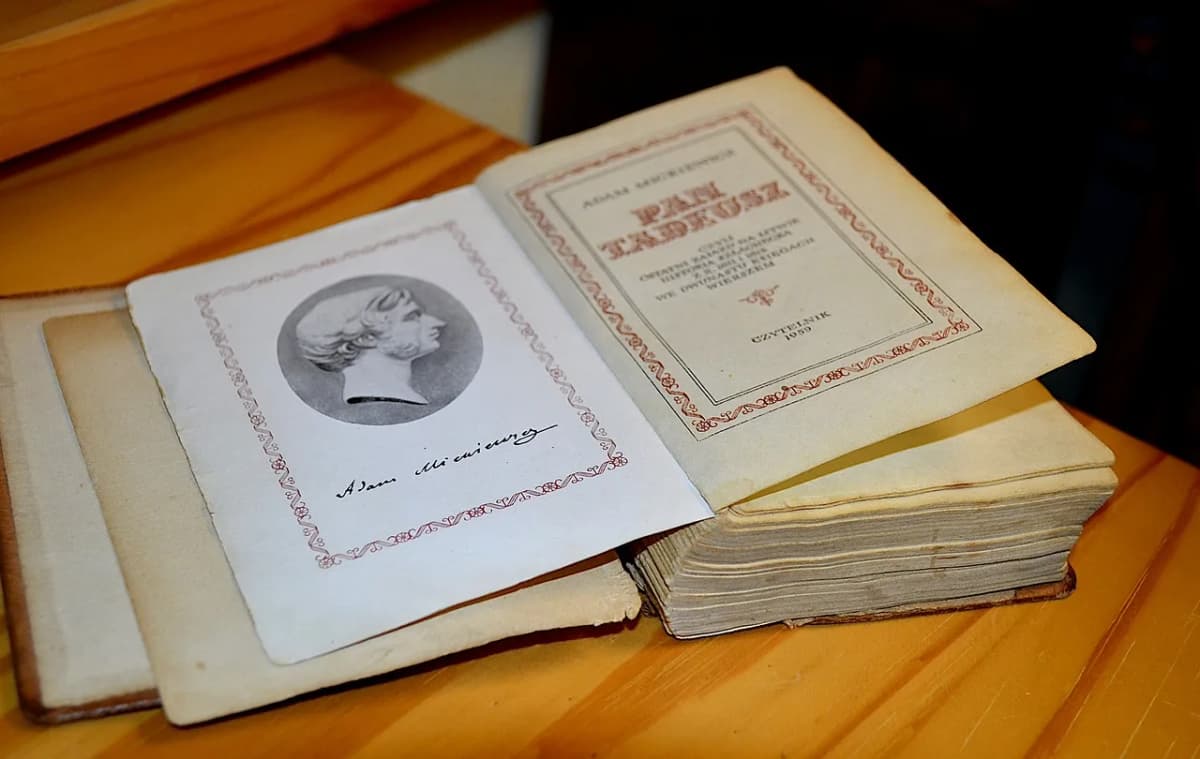
Pan Tadeusz — full title Pan Tadeusz, czyli ostatni zajazd na Litwie ("Sir Thaddeus, or the Last Foray in Lithuania") — was first published in Paris in 1834, written entirely in exile about a homeland Mickiewicz would never see again. It's a 10,000-line epic poem, composed in Polish alexandrine couplets, telling the story of a feud between two noble families set against the backdrop of Napoleon's brief 1812 campaign into Russian-occupied Lithuania.
On its surface, Pan Tadeusz is a comedy of manners: a property dispute, a romance between the young Tadeusz Soplica and Zosia, a cast of eccentric minor nobility, and a lavishly detailed portrait of Polish-Lithuanian gentry life just before it vanished for good. Underneath that surface, it's an act of mourning for a world Mickiewicz knew was already gone — and a coded argument that Polish national identity could survive occupation as long as its language, customs, and stories did.
That same attention to rural custom and folk detail shows up constantly in the folk motifs Polish painters later wove into their canvases — Mickiewicz was doing in verse what visual artists would spend the rest of the century doing in paint.
The poem earned UNESCO Memory of the World recognition in 2014, cementing its status as one of the last great epic poems in European literature. It has been translated into 33 languages, remains compulsory reading in Polish schools to this day, and was adapted into a 1999 film by director Andrzej Wajda that became one of the highest-grossing Polish films ever released.
Why "O Lithuania, My Country!" Is Poland's Most Famous Opening Line
Pan Tadeusz opens with an invocation that every Polish student can recite from memory: "Litwo! Ojczyzno moja!" — "O Lithuania, my country!" It's a strange line for a supposedly Polish national epic to open with, and that strangeness is the point.
Mickiewicz wasn't confused about geography. He was making a deliberate statement: that "Poland," as a cultural and emotional homeland, included the multiethnic borderlands where he grew up, not just the ethnically Polish heartland. Reading that opening line today, most Poles feel the ache of it immediately — a poet in a Paris apartment, addressing a homeland he'll never set foot in again, using the name of the region rather than the nation because the nation, at that moment, didn't legally exist.
Dziady: The Darker, Stranger Mickiewicz
Pan Tadeusz isn't Mickiewicz's only major work, and it's worth knowing that his most politically explosive piece is a different one entirely: Dziady ("Forefathers' Eve"), a sprawling dramatic poem built around an actual pagan Slavic ritual for communing with the dead. Where Pan Tadeusz is warm, nostalgic, and comic, Dziady is dark, fragmented, and furious — banned by Soviet authorities more than a century after it was written because audiences kept turning performances into anti-government protests. It deserves its own deep dive, since the ritual behind it and the play's afterlife as a political flashpoint are genuinely a different story from the one Pan Tadeusz tells.
Mickiewicz's Life in Paris — and Death Far From Home
Mickiewicz spent his final decades in Paris, where he held a professorship in Slavic literature at the Collège de France starting in 1840 — a rare position of institutional respect for a stateless exile, and one he used to lecture on Slavic culture to a French audience that knew little about it. He continued writing, editing émigré publications, and involving himself in the political causes of the Polish diaspora, never abandoning the belief that Poland would someday be free again.
He didn't live to see it. In 1855, Mickiewicz traveled to Istanbul (then Constantinople) to help organize Polish and Jewish legions to fight against Russia in the Crimean War — one final act of resistance from a man who'd spent his entire adult life exiled from the country he refused to stop fighting for. He died there of cholera at fifty-six. His remains were later moved to Paris, and then, in 1890, repatriated to Wawel Cathedral in Kraków, where he's buried among Poland's kings.
How Mickiewicz Shaped Modern Polish Identity
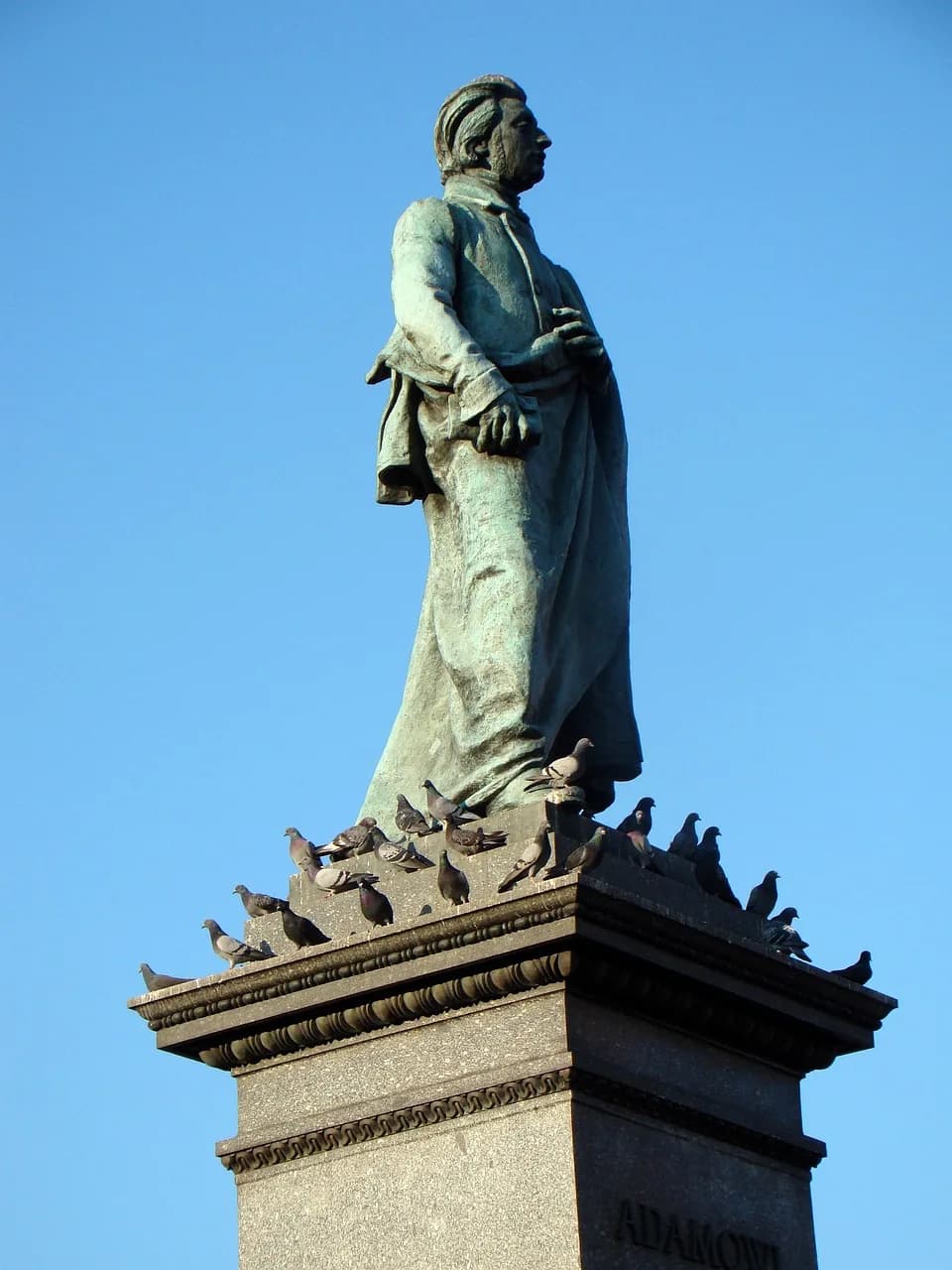
It's hard to overstate how deeply Mickiewicz is woven into Polish self-understanding. Streets named "Mickiewicza" exist in nearly every Polish city, and his name sits alongside the other names covered in our guide to famous Polish people as one every visitor eventually learns to pronounce correctly. His statue anchors Kraków's Main Market Square, one of the most photographed meeting points in the country — "spotkajmy się pod Adasiem" ("let's meet under Adaś," a diminutive nickname for Adam) is a genuinely common phrase Kraków locals use to arrange to meet there. Warsaw, Poznań, Wrocław, and Vilnius all have their own Mickiewicz monuments too.
This isn't just civic decoration. Mickiewicz became a template for what it means to be Polish under pressure: someone who kept the culture alive through language and story when no political structure could protect it. That template resurfaced explicitly during the 20th century, when Poland was occupied again — first by Nazi Germany, then absorbed into the Soviet sphere — and Mickiewicz's exile-era writing about a homeland under foreign control read as newly, uncomfortably current.
Where to Start Reading Mickiewicz in English
If you're curious enough to actually read him, start with Pan Tadeusz — it's the most accessible entry point, has the richest modern English translations (Bill Johnston's 2018 translation is widely considered the best available), and rewards readers even without deep knowledge of Polish history. Save Dziady for after you have some grounding in the historical and folkloric context; it's a much stranger, more demanding read.
Key Facts About Adam Mickiewicz
| Fact | Detail |
|---|---|
| Born | December 24, 1798, near Navahrudak (now Belarus) |
| Died | November 26, 1855, Istanbul, of cholera |
| Movement | Polish Romanticism — one of the "Three Bards" |
| Major work | Pan Tadeusz (1834), Poland's national epic |
| Other major work | Dziady ("Forefathers' Eve"), a politically explosive dramatic poem |
| Recognition | Pan Tadeusz named to UNESCO's Memory of the World register in 2014 |
| Burial site | Wawel Cathedral, Kraków, among Poland's kings |
| Nobel Prize | None — died 46 years before the prize was first awarded in 1901 |
Common Misconceptions About Mickiewicz
"He won the Nobel Prize." He didn't, and couldn't have — the Nobel Prize in Literature wasn't established until 1901, decades after his death. This confuses people because Poland does have five Nobel literature laureates, but Mickiewicz predates all of them.
"He was purely Polish." Mickiewicz consistently identified with Lithuania as his homeland, reflecting the multiethnic Polish-Lithuanian Commonwealth he grew up in rather than the more ethnically defined Poland that exists today. That opening line of Pan Tadeusz — "O Lithuania, my country!" — isn't a mistake; it's the whole point.
"Pan Tadeusz is a heavy, difficult classic." Large parts of it read closer to a warm comedy of manners than a somber national monument, full of feuding relatives, a bear hunt, and a slow-burn romance. Its reputation as "serious literature" sometimes obscures how genuinely enjoyable it is.
Frequently Asked Questions
Why is Adam Mickiewicz called Poland's national poet? He's credited with using poetry to preserve and define Polish cultural identity during a period when Poland had been erased from the map by Russia, Prussia, and Austria. Pan Tadeusz in particular became a touchstone text that generations of Poles turned to for a sense of shared history and language.
What is Pan Tadeusz actually about? On the surface, it's a story of a feud between two noble families in Russian-occupied Lithuania in 1811–1812, complicated by a romance and the arrival of Napoleon's army. Underneath, it's an elegy for a vanishing way of life and an argument that Polish identity could survive without a Polish state.
Did Adam Mickiewicz ever return to Poland? No. After his 1824 exile by Russian authorities, he never set foot in his homeland again, living the rest of his life in Rome, Paris, and briefly Istanbul, where he died in 1855.
Is Dziady related to Pan Tadeusz? They're both major Mickiewicz works but very different in tone and subject — Dziady is a dark, politically charged dramatic poem built around a pagan ritual for the dead, while Pan Tadeusz is a warmer, more narrative epic about gentry life. They're often studied together but tell entirely separate stories.
Why is there a Mickiewicz statue in almost every Polish city? His symbolic status as the voice of Polish identity during foreign occupation made him an obvious choice for civic monuments once Poland regained independence in 1918, and again after each subsequent period of occupation. The Kraków statue in the Main Market Square is the most famous and most frequently used as a meeting point by locals.
What translation of Pan Tadeusz should English readers start with? Bill Johnston's 2018 translation is widely regarded as the most accessible and lyrically faithful English version currently available, and is the one most commonly recommended to first-time readers.
Was Mickiewicz part of the Polish independence movement? Yes, throughout his life. He was arrested as a student for involvement in a secret pro-Polish student society, spent his adult life supporting Polish émigré political causes from exile, and died in Istanbul while organizing military legions to fight Russia during the Crimean War.
Reading Mickiewicz isn't really an academic exercise — it's a shortcut into understanding why Poles talk about their language and literature the way they do, with a seriousness that can seem surprising until you know the history behind it. A country that spent 123 years erased from the map had to keep its identity somewhere, and for a huge number of Poles, that somewhere was Mickiewicz's poetry.
That's still true today, whether it's a tourist getting directions to meet "pod Adasiem" or a student memorizing "Litwo! Ojczyzno moja!" for a class recitation — the poetry never really stopped doing its job.