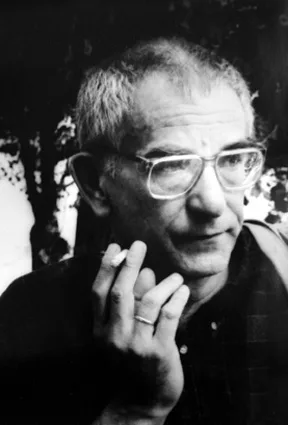
Zdzisław Beksiński art — or, more accessibly, zdzislaw beksinski art for those typing the name without Polish diacritics — is unlike anything else in Polish painting. Walk into a room of his work and you step into a world of skeletal figures, decaying cathedrals, and apocalyptic landscapes rendered in obsessive, photorealistic detail: images that feel like stills from a horror film nobody has had the courage to make yet. Despite working in near-total isolation in the small town of Sanok in southeastern Poland, Beksiński has become one of the most internationally recognised Polish artists of the twentieth century, with a cult following that spans art collectors, metal band album covers, and a generation of fans who discovered his work online.
If you already know the famous polish painters who defined Poland's national art identity — Matejko's epic battles, Malczewski's symbolist dreamscapes, or Wyspiański's intimate portraits — Beksiński will feel like a different country entirely. He belongs to no school, no movement, and no tradition. His dark, surreal paintings exist in a category of their own, and that otherness is precisely what makes him so compelling.
This guide explores seven reasons why Zdzisław Beksiński art — also commonly searched as zdzislaw beksinski art — has developed such a devoted international following, what makes his technique so distinctive, and — most importantly — exactly where you can stand in front of his real paintings on your next visit to Poland.
Who Was Zdzisław Beksiński? The Man Behind the Cult Following
Beksiński was born in 1929 in Sanok, a quiet town in the Bieszczady Mountains of southeastern Poland, near the border with Ukraine. He originally trained as an architect and worked in construction in the 1950s, but his artistic instincts led him elsewhere. He began taking photographs in the 1950s — stark, surreal black-and-white compositions that already contained the aesthetic seeds of his later paintings — and gradually transitioned to drawing and sculpture before finally finding his true medium in painting.
The most striking thing about Beksiński's biography is how deliberately isolated he was. He never studied under a master, never belonged to an artistic movement, and famously refused to title his paintings. When asked why, he said he wanted viewers to bring their own meaning to each work — no instructions, no context, just the image itself. This refusal to explain his own work became a signature trait that deepened the mystique around Zdzisław Beksiński art.
His life ended in tragedy. In 2005, Beksiński was murdered in his Warsaw apartment at the age of 75 — stabbed by a teenage acquaintance over a loan dispute. The violence of his death mirrored the darkness of his paintings in a way that felt almost fated, cementing his status as a tragic, almost mythological figure in Polish art history.
The Beksiński Style: What Makes His Paintings Unmistakable
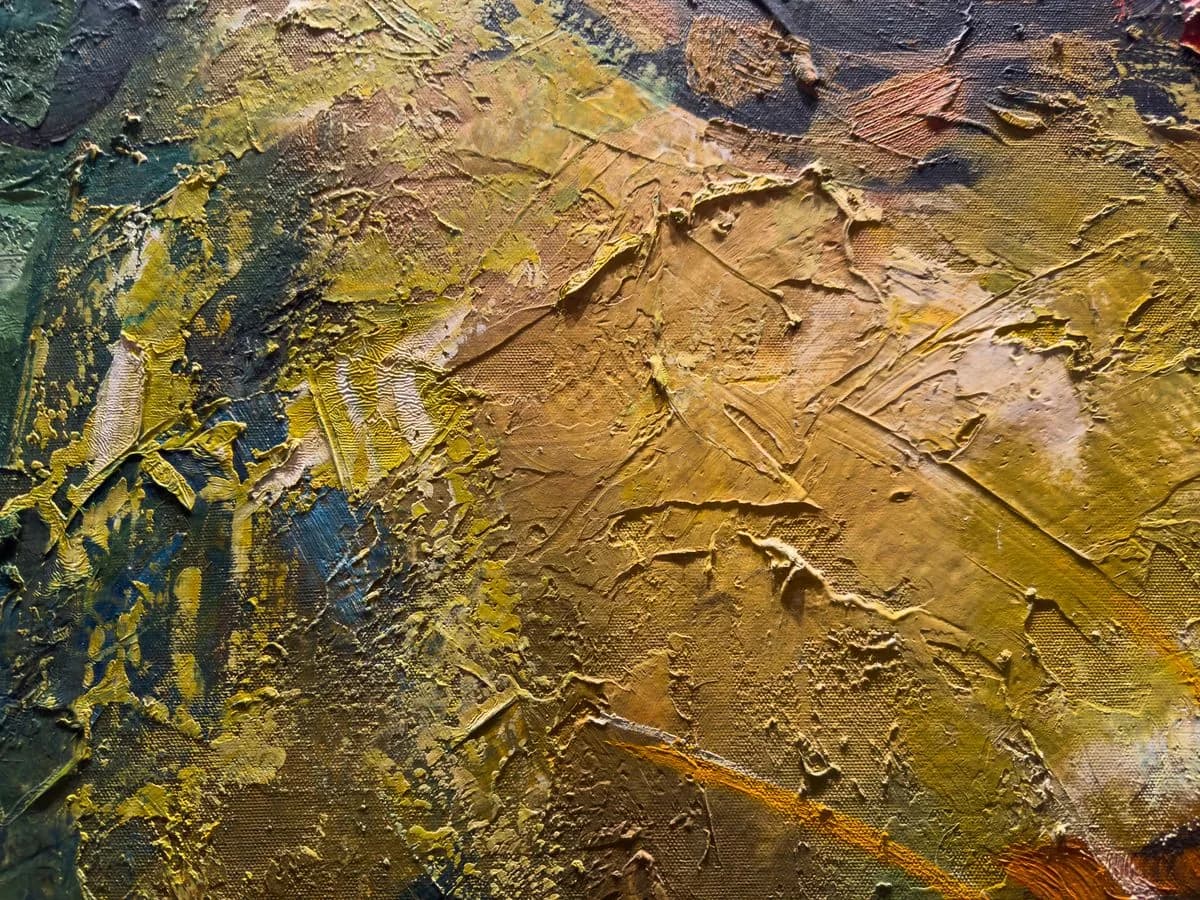
When people search for zdzislaw beksinski art, it is the technique that first draws them in. Beksiński's painting technique is as singular as his subject matter. He worked primarily in oil on hardboard panels, building up layer after layer of paint with obsessive attention to detail. The result is a surface that feels almost photographic — not because it looks like a photograph, but because every texture, every fold of fabric, every crack in a decaying wall has been rendered with the same painstaking care.
His colour palette is narrow but deliberate. Most of his best-known works use a muted range of earth tones — ochre, brown, rust, bone-white — punctuated by flashes of deep red or blue. The effect is claustrophobic and dreamlike at the same time. You feel the cold of the stone, the weight of the sky, the silence of the empty cathedral.
The subjects themselves are the reason Zdzisław Beksiński art — zdzislaw beksinski art to those searching online — has become iconic. Skeletal figures wrapped in burial shrouds, faceless mannequins in post-apocalyptic landscapes, crumbling Gothic cathedrals floating in a void — these images recur with the obsessive quality of recurring nightmares. Yet Beksiński insisted that his work was not macabre in intent. He claimed he painted optimistically, that the images came from his subconscious and he simply transferred them to the panel. Whether that is true or a carefully cultivated artistic persona is part of the mystery.
Why Zdzisław Beksiński Art Has Such a Powerful Cult Following
1. The Uncanny Photorealism
Beksiński's paintings look like photographs of places that cannot exist. The hyper-detailed rendering of textures — skin, fabric, bone, stone — creates a visceral sense of reality that makes the surreal subject matter hit harder. Your brain registers the image as real before your conscious mind catches up and realises that what you are seeing is impossible. This cognitive dissonance is addictive. It is the same principle that makes the best horror films work: the familiar made unrecognisable.
2. The Untitled Mystery
By refusing to name his paintings, Beksiński created a vacuum that viewers have been filling ever since. An untitled Beksiński painting can mean a dozen different things to a dozen different people. This openness has made his work remarkably adaptable — it has been used as album art for heavy metal bands, as inspiration for film directors, and as the visual anchor for online communities dedicated to dark art. The lack of a fixed meaning means every viewer can claim the work as their own.
3. The Online Discovery
Unlike most Polish artists of his generation, Beksiński's work found a massive second life on the internet. In the 2000s and 2010s, his images circulated widely on image-sharing platforms, often stripped of attribution but instantly recognisable. A generation of fans discovered Zdzisław Beksiński art — zdzislaw beksinski art in search queries — through a screensaver, a forum thread, or a music video before they ever learned his name. This online, word-of-mouth discovery created a genuine underground following — the kind of fame that feels personal and earned rather than institutional.
4. The Metal and Alternative Culture Connection
Beksiński's aesthetic has been embraced by the global metal and alternative music scene more than any other visual artist of his stature. His apocalyptic imagery is a natural fit for album covers, merchandise, and music videos. The band Riverside, one of Poland's most successful progressive rock acts, directly referenced Beksiński's visual language in their album art. This cross-pollination with music has introduced his work to audiences who might never visit a traditional art museum. The Culture.pl profile on Beksiński offers a comprehensive English-language overview of his life and career for those wanting to dig deeper.
5. The Sanok Pilgrimage Destination
For fans of zdzislaw beksinski paintings in particular, the beksinski museum sanok experience is the ultimate goal. The Historical Museum in Sanok holds the world's largest dedicated collection of Beksiński's work — over 1,000 paintings, drawings, and photographs. For fans of Zdzisław Beksiński art, a visit to Sanok is a genuine pilgrimage. The town is far from the standard Warsaw-Kraków tourist circuit, which means the people who make the journey are there for one reason: Beksiński. This shared purpose creates a community around the museum that feels more like a fan convention than a typical art gallery visit.
6. The Tragic Biography
Beksiński's murder in 2005 inevitably colours how his work is perceived. The violence of his death — stabbed in his own apartment by a young acquaintance — adds a layer of biographical weight to every painting. The darkness in his art suddenly has a real-world counterpart. This narrative is powerful, and it has been amplified by documentaries, articles, and the online community that grew around his work after his death.
7. The Complete Independence
Beksiński worked entirely outside the art establishment. He refused to promote himself, refused to explain his work, and refused to adapt to market trends. This uncompromising independence is rare in the art world, and it commands respect. In an era of curated personal brands and strategic career moves, Beksiński's total refusal to play the game feels almost radical. His cult following is, in part, a reaction to that integrity.
The Beksiński Museum in Sanok: A Pilgrimage Destination for Fans of His Paintings
If you want to experience Zdzisław Beksiński art in its full context, there is only one place to go: the Historical Museum in Sanok (Muzeum Historyczne w Sanoku). The museum's Beksiński collection is the largest in the world, occupying an entire wing of the building on the second floor.
The collection traces Beksiński's entire artistic evolution. You can see his early photographic work from the 1950s — stark, surreal black-and-white images that already show his eye for the uncanny — alongside his first drawings and sculptures. The main gallery, however, is devoted to the monumental oil paintings that made his reputation: enormous hardboard panels covered in the skeletal figures, decaying architecture, and post-apocalyptic landscapes that define his mature style.
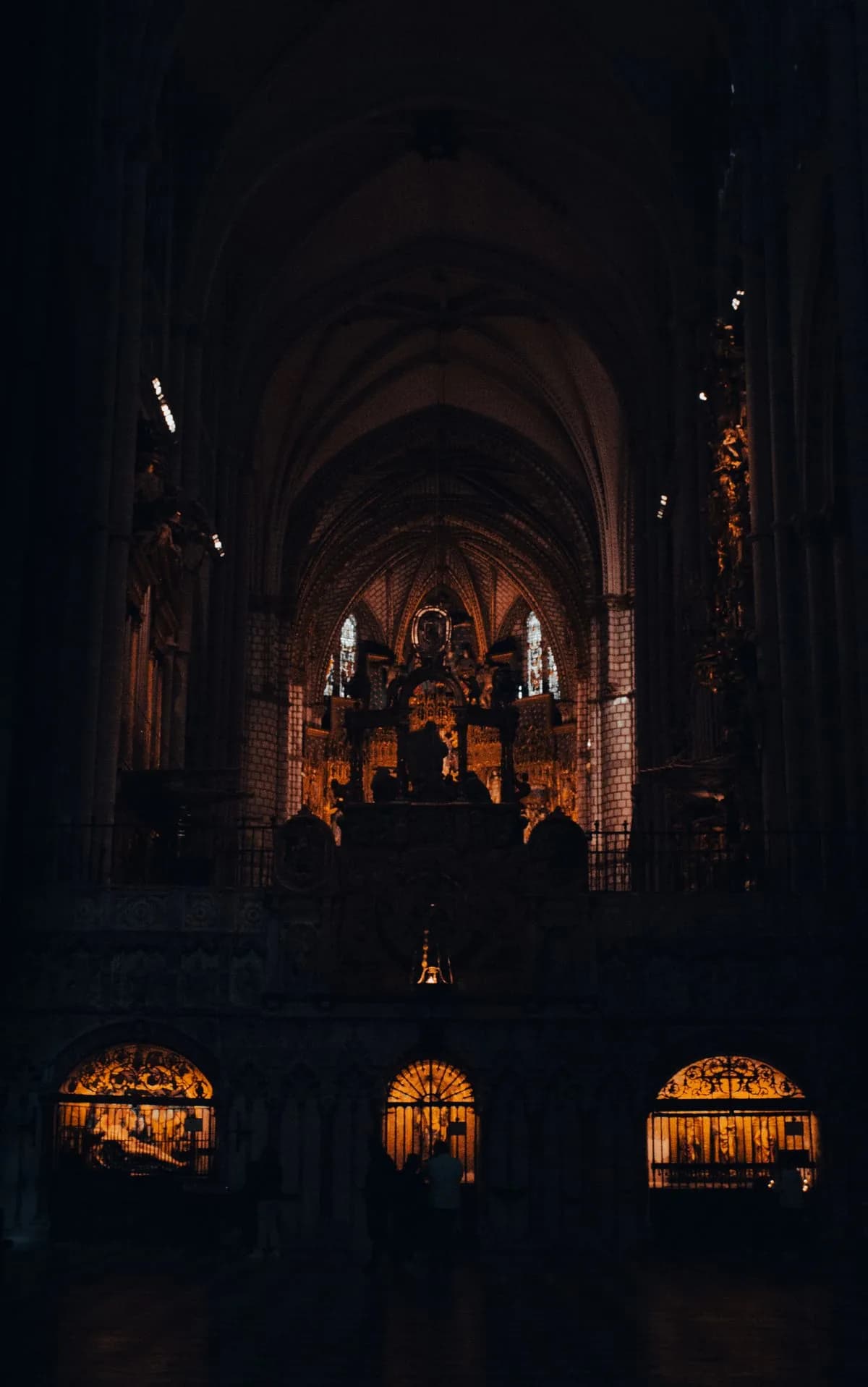
Standing in the Beksiński gallery in Sanok is a genuinely overwhelming experience. The paintings are large — many of them over a metre wide — and the gallery is deliberately dimly lit, with spotlights trained on each work. The effect is immersive and claustrophobic. You are surrounded by the images on all sides, and the silence of the museum amplifies the strangeness of what you are seeing.
Sanok itself is part of the experience. The town sits in the Bieszczady Mountains, one of the most remote and beautiful regions of Poland. The drive from Kraków takes about three hours through rolling hills and forested valleys. For fans of dark Polish art, the journey to Sanok is a way of following Beksiński's own path — from the city into the isolation that shaped his vision.
Where Else to Find Zdzisław Beksiński Paintings in Poland
While Sanok is the essential destination, Beksiński's work is also held in other Polish collections:
- National Museum in Warsaw — holds a smaller but significant selection of Beksiński's paintings, including some of his later works.
- Museum of Architecture in Wrocław — contains some of his early architectural drawings and plans, reflecting his training as an architect.
- Bunkier Sztuki Gallery in Kraków — has hosted temporary exhibitions of Beksiński's work, though it does not hold a permanent collection.
- Nowa Huta Cultural Centre in Kraków — another venue that has hosted notable Beksiński retrospectives.
For the most comprehensive experience, however, Sanok remains the only place where you can see the full arc of his career in a single dedicated space.
Beksiński's Place in Polish Art History
Where does Zdzisław Beksiński art fit in the broader story of Polish painting? The honest answer is that it does not fit neatly anywhere. He is not part of any Polish art movement — not the Young Poland symbolism of Jacek Malczewski, not the interwar avant-garde, not the post-war abstraction that dominated Polish art in the second half of the twentieth century.
Beksiński belongs to a tradition of outsider artists who work in complete isolation from the mainstream. His closest kinship is not with other Polish painters but with artists like H.R. Giger (the Swiss surrealist who designed the creatures in the Alien films) or the American painter Odd Nerdrum — artists who developed their own visual language entirely outside the art world's approval system.
Yet Beksiński remains deeply Polish in a way that is hard to define. The melancholy that runs through his work — the sense of loss, of ruins, of a civilisation that has passed — echoes something in the Polish cultural DNA. The partitions, the wars, the destruction of Warsaw, the experience of living in a country that has been erased and recreated multiple times — all of this finds a strange resonance in Beksiński's decaying cathedrals and empty landscapes. He may have been an outsider, but he was a Polish outsider, and his work speaks to something real in the Polish experience.
Frequently Asked Questions
What is Zdzisław Beksiński art known for? Beksiński's paintings are known for their dark, surreal, apocalyptic imagery — skeletal figures, decaying cathedrals, post-apocalyptic landscapes — rendered in obsessive, photorealistic detail. He worked in oil on hardboard panels, using a muted earth-tone palette punctuated by occasional flashes of red or blue.
Where can I see Beksiński's paintings in Poland? The largest collection is at the Historical Museum in Sanok (Muzeum Historyczne w Sanoku), which holds over 1,000 of his works. Smaller collections exist at the National Museum in Warsaw and, periodically, at temporary exhibitions in Kraków and Wrocław.
Why did Beksiński refuse to title his paintings? Beksiński believed that viewers should bring their own interpretation to each work. He said that titling a painting would impose a meaning on it, closing off other possibilities. This refusal to explain his own work became a defining characteristic of his artistic identity.
How did Beksiński die? Beksiński was murdered in 2005 at his apartment in Warsaw. He was stabbed by a teenage acquaintance over a dispute involving a small loan. The tragedy of his death has become inextricably linked with the darkness of his art in the public imagination.
Why is there a cult following around Beksiński? The cult following developed organically online, as his images circulated through image-sharing platforms, music album covers, and forum communities. The untitled nature of his work, combined with its striking visual power, made it highly shareable and adaptable across different contexts — from art criticism to heavy metal album art.
Is Beksiński considered a Polish artist? Yes. Despite working in isolation from the Polish art establishment, Beksiński was born in Sanok, Poland, lived in Warsaw for much of his later life, and his work is indelibly associated with Polish art history. The largest collections of his work are in Polish museums, and his legacy is actively maintained by Polish cultural institutions.
What makes Beksiński's technique different from other surrealists? Beksiński's technique is distinguished by its obsessive photorealism and his use of oil on hardboard rather than canvas. He built up paint in thin, meticulous layers to create textures that feel almost photographic. Unlike surrealists such as Dalí or Magritte, Beksiński worked in near-total isolation and did not participate in the surrealist movement or any other artistic school.
Zdzisław Beksiński Art and the Polish Language Connection
If this article has given you a reason to feel something about Poland — curiosity, fascination, a desire to stand in front of a Beksiński painting in Sanok — then it has done its job. That feeling is the first step toward learning the language. The research on language acquisition is clear: emotional attachment to a culture accelerates retention. You remember vocabulary faster when it is tied to something you already care about.
For a deeper dive into the famous polish painters who form the backbone of Polish art history — from Matejko's monumental battle scenes to Malczewski's symbolist dreamscapes — our pillar guide covers the full spectrum.
You can also read more about the Historical Museum in Sanok on Wikipedia to plan your visit in advance.
The Beksiński paintings in the dimly lit gallery of Sanok will not give you their secrets easily. But the vocabulary you need to ask about them in Polish is well within reach.