Gorale polish highlanders are one of Poland's most distinctive ethnographic groups — mountain people from the Tatra region who have their own dialect, their own folk costume, their own music, and honestly, their own sense of being a little bit different from the rest of Poland. Spend even a day in Zakopane and you'll notice it: a slightly different lilt in how shopkeepers talk, embroidered trousers on a wedding band poster, a violin sound that doesn't quite match anywhere else in the country.
If you've read about oscypek, Poland's famous smoked sheep cheese, you've already encountered Gorale culture without necessarily realizing it. Oscypek isn't just made in the Gorale's home region — it's made by them, using a method passed down through Gorale shepherding families for centuries. The cheese is arguably the single most recognizable physical export of an entire culture most outsiders never learn the name of.
This guide introduces who the Gorale actually are: their language, their dress, their music, a genuine 19th-century folk hero, an entire architectural style built around their villages, and why their traditions are still very much alive rather than preserved behind museum glass.
Who Are the Gorale? Poland's Tatra Mountain Highlanders
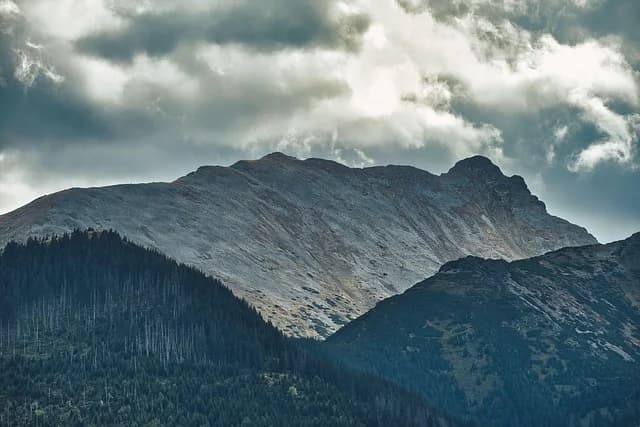
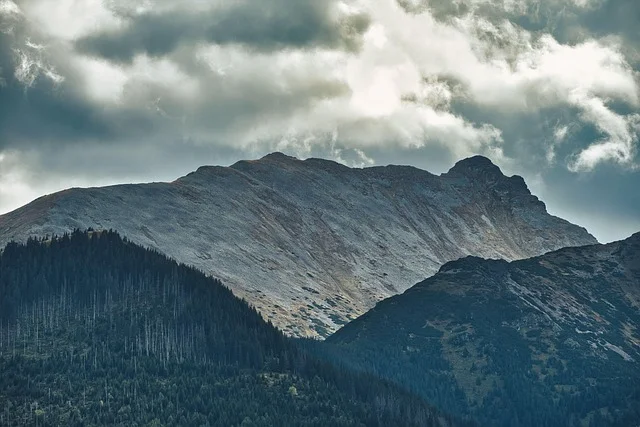
Gorale — spelled Górale in Polish, with the accent changing the pronunciation of the first syllable — means "highlanders" or "mountain people." The name refers to a distinct ethnographic group centered on the Podhale region around Zakopane and Nowy Targ, with related highlander communities extending into the Beskid mountains, northern Slovakia, and the Cieszyn Silesia area of the Czech Republic.
Historically, the Gorale trace much of their culture back to Vlach shepherds who moved through the Carpathian mountain range centuries ago, bringing pastoral traditions — transhumance sheep-herding, specific cheese-making methods, and distinctive mountain architecture — that still shape Gorale life today. Unlike lowland Polish farming communities, Gorale identity formed around mountain shepherding, a much harsher and more isolated way of life that produced a genuinely separate regional culture rather than just a local accent.
According to Wikipedia's overview of the Gorals, the group's language belongs to the West Slavic family but carries clear influence from neighboring Eastern Romance-speaking shepherd cultures, a linguistic fingerprint of exactly how far those Carpathian migration routes actually traveled. That single detail says a lot about why Gorale culture ended up so distinct from the rest of Poland: it was shaped as much by a mountain range shared with several countries as it was by Poland itself.
Podhale Mountain Culture: Dialect, Costume, and Identity
Podhale mountain culture is built on two things you can notice almost immediately: how the Gorale talk, and how they dress.
The Gorale dialect (gwara podhalańska) belongs to the broader Lesser Poland dialect family, but centuries of contact with Slovak-speaking communities across the border left a heavy mark on it, along with borrowed vocabulary from Hungarian and Balkan languages. It's full of archaic Polish words that disappeared from standard Polish generations ago. Crucially, it isn't a fading relic — locals speak it at home, in shops, and even with each other during school breaks, switching to standard Polish only for lessons.
The traditional costume is just as distinctive. Men traditionally wore a linen shirt fastened with metal studs and tight woolen trousers decorated with parzenica — a looping embroidered pattern originally sewn in simple red or navy thread that evolved into elaborate, colorful woolwork. Women's costumes featured embroidered corsets decorated with thistle and edelweiss motifs, later embellished further with sequins and glass beads, paired with floral headscarves. Men's felt hats, trimmed with small shells, complete a silhouette that's instantly recognizable across Poland.
Footwear mattered too. Traditional kierpce — simple moccasin-style leather shoes tied with leather thongs — were practical mountain wear long before they became a folk-costume detail, designed for grip on steep, uneven trails rather than for show. Even small accessories like carved wooden belt buckles and metal clasps carried regional meaning, often passed down within a family rather than bought new.
The Cheese That Carries Gorale Identity: Oscypek
Nowhere is Gorale identity more visible — or more edible — than in oscypek, Poland's spindle-shaped smoked sheep cheese. Oscypek isn't simply a regional specialty that happens to come from Podhale; it's a direct product of Gorale shepherding culture, made under traditional methods using milk from Polish Mountain Sheep the Gorale have herded in the Tatra highlands for generations.
The cheese's protected status — it became Poland's first EU-recognized PDO food in 2008 — effectively protects Gorale craftsmanship as much as it protects a recipe. Only producers working within the historic Gorale region, using the traditional hand-shaping and cold-smoking method, are legally allowed to call their cheese oscypek. In that sense, buying a genuine oscypek at a mountain market isn't just tasting Polish cheese — it's tasting one specific culture's signature craft.
The connection runs both directions, too. Just as oscypek can't legally exist outside Gorale territory, Gorale shepherding identity is hard to picture without the cheese — sheep-herding, wooden shepherd's huts called bacówki, and the smoking process itself are as central to how Gorale families describe their own heritage as the dialect or the costume are.
Gorale Music and the Zbójnicki Dance
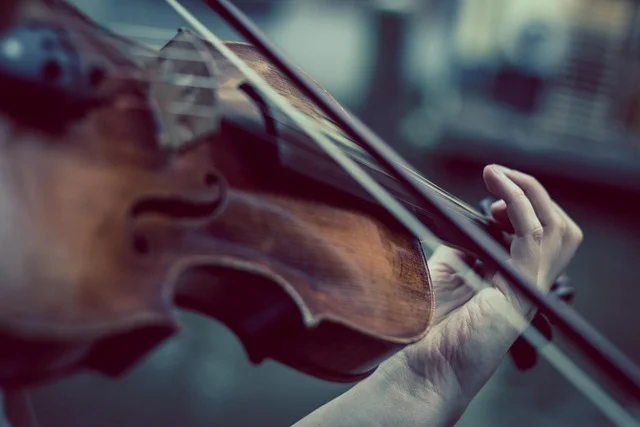
Gorale music sounds different from anything else in Poland, and that's by design as much as by geography. A typical highland ensemble centers on a lead violin playing ornamental, improvised-sounding melodies, backed by two accompanying violins and a basy — a small, cello-sized bass instrument unique to the region. The overall sound carries clear traces of Slovak, Hungarian, Romanian, and Moravian folk music, a direct result of the Carpathian range connecting all of those cultures across mountain passes rather than separating them.
Two dance traditions stand out. The general highlander dance is performed by couples, but the zbójnicki ("outlaw's dance") is different — a masculine, athletic dance built around displays of strength and agility, rooted in the folklore of Carpathian highway robbers and rebel shepherds. The legend looms largest just across the border in Slovakia, where the bandit Juraj Jánošík became a folk hero for defying Habsburg rule, but the shared Carpathian bandit-folklore behind the zbójnicki dance runs through Gorale communities on the Polish side just as strongly.
Live performances still draw real crowds rather than just tourists passing through. Zakopane hosts an annual folklore festival, Sabałowe Bajania, named directly after Sabała himself, where storytellers and musicians from across the highland region compete and perform in the same oral tradition he practiced in the 19th century. It's one of the clearest signs that Gorale polish highlanders treat their music and storytelling as an active competition and craft, not a fixed museum exhibit.
Sabała: The "Homer of the Tatras"
If any single person represents Gorale folk culture at its most vivid, it's Jan Krzeptowski, better known by his nickname Sabała (1809–1894). In his younger years he was, by his own reputation, a poacher and highland outlaw. He took part in the failed 1846 Chochołów Uprising against Austrian rule and served time in prison for it.
After his release, Sabała reinvented himself entirely — not as a farmer, but as a storyteller, fiddler, and guide. He accompanied physician Tytus Chałubiński and architect Stanisław Witkiewicz on their mountain expeditions, sharing folk tales and music along the way. Witkiewicz was so taken with him that he nicknamed Sabała "the Homer of the Tatras," and the name stuck. Today, Sabała isn't a minor local legend — he's recognized as a genuine figure in the broader canon of Polish folklore.
Zakopane Style: How Gorale Architecture Became a National Style
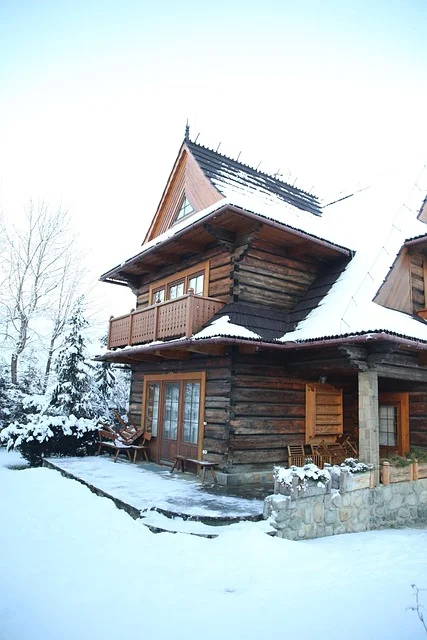
Gorale village architecture eventually grew into something much bigger than local building tradition. In the late 19th century, Stanisław Witkiewicz — the same architect who traveled with Sabała — studied the modest but richly decorated wooden houses of Gorale villages like Chochołów and used them as the foundation for an entirely new architectural movement.
Witkiewicz blended those Gorale building traditions with elements of Polish manor-house style and Art Nouveau, creating what's now known as Zakopane Style. It became one of the most recognizable homegrown architectural movements in Polish history, and its steep wooden gables and carved detailing are still visible throughout Zakopane today — a rare case of a highland folk tradition reshaping national design rather than the other way around.
The Ciupaga: A Walking Stick, an Axe, and a National Symbol
Few objects capture Gorale identity as neatly as the ciupaga (also called wałaska in some regions) — a small decorative hatchet mounted on a long wooden handle. Practically, it served several roles at once: a walking cane on steep mountain paths, an ice axe for winter travel, and a woodworking tool for the carpenters who built Gorale houses in the first place.
Over time, the ciupaga became something closer to a national symbol than a farm tool. It has been presented as a ceremonial gift to visiting dignitaries, most famously to Pope John Paul II, whose own family roots trace back near the Tatra foothills — a gesture that turned a shepherd's everyday implement into a recognized emblem of Polish highland identity on the world stage.
Skilled ciupaga-making is still its own craft in Podhale today, with carvers producing increasingly ornate handles decorated with metal inlay and carved motifs. A plain version still gets used exactly as it always has, on real mountain trails, while a finely decorated one is more likely to end up as a souvenir, a wedding gift, or a piece hung on a wall — two versions of the same object serving two very different purposes, depending on who's carrying it.
Gorale Polish Highlanders Today: Not a Museum Piece
It would be easy to assume Gorale traditions survive only in tourist performances and folk festivals, but that undersells how much of it is still genuinely lived. The dialect is still spoken daily, not just performed. Traditional costume still appears at real weddings, not only staged shows. And the music has kept evolving rather than freezing in place.
Modern groups prove the point directly. Zakopower, a folk-pop band from Zakopane, built a mainstream Polish audience by blending Gorale musical roots with contemporary pop production. Trebunie-Tutki went further still, fusing traditional highland violin music with reggae — an unlikely pairing that's become one of the more celebrated crossover acts to come out of Podhale. Neither act treats Gorale music as something to preserve carefully behind glass; both treat it as something still worth building on.
Generational transmission is still happening, too. Children in Podhale villages routinely grow up hearing gwara at home before standard Polish, and Gorale costume still gets made and worn for genuine family occasions, not manufactured purely for tourist photos. That's the real distinction between Gorale polish highlanders and many "heritage culture" groups elsewhere — the culture didn't stop evolving the moment it became photogenic to outsiders.
Gorale Vocabulary
| Polish Term | English Meaning |
|---|---|
| Góral / Górale | Highlander (singular/plural) |
| Gwara | Dialect |
| Parzenica | Traditional embroidered trouser pattern |
| Ciupaga | Decorative highlander hatchet/walking stick |
| Zbójnicki | The highlander "outlaw's dance" |
| Bacówka | Traditional shepherd's hut |
| Basy | Small highland bass instrument |
Knowing even a few of these terms will noticeably change how a trip to Zakopane feels — suddenly the embroidery on a market stall, the music drifting from a mountain inn, and the shepherd's hut on a hiking trail all connect to a specific, living culture instead of just "mountain scenery."
Frequently Asked Questions
Who exactly are the Gorale? The Gorale (Górale) are an ethnographic group of highlanders centered on Poland's Podhale region around Zakopane, with related communities in the Beskids, northern Slovakia, and Czech Cieszyn Silesia, historically shaped by Vlach shepherd traditions.
Is Gorale a language or a dialect? It's generally classified as a dialect of Polish (part of the Lesser Poland dialect group) rather than a separate language, though it contains heavy Slovak, Hungarian, and Balkan influence.
What does the word "Gorale" mean? It translates roughly to "highlanders" or "mountain people," from the Polish word góra, meaning mountain.
Do the Gorale still wear traditional costume? Yes, especially at weddings, festivals, and religious holidays, though everyday dress in Zakopane today is otherwise modern.
How is oscypek connected to Gorale culture? Oscypek is made specifically by Gorale producers within the historic Podhale region, using traditional shepherding and smoking methods — it's a direct product of Gorale culture, not just a regional food that happens to share a location with them.
What is the zbójnicki dance? A masculine highlander dance built around displays of strength and agility, rooted in Carpathian folklore about highland outlaws and rebel shepherds.
Who was Sabała? Jan Krzeptowski, nicknamed Sabała (1809–1894), was a former highland outlaw turned storyteller and fiddler, nicknamed "the Homer of the Tatras" for his folk storytelling.
Where is the best place to see Gorale culture in person? Zakopane is the practical center of it — Zakopane Style architecture is visible throughout the town, mountain markets sell genuine oscypek and traditional crafts, and festivals like Sabałowe Bajania showcase Gorale music and storytelling directly.
Key Facts About the Gorale
| Fact | Detail |
|---|---|
| Meaning | "Highlanders" / "mountain people" |
| Core region | Podhale, around Zakopane and Nowy Targ |
| Also found in | Beskids, northern Slovakia, Czech Cieszyn Silesia |
| Dialect | Gwara podhalańska (Lesser Poland dialect group, Slovak-influenced) |
| Signature food | Oscypek smoked sheep cheese |
| Folk hero | Sabała (Jan Krzeptowski), "the Homer of the Tatras" |
| Architectural legacy | Zakopane Style, founded by Stanisław Witkiewicz |
The Gorale are proof that a single mountain region can produce an entire self-contained culture — its own speech, its own dress, its own music, its own architecture, and its own folk heroes — all still functioning as a living identity rather than a historical footnote. Next time oscypek shows up on a market stall, it's worth remembering it comes from all of that, not just from a recipe. Understanding Gorale polish highlanders even a little deepens a trip to Zakopane considerably, turning a scenic mountain town into the visible edge of a culture with genuinely deep roots.