The Andrzejki Polish tradition lands every year on November 29th, the eve of St. Andrew's Day, and it's the one night Poland sets aside for fortune-telling. Melted wax gets poured through a keyhole, shoes race across the floor toward a doorway, and rooms full of twenty-somethings squeal over what a candlelit shadow supposedly means for their love life. It sounds like a party game. It's actually a five-hundred-year-old ritual that outlived the church that tried to ban it.
If you've spent any time around Polish friends in late November, you've probably heard the word tossed around the way English speakers mention Halloween — as shorthand for a specific, slightly chaotic night everyone already knows the shape of. Learning what the Andrzejki Polish tradition actually involves gives you a real piece of the cultural calendar, not just a vocabulary flashcard.
This guide walks through where the tradition came from, what actually happens at a modern Andrzejki party, the words you'll need to follow along, and how it fits alongside the other big dates on the Polish year — including two you may already know from PolishPal: Wigilia and imieniny.
What Is Andrzejki? Poland's Official Night of Fortune-Telling
Andrzejki (pronounced roughly "ahn-DJEY-kee") is the eve of Świętego Andrzeja — St. Andrew's Day — celebrated on the night of November 29th into the 30th. The name comes straight from Andrzej, the Polish form of Andrew, and the whole night exists because of an odd historical accident: St. Andrew's feast fell on a date that, centuries ago, absorbed a much older pre-Christian custom.
Andrzejki St Andrews Eve: Where the Date Actually Comes From
The pairing of andrzejki st andrews eve with fortune-telling isn't unique to Poland — a similar belief that this particular night was good for glimpsing the future shows up across Eastern Europe. What makes the Polish version distinct is how thoroughly it survived: while comparable eves faded into minor footnotes elsewhere, Poland kept building on it century after century, adding new games and rituals until it became the single best-known fortune-telling occasion on the entire calendar.
The first written mention of Andrzejki-style fortune-telling in Poland dates back to 1557, which makes it one of the oldest continuously referenced folk customs still practiced today, as documented on Wikipedia's Andrzejki entry. Most historians trace the fortune-telling impulse itself to older Slavic and Germanic harvest-season rituals tied to fertility and the coming winter — the kind of "what does the future hold" anxiety that shows up in agricultural societies right before the dark months set in. The Church layered a saint's feast day on top of it, the way it did with so many pre-Christian dates, but the fortune-telling core never went away.
For centuries, the Andrzejki Polish tradition belonged almost entirely to unmarried women. In villages, girls would gather specifically to ask one question: who will I marry, and when? A near-identical sister tradition called Katarzynki (St. Catherine's Eve, November 24th–25th) existed for young men to ask the same thing about their future wives — though Katarzynki never had the staying power Andrzejki did, and today it's largely forgotten outside academic folklore circles.
Lanie Wosku: Reading the Future Through a Melted Wax Shadow
The single most recognizable ritual in the Andrzejki Polish tradition is lanie wosku — wax pouring — and it's specific enough that most Poles can describe the exact steps without hesitation.
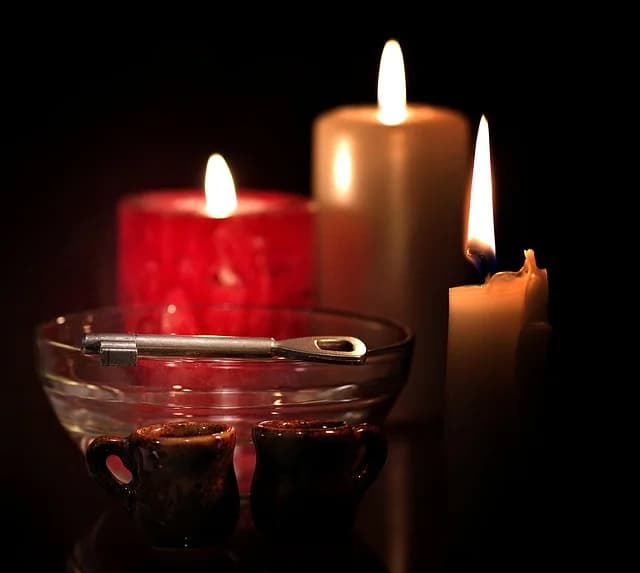
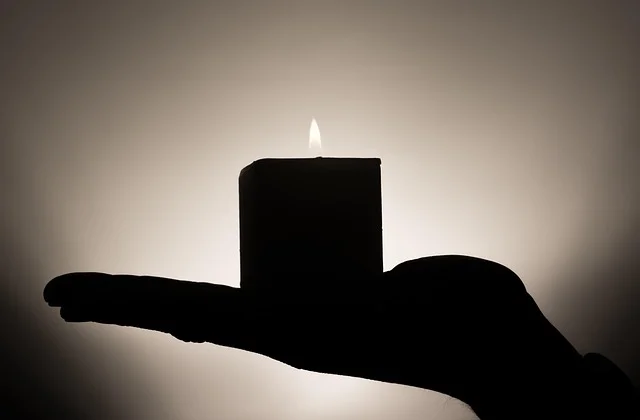
Someone melts a candle or a chunk of wax over a flame, then pours the molten wax through the narrow opening of an old-fashioned keyhole into a bowl of cold water sitting just below. The wax hits the water and hardens instantly into a random, jagged shape. Then comes the interpretation: the group holds the cooled wax shape up between a candle and a blank wall, and reads meaning into whatever silhouette its shadow throws — a crown might mean success, a ring might mean an engagement, a ship might mean travel or a fresh start abroad.
There's no rulebook for what shapes mean what. Interpretation is half the fun, and half the point — a room full of slightly tipsy friends squinting at a candle-shadow and arguing about whether it looks more like a heart or a frying pan is, itself, the tradition.
Lanie Wosku Wax Pouring: Step-by-Step
For anyone curious enough to try it, lanie wosku wax pouring breaks down into four simple steps. First, someone holds an old or spare key over a bowl of cold water — a real household key with a proper hole works best, though modern versions sometimes swap in a funnel if no one has an old-fashioned key lying around. Second, a candle is lit and tilted so the melting wax drips steadily.
Third, the melted wax is poured directly through the keyhole so it falls into the water below and hardens on contact, usually within a second or two. Fourth, the hardened piece is lifted out, dried briefly, and held between a candle flame and a bare wall so its shadow — not the object itself — gets read for meaning. Most groups go around the room letting each person take a turn, which is part of why the ritual anchors an entire evening rather than lasting five minutes.
Shoes, Names Under Pillows, and Other Ways Poles Predict Their Love Life
Wax pouring gets the most attention, but it's only one of several games that make up a typical Andrzejki night.
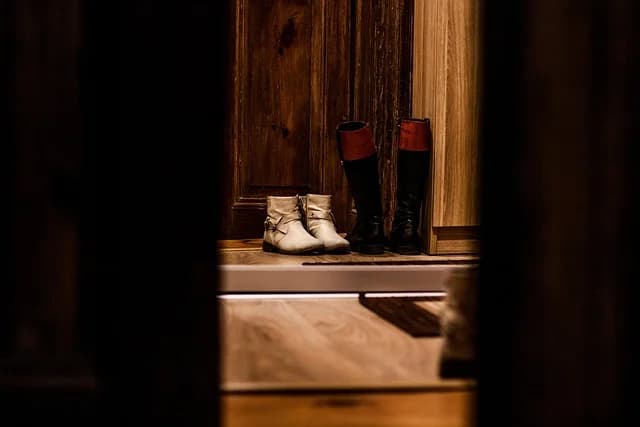
The shoe race. Every guest lines a shoe up single-file against the far wall, and each person, in turn, moves their own shoe one length forward toward the door. Whoever's shoe crosses the threshold first is declared next in line to marry. It's essentially a slow-motion race decided by whoever gets an early turn — which is exactly why it works as a party game rather than a serious prediction.
Names under the pillow. Small pieces of paper, each with a different name written on it, get slipped under a sleeping guest's pillow. Pull one out the next morning, half-asleep, and that's supposedly the name of your future spouse.
Peeled-apple divination. Peel an apple in one continuous, unbroken strip, then toss the peel over your shoulder. Whatever letter the fallen peel most resembles is meant to be the first initial of your future partner's name.
The bench-and-dog trick, documented specifically in the Mazovia region: girls would set small cakes out along a bench, then call a dog into the room. Whichever cake the dog reached first supposedly marked which girl would be first to marry — a custom that's mostly died out today but shows up reliably in Polish folklore collections.
None of these rituals are taken remotely seriously as actual prophecy in 2026. They survive because they're an excuse to gather, drink, and laugh at the results — not because anyone genuinely expects the wax shadow to nail their next five years.
Andrzejki Vocabulary: Words You'll Actually Hear at the Party
If you're joining an Andrzejki party as a learner, a handful of words will come up constantly. Knowing them ahead of time turns a confusing night into one you can actually follow.
| Polish | Literal meaning | What it refers to |
|---|---|---|
| andrzejki | "little Andrews" | The whole night/tradition itself |
| lanie wosku | "pouring of wax" | The wax-through-keyhole ritual |
| wróżby | "fortunes/omens" | Fortune-telling games in general |
| klucz | "key" | The key whose hole the wax is poured through |
| but | "shoe" | Used in the shoe-race game |
| przyszły mąż / przyszła żona | "future husband / future wife" | Who the games are supposedly predicting |
Even just recognizing "lanie wosku" or "wróżby" being shouted across a crowded kitchen tells you exactly what's about to happen — which is more than most learners get on their first Andrzejki night.
From Village Ritual to Student Party: How Andrzejki Changed
The Andrzejki Polish tradition started as a women-only, marriage-focused custom, and for a long time it stayed that way — Katarzynki was for men, Andrzejki was for women, and the two nights never mixed. That separation eroded over the 20th century, and by the time Andrzejki hit its modern form, gender had mostly dropped out of the equation entirely.
Today, Andrzejki is a mixed-gender, campus-and-nightlife event as much as a fortune-telling ritual. University clubs across Poland throw dedicated Andrzejki parties every late November, often the single biggest club night of the autumn semester outside New Year's Eve. The fortune-telling games still happen — usually early in the evening, often at a house party before everyone heads out — but the marriage-prediction stakes have faded into something closer to a running joke than a genuine question. It's less "who will I marry" and more "let's see what nonsense the wax makes tonight," followed by several hours of dancing.
This shift mirrors what happened to plenty of old European seasonal customs: the ritual scaffolding survives, but the meaning riding on top of it gets replaced by whatever a given generation actually wants from a night out.
Why Andrzejki Is Poland's Biggest Polish Fortune Telling Night
No other date on the Polish calendar combines divination, romance, and a full-blown party the way Andrzejki does, which is exactly why it holds onto the title of Poland's biggest polish fortune telling night decade after decade. Other folk customs either kept their solemnity (Wigilia), lost their audience (Katarzynki), or never had the built-in excuse to gather a crowd in the first place. Andrzejki had all three ingredients from the start — a specific date, a physical ritual anyone can perform with household objects, and a question (who will I marry?) universal enough to keep mattering even after most participants stopped believing the wax literally knows the answer.

Andrzejki, Wigilia, and Imieniny: Poland's Calendar of Named Nights
Poland's calendar is unusually dense with dates that have their own distinct rituals attached, and Andrzejki sits alongside two others you'll run into constantly if you're learning the language or spending time in Poland.
Wigilia, the elaborate twelve-dish Christmas Eve dinner, arrives just under a month after Andrzejki and could not feel more different in tone — Wigilia is solemn, family-centered, and built around waiting for the first star to appear before anyone eats. Andrzejki is loud, single-friendly, and built around getting the results of a wax-pouring game before midnight.
Imieniny — the Polish custom of celebrating your name day rather than your birthday — runs on a completely different logic, tied to the Catholic saints' calendar and repeating every year on a fixed date rather than a birthdate. Even St. Andrew's Day itself functions as an imieniny for every Andrzej in Poland, which is part of why the date carries so much cultural weight beyond the fortune-telling games layered on top of it.
Together, these three nights map out something useful for a learner: Poland's calendar isn't organized the way an American or British one is, around a handful of national holidays plus personal birthdays. It's threaded through with dozens of smaller, specific, ritual-heavy dates — and Andrzejki is one of the liveliest of them.
Common Questions About the Andrzejki Polish Tradition
When exactly is Andrzejki? The night of November 29th, the eve of St. Andrew's Day (Świętego Andrzeja) on November 30th. Some parties and events run slightly earlier in the week if the 29th falls on a weekday, since the tradition is really about the closest convenient weekend.
Is Andrzejki a public holiday in Poland? No. It's a folk and social tradition, not an official public holiday — workplaces, schools, and government offices operate normally. It's celebrated informally through parties, gatherings, and club nights rather than any nationwide day off.
Do Poles still take the fortune-telling seriously? Almost never as literal prophecy. The games are treated the way English speakers treat a fortune cookie or a Magic 8-Ball — a fun ritual with real historical roots, played for entertainment rather than belief.
What's the difference between Andrzejki and Katarzynki? Andrzejki (November 29th) was historically for unmarried women to predict their future husbands; Katarzynki (November 24th–25th, St. Catherine's Eve) was the parallel tradition for unmarried men to predict their future wives. Katarzynki has largely faded from modern practice, while Andrzejki thrived and became the dominant version of the custom.
Can foreigners or non-Poles join an Andrzejki party? Absolutely — it's one of the more welcoming Polish traditions for outsiders, since it's fundamentally a party rather than a family or religious occasion. If you're studying in Poland or have Polish friends, late November is a good time to ask if anyone's hosting one.
What do I actually need to bring to an Andrzejki party? Nothing formal — most house parties supply the candles, wax, and a bowl of water. It's worth bringing a spare pair of shoes if you want to join the shoe race without giving up the ones on your feet, and something to drink, since Andrzejki nights run long.
Where does the wax-pouring tradition come from? It's documented in Polish sources back to at least 1557, and most folklorists connect it to older pre-Christian Slavic and Germanic winter-divination customs that predate the Christian St. Andrew's feast entirely. The Church calendar and the folk ritual essentially merged over centuries rather than one replacing the other.
Key Facts: Andrzejki at a Glance
| Fact | Detail |
|---|---|
| Date | Night of November 29th (eve of St. Andrew's Day, November 30th) |
| First recorded mention | 1557 |
| Signature ritual | Lanie wosku — pouring melted wax through a keyhole into water |
| Other games | Shoe race to the door, names under the pillow, apple-peel divination |
| Historical audience | Originally unmarried women only; now mixed-gender and universal |
| Sister tradition | Katarzynki (St. Catherine's Eve, Nov 24–25) — largely faded today |
| Modern form | House parties plus major club/campus nightlife event |
| Public holiday status | No — a folk/social tradition, not an official day off |
The Andrzejki Polish tradition is the kind of custom that rewards actually knowing the backstory before you show up to one. Understanding why everyone's crowded around a candle staring at a lump of hardened wax — and why that ritual has survived nearly five centuries of history — turns a confusing party game into something you can actually participate in with context. It sits naturally alongside Wigilia and imieniny as one more piece of the calendar that makes Polish culture feel less like a list of facts and more like a rhythm you can follow.