
Getting a PESEL number in Poland is the first real bureaucratic hurdle almost every foreigner hits after landing — before you can open a bank account, sign a job contract, or register with the national health fund, you usually need this eleven-digit number. It looks like a small thing on paper, but if you've never dealt with a Polish urząd (office) before, the process can feel confusing fast: which office, which form, which documents, and what happens if the clerk behind the counter doesn't speak a word of English.
This guide walks through the process step by step, using the current rules published on the official gov.pl PESEL service page. It also does something most PESEL guides skip entirely: it gives you the actual Polish phrases to say out loud when you're standing at the window and the conversation stalls. You don't need to be fluent — you need about a dozen working sentences, and this article gives you all of them.
By the end, you'll know exactly what to bring, where to go, what the seven steps look like in order, and how to get through the appointment even if your Polish is close to zero.
What Is a PESEL Number and Why Do You Need One?
PESEL stands for Powszechny Elektroniczny System Ewidencji Ludności — the Universal Electronic System for Registration of the Population. Your PESEL number is an eleven-digit code assigned to you personally, and once it's issued, it never changes and is never reassigned to anyone else.
Poland uses your PESEL number as the master identifier behind almost every official interaction. You'll be asked for your PESEL number when you open a bank account, sign an employment contract, register with the NFZ (National Health Fund), enroll a child in school, get a phone contract in your own name, or set up the government's mObywatel digital ID app. Landlords and employers often ask for it before they'll even finish paperwork with you.
Without a PESEL number, you can still function short-term on a passport and visa, but almost everything that requires a long-term paper trail in Poland — taxes, healthcare, banking — eventually asks for it. Getting your PESEL number early saves you from being turned away later.

Who Needs a PESEL Number in Poland?
There are two separate paths to getting one, and which applies to you depends on how long you're staying and why.
Automatic Assignment via Address Registration
If you register your address in Poland (zameldowanie) for a stay longer than 30 days as a non-EU citizen, or longer than 3 months as an EU/EEA citizen, your PESEL number is assigned to you automatically as part of that registration. This is the simpler route if you already have a signed lease and a landlord willing to help with the registration form — no separate PESEL application is needed.
Direct Application Without Registration
If you can't register an address — maybe you're staying with friends informally, or your legal situation doesn't call for zameldowanie — but an office genuinely requires you to have a PESEL number (for a job, a bank, a school), you can apply for a PESEL number directly. In this case, the application must state the specific legal basis that requires you to have it, since a PESEL number isn't handed out just because someone would find it convenient.
Since January 2026, most foreign applicants going through the direct-application route are expected to appear in person so a clerk can verify their identity against an original travel document — there's no proxy submission for a first-time PESEL assignment for most non-EU citizens. If you can't communicate in Polish, be prepared for the clerk to require an interpreter or someone accompanying you who can translate, especially for anything beyond the most routine requests.
How to Get a PESEL Number in Poland: Step by Step
Step 1: Gather Your Documents
At minimum, bring your valid passport (or national ID card if you're an EU/EEA citizen) — these are the core documents behind any PESEL number application. If you're applying through address registration, you'll also need your signed rental contract and a completed zameldowanie form, ideally with your landlord's signature already on it. If you're applying directly without registration, bring whatever document proves the legal basis for needing the number — a job offer letter, a school enrollment confirmation, or similar.
Any foreign-language document that isn't your passport may need a certified Polish translation. It's worth asking the specific office in advance, since requirements vary slightly between cities and even between districts of the same city.
Step 2: Choose the Right Office
You apply at an urząd gminy (municipal office) or, in larger cities, an urząd dzielnicy (district office). If you're registering an address, you generally must go to the office covering the district where your apartment is located — showing up at the wrong district's office to register an address will get you turned away, even if the paperwork is otherwise perfect.
Not sure which one covers your address? The quickest way to find out is to search urząd gminy or urząd dzielnicy plus your city or district name on Google Maps — the correct office usually comes up right away, along with its address, opening hours, and how busy it tends to get. Larger cities often run their own locator tools too (Warsaw's is at warszawa19115.pl), and your landlord or property manager can usually tell you which office covers your specific address, since that's exactly what decides where you need to go.
If you're applying for a PESEL without an address registration, the rules are looser — in Warsaw, for instance, you can typically submit that kind of application at any of the city's 18 district offices, not just the one nearest your flat.
Step 3: Take a Queue Number
Most offices use a ticket machine near the entrance, sometimes with a touchscreen that sorts visitors into categories (for example, "registration," "PESEL," "other matters"). Picking the wrong category on the machine sends you to the wrong window and wastes your slot, so if the touchscreen isn't in English, this is one of the first places you'll want a short Polish phrase ready — more on that below.

Numbers & Counting
Step 4: Fill Out the Application
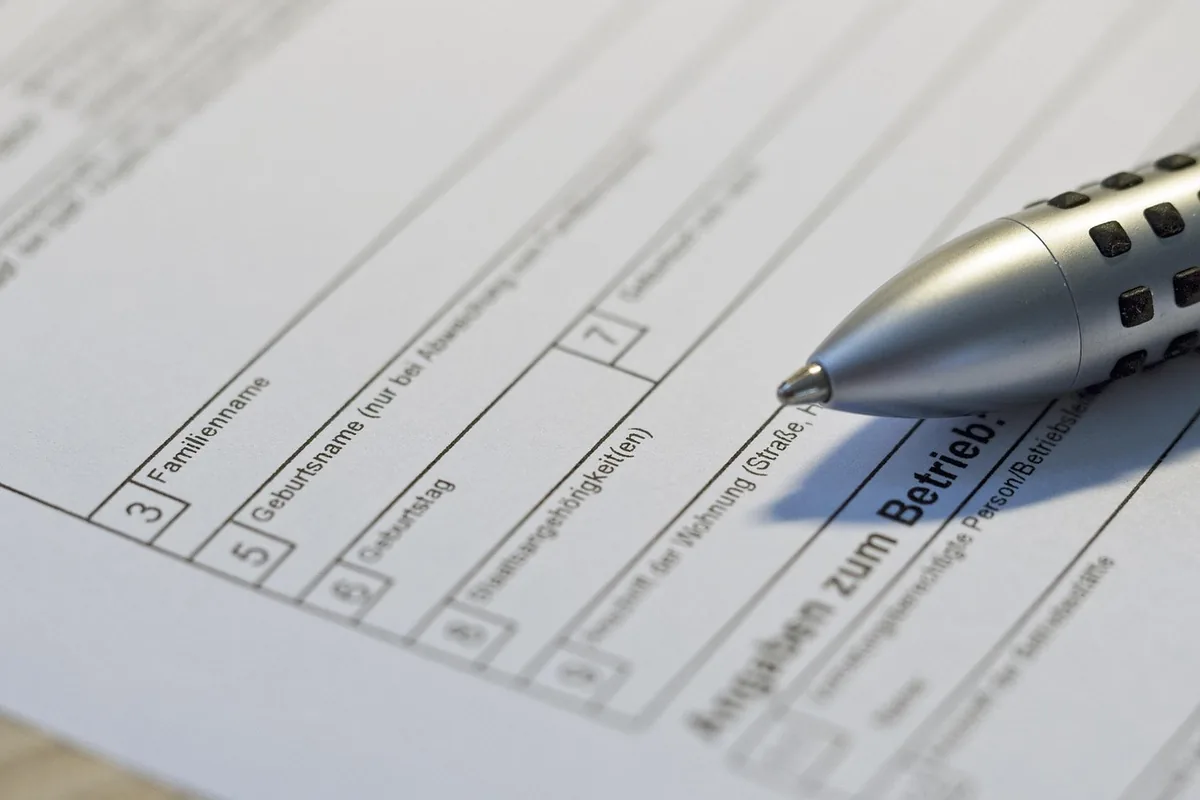
This is the official PESEL number application form, called wniosek o nadanie numeru PESEL, and it's in Polish only. It asks for your full name, date and place of birth, citizenship, current address, and — for the direct-application route — the legal basis for the request. Many offices have a sample filled-in copy pinned near the counter that you can copy from, but don't guess on fields you don't understand; ask.
Step 5: Submit In Person and Verify Your Identity
Hand over your form and documents at the window. The clerk checks your original passport against what you've written, confirms your details, and — for most non-EU applicants going through the direct route — this identity check now has to happen with you physically present, not through a representative. If anything on the form doesn't match your passport exactly (a middle name left off, a birthplace spelled differently), expect to be sent away to fix it and come back.
Step 6: Wait for Your Number
Assigning a PESEL number is free of charge. If your application is complete and there are no formal errors, many applicants receive their number the same visit, sometimes within minutes of submission; more complex cases can take a few additional days. Ask the clerk directly what to expect before you leave the window — timelines genuinely vary by office and by how busy that particular day is.
Step 7: Keep Your Confirmation Slip Safe
You'll be given a written confirmation (zaświadczenie) showing your new PESEL number. Photograph it immediately and store the original somewhere safe — you'll need to write this number out from memory more times than you'd expect over the following months, at the bank, at the clinic, on tax forms, and anywhere else that asks "PESEL?"
What to Say at the Office When the Clerk Doesn't Speak Polish
Urząd clerks are civil servants processing dozens of cases a day, and outside major international hubs, many of them work entirely in Polish. You don't need to be conversational — you need a small, reliable script. If you haven't picked up basic greetings yet, our guide on essential Polish phrases every traveler needs is worth a quick read before your appointment.
Arriving and Taking Your Turn
| Polish | Rough pronunciation | Meaning |
|---|---|---|
| Dzień dobry | jen DOH-brih | Good day (say this first, always) |
| Chciałbym / Chciałabym złożyć wniosek o PESEL | h-CHOW-bim / h-cha-WA-bim ZWO-zhich VNYO-sek oh PESEL | I would like to submit a PESEL application (bym for men, abym for women) |
| Który numerek? | KTOO-rih noo-MEH-rek | Which ticket number? |
Explaining Why You're There
| Polish | Rough pronunciation | Meaning |
|---|---|---|
| Nie mam jeszcze numeru PESEL | nyeh mahm YESH-cheh noo-MEH-roo PESEL | I don't have a PESEL number yet |
| Oto mój paszport i dokumenty | OH-toh mooy PASH-port ee doh-koo-MEN-tih | Here is my passport and documents |
| Mieszkam pod tym adresem | MYESH-kahm pod tim ah-DREH-sem | I live at this address |
When You Get Stuck
This is the part most guides skip, and it's the part you'll actually need. If the conversation moves faster than you can follow, these three phrases keep you in control of the exchange instead of just nodding along:
| Polish | Rough pronunciation | Meaning |
|---|---|---|
| Niestety, nie mówię dobrze po polsku | nyeh-STEH-tih, nyeh MOO-vyeh DOH-brzeh po POL-skoo | Unfortunately, I don't speak Polish well |
| Czy ktoś tutaj mówi po angielsku? | chih ktosh TOO-tie MOO-vee po an-GYEL-skoo | Does anyone here speak English? |
| Proszę mówić wolniej | PROH-sheh MOO-veech VOL-nyay | Please speak more slowly |
| Czy może Pan/Pani to zapisać? | chih MOH-zheh pan/PAH-nee toh za-PEE-sach | Could you write that down? (Pan to a man, Pani to a woman) |
Writing something down solves a surprising number of stuck conversations — a clerk pointing at a line on the form or jotting a date is often faster than either of you finding the right words.
Saying Thank You and Leaving
| Polish | Rough pronunciation | Meaning |
|---|---|---|
| Kiedy będzie gotowe? | KYEH-dih BEN-jeh go-TOH-veh | When will it be ready? |
| Dziękuję bardzo za pomoc | jen-KOO-yeh BAR-dzo za POH-mots | Thank you very much for the help |
| Do widzenia | doh vee-DZEH-nya | Goodbye |
Common Mistakes That Delay a PESEL Application
The most frequent hold-up in a PESEL number application is a mismatch between the name on the form and the name exactly as printed in the passport — including middle names, hyphens, and diacritics that get dropped by accident. Second most common: showing up at the wrong district office to register an address, which simply isn't accepted outside your registered district. Third: forgetting to state the specific legal basis for a direct PESEL application, which some clerks will reject outright rather than ask you to clarify on the spot.
A smaller but real issue is bringing photocopies instead of originals. Offices generally want to see the original passport, not a scan on your phone, even if you've already emailed a copy ahead of time.
PESEL vs. NIP vs. Karta Pobytu: Don't Mix Them Up
These three get confused constantly by newcomers, so it's worth separating them clearly. Your PESEL number identifies you as a person for population records, healthcare, and daily administration, and of the three, it's the one you'll be asked for most often. A NIP (Numer Identyfikacji Podatkowej) is a separate tax identification number used mainly for business and self-employment purposes — most employees never need one, since their PESEL covers their tax filings. A karta pobytu (residence card) is a physical ID card proving your legal right to stay in Poland; it's a completely different document from a PESEL, and having one doesn't automatically mean you have the other, though the two processes are often handled by the same office.
If you're navigating Poland's supermarket culture or setting up daily life more broadly once your paperwork is sorted, that's a good sign you're through the hardest part — the rest of settling in gets noticeably easier from here.
What to Do With Your PESEL Number Once You Have It
Once assigned, your PESEL unlocks a genuinely useful next step: registering for a Trusted Profile (Profil Zaufany) or the mObywatel app, Poland's official digital ID system. With either one set up, a lot of what used to require another office visit — checking tax records, requesting certain certificates, verifying your ID online — can be done from your phone instead of another queue.
It's also worth writing your PESEL number somewhere you can find quickly, since you'll be asked for it far more often than the confirmation slip alone might suggest: at the bank, at the pharmacy counter for certain prescriptions, when signing a phone contract, and on nearly every Polish tax and health form you'll ever fill out.
Frequently Asked Questions
Is getting a PESEL number free? Yes. Assigning the number itself carries no fee. Some related services, like registering by proxy through a formal power of attorney, involve a small stamp duty, but the PESEL assignment itself is free.
Can someone apply for my PESEL number on my behalf? For most non-EU citizens applying for the first time, no — in-person identity verification is now required. EU/EEA citizens and certain other categories have more flexibility to use a proxy in some circumstances.
How long does it take to get a PESEL number? Many straightforward applications are processed the same visit, sometimes within minutes. More complicated cases, or ones needing document verification, can take a few extra days.
Do I need a PESEL number to open a bank account in Poland? Most Polish banks will ask for one, though a handful of accounts aimed specifically at newcomers accept just a passport temporarily. Expect to be asked for a PESEL sooner or later regardless.
What if the office rejects my application? Usually it's a fixable clerical issue — a name mismatch, a missing translated document, or an unclear legal basis. Ask specifically what needs correcting before you leave, since a vague "come back later" wastes a second trip.
Does a PESEL number expire? No. Once assigned, it's permanently yours and is never reused for anyone else, even if you leave Poland and return years later.
Can children get a PESEL number? Yes — children born in Poland are typically assigned one automatically, and children registering an address with a parent generally follow the same process described above.
What's the difference between registering an address and applying for a PESEL directly? Registering an address (zameldowanie) automatically triggers a PESEL assignment as part of that process. Applying directly is for people who need the number without registering an address, and it requires stating why you need it.
If you're at the stage of collecting documents for your first PESEL appointment, it's also a good moment to build a small survival vocabulary beyond just this office visit — our guide on how to learn Polish as a complete beginner is a solid next stop once the paperwork is behind you.