
There's no single answer to which are the best cities in Poland for expats — there's only the best city for what you actually want out of the move. Someone chasing a corporate tech salary and someone chasing a slower, walkable, coffee-shop kind of life shouldn't end up in the same neighborhood, and Poland is large and varied enough that both exist within a two-hour train ride of each other.
This guide breaks down the six cities that come up again and again in expat relocation threads and corporate transfer packages — Warsaw, Kraków, Wrocław, Gdańsk, Poznań, and Łódź — with what each one is actually good at, what it costs, and who tends to regret choosing it. Of all the expat cities Poland offers, these six account for the overwhelming majority of foreign relocations, so it's rarely worth overthinking options beyond this list.
Best Cities in Poland for Expats: Quick Comparison
Before the city-by-city detail, here's the shape of the decision at a glance.
| City | Population | Best For | Single Person Budget | Vibe |
|---|---|---|---|---|
| Warsaw | 1.86 million | Career, salary, corporate jobs | 6,000–9,000 zł/month | Fast-paced, international, expensive |
| Kraków | 815,000 | Culture, tech, student energy | 5,000–7,500 zł/month | Historic, lively, tourist-heavy centre |
| Wrocław | 675,000 | Overall quality of life | 4,500–6,500 zł/month | Walkable, riverside, youthful |
| Gdańsk (Tricity) | 466,000 (city), ~1.5M metro | Coastal living, maritime and tech jobs | 4,500–6,500 zł/month | Relaxed, beach access, seasonal |
| Poznań | 526,000 | Value for money, strong local economy | 4,000–6,000 zł/month | Business-focused, underrated, fewer tourists |
| Łódź | 625,000 | Budget-conscious renters | 3,500–5,000 zł/month | Gritty-to-gentrifying, cheapest major city |
Warsaw: Best for Career and Salary
Warsaw is the obvious first stop for anyone relocating for corporate work. As Poland's capital and largest city, it hosts nearly every major multinational with a Polish presence — banking, consulting, tech, and shared-service centres cluster here more densely than anywhere else in the country. According to Emerging Europe's overview of Poland's IT sector, Poland's tech industry now makes up roughly 3% of the national workforce and 4.4% of GDP, and Warsaw absorbs a large share of that activity.
The tradeoff is cost. A single professional living comfortably in Warsaw typically spends 6,000–9,000 zł a month once rent is included, noticeably more than anywhere else on this list — though salaries here run higher to match, so the gap in disposable income is smaller than the raw rent numbers suggest.
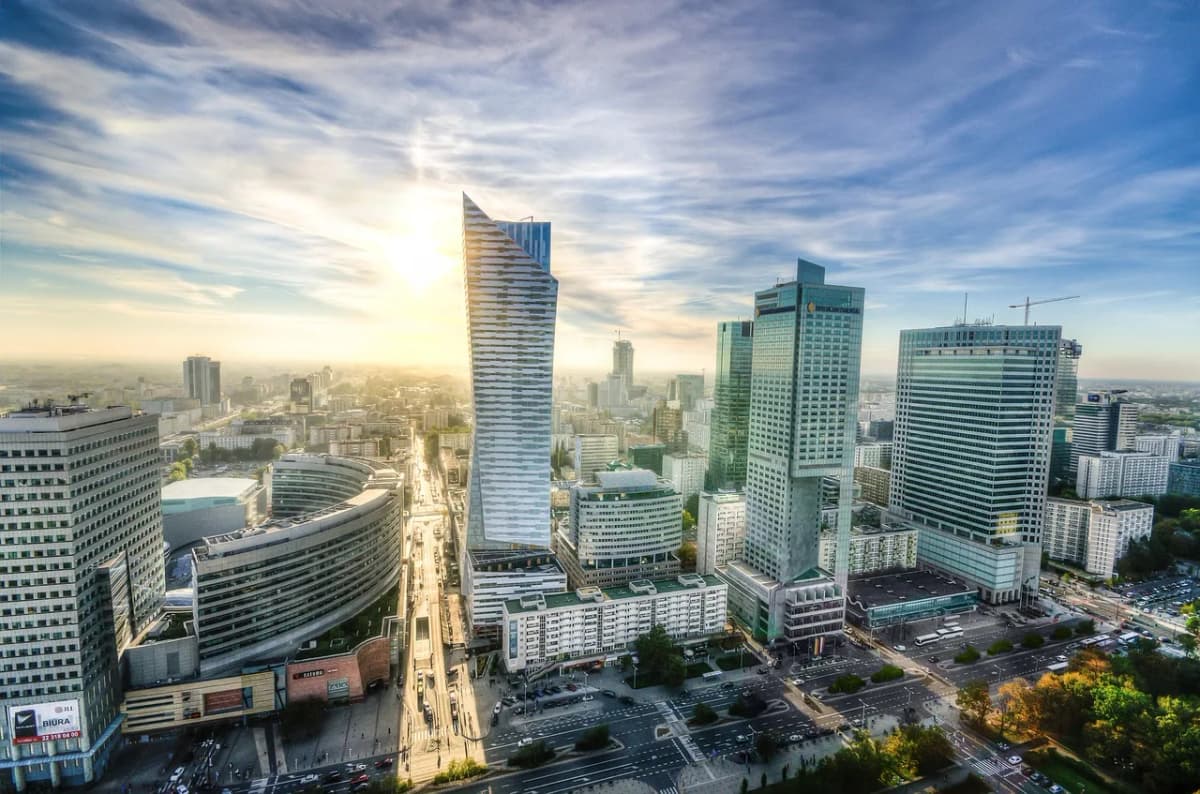
Warsaw makes the most sense if the job itself is the deciding factor — if you're negotiating a relocation package with a specific employer, there's a good chance the role only exists in Warsaw to begin with.
Kraków: Best for Culture and Student Life
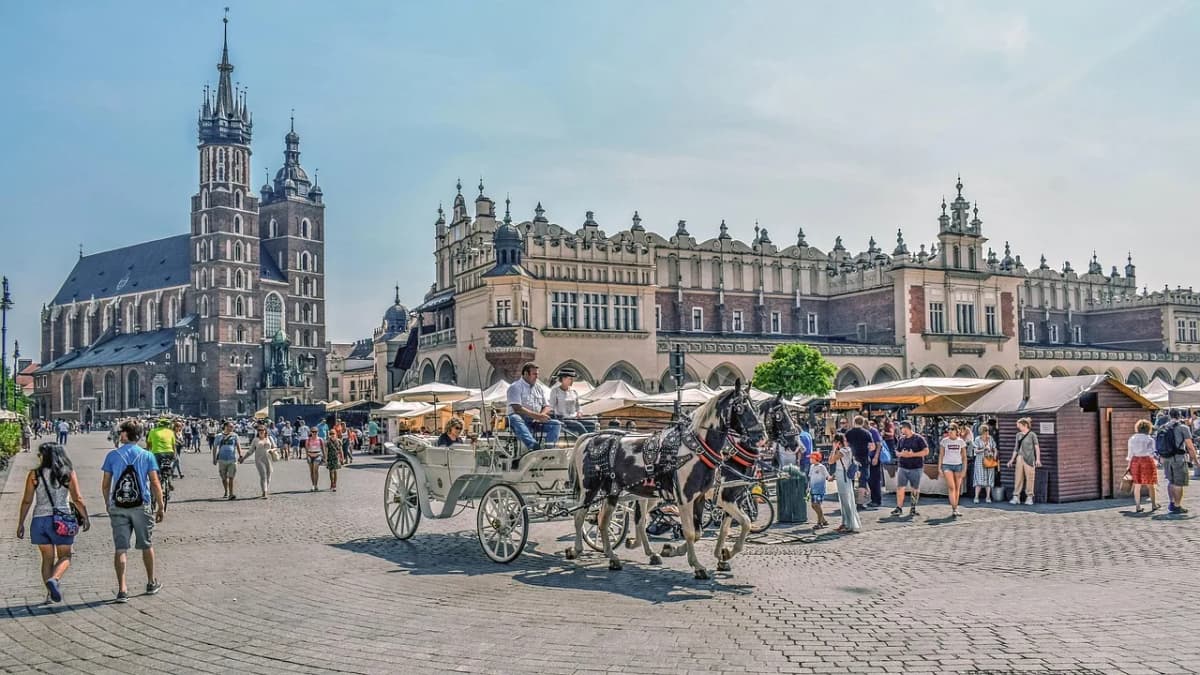
Kraków is Poland's second city and, for many expats, its most romantic one — a genuinely walkable historic centre, a UNESCO-listed old town, and a huge student population that keeps the city young and the nightlife active year-round. It's also become a serious tech hub in its own right, with a mix of startups and outsourced offices for larger international firms.
Costs drop meaningfully compared to Warsaw: a comfortable single-person budget runs 5,000–7,500 zł a month. The catch is that the historic centre is heavily touristed, which pushes up prices in exactly the neighborhoods most newcomers want to live in first — a lot of long-term expats end up a few tram stops out, in areas like Podgórze or Krowodrza, once the initial novelty of the Rynek wears off.
Wrocław: Best Overall Quality of Life
Wrocław consistently gets named the most livable Polish city by people who've actually lived in more than one of them. It's built across a dozen islands connected by well over a hundred bridges — the Polish Tourism Organisation describes it as "the Venice of the North" — and the riverside layout makes it one of the most walkable and bikeable mid-sized cities in the country.
It's also a genuine tech city in its own right, anchored by an Intel chip assembly facility currently under development and a long-standing presence of firms like Nokia and HP. With over 130,000 students across its universities, the city skews young, and typical single-person budgets land around 4,500–6,500 zł a month — noticeably gentler than Warsaw or Kraków without feeling like a compromise.
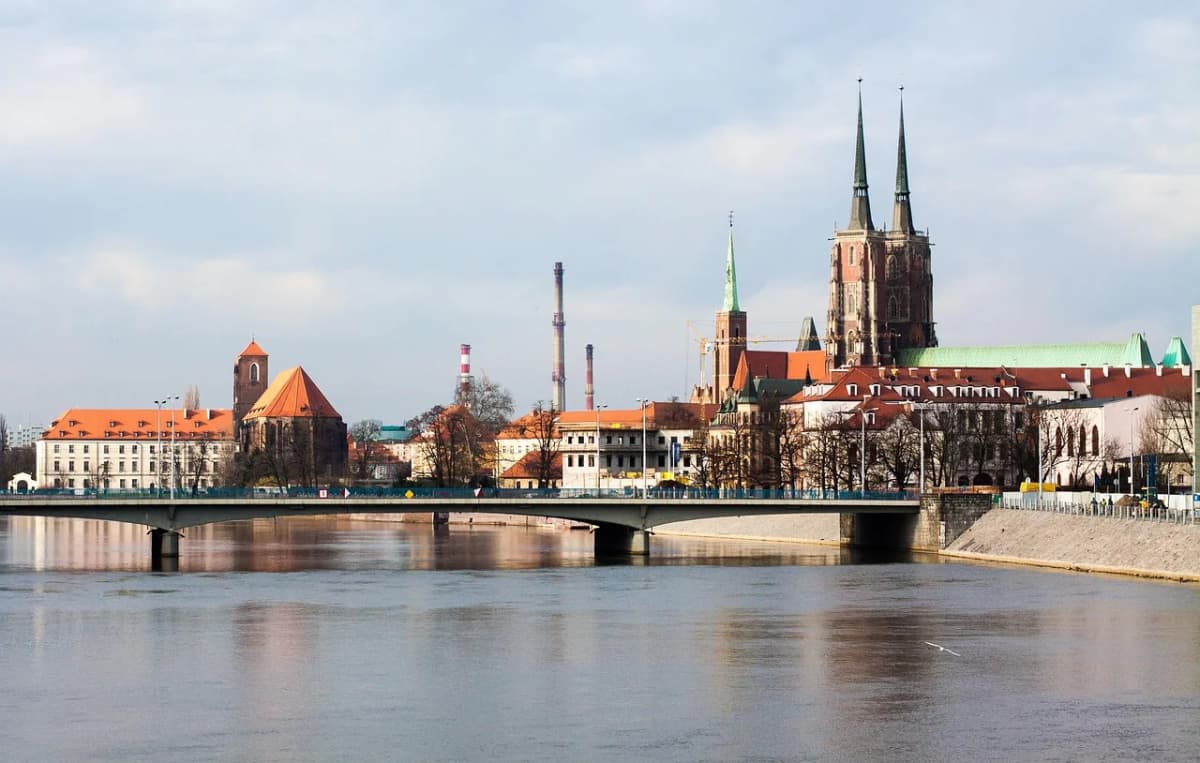
If quality of daily life matters more to you than being in the absolute centre of the job market, Wrocław is the city most expats point to first.
Gdańsk and the Tricity: Best for Coastal Living
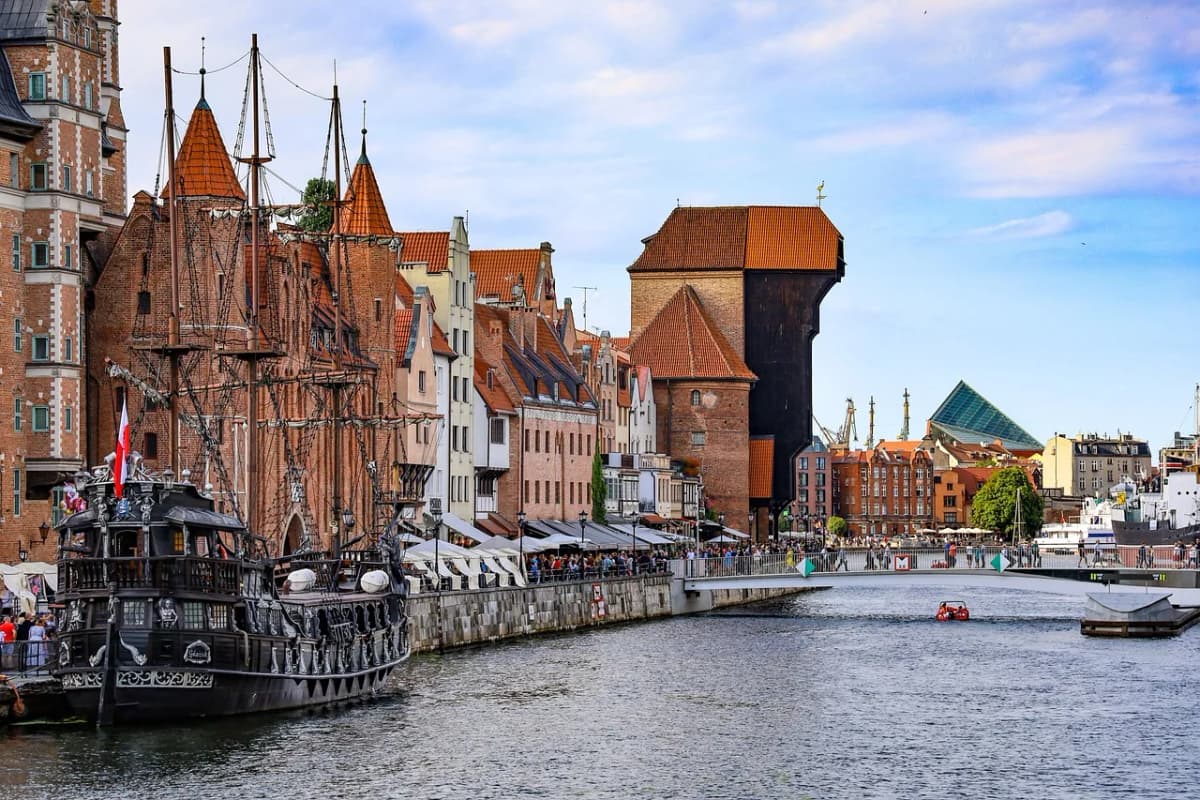
Gdańsk technically isn't one city for expat purposes — it's part of the Tricity (Trójmiasto), a connected metro area of Gdańsk, Gdynia, and Sopot linked by a fast commuter rail line, giving residents beach access, a historic Hanseatic old town, and a resort town all within a 30-minute ride of each other.
The Tricity has a strong maritime and logistics industry alongside a growing tech sector, and it's the clear choice for anyone who wants the Baltic Sea to be part of daily life rather than an occasional weekend trip. Costs sit close to Wrocław's, at 4,500–6,500 zł a month, though the city has a more seasonal rhythm — summers are lively and crowded with domestic tourists, while winters are quieter and considerably greyer.
Poznań: Best Value for Money
Poznań rarely tops "best city" lists written for tourists, and that's part of its appeal for expats specifically — it has a genuinely strong, diversified local economy (trade fairs, logistics, manufacturing, and a growing services sector) without the tourist-driven price inflation that hits Kraków's centre or Warsaw's rental market.
It also has an established international community relative to its size, largely built around long-running trade fair business and university partnerships, so newcomers aren't starting entirely from scratch socially. Budgets here run 4,000–6,000 zł a month for a comfortable single-person lifestyle — genuinely cheaper than the bigger three cities, without the more visible rough edges of Łódź.
The city's compact size is part of its appeal too — most of Poznań is reachable within a 20-30 minute tram ride, which keeps commute times low even for people living well outside the immediate centre. It's a city that rewards people who've already lived somewhere chaotic and are specifically looking for something calmer without giving up a real career.
Łódź: Best for Budget-Conscious Renters
Łódź is Poland's cheapest major city by a clear margin, and it's shedding its reputation as a purely post-industrial has-been faster than most rankings acknowledge — former textile factories have been converted into loft apartments, galleries, and coworking spaces, especially around the Manufaktura complex.
A single person can live comfortably here on 3,500–5,000 zł a month, rent in particular running well below Warsaw or Kraków. The job market is thinner than the other cities on this list, so Łódź tends to suit remote workers and freelancers earning outside Poland more than it suits someone job-hunting locally from scratch.
Moving to Poland: A Quick Decision Matrix
| If your priority is... | Choose... |
|---|---|
| Maximum salary and job options | Warsaw |
| Culture, history, and nightlife | Kraków |
| Walkability and daily quality of life | Wrocław |
| Beach access and a maritime industry | Gdańsk / Tricity |
| Strong economy without tourist pricing | Poznań |
| Lowest cost of living in a major city | Łódź |
Living in Poland as an Expat: English and Community
Poland ranks well for English proficiency by European standards, especially among people under 40 and in tech-adjacent industries, but this varies noticeably by city and by neighborhood. Warsaw, Kraków, and Wrocław have the largest, most established expat and international-student communities, which means more English-language services — from clinics to real estate agents — clustered in and around them.
Smaller cities and older generations lean much more heavily on Polish for daily interactions, particularly at government offices, with landlords, and in neighborhood shops. Learning even basic Polish meaningfully smooths daily life everywhere on this list, government offices especially — our guide to getting a PESEL number in Poland covers exactly the kind of office interaction where a few working phrases save real time and frustration.
Family Life and International Schools
For expats relocating with children, the calculation shifts slightly from what works best for a single professional. Warsaw has by far the widest choice of international schools, following British, American, French, and International Baccalaureate curricula, which matters most for families planning a short-to-medium posting and wanting a smooth return to their home education system.
Kraków and Wrocław both have smaller but established international school options, generally sufficient for a single family's needs even if the overall selection is narrower than the capital's. Poznań, Gdańsk, and Łódź have far fewer international options, which pushes many expat families in those cities toward either the local Polish public system — genuinely strong academically, though obviously conducted in Polish — or long commutes to whichever international school is nearest.
Childcare costs follow a similar pattern to rent: Warsaw runs highest, smaller cities noticeably less, and public nursery and preschool spots (though often oversubscribed) are heavily subsidized compared to private alternatives everywhere on this list.
Common Mistakes When Choosing a City
| Mistake | Why It's a Problem | Do This Instead |
|---|---|---|
| Picking based on a short tourist visit | Old Town charm doesn't reflect daily commute, rent, or grocery reality | Spend time in residential neighborhoods, not just the centre |
| Assuming Warsaw salaries apply everywhere | Pay drops significantly outside the capital, even at the same company | Check location-specific salary bands before committing |
| Ignoring winter length and darkness | Northern and inland cities have long, grey winters that hit newcomers hard | Talk to current residents about the November–February stretch specifically |
| Renting sight-unseen in the historic centre | Old Town apartments are often noisy, touristy, and overpriced for locals | Look one or two tram stops out for a better quality-to-price ratio |
| Underestimating the value of an existing expat network | Isolation is the most common reason people leave within the first year | Check for expat Facebook groups and meetups before, not after, moving |
Scenario: Asking About Neighborhoods in Polish
You: Które dzielnice są dobre dla obcokrajowców? (Which neighborhoods are good for foreigners?) Local: Zależy, czego szukasz — spokoju czy życia nocnego? (Depends what you're looking for — quiet or nightlife?) You: Raczej spokoju, ale blisko centrum. (More quiet, but close to the centre.) Local: W takim razie polecam Krowodrzę. (In that case, I'd recommend Krowodrza.) You: Dziękuję za pomoc! (Thanks for the help!)
That kind of casual, opinion-seeking exchange comes up constantly once you're actually apartment hunting rather than just reading about it online. If conversations like this still feel out of reach, our guide to essential Polish phrases for travel and everyday life is a solid place to build the basics.
Table of Useful City and Neighborhood Words
| Polish | English | Pronunciation Note |
|---|---|---|
| dzielnica | neighborhood / district | jel-NEE-tsah |
| centrum | city centre | TSEN-troom |
| stare miasto | old town | STAH-reh MYAS-toh |
| przedmieścia | suburbs | pshed-MYESH-chah |
| czynsz | building/admin fee | chinsh |
| komunikacja miejska | public transport | koh-moo-nee-KAHTS-yah MYEY-skah |
| spokojny | quiet (describing a place) | spoh-KOY-nih |
| zatłoczony | crowded | zaht-woh-CHOH-nih |
Frequently Asked Questions
What is the easiest city in Poland for an expat to settle in? Warsaw, Kraków, and Wrocław have the largest existing expat communities and the most English-language services, which generally makes the first few months noticeably easier than in smaller cities.
Which Polish city has the best job market for foreigners? Warsaw, by a clear margin — it hosts the deepest concentration of multinational employers, followed by Kraków and Wrocław for tech specifically.
Is Wrocław or Kraków better for expats? It depends on priorities: Kraków offers more history, tourism, and nightlife energy, while Wrocław generally scores higher on walkability, daily livability, and having a genuine tech job market without Kraków's centre-of-town tourist pricing.
Is Poznań worth considering over Warsaw or Kraków? Yes, if lower cost of living and a strong local economy matter more to you than being in the country's single biggest job market — Poznań is consistently underrated in expat discussions relative to what it actually offers.
Do I need to speak Polish to live comfortably in these cities? Not in the largest cities' central, international-facing areas, but basic Polish makes government offices, landlords, and everyday errands significantly smoother everywhere on this list.
Which city is best for expats with families? Warsaw offers by far the widest choice of international schools, making it the default pick for families on a fixed-term posting, though Kraków and Wrocław both have smaller but workable options for longer-term settlers.
Once you've picked a city, the two practical hurdles almost everyone hits next are budgeting accurately and getting through the paperwork — our guides to the real cost of living in Poland and getting a PESEL number cover both in detail. And if you're starting your Polish from zero before the move, our free guide to learning Polish online is a good place to begin, including PolishPal's own free A0 to A1 course.