Imieniny catches most foreigners off guard the first time a Polish coworker brings a whole cake to the office — not because it's their birthday, but because it's their name day. In Poland, the calendar assigns nearly every first name its own saint's feast day, and for generations, that day mattered more to most people than the one they were actually born on.
Understanding imieniny matters for anyone spending real time around Polish friends, coworkers, or family, because it flips a social script you probably grew up with. The person having their imieniny isn't the guest of honor waiting to be spoiled — they're often the one buying the flowers, baking the cake, and hosting everyone else.
This guide covers where the imieniny tradition comes from, how it differs from a birthday, how people actually find out the date, and the phrases and small customs — the flowers, the toast, the cake at the office — that make up a proper Polish name day.
Where Imieniny Comes From
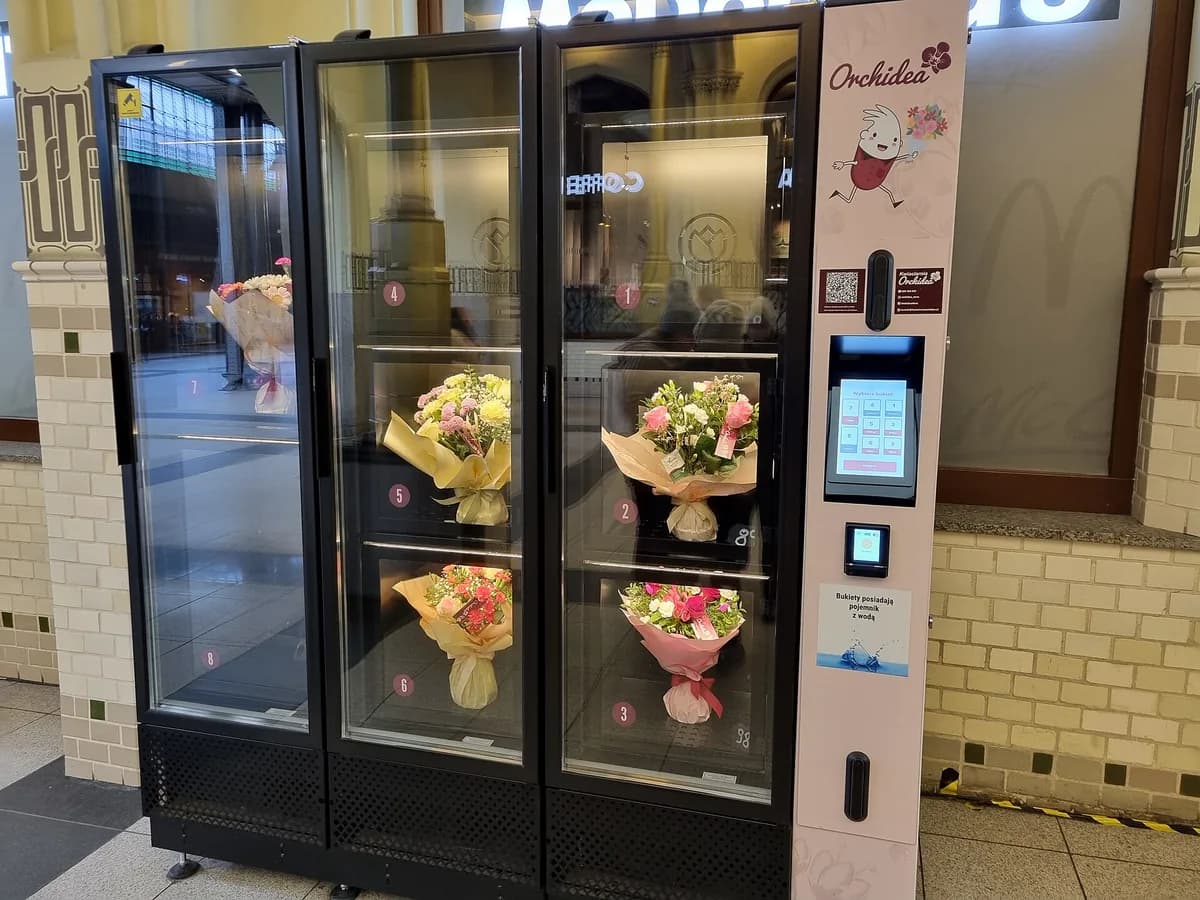
Photo: Maxim75, CC BY 4.0, via Wikimedia Commons.
The tradition traces back to the Catholic liturgical calendar, which assigns one or more saints to nearly every day of the year. Since most traditional Polish first names come from saints' names, almost everyone's name corresponds to a specific date — or occasionally several, in which case the custom is to celebrate on the first one that falls after your actual birthday.
For centuries, this made the name day the more socially significant date of the two. Birthdays were often a quiet, private affair, while a name day was the occasion for a proper gathering of friends and family — closer in spirit to how a lot of Western cultures treat birthdays today.
The underlying calendar itself is worth understanding, since it's the whole mechanism behind the custom. Traditional Polish calendars print two names under each date — one typically masculine, one feminine — cycling through the full list of common Polish given names across the year. A name with unusually high popularity, like Maria or Jan, might even get more than one assigned date, which is exactly why the "celebrate on the first occurrence after your birthday" rule exists: it resolves the ambiguity without anyone needing to guess.
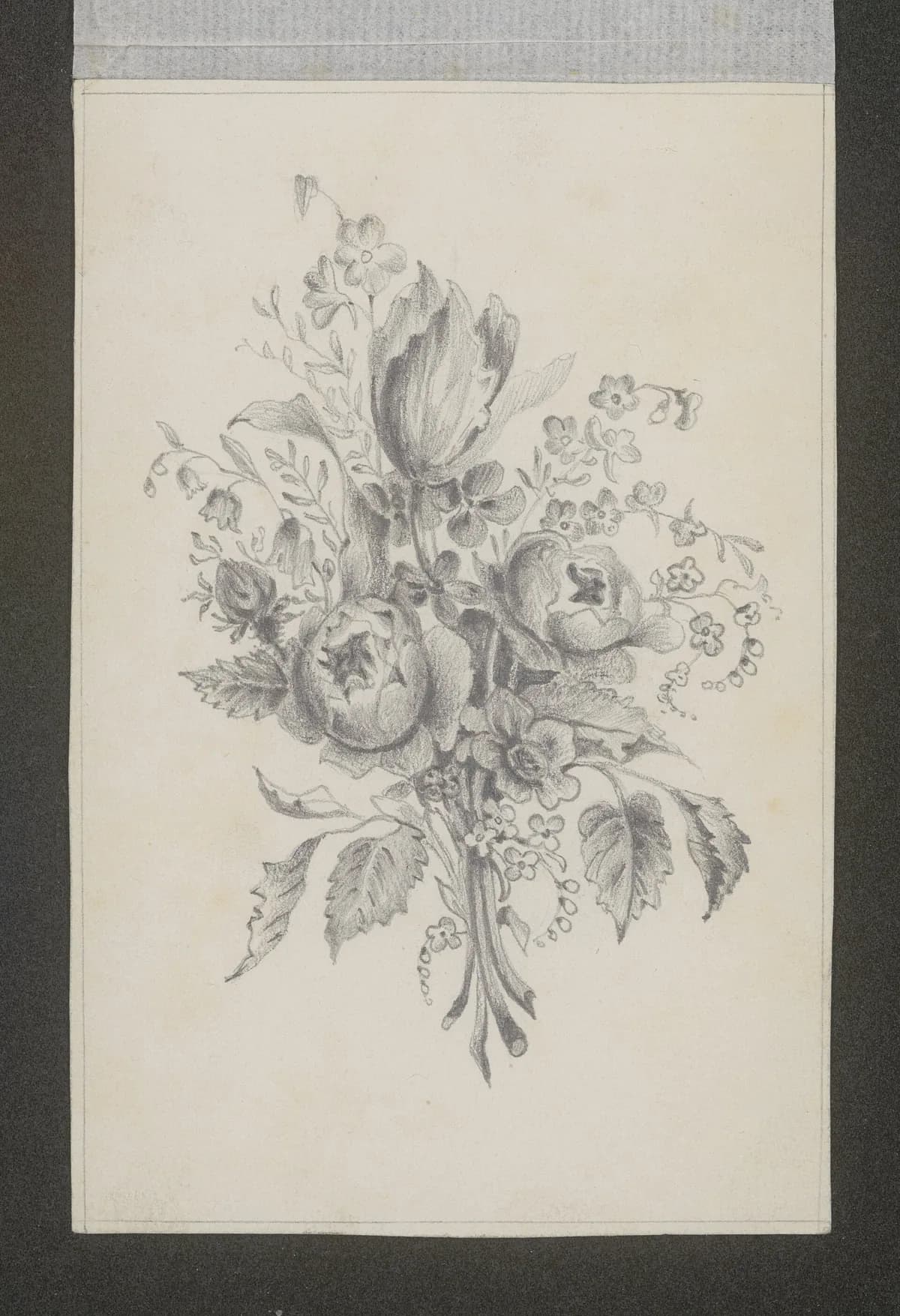
Illustration by Józef Ignacy Kraszewski (19th century), public domain, via Wikimedia Commons.
That's part of why the custom has such deep roots — it isn't a modern invention layered onto Polish culture, but a centuries-old habit tied to the same religious calendar that shaped so much of everyday life before the 20th century. Flowers, like the ones sketched here, have been part of the occasion for just as long.
Not every region kept the tradition equally. According to Wikipedia's overview of name days in Poland, Upper Silesia and Kashubia never fully adopted the custom the way the rest of the country did, and in the formerly German-administered western territories, Prussian Protestant influence left birthdays as the bigger occasion instead — a reminder that even a tradition this widespread isn't perfectly uniform across the country.
One name day has grown into something bigger than a personal celebration entirely: Andrzejki, the eve of St. Andrew's feast day on November 30th, has become a full-blown national tradition of its own, built around fortune-telling games rather than gift-giving — young people pour hot wax through a key into cold water and read the shapes it makes, among other games, to predict the coming year's love life. If you want the fuller list of Poland's yearly cultural calendar, our guide to Polish holidays and traditions covers Andrzejki alongside the rest.
Imieniny vs. Birthday: Who Actually Hosts?
The biggest surprise for newcomers isn't that imieniny exists — it's who's expected to do the work. On a Western-style birthday, the person celebrating is typically treated: friends buy the drinks, plan the outing, bring the gifts. On an imieniny, the celebrant traditionally flips into host mode instead.
That means the person whose name day it is may be the one who bakes or buys the cake, brings it into the office, and makes sure everyone else has a drink in hand. Guests still bring small gifts — flowers, chocolate, a bottle of wine — but the social center of gravity sits with the host, not the guest of honor, which is exactly backwards from how a birthday usually works.
Younger generations have been drifting toward treating birthdays as the bigger occasion, a trend that's been especially noticeable in the decades since the fall of communism. But in most workplaces and family circles, the custom is still marked, even if it's a smaller, quieter gesture than it might have been a generation ago.
Part of what kept the custom alive this long is how low-friction it is compared to a birthday. A birthday requires knowing someone's actual date of birth, which isn't always public information in the same casual way a name is. Imieniny sidesteps that entirely — if you know someone's first name, you already know enough to look up their name day, which makes it a much easier occasion to remember and mark for casual acquaintances, distant relatives, and coworkers you don't know especially well.
How People Know Whose Imieniny It Is
Polish wall calendars have made this easy for generations — most print the name (or two) associated with each date directly under the day's number, so you can glance at any calendar and see whose name day it is without needing to look anything up. Phone apps and calendar widgets have mostly taken over that job today, but the underlying list of dates is the same one that's been printed on Polish calendars for decades.
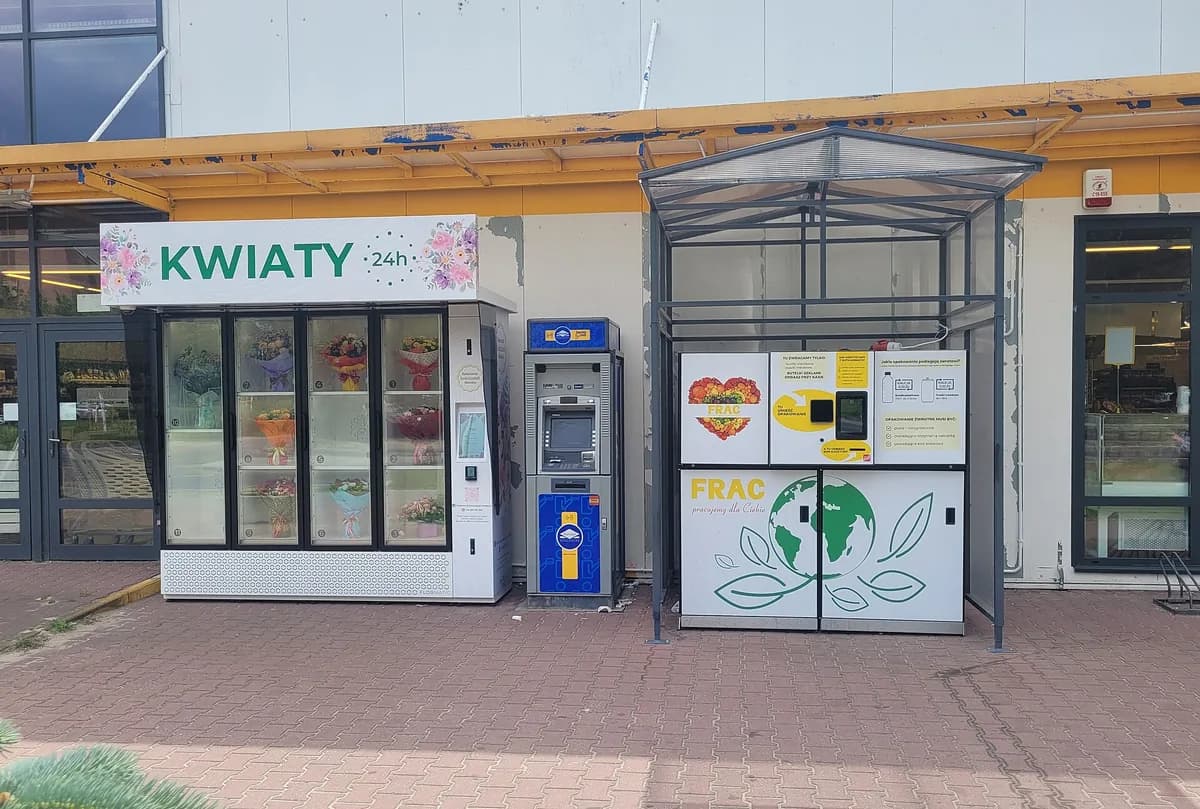
Photo: Wistula, CC BY-SA 4.0, via Wikimedia Commons.
Flowers are such a fixture of the occasion that Poland has developed a genuinely practical answer to the "I forgot and it's 9pm" problem: unstaffed flower vending machines, sometimes called kwiatomaty, that dispense a wrapped bouquet around the clock. You'll find them outside supermarkets, train stations, and shopping centers in cities across the country — a small piece of infrastructure that exists largely because so many people need last-minute flowers for someone's imieniny.
If you'd like the vocabulary to navigate a florist, a shop, or any other everyday errand in Polish, this lesson is a useful next step:
Shopping & Clothing Vocabulary
According to Key to Poland's rundown of the custom, name days are often posted publicly at transit stations and outside flower shops as a running reminder of whose turn it is that day — a small, practical nudge that keeps the custom visible in everyday city life rather than something people have to actively remember to check.
Dedicated name-day calendar websites and apps have become the more common lookup method for younger Poles, letting you search a specific first name and get every date it's assigned to for the whole year, rather than scanning a printed calendar day by day. Some go further and send a push notification the morning of a friend's name day, functionally turning an old paper-calendar habit into the same kind of automated reminder a phone already gives you for birthdays.
What to Say on Someone's Imieniny
The phrase you'll hear most often is simple, and it doubles as the standard line for birthdays too, so you only need to learn it once. A short phrase list covers almost every situation you'll run into:
| Polish | Meaning |
|---|---|
| Wszystkiego najlepszego! | All the best! |
| Wszystkiego najlepszego z okazji imienin! | All the best on your name day! |
| Sto lat! | "A hundred years!" — the traditional toast/song |
| Dziękuję! | Thank you! |
| Kiedy masz imieniny? | When is your name day? |
| Dzisiaj są moje imieniny | Today is my name day |
Sto lat deserves its own mention — it's both a spoken toast and a short sung phrase, roughly Poland's equivalent of "for he's a jolly good fellow," and it gets sung at both birthdays and name days without distinction.

Photo: Waldo Jaquith, CC BY-SA 2.0, via Wikimedia Commons.
Raising a glass and singing "sto lat" is one of the few parts of the celebration that looks almost identical whether it's a name day, a birthday, a wedding anniversary, or a retirement party — it's the universal Polish way of wishing someone a long life, deployed at nearly every happy occasion going.
The song itself is short enough to learn in one sitting, and it's worth knowing the melody as well as the words, since it's genuinely sung, not just said, at almost every gathering. The full lyric repeats "sto lat, sto lat, niech żyje, żyje nam" (a hundred years, a hundred years, may they live, live for us) twice, then closes with a shouted "sto lat!" — simple enough that even a total beginner can join in by the second verse.
"Wszystkiego najlepszego," by contrast, is the phrase you'd actually say directly to someone, whether in person, by text, or on a card — it works as a complete sentence on its own or as the lead-in to a longer, more personal message. Between the two, you can cover almost every register: "sto lat" for the group toast and song, "wszystkiego najlepszego" for the individual, one-on-one wish.
The Cake, the Office, and the Small Gifts
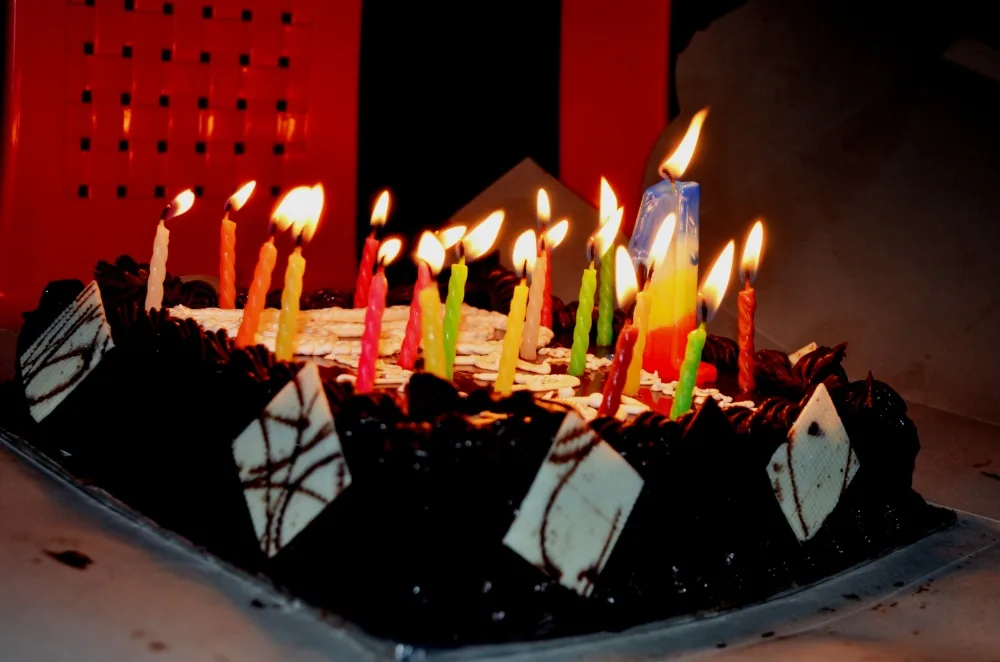
Photo: Pdpics, CC BY-SA 3.0, via Wikimedia Commons.
Office celebrations tend to be modest but consistent: the person whose name day it is brings in a homemade or bakery cake, sets it out in the break room, and coworkers stop by to wish them well and grab a slice. It's a low-effort, low-pressure version of the custom, but it shows up in workplaces across the country with real regularity.
At home, the gathering is usually smaller than a big birthday party — a handful of close friends or family rather than a big blowout — with the same expectation that the host (the celebrant) is the one pouring drinks and cutting the cake. Gifts of flowers, chocolate, or a bottle of wine are the standard, low-stakes choice; nobody expects anything extravagant for an imieniny the way they might for a milestone birthday.
That modesty is arguably the point. A milestone birthday — 18, 30, 50 — carries real weight and often a genuinely big party to match, while imieniny repeats every single year with the same low-key format: cake, flowers, a toast, a bit of conversation. It's less a single big event than a small, reliable social ritual that keeps friend groups and extended families in loose but regular contact, one modest gathering at a time.
Exactly how much fuss gets made varies a lot by family and by generation. Some households treat a parent's or grandparent's name day as seriously as a birthday, with a full Sunday lunch and every relative in attendance; others let it pass with little more than a phone call and a "wszystkiego najlepszego." Neither version is wrong — the calendar just gives people a reliable excuse to check in, and how far they take that excuse is entirely up to them.
Frequently Asked Questions
What does "imieniny" mean? It comes from imię, the Polish word for "first name" — imieniny is literally your "name's day," tied to the feast day of the saint your name comes from.
How do I find out someone's imieniny date? Check a Polish calendar (print or app) for the name printed under a given date, or search "kalendarz imion" plus the name online — most sites list the full year's assignments.
Is imieniny still celebrated by younger Poles? Yes, though birthdays have gained ground, especially among younger people and in regions with less historical attachment to the tradition, like Upper Silesia and Kashubia.
Do you bring a gift to someone's imieniny? Yes — flowers, chocolate, or wine are typical, similar to what you'd bring to a birthday, just usually on a smaller scale.
Is imieniny a religious holiday? Not in practice today — while it originates from the Catholic saints' calendar, celebrating your imieniny is a secular social custom now, observed regardless of how religious someone is.
What if my name isn't on the Polish calendar? Foreign names without a direct Polish equivalent typically don't have an assigned name day, though some people adopt the date of the closest-sounding Polish name instead.
Why does the celebrant host instead of the guests? It's simply the inherited custom — the tradition developed as a home gathering the celebrant threw for visiting well-wishers, rather than a party thrown in their honor, and that host role has stuck even as the celebrations have gotten smaller.
Can one name have more than one imieniny date? Yes, some names are tied to multiple saints throughout the year. The custom is to celebrate on the first of those dates that falls after your birthday.
Do Poles still send physical name-day cards? Less often than in past decades — a text message or a call has mostly replaced the printed card, though older relatives sometimes still appreciate one for a milestone name day.
Is Andrzejki the same thing as a regular imieniny? No — Andrzejki (St. Andrew's Eve) has grown into a standalone folk tradition built around fortune-telling games, celebrated by everyone regardless of their own name, rather than a personal name-day celebration for people named Andrzej specifically.
Do Polish workplaces treat imieniny as an official occasion? Not officially — there's no paid time off or formal recognition — but it's a well-established informal custom, and most offices have an unwritten expectation that someone celebrating brings something to share.
Once you know the calendar quirk behind it, imieniny stops looking like an odd exception and starts looking like what it actually is: one of the steadiest, longest-running social habits in Polish daily life, and a small window into how differently a culture can decide to mark the passage of a year.