
What is a bar mleczny, and why does a plate of pierogi there sometimes cost less than a coffee at the café next door? Translated literally as "milk bar," a bar mleczny is a Polish cafeteria that's been serving cheap, home-style meals since long before most of the country's current supermarkets and minimarkets existed — and unlike almost everything else from that era, it never really went away.
Understanding the bar mleczny matters for anyone curious about how ordinary Poles actually eat day to day, because it's neither a tourist gimmick nor a museum piece. Office workers, students, pensioners, and construction crews all still eat lunch at one, often standing in line behind each other at the same counter, for reasons that are as much economic as cultural.
This guide covers what a bar mleczny actually is, where the idea came from, what's typically on the menu, how ordering works if you've never done it before, and where you'll still find one today — plus how it fits alongside Poland's other everyday food institutions.
What Is a Bar Mleczny, Exactly?
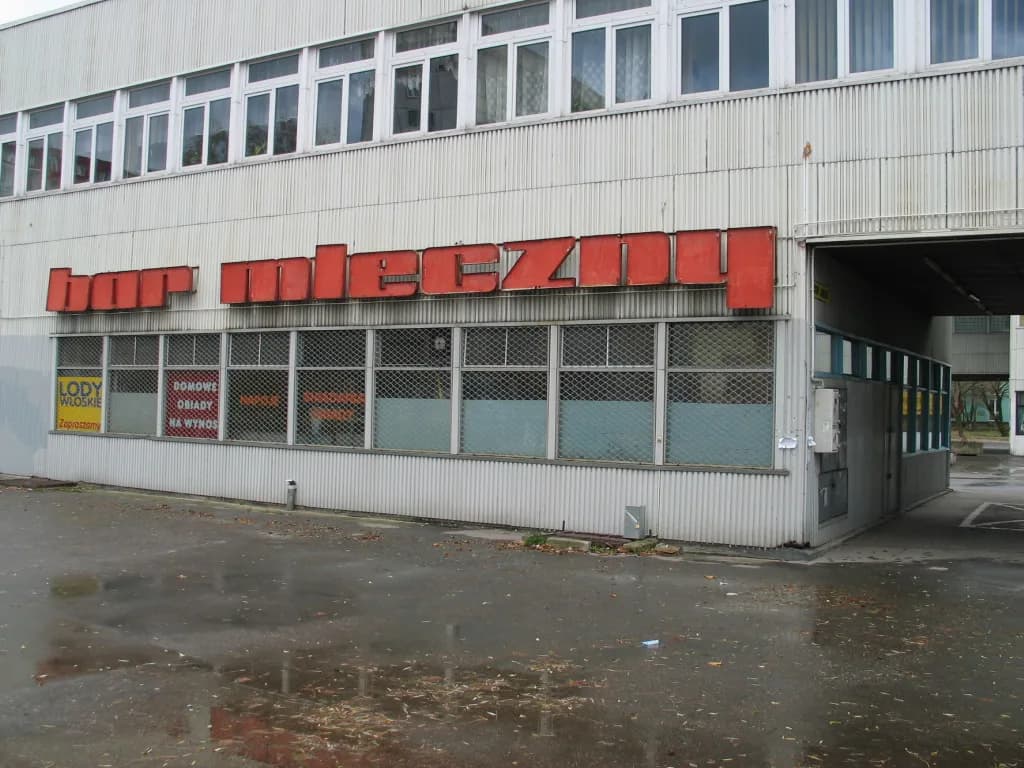
Photo: HuBar, CC BY-SA 2.5, via Wikimedia Commons.
A bar mleczny is a no-frills, self-service Polish cafeteria that serves traditional home-style dishes at prices well below a normal restaurant — often less than half. You order at a counter, pay before you eat, carry your own tray to a plain table, and bus your own dishes when you're done. There's no tipping, no table service, and usually no menu translated into English.
The name is a little misleading on its own. "Milk bar" doesn't mean the menu is all dairy — it refers to the original concept: cheap, largely meat-free food built around dairy, eggs, and vegetables, which was both nutritionally sound and inexpensive to produce at scale. Meat has crept onto most menus since, but the name, and a good chunk of the vegetarian-friendly cooking style, stuck.
What makes one genuinely different from a budget restaurant is the pricing model behind it. Many are still partially subsidized by the state today, a detail that traces directly back to why they were built in the first place — to make a filling, decent meal affordable to absolutely everyone, regardless of income.
A Short History of the Bar Mleczny
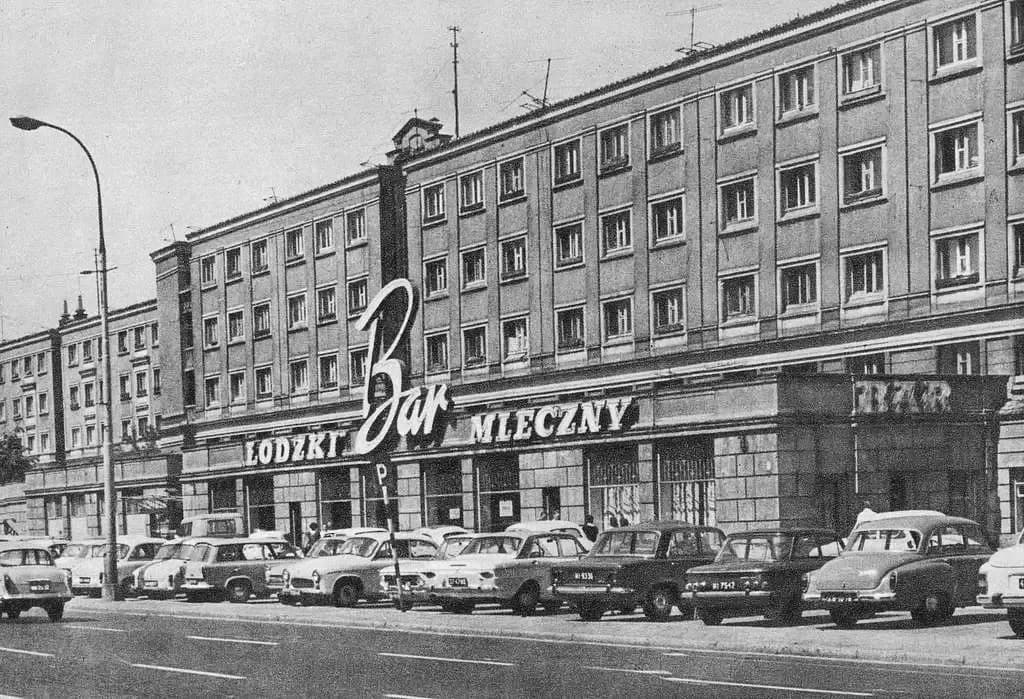
Photo: unknown photographer, from Poznaj Warszawę. Wola (Warsaw, 1971), public domain, via Wikipedia.
The bar mleczny concept is older than most people assume — it didn't start with communism. The first one, "Mleczarnia Nadświdrzańska," opened in Warsaw all the way back in 1896, founded by Stanisław Dłużewski, a member of the Polish landed gentry looking to sell his dairy farm's output directly to city residents at a fair price.
The idea spread gradually through the interwar Second Polish Republic, gaining real traction during the hardship of the 1930s Depression, when cheap, nutritious food mattered more than ever. But it was the postwar People's Republic of Poland that turned it into a fixture of everyday life. The socialist state subsidized them heavily as a matter of policy, and by the mid-20th century, practically every city neighborhood had one within walking distance.
During the martial law period of the 1980s, when meat was formally rationed across the country, the historically vegetarian and dairy-heavy bar mleczny menu became more than nostalgic — for a lot of families, it was one of the few reliable places to get a full meal at all.
The idea wasn't unique to Poland, either, which is a detail few visitors expect. Similar cheap, dairy-and-vegetable-based cafeterias called "milk bars" briefly existed in Britain and the United States around the same interwar period, built on the same basic economic logic — cheap ingredients, simple cooking, and a price low enough for anyone to afford. Almost none of them survived into the present day, which makes Poland's version, still operating continuously for the better part of a century, a genuine outlier rather than a revival of something universal.
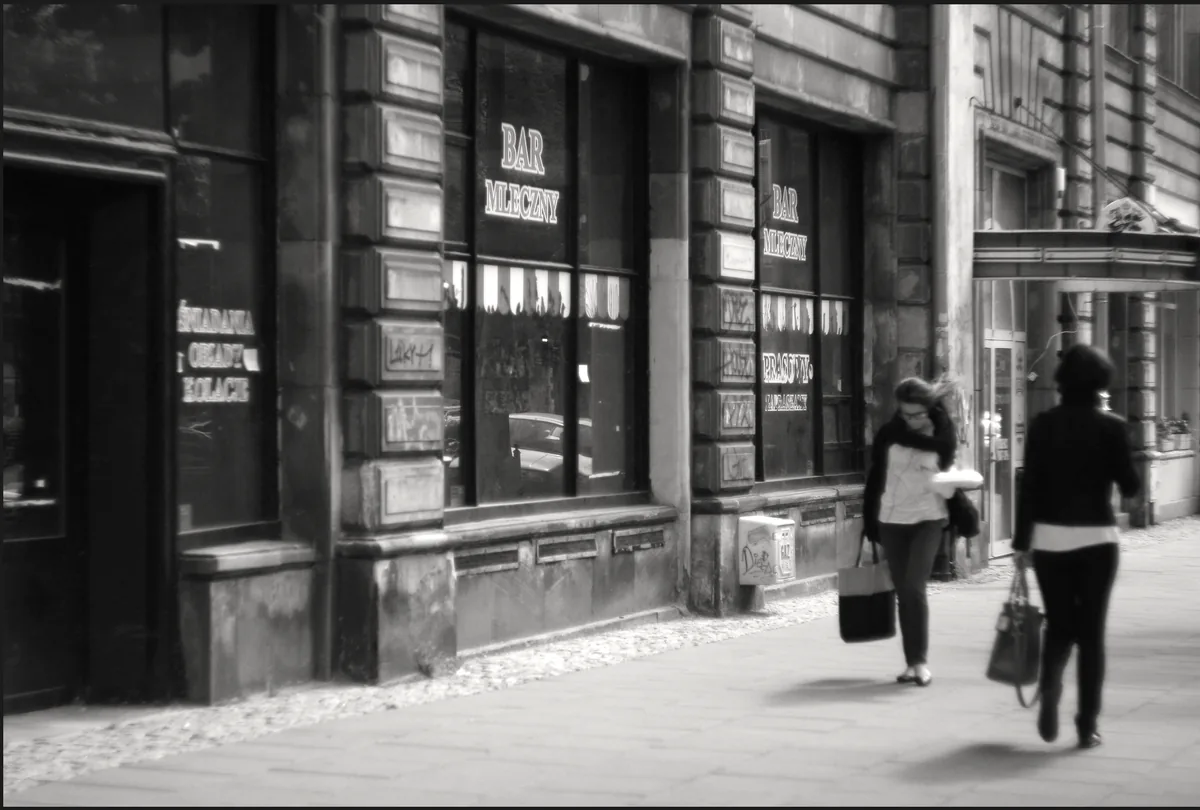
Photo: Artur Kuczmarski, CC BY-SA 4.0, via Wikimedia Commons.
Bar Mleczny Prasowy, pictured here, is one of Warsaw's most famous surviving examples — a genuine time capsule that's been serving the same kind of food, at the same kind of counter, for decades. After the fall of communism in 1989, most were privatized, and plenty closed as market prices and private restaurants proliferated. But the ones that survived, and the state support that kept them affordable, never fully disappeared, according to Wikipedia's overview of the bar mleczny.
What You'll Actually Eat at a Bar Mleczny
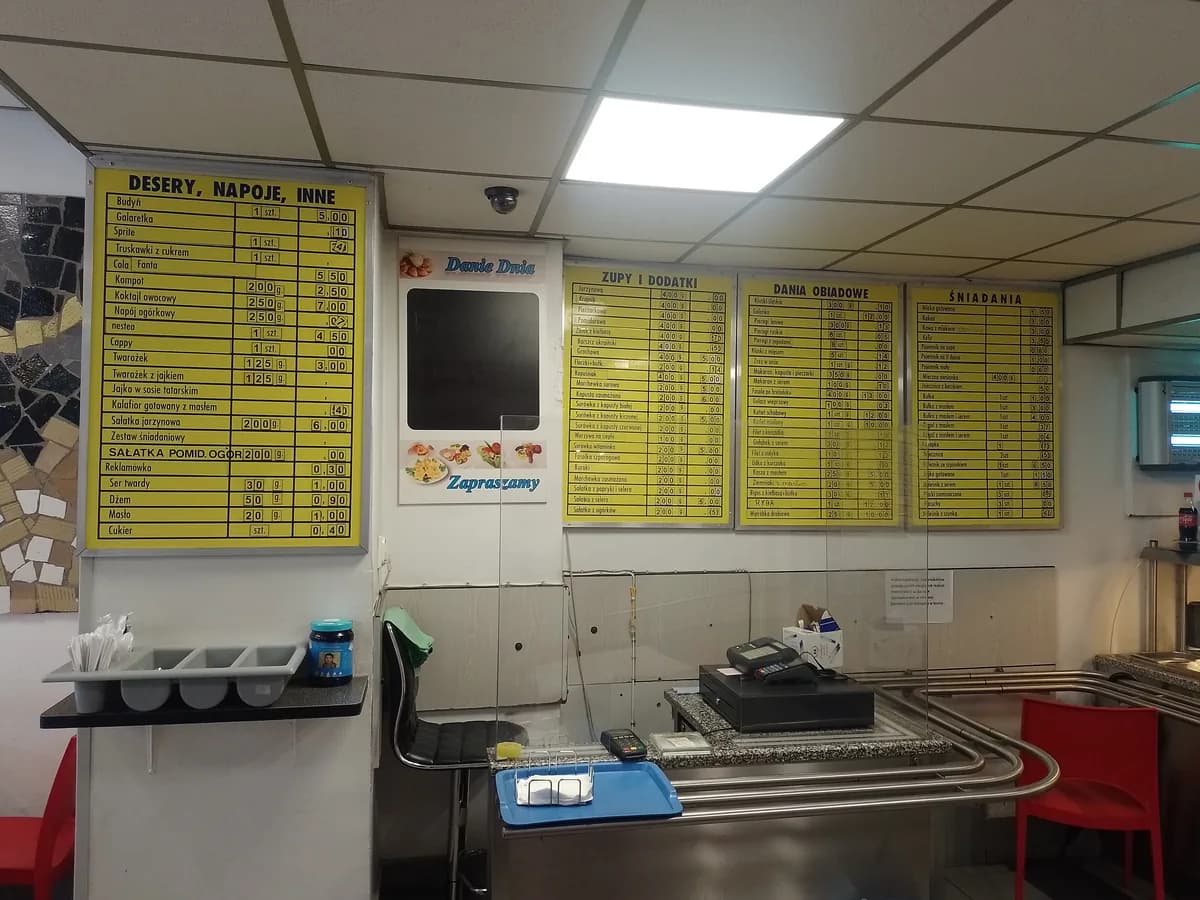
Photo: Kamil Czaiński, CC BY-SA 4.0, via Wikimedia Commons.
The menu at a bar mleczny is built around Polish comfort food, and the prices on a board like the one pictured above are genuinely striking the first time you see them — a full main course frequently costs less than the price of a single coffee at a café a few doors down.
You'll typically find pierogi (usually ruskie — potato and cheese — or with meat), naleśniki (crepes, sweet or savory), kotlet schabowy (breaded pork cutlet), gołąbki (cabbage rolls), and kopytka (potato dumplings) among the main courses. Soups are a category of their own: zupa pomidorowa (tomato soup), żurek (sour rye soup), barszcz (beetroot soup), and krupnik (barley soup) all show up regularly, usually for just a few złoty a bowl.
Dairy-forward and vegetarian dishes remain a strong presence too, a direct echo of the original "milk bar" concept — think twarożek (a fresh curd cheese dish), naleśniki z serem (crepes with sweet cheese filling), and simple vegetable salads. Drinks lean toward kompot (a lightly sweetened stewed-fruit drink) rather than soda, though most bars stock the usual sodas too.
The prices themselves are worth spelling out, since they're the whole point. A bowl of soup routinely runs 5–8 złoty, a main course like kotlet schabowy with potatoes and a side of vegetables often lands somewhere around 12–17 złoty, and a full meal — soup, main, and a drink — can still come in under the price of a single fast-food combo meal elsewhere in the same city. That gap between a bar mleczny and literally everywhere else selling cooked food is the entire reason the format still exists.
How Ordering Works (No Waiter, No English Menu)
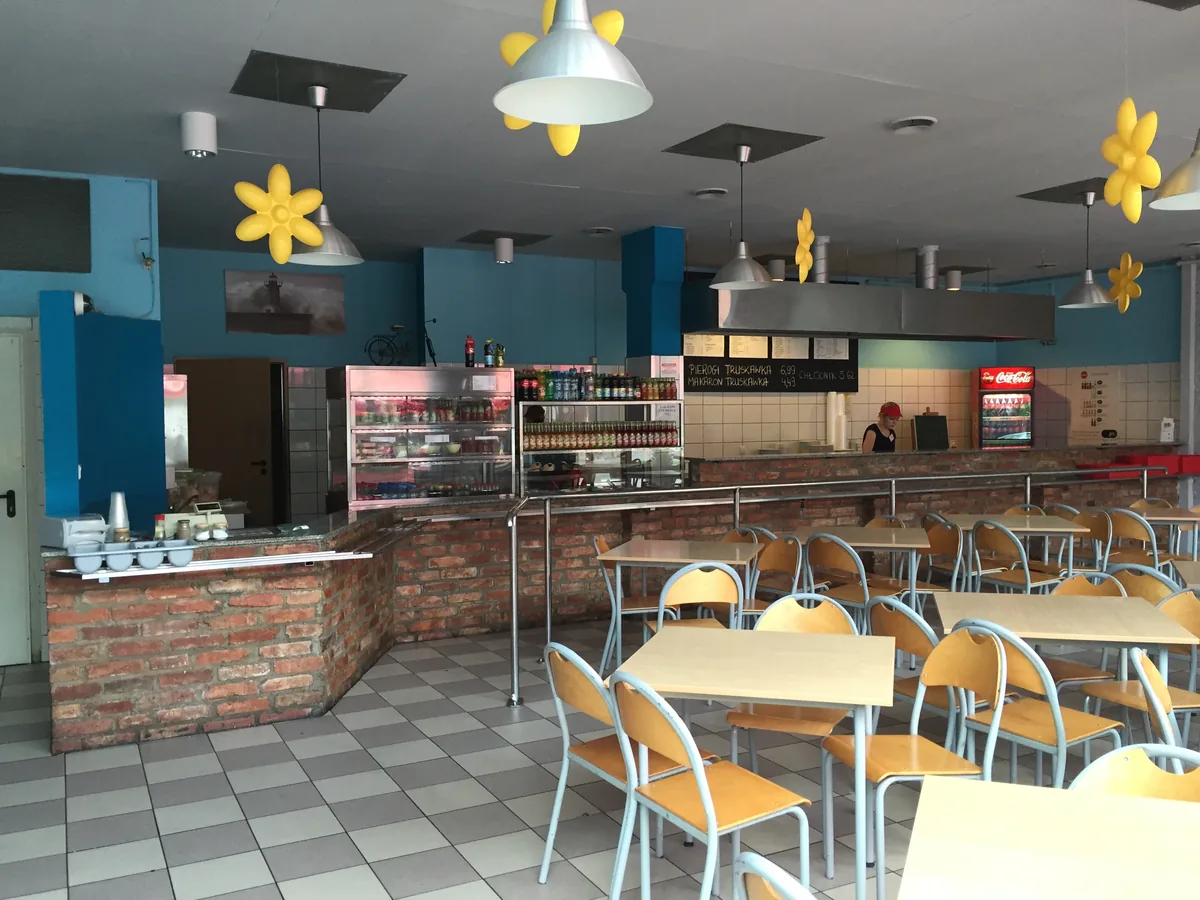
Photo: Christopher Ziemnowicz (CZmarlin), CC BY-SA 4.0, via Wikimedia Commons.
This is the same Gdańsk cafeteria from the exterior photo further down, seen from inside — and the layout is a good illustration of the system, which is consistent almost everywhere in Poland. Knowing it in advance saves you an awkward first visit. You look at the menu board — usually mounted on the wall near the counter, exactly like the one shown earlier — decide what you want, and place your order directly with the cashier. You pay immediately, before any food changes hands.
Once you've paid, you either wait a moment for your order to be plated and handed to you, or take a numbered ticket and listen for it to be called. There's no host, no assigned table, and no server bringing food to you — you carry your own tray to any open seat.
A short phrase list makes that first visit far smoother, since the cashier is unlikely to switch to English:
| What you might say | Meaning |
|---|---|
| Poproszę pierogi ruskie | I'd like the potato-and-cheese pierogi, please |
| Ile płacę? | How much do I owe? |
| Na miejscu | For here (eating in) |
| Na wynos | To go |
| Czy jest zupa pomidorowa? | Is there tomato soup? |
| Dziękuję, to wszystko | Thank you, that's everything |
When you're finished eating, you're expected to clear your own tray to a designated return point near the exit — skipping this is one of the few genuine faux pas here, since there's no waitstaff to do it for you.
If you'd like more structured practice with ordering food and drinks in Polish before your first visit, this lesson covers exactly that:
Ordering Food & Drinks
Where to Find a Bar Mleczny Today
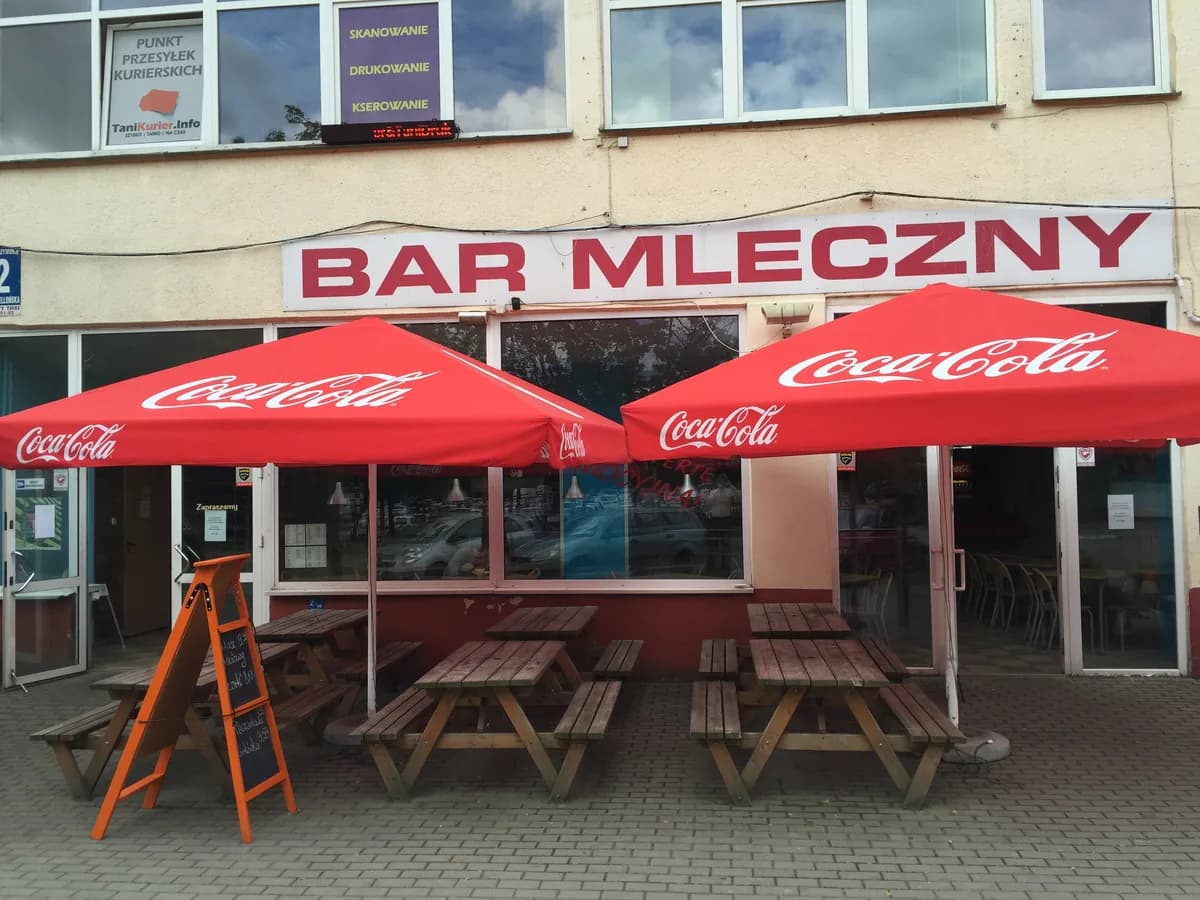
Photo: Christopher Ziemnowicz (CZmarlin), CC BY-SA 4.0, via Wikimedia Commons.
Despite years of closures, a genuine revival of the format has been underway since the early 2010s, driven partly by nostalgia for the PRL era and partly by younger owners modernizing the format while keeping the prices low. You'll still find them scattered across most Polish cities — this one in Gdańsk, complete with outdoor picnic tables, is a good example of the format holding on in a major tourist city.
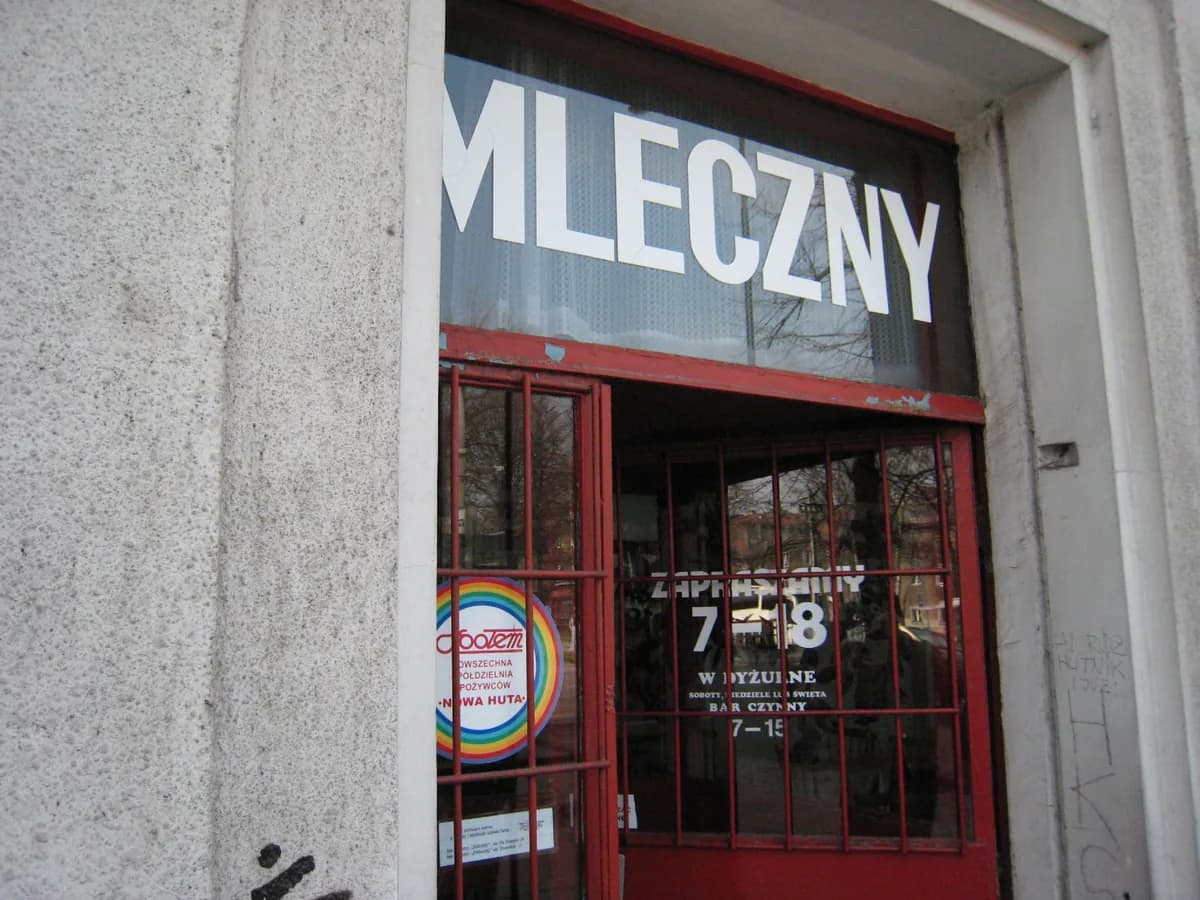
Photo: Christopher Pratt, CC BY-SA 2.0, via Wikimedia Commons.
Nowa Huta, the planned socialist-realist district of Kraków built around its steelworks, is an especially fitting place to still find one — the whole neighborhood was designed as a model communist community, and its milk bar has outlasted plenty of the ideology that built it.
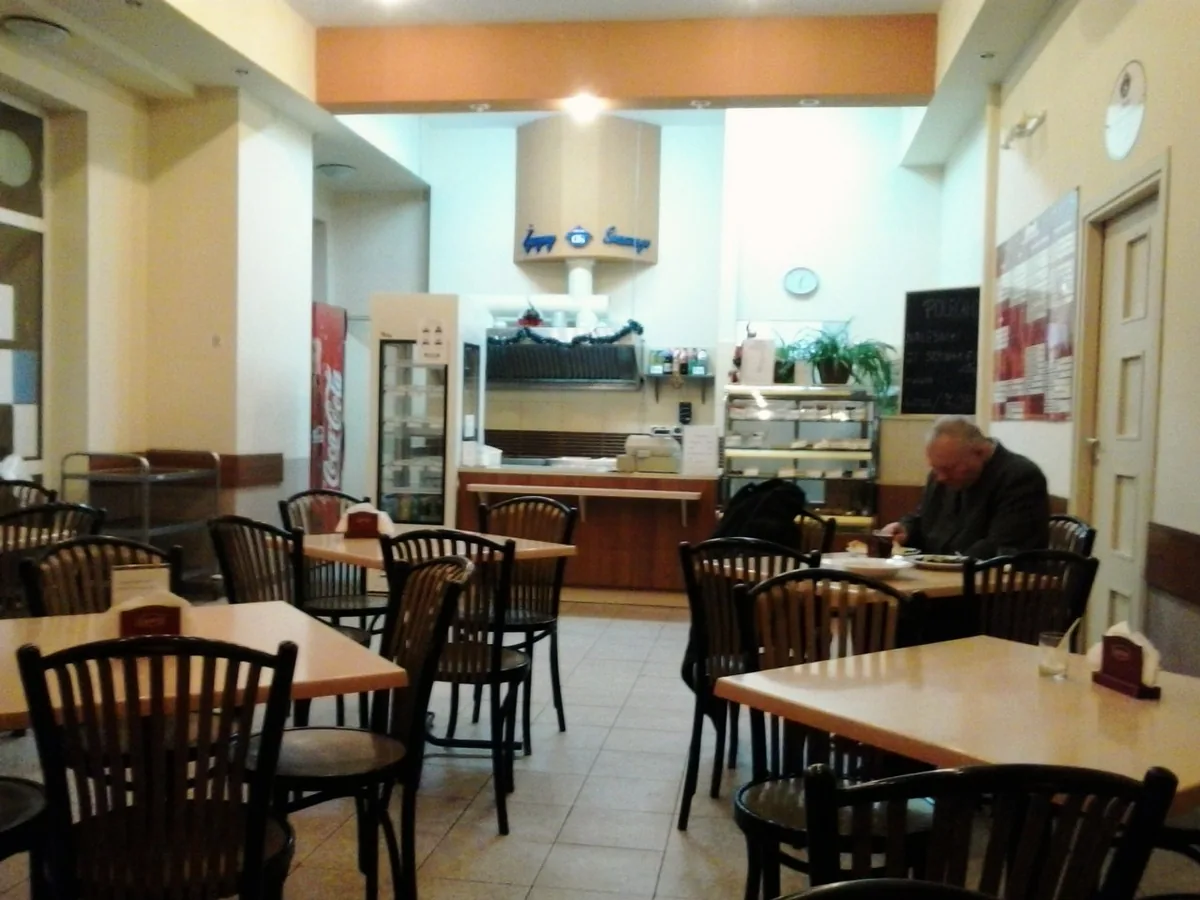
Photo: MOs810, CC BY-SA 4.0, via Wikimedia Commons.
Kalina, in Poznań's residential Dębiec district, is a good example of the quieter, neighborhood version of the format — no tourists, no novelty branding, just a regular lunch spot for people who live nearby. That's arguably the more representative bar mleczny experience than the well-known central ones in Warsaw or Kraków: a plain room, a short menu, and a handful of regulars who've been coming for years.
The state subsidy hasn't disappeared either, though it has narrowed over time. Poland's 2025 budget allocated roughly 61.4 million złoty to milk bar subsidies nationwide, down from 71 million the year before, according to Notes from Poland's coverage of the cuts. The funding covers around 40% of ingredient costs on specific non-meat dishes, used by roughly 70 participating businesses — a much narrower program than the communist-era system, but still enough to keep a meal genuinely cheap for pensioners, students, and anyone on a tight budget.
Bar Mleczny vs. Żabka vs. Biedronka: Poland's Everyday Food Trilogy
Between a bar mleczny, a Żabka, and a Biedronka, you've got a genuinely complete map of how food actually works in daily Polish life, and each one solves a different problem. Żabka is the quick single-item stop — a coffee, a hot dog, a forgotten ingredient, open at any hour. Biedronka is the full weekly grocery shop, a cart instead of a single bag.
This kind of cafeteria fills the gap neither one touches: a sit-down, cooked, complete meal you didn't have to make yourself, at a price that barely registers against a normal restaurant bill. It's less about convenience and more about a specific, decades-old promise — that a hot meal shouldn't be out of reach for anyone. If you want a deeper look at how food fits into Polish life more broadly, our guide to Polish food culture is a good next stop.
Frequently Asked Questions
What does "bar mleczny" mean? Literally "milk bar." The name reflects the original concept — cheap, largely dairy- and vegetable-based meals — even though most menus include meat dishes today.
Are these cafeterias still subsidized by the government? Yes, though on a smaller scale than during communism. Poland's 2025 budget included about 61.4 million złoty in subsidies, covering roughly 40% of ingredient costs on specific dishes at participating businesses.
Do I need to speak Polish to order at one? It helps, since menus and staff are rarely bilingual, but pointing at the menu board and a few basic phrases ("poproszę," "ile płacę") are usually enough to get by.
Is the food at a bar mleczny good, or just cheap? Both, at the well-regarded ones — it's simple home-style cooking rather than fine dining, but the quality at a good bar mleczny is genuinely comparable to home cooking, not a step down from it.
Do you tip there? No. There's no table service, so tipping isn't part of the culture there the way it might be at a sit-down restaurant.
Why did these cafeterias survive when so much else from the communist era disappeared? Continued government subsidy is the main reason — without it, most couldn't sustain the same low prices in a market economy, so the state's decision to keep funding them kept the format alive.
Is a bar mleczny the same as a regular Polish restaurant? No — the self-service, pay-first, no-tipping, cafeteria-style format is distinct from how a normal restaurant works, even one serving the exact same dishes.
Where's the best place to try one for the first time? Any city with a historic center usually has at least one long-running milk bar near the center — Warsaw, Kraków, and Gdańsk all have well-known examples that welcome tourists as readily as regulars.
Can vegetarians and vegans eat well at a bar mleczny? Vegetarians generally do very well, given the format's dairy-and-vegetable roots — pierogi ruskie, naleśniki, and most soups and salads are meat-free. Strict vegans should still ask, since butter, eggs, and dairy show up often even in dishes that look plant-based at a glance.
The lesson underneath all of this is a simple one: a bar mleczny isn't a museum exhibit dressed up for nostalgia, it's a working piece of social policy you can still sit down and eat lunch at — and once you understand the counter, the tray, and the prices on that yellow menu board, it becomes one of the most genuinely useful places to eat in the entire country.