
What is a paczkomat, and why does it seem like every street corner, apartment courtyard, and village square in Poland has one? If you've spent any time here, you've almost certainly walked past a tall, orange-and-white metal cabinet with rows of small doors and a touchscreen on the front — and if you've shopped online in Poland even once, there's a good chance you've already used one without fully understanding what it was.
Understanding the paczkomat matters for anyone living in or visiting Poland, because it isn't a novelty — it's the default way most parcels change hands here. Online shops let you choose one as your delivery address at checkout, couriers use them to drop off parcels when nobody's home, and returning something you bought online usually means finding your nearest one rather than waiting for a van.
This guide covers what a paczkomat actually is, the company behind it, how the sending-and-collecting process works step by step, where you'll find one (spoiler: almost everywhere), and the practical details — the app, the screen prompts, the box sizes — that trip up newcomers on their first visit.
What Is a Paczkomat, Exactly?
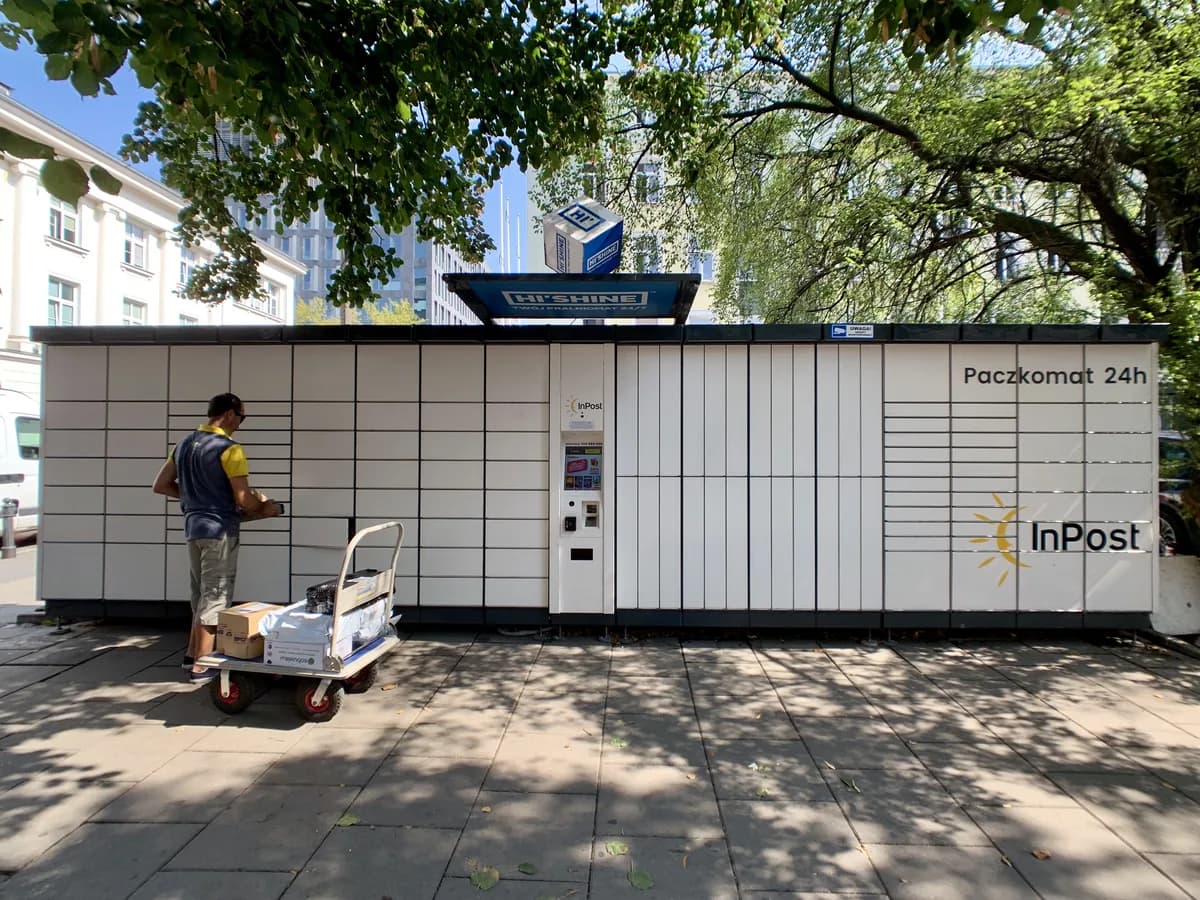
Photo: Chris Olszewski (Kgbo), CC BY-SA 4.0, via Wikimedia Commons.
A paczkomat is a self-service, automated parcel locker — a wall of individually lockable compartments where couriers deposit parcels and customers collect them 24 hours a day, without ever needing a person behind a counter. The word itself is a compound of paczka (parcel) and automat (machine), and it's owned as a trademark by InPost, the Polish logistics company that invented the format.
That's a detail worth knowing on its own: "paczkomat" is technically a brand name, the same way "Kleenex" or "Google it" became everyday words for a much broader category. Poles use it to mean "parcel locker" in general, even for lockers run by other companies, in the same way you might ask for a "Xerox" of a document. When someone tells you to send something to their nearest paczkomat, they almost always mean the orange InPost one specifically — but you'll occasionally hear it used loosely for any parcel-locker network.
InPost was founded in 1999 in Kraków by entrepreneur Rafał Brzoska, originally as a direct-mail distribution business, according to Wikipedia's overview of the company. The first parcel lockers appeared in 2009 — a modest rollout of around 150 machines — built on a simple idea: most missed deliveries happen because nobody's home during the day, so why not let people collect their own parcel whenever they actually are home, at 6am or 11pm, with no courier involved at all.
That idea scaled dramatically. InPost's network in Poland has grown into the tens of thousands of machines, blanketing not just every city but the smaller towns and villages in between, and the company has since expanded across the UK, Italy, and other European markets using the same locker model it built at home.
How a Paczkomat Actually Works
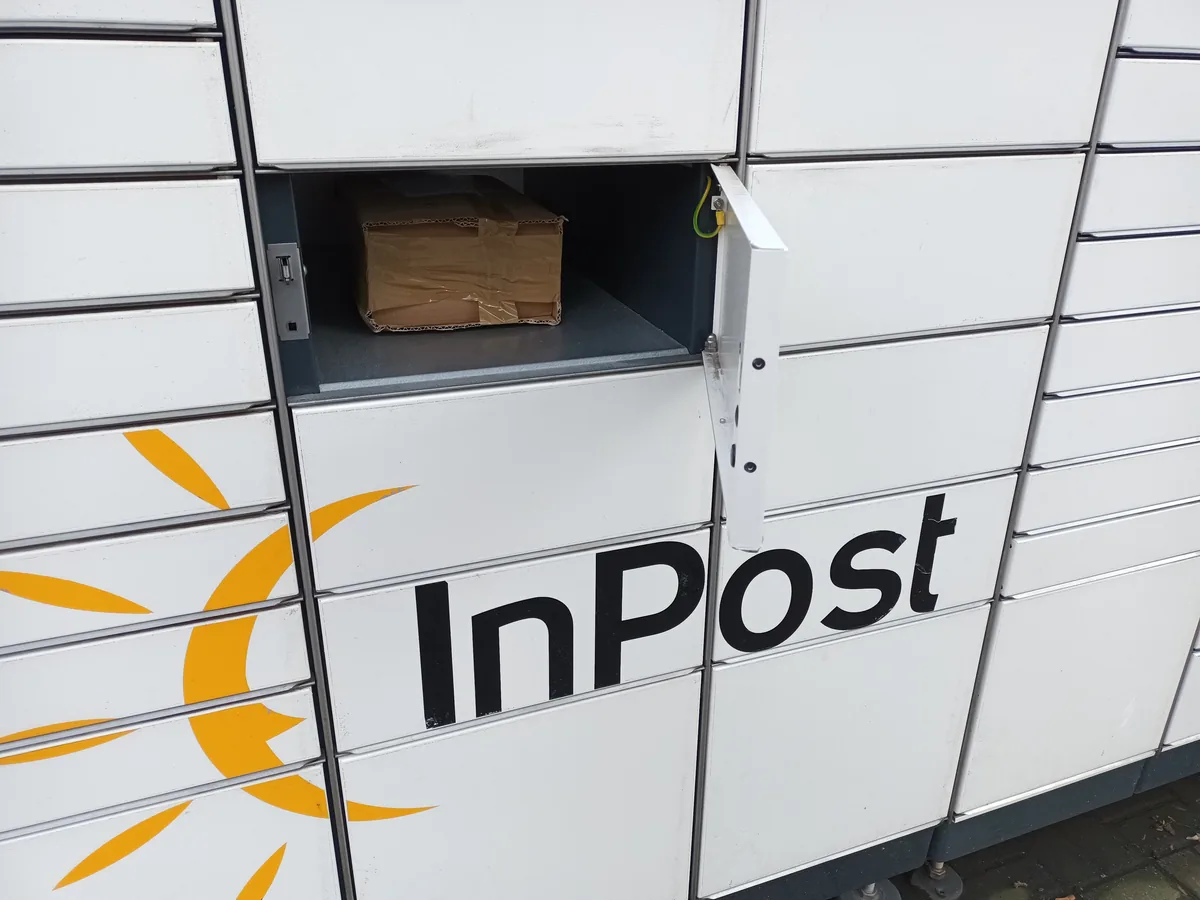
Photo: Cybularny, public domain (CC0), via Wikimedia Commons.
Using a paczkomat splits into two simple flows: collecting a parcel someone sent you, and sending one yourself. Both run through the free InPost Mobile app or a one-time SMS/email code, so you never need to speak to anyone or print a label at home.
Collecting a Parcel
When a parcel is on its way to a paczkomat you selected at checkout, you'll get a notification — by app, SMS, or email — once it's actually inside the machine and ready for pickup. That message contains either a QR code or a numeric collection code.
At the locker itself, you tap the touchscreen, scan the QR code (or type the numeric code in manually), and the correct compartment door pops open automatically. You take your parcel, close the door, and you're done — the whole interaction usually takes under a minute once you're standing in front of it.
If you have the InPost Mobile app installed and you're within about 10 meters of the machine, it can open your compartment directly from your phone, skipping the code entirely.
Sending a Parcel
Sending works in reverse. You generate a shipping label and a QR code through the app or a Polish shipping website (or through a marketplace like Allegro, which sends the code to you directly), select a package size, and choose your local paczkomat as the drop-off point.
At the machine, you scan the code, and an empty compartment sized to match your package opens up. You place your item inside, close the door, and the parcel is marked as sent — no queue, no staff, no printed label needed if you generate one on your phone.
Box Sizes
Compartments come in a few standard sizes to fit different-sized parcels. Size A is the smallest at roughly 8 × 38 × 64 cm, size B doubles the width at around 19 × 38 × 64 cm, and size C is the largest standard compartment at about 41 × 38 × 64 cm — enough for a decent-sized moving box. An extra-small XS option, capped at 23 × 40 cm and 3 kg, is handled entirely through the app for thin items like documents, phone cases, or a single book.
Machines flag which sizes are available in real time, so the app will tell you before you leave home whether your local paczkomat actually has room. Most machines also accept parcels up to around 25 kg in total weight, which covers the overwhelming majority of everyday online orders.
Where You'll Find a Paczkomat in Poland
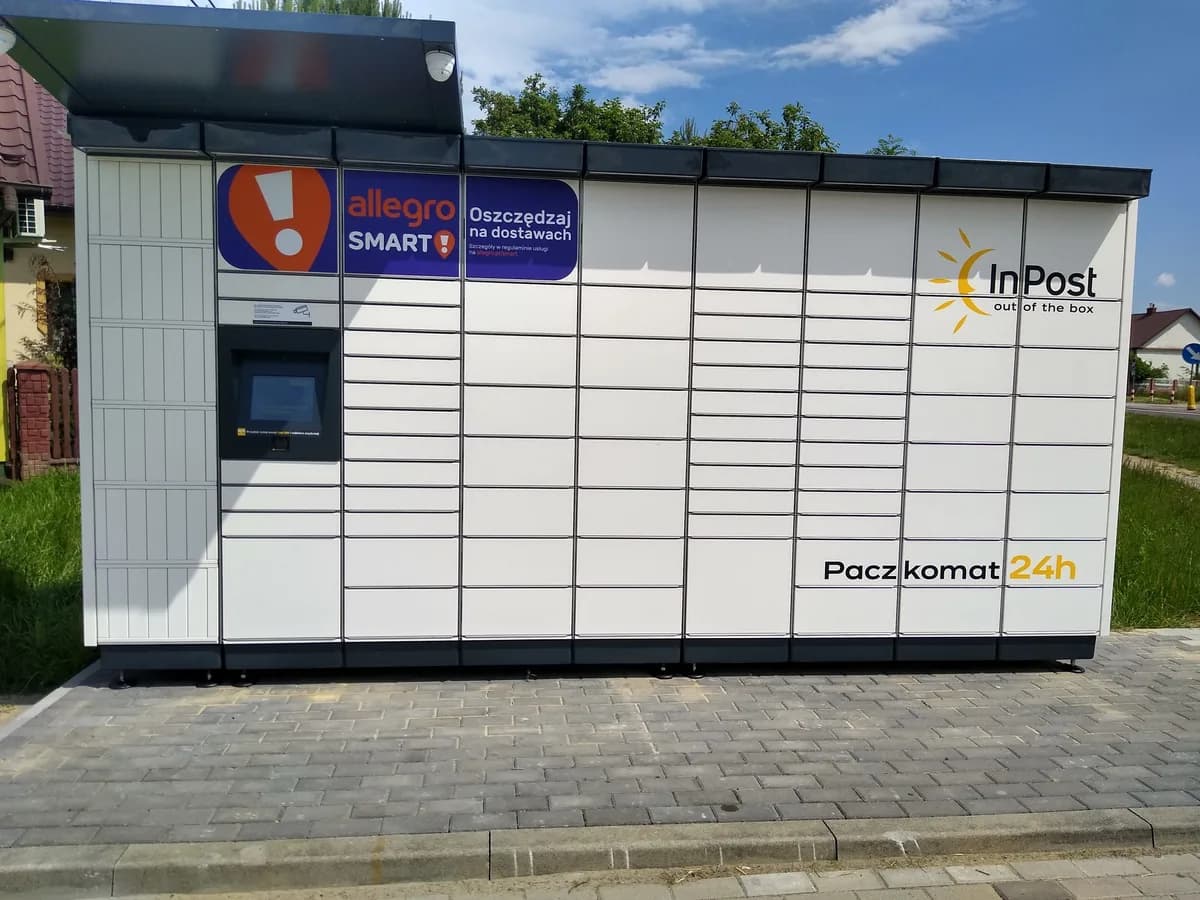
Photo: Patryk2710, public domain (CC0), via Wikimedia Commons.
The honest answer is: almost everywhere. Paczkomaty cluster outside supermarkets, train stations, and apartment blocks in cities, but the network doesn't stop at city limits — you'll find one in small towns, housing estates, and even villages with a population in the low hundreds. It's one of the more quietly impressive pieces of infrastructure in the country, and one of the first things that makes online shopping in Poland feel more convenient than in a lot of larger economies.
Density is the whole point of the model. InPost deliberately places lockers within easy walking distance of where people actually live, rather than concentrating them in a handful of large depots, which is what makes "collect it on your way home" a realistic plan rather than a special trip.
You'll also notice advertising panels on plenty of machines, often for Allegro, Poland's dominant online marketplace (roughly the local equivalent of Amazon or eBay). InPost and Allegro have a close commercial partnership — a huge share of Allegro's parcels move through the paczkomat network — so co-branded ads are common and don't mean anything unusual is going on with that particular locker.
Paczkomat vs. Other Ways to Get a Parcel in Poland
A paczkomat isn't the only delivery option, but it's become the default one for a reason. Home courier delivery still exists and works the way it does everywhere else — a van, a doorbell, a signature — but it requires someone to actually be home during a delivery window, which is exactly the friction the locker model was built to remove.
Poczta Polska, the state postal service, runs its own post offices and a smaller network of its own parcel lockers, and remains the standard choice for registered mail, official government correspondence, and international shipments that need a customs stamp. It's reliable but tends to involve more queueing and stricter opening hours than an InPost machine that's accessible at 2am.
InPost also isn't the only locker company anymore. Orlen Paczka (run by the Orlen fuel-station chain) and Allegro One Box have both built out their own competing locker networks in recent years, and you'll increasingly see a choice of locker brands at checkout on Polish shopping sites. For sheer number of locations and brand recognition, though, InPost's orange paczkomaty remain the one most people mean when they say the word.
Cost is usually the deciding factor for online sellers, and it flows through to shoppers too — locker delivery is typically the cheapest shipping option offered at checkout, cheaper than a courier bringing a parcel to your door, which is exactly why so many Polish shops default to it as the pre-selected choice rather than an afterthought.
If you're weighing up daily errands more broadly — where to do a quick top-up shop versus a full grocery run — our guides to what Żabka is and what Biedronka is cover the other two pieces of everyday Polish logistics that trip up newcomers in their first few weeks.
Using a Paczkomat as a Foreigner
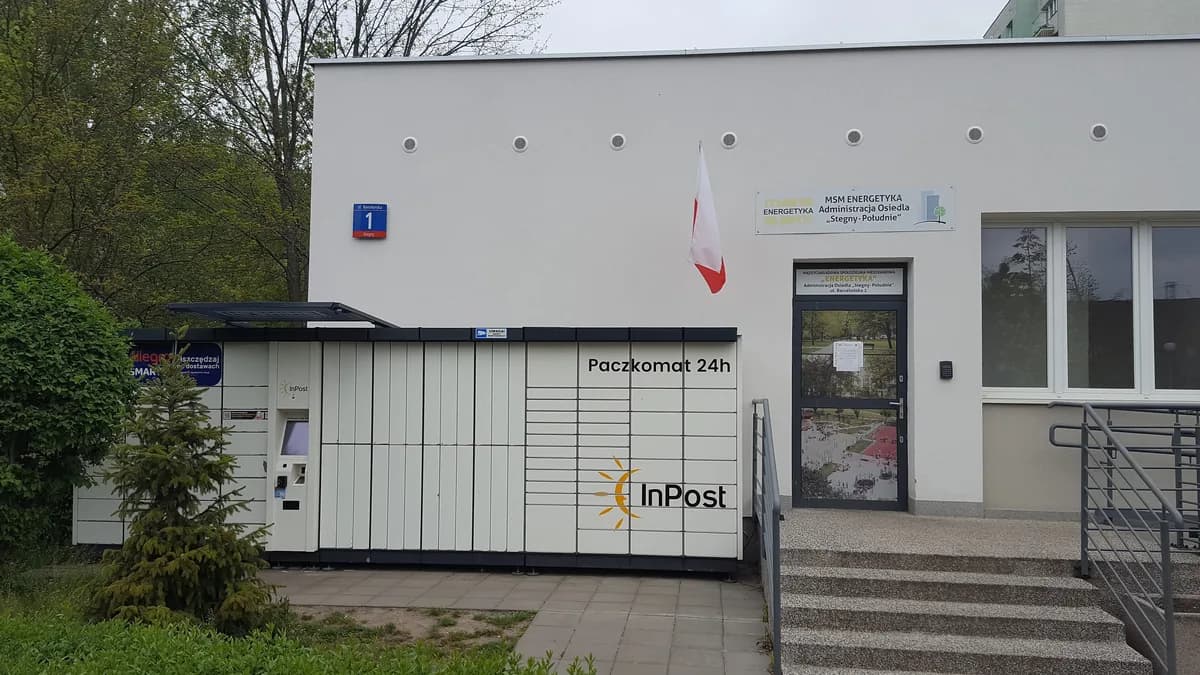
Photo: Wistula, CC BY-SA 4.0, via Wikimedia Commons.
The single most useful thing you can do before your first parcel is download the InPost Mobile app and switch its language to English in the settings — the interface, notifications, and locker screens all support it, so you're never stuck guessing at Polish menus. Once it's installed, add your phone number, and you're ready to both collect and send.
When shopping on Polish sites, look for InPost or "paczkomat" listed as a delivery method at checkout, then pick the specific machine nearest your address from the map — most sites show live availability and walking distance. If you're renting an apartment, ask your landlord which paczkomat they usually use; locals typically default to the same one out of habit, and it's often the fastest way to find the closest one that reliably has free compartments.
Words You'll See on the Paczkomat Screen
A handful of Polish words show up constantly on the touchscreen, and recognizing them on sight saves you from fumbling at the machine with a parcel in one hand and your phone in the other.
| On the screen | Meaning |
|---|---|
| Odbierz paczkę | Collect a parcel |
| Nadaj paczkę | Send a parcel |
| Zeskanuj kod | Scan the code |
| Wpisz kod | Enter the code |
| Otwórz | Open |
| Zamknij | Close |
| Rozmiar paczki | Parcel size |
None of these require fluent Polish to use — the touchscreen is largely icon-driven — but recognizing them turns a moment of hesitation into a confident tap, especially the first few times.
If you're new to reading numbers in Polish generally — useful for both collection codes and locker compartment numbers — this lesson is a solid next step:
Numbers & Counting
Why Poland Has So Many Paczkomaty
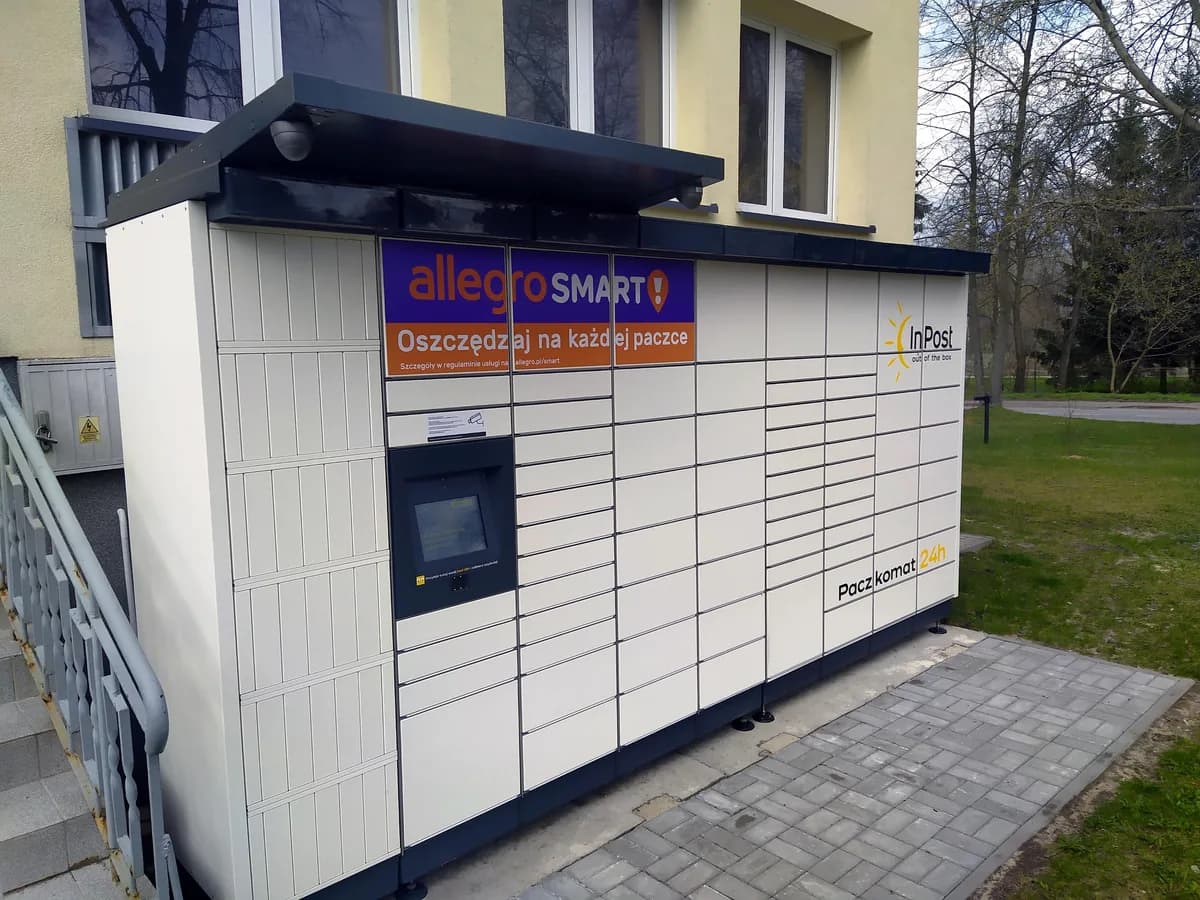
Photo: Radosław Botev, CC BY-SA 4.0, via Wikimedia Commons.
The scale of the network makes more sense once you know the problem it solves. Most Poles live in apartment blocks rather than houses, and most apartment buildings here don't have a doorman, concierge, or shared reception desk to hold parcels the way buildings in some other countries do. Combined with standard working hours, that used to mean a failed delivery attempt was the norm rather than the exception — a courier would show up, find nobody home, and leave a slip telling you to collect it from a depot across town during narrow opening hours.
The paczkomat network turned that problem inside out. Instead of scheduling your day around a delivery window, you collect the parcel whenever it suits you, at a location within a short walk of home, with no interaction required at all. It's a genuinely elegant fix for a very ordinary daily-life problem, and it's a large part of why online shopping adoption in Poland grew as fast as it did.
The machine pictured above serves Osuchów, a village with a population well under a thousand — a useful reminder that this isn't just a big-city convenience. The pandemic gave the model another push: a contactless way to send and receive parcels turned out to matter a great deal in 2020 and 2021, and adoption that might otherwise have taken years happened in months. InPost has since exported the same locker format to the UK, Italy, France, and several other European countries, but Poland remains the market where it's most deeply woven into ordinary life.
If you're in the middle of settling into life in Poland more broadly — bank accounts, residence registration, and the rest of the paperwork — our guide on getting a PESEL number covers the bureaucratic side of the move that a parcel locker can't help with.
Frequently Asked Questions
What does "paczkomat" mean? It's a compound of the Polish words for "parcel" (paczka) and "machine" (automat) — literally, "parcel machine." It's also InPost's trademark for its locker network specifically.
Who owns InPost? InPost is a Polish logistics company founded in 1999 by Rafał Brzoska, who remains its CEO. It's publicly listed and has expanded its locker network well beyond Poland into other European markets.
Is InPost the only parcel locker company in Poland? No — Orlen Paczka and Allegro One Box both run competing locker networks, though InPost's paczkomaty remain the largest and most recognized.
How much does it cost to use a paczkomat? Collecting a parcel is free. Sending one costs a shipping fee that varies by size and destination, paid through the app, a courier website, or the marketplace you're shipping from.
How long can a parcel wait in a paczkomat before it's returned? Typically 48 hours from the collection notification, though this can vary slightly by sender — the app always shows your exact deadline.
Can I return something I bought online through a paczkomat? Usually yes — most Polish online retailers support paczkomat returns, and the process works the same way as sending any other parcel: generate a label, scan the code, drop it in.
Is the InPost app available in English? Yes, you can switch the app's language in its settings, and most on-screen locker prompts are simple enough to follow even without doing so.
What happens if my package doesn't fit any available compartment? The app checks available sizes before you commit to a specific locker, so this is rare — if it does happen, the courier or app will redirect you to the nearest paczkomat with room.
Between the app, the touchscreen, and a bit of comfort with the handful of Polish words that show up on screen, using a paczkomat becomes second nature within a visit or two — and once it does, you'll understand exactly why this quiet orange machine has become one of the most ordinary, unremarkable parts of daily life in Poland.