
Allegro is the online marketplace almost every Pole opens before checking Amazon at all — and once you see the numbers, it's obvious why. Amazon holds roughly 3.9% of Poland's e-commerce market, while this one platform controls somewhere between 45% and 50% of it, a dominance no single marketplace comes close to matching anywhere in Western Europe.
Understanding Allegro matters for anyone shopping, selling, or just living in Poland, because it isn't a niche alternative to Amazon the way a regional marketplace might be elsewhere — it's the default. Job listings mention it, delivery notifications reference it, and an entire parcel-locker network exists largely because of how many packages move through this one company's checkout every day.
This guide covers what Allegro actually is, how a Polish auction site outgrew Amazon in its own backyard, what its loyalty program gets you, how delivery actually works once you've placed an order, and the practical adjustment worth making if you've just moved to Poland and are still defaulting to a different marketplace out of habit.
What Is Allegro, Exactly?
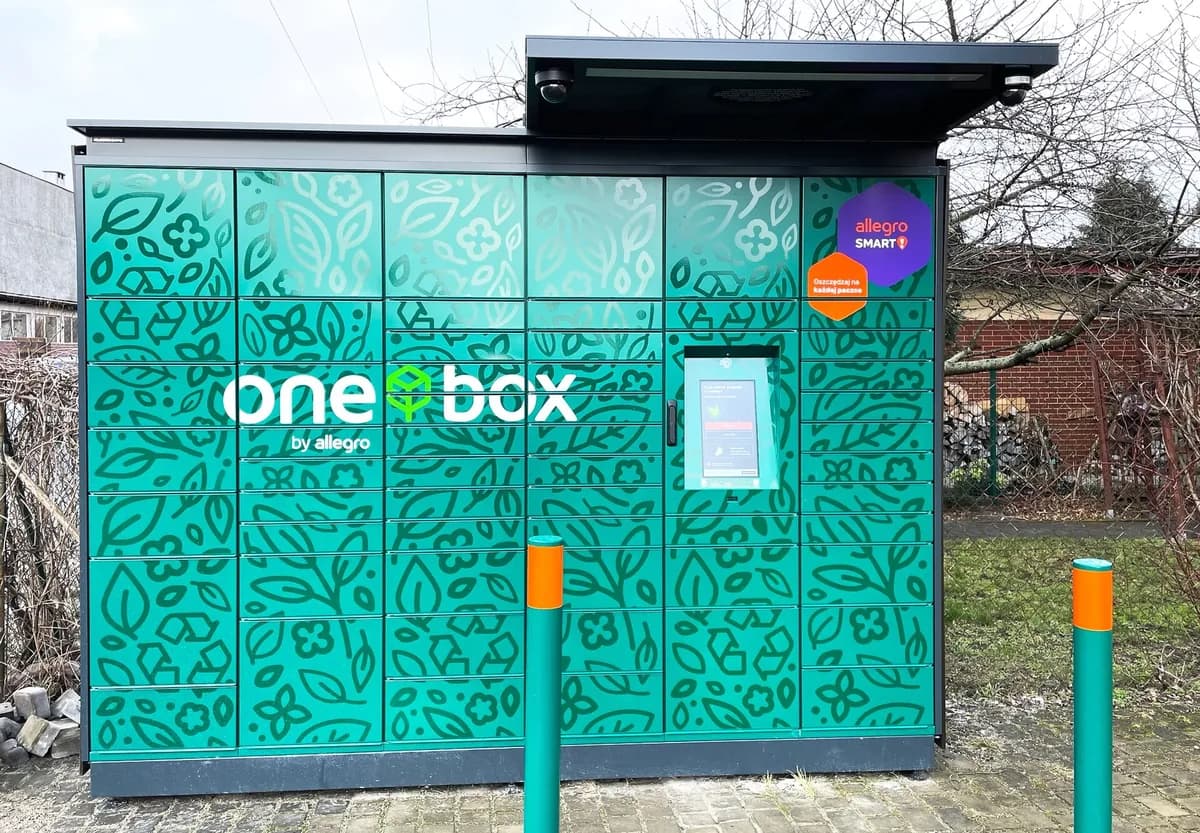
Photo: Olgierd, CC BY-SA 2.0, via Wikimedia Commons.
Allegro is Poland's dominant e-commerce marketplace — a platform connecting buyers with independent sellers across nearly every product category, from electronics and fashion to home goods and automotive parts. It isn't a single retailer the way a foreign shopping site often functions for a given item; it's closer to eBay in structure, built on top of tens of thousands of individual merchants, but with a scale and market dominance that eBay has never approached in any single country, according to Wikipedia's overview of the company.
Founded in Poznań in 1999, the company started life as a straightforward online auction site before evolving into the full commerce ecosystem it is today — integrated payments, its own logistics and parcel-locker network, advertising tools for sellers, and a loyalty program used by millions of Polish households. For most everyday online shopping in Poland, this marketplace isn't one option among several; it's the assumed starting point, in the same way a search engine is often the first stop rather than a specific website.
How Allegro Beat Amazon in Its Own Backyard
This head start over Amazon wasn't luck — it was already deeply embedded in Polish daily life years before the American giant seriously entered the market. That early-mover advantage compounded over two decades of acquisitions and reinvestment rather than fading, which is the main reason Amazon has struggled to gain meaningful ground in Poland the way it dominates in the US, UK, or Germany.
Ownership changed hands several times along the way. British auction site QXL Ricardo bought the company in March 2000, before that parent company rebranded as Tradus plc in 2007. South African media group Naspers acquired Tradus in 2008 and ran the Polish marketplace for nearly a decade, until a consortium of private equity firms — Cinven, Permira, and Mid Europa Partners — bought it from Naspers in October 2016.
That private equity chapter set up the company's biggest public moment. On 12 October 2020, it debuted on the Warsaw Stock Exchange in what remains the largest IPO in Polish stock market history, raising roughly 9.2 billion złoty (about $2.3 billion), according to Bloomberg's coverage of the listing. Shares surged 63% on the first day of trading, pushing the valuation past $19 billion — a striking vote of confidence from investors in a business most Poles had already trusted with their everyday shopping for two decades.
That IPO mattered for reasons beyond the headline number, too. It gave ordinary Polish investors a direct stake in a company whose app was already on nearly every phone in the country, and it cemented, in a very public way, that a homegrown Polish tech company could out-compete the world's biggest online retailer without ever needing to expand much beyond its own region to do it.
The Naspers years deserve a closer look, since that's the period when the groundwork for today's dominance was actually laid. Naspers had the deep pockets to fund years of infrastructure investment — warehouses, payment systems, seller tools — well before the company was under any pressure to turn a quick profit, the kind of patient capital that let it out-invest local rivals long before Amazon ever showed up to compete for the same customers.
Allegro Smart!: The Loyalty Program Poland Can't Live Without
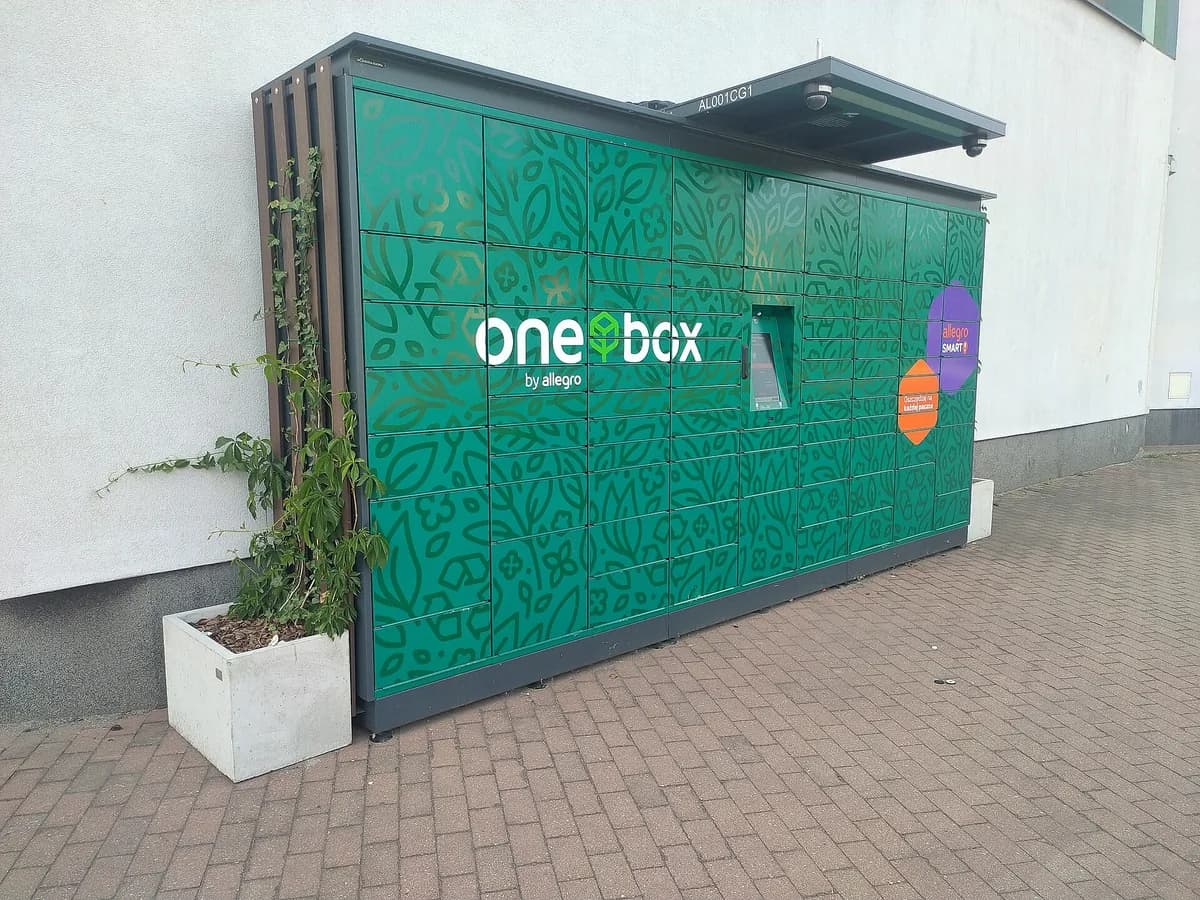
Photo: MaciejLa, public domain (CC0), via Wikimedia Commons.
The Smart! subscription program is stamped on nearly every locker and delivery box in the country, and it's the single biggest reason customers keep coming back rather than price-shopping elsewhere. For an annual fee, subscribers get free delivery on eligible listings regardless of order size — no minimum cart value required, unlike many competing loyalty schemes abroad.
The scale is genuinely large: it's the biggest e-commerce loyalty program in Central and Eastern Europe, with several million active subscribers in Poland alone. Subscribers also spend meaningfully more per year on average than non-subscribers, which is exactly the effect a well-designed loyalty program is supposed to produce — once free delivery is already paid for, there's no marginal cost to ordering one more thing.
That psychology matters more in Poland than it might elsewhere, precisely because delivery has historically been the main friction point in online shopping here. Removing that friction entirely, for a flat annual fee, converts occasional shoppers into habitual ones far more effectively than a simple discount code ever could.
How Delivery Actually Works
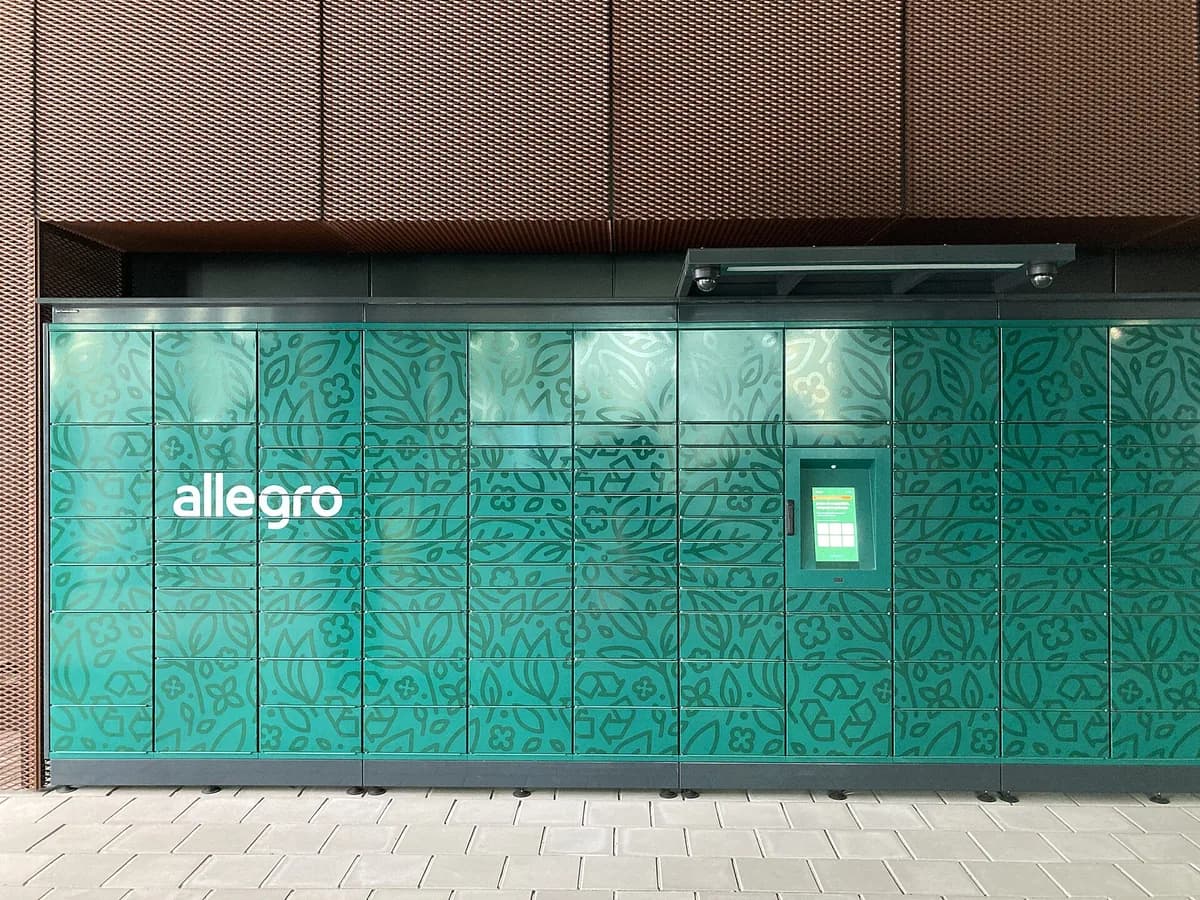
Photo: Michał Beim, CC BY-SA 4.0, via Wikimedia Commons.
Most orders placed through this marketplace ship to a nearby parcel locker rather than a home address, and the network behind that is bigger than most newcomers expect. A large share of deliveries route through InPost's orange Paczkomat lockers — the same network covered in our guide on What Is Paczkomat — since InPost and this platform have run a close commercial partnership for years.
There's also a second, competing locker network run directly by the company itself, called One Box, easily recognized by its distinctive green, leaf-patterned panels rather than InPost's orange ones. Both networks work the same basic way: you pick a nearby locker at checkout, get a notification once your parcel arrives, and scan a code or enter it manually to open the right compartment. Choosing between an orange Paczkomat and a green One Box locker at checkout usually comes down to nothing more than whichever one happens to be closer to home.
Running two parallel locker networks is a genuinely unusual choice for one company to make, and it says something about how central locker delivery has become to the whole business model — rather than simply relying on a third-party partner, the strategy has been to build a second, fully-owned network as a hedge, ensuring that even if the InPost partnership terms shifted, the delivery experience customers rely on wouldn't skip a beat.
What You'll Actually Find on the Marketplace
The catalog is broad enough that "what does it sell" is almost the wrong question — a better one is what people default to it for. Electronics, clothing, home and garden goods, automotive parts, and beauty products all move in huge volume, but the real strength here is being the first place most Poles check for literally anything.
Local payment methods are fully built in, including BLIK — Poland's dominant mobile payment system — alongside standard card payments, which matters for anyone used to shopping with a foreign card and expecting friction that usually doesn't materialize on a Polish checkout page.
It isn't only individual sellers and small businesses using the platform either, though plenty of both do — established Polish and international retailers run official storefronts through it too, treating it less like a discount marketplace and more like the primary online storefront for the entire country. That mix of casual sellers and serious retail brands side by side is part of why browsing feels closer to a proper department store than a garage-sale-style auction site, even though auctions are exactly where the whole thing started.
If you want the vocabulary to navigate shopping and checkout in Polish more broadly, this lesson is a useful companion:
Shopping & Clothing Vocabulary
Allegro vs. Amazon: Why the Difference Matters for Newcomers
For anyone who's just moved to Poland, the practical lesson is simple: don't default to Amazon.pl out of habit. Selection, pricing, and delivery speed are all consistently better on the local marketplace for the overwhelming majority of everyday purchases, precisely because it's where Polish sellers, warehouses, and the Paczkomat and One Box delivery infrastructure are actually concentrated.
That's a genuinely useful adjustment to make early, since the habit of "just check Amazon first" is hard to unlearn and costs real convenience in Poland specifically. Once you've picked a nearby locker as your default delivery point, ordering through the country's actual dominant marketplace ends up feeling faster and more predictable than the international alternative most newcomers reach for out of pure habit.
The gap isn't close, either. With roughly ten times Amazon's market share in the same country, this isn't a case of two roughly comparable options where personal preference decides — it's closer to choosing between the store everyone else already shops at and one that most Polish sellers and warehouses simply aren't built around.
There's a practical customer-service angle too, one that rarely comes up in market-share statistics but matters a great deal in daily use: returns, complaints, and seller disputes all run through Polish-language support built around Polish consumer protection law, rather than a foreign platform's general-purpose international support system. For anyone still building up their Polish, that means dealing with a marketplace whose entire customer experience — search results, seller ratings, return policies — was actually designed around the local market, rather than translated into it after the fact.
Frequently Asked Questions
What is Allegro? Poland's dominant e-commerce marketplace, connecting buyers with independent sellers across nearly every product category, similar in structure to eBay but far more dominant in its home market.
Is Allegro bigger than Amazon in Poland? Yes, by a wide margin — it holds roughly 45–50% of Polish e-commerce, while Amazon holds around 3.9%.
When was Allegro founded? In 1999, in Poznań, originally as an online auction site.
What is Allegro Smart!? A paid loyalty subscription offering free delivery on eligible orders with no minimum cart size, and the largest e-commerce loyalty program in Central and Eastern Europe.
How does delivery work? Most orders ship to a nearby parcel locker — either an InPost Paczkomat or the company's own green One Box lockers — where you collect the package using a code sent by notification.
Is the company publicly traded? Yes, since 12 October 2020, when it debuted on the Warsaw Stock Exchange in the largest IPO in Polish stock market history.
Who owns Allegro? It's publicly traded following its 2020 IPO, after a private equity consortium of Cinven, Permira, and Mid Europa Partners acquired it from Naspers in 2016.
Should I use it instead of Amazon while living in Poland? Generally yes — better selection, pricing, and delivery infrastructure make it the more practical default for nearly all everyday online shopping in Poland.
Why does Allegro run two separate parcel-locker networks? Partly as a hedge — relying on InPost's Paczkomat network alone would leave delivery dependent on a third-party partnership, so building a second, fully-owned One Box network protects the customer experience regardless of how that partnership evolves.
Can international sellers list products on Allegro? Yes — alongside individual Polish sellers and small businesses, established retailers (both domestic and international) run official storefronts on the platform, treating it as a primary retail channel rather than a side marketplace.
How did a Polish company manage to out-compete Amazon locally? Mainly through timing and sustained investment — it was already the default marketplace years before Amazon entered Poland seriously, and years of infrastructure funding under Naspers built out logistics and seller tools before Amazon had any local foothold to compete against.
Between the market share, the IPO history, and a delivery network big enough to have spawned two competing locker brands, this quietly dominant marketplace is one of those institutions that's easy to underestimate until you actually need to buy something in Poland — at which point it becomes obvious why almost nobody bothers checking anywhere else first.