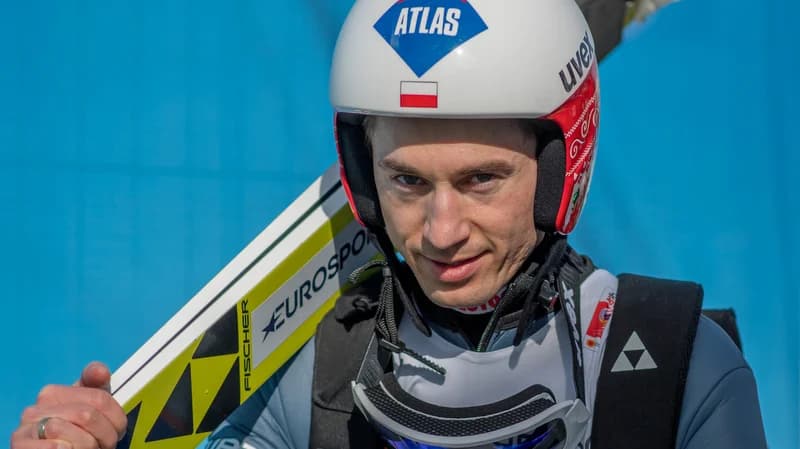
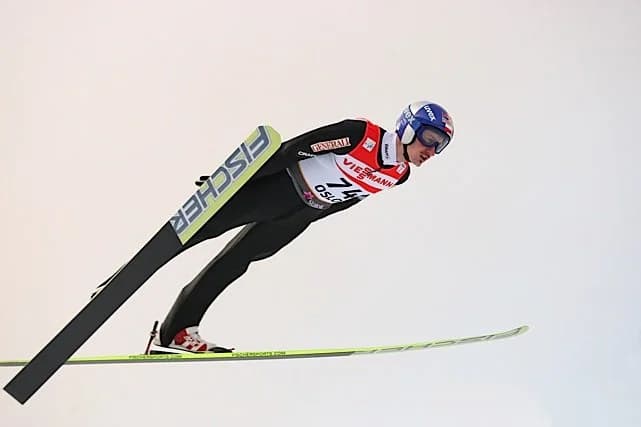
Adam Malysz was a roofer's apprentice from a small mountain town who, for one extraordinary decade, made an entire country stop what it was doing every winter weekend to watch him fly through the air. The phenomenon that grew up around him got its own name — Malyszmania — and it remains, by most accounts, the single biggest sports obsession Poland has ever experienced.
This wasn't ordinary fandom. It was Sunday mass attendance dropping because services were rescheduled around his jumps. It was Pope John Paul II refusing to interrupt a broadcast for a scheduled appointment. It was 60,000 people packing a hillside built for half that number, screaming so loudly that a national park had to formally measure the noise. To understand modern Polish sports culture — and why a ski jumper still gets more instant recognition in Poland than most heads of state — you have to understand what happened between 2001 and 2007.
Who Is Adam Malysz? From a Wisla Roofer's Apprentice to National Icon
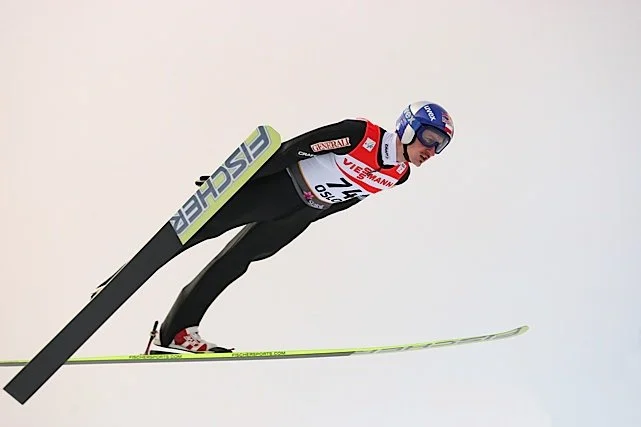
Adam Henryk Malysz was born on December 3, 1977, in Wisla, a small town tucked into the Silesian Beskids near the Czech border. His parents weren't sports royalty and neither was he, at first — as a teenager, Malysz trained as a tinsmith and roofer and seriously considered abandoning ski jumping altogether for a trade career.
He made his senior competitive debut on January 4, 1995, in Innsbruck, and for the next five years he was a solid but unremarkable presence on the World Cup circuit. Nothing about his early results predicted what was coming. Malysz was famously unassuming — journalists who covered him in those years describe a quiet, almost shy young man who never seemed comfortable with attention, which made what happened next even stranger for the country watching it unfold.
By the time his career took off, Malysz already had a family life that had nothing to do with ski jumping's growing spotlight. He married Izabella Polok in June 1997, and their daughter Karolina was born that October — meaning Malysz became both a father and, within a few years, the most famous man in Poland almost simultaneously, without either role visibly changing how he carried himself in public.
How Winning the Four Hills Tournament Started Malyszmania in 2001
Everything changed during the 2000-2001 season. Malysz won the Four Hills Tournament — ski jumping's most prestigious annual event, held every New Year across four hills in Germany and Austria — and did it in historic fashion. He became the first jumper ever to break the 1,000-point barrier across the tournament, finishing with 1,045.9 points and beating second-place Janne Ahonen by 104.4 points, still the largest winning margin in the tournament's history.
That same season he claimed his first overall World Cup title. Poland, a country with essentially no prior tradition of ski jumping success, suddenly had a genuine world champion — and Malyszmania was born almost overnight. Sports commentator Wlodzimierz Szaranowicz later described what happened to Polish television schedules that winter: "Every week we would sit down, as if for a soap opera, to watch the competition." Journalist Michal Pol, who watched the breakthrough happen in real time, put it even more bluntly: the scale of Malyszmania, he said, would never be matched by adoration for any other Polish athlete.
Inside Malyszmania: What the Obsession Actually Looked Like
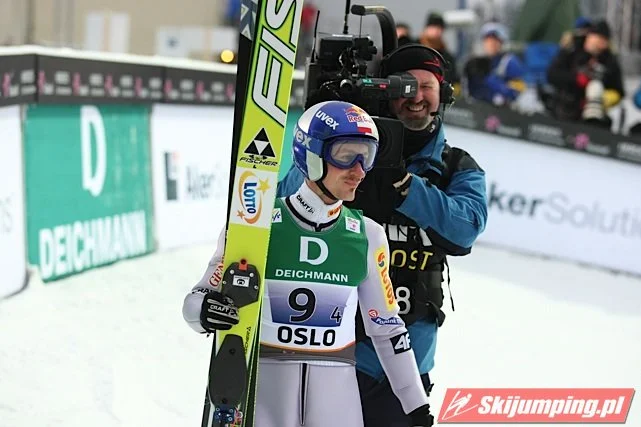
Numbers alone don't capture what Malyszmania felt like on the ground, but they help. At the 2002 World Cup event in Zakopane — Poland's biggest ski jumping hill and the closest thing the sport has to a home stadium — an estimated 60,000 spectators showed up to a venue with roughly half that official capacity. According to an analysis by Tatra National Park, crowd noise during Malysz's winning jump against German rival Sven Hannawald exceeded acceptable limits more than a thousand times over.
The fan devotion went well beyond stadium noise. At a fan event called "Mayday with Malysz," he reportedly signed autographs continuously for seven hours straight, on everything fans handed him — passports, banknotes, even skin. Spectators started copying his distinctive mustache, and musical festivals in Wisla were organized specifically to celebrate his wins.
In 2001, Malysz appeared on a Polish postage stamp, an honor that had previously gone to almost no one outside Pope John Paul II, director Andrzej Wajda, and the country's Nobel literature laureates Wislawa Szymborska and Czeslaw Milosz — an extraordinary group for a ski jumper to suddenly find himself alongside. Even the Pope himself reportedly wouldn't be interrupted. During Malysz's 2003 World Championship-winning jump, John Paul II — a fellow son of the Polish mountains — was said to have refused to break away from the television broadcast for a scheduled appointment.
Timing mattered here as much as talent. Malyszmania's peak years, roughly 2001 to 2007, fell squarely in the decade after Poland shed one-party communist rule and, in 2004, joined the European Union. It was a country in the middle of reinventing its own image, both to itself and to the outside world, and Malysz's success offered something simple and unifying to rally around at exactly the moment the country needed it. Poland was, for that decade, genuinely rearranging itself around a man in a ski suit.
The Sven Hannawald Rivalry That Made It Even Bigger
Malyszmania needed a villain, and German jumper Sven Hannawald obliged. In the 2001-02 Four Hills Tournament — the 50th anniversary edition — Hannawald did something no one had ever managed: he won all four events, the sport's first-ever "grand slam." On paper, it looked like Hannawald had definitively overtaken Malysz.
He hadn't. Despite the historic sweep, Hannawald couldn't top Malysz in the season-long World Cup standings. A five-competition winning streak by Hannawald in December and January briefly threatened to end Malysz's dominance, but the German's form collapsed under the pressure before the season closed. Malysz picked up a decisive win in front of his home crowd in Zakopane and cruised to his second consecutive overall World Cup title. For Polish fans, beating the man who'd just achieved something unprecedented was, if anything, sweeter than an ordinary title defense.
Four World Cup Titles and the Olympic Medal That Got Away
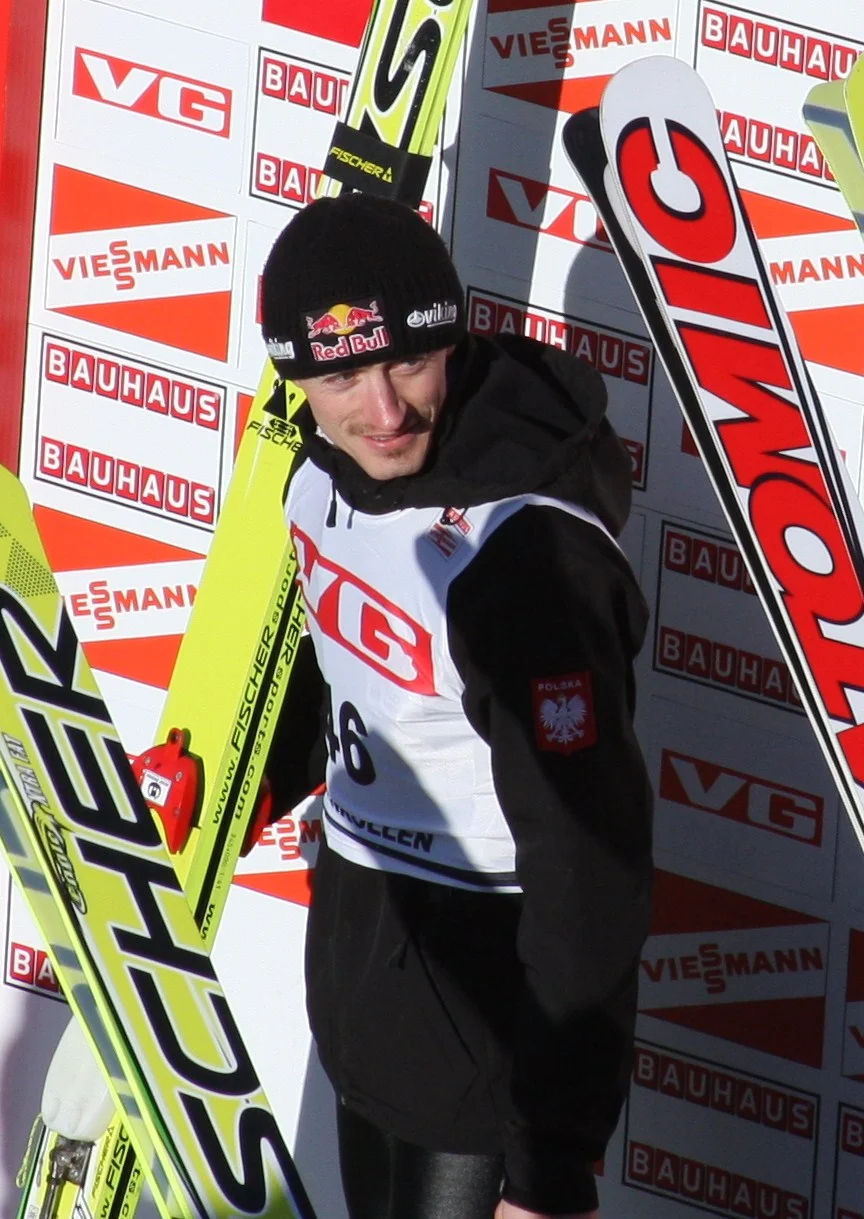
Over his career, Malysz won four overall World Cup titles (2001, 2002, 2003, and 2007), tying the men's record set by Finnish legend Matti Nykanen. He racked up 39 individual World Cup victories and 92 podium finishes, along with four individual World Championship gold medals — still the all-time record in that event.
The one thing that eluded him, remarkably, was an Olympic gold medal. According to his official Olympic athlete profile, he won silver on the large hill and bronze on the normal hill at the 2002 Salt Lake City Games. Eight years later, at Vancouver 2010, a 32-year-old Malysz — well past what most considered a ski jumper's prime — won silver on both the normal and large hill, an astonishing late-career comeback that only deepened his legend. Four Olympic medals, zero golds. It's the one line on his resume that Kamil Stoch, the Polish jumper who succeeded him and won three Olympic golds, doesn't share.
Why Malyszmania Faded: The Legacy of Polish Ski Jumping Today
Malysz retired in March 2011, closing his career the way it had opened: on home snow, with a win in Zakopane, followed by a final bronze medal at the World Championships in Oslo weeks later. What followed his ski jumping career was almost as unlikely as what preceded it. Between 2012 and 2014, Malysz competed in the Dakar Rally, one of the world's toughest off-road races, finishing 37th, 15th, and 13th in successive years on four wheels instead of skis.
He never really left the sport, either. From 2018 to 2022 he served as coordinator of Poland's ski jumping and Nordic combined programs, and in June 2022 he was elected president of the Polish Ski Federation.
The mania around Malysz personally cooled once he stopped winning at the same rate, the way it does for any single athlete. But the infrastructure and sponsorship money it pulled into Polish ski jumping never went away. That investment built the pipeline that produced Kamil Stoch, Piotr Zyla, and Dawid Kubacki — the generation that won Poland's first-ever team gold medal at the 2017 World Championships in Lahti, Finland, and that has kept Zakopane's annual World Cup weekend one of the loudest, best-attended stops on the entire circuit ever since.
Stoch alone would go on to win three individual Olympic golds, something Malysz himself never managed. But almost every profile of Stoch's generation traces the same starting point: without Malyszmania's money and attention in the early 2000s, Poland likely never builds a ski jumping program capable of producing him at all.
Through all of it, by every account, Malysz stayed exactly what he'd been before the mania started. His life motto is reportedly "Be good and that's it" — and colleagues who worked with him during the peak of his fame consistently describe a man who never let the noise, the postage stamps, or the seven-hour autograph lines change who he actually was.
The town of Wisla made the connection permanent. The local ski jumping hill where Malysz trained as a boy is now officially named the Adam Malysz Ski Jumping Hill, and it draws visitors and hobby tourists year-round, long after the competitive circuit moved on to bigger venues. For a country that had never produced so much as a minor ski jumping name before him, naming an entire hill after a local roofer's apprentice says as much about what Malyszmania left behind as any medal count does.
Common Misconceptions About Malyszmania
"Malysz was Poland's first great ski jumper." Not quite — Poland had competed in ski jumping for decades before Malysz, without ever producing a genuine world champion. What made him unprecedented wasn't that he was Poland's first jumper of note; it's that he was the first to actually win consistently at the sport's highest level, in a country with essentially zero prior tradition of ski jumping success.
"The obsession was really about winning gold medals." Malysz never won an Olympic gold in his entire career, and Malyszmania was already near its peak years before he'd won any Olympic medal at all. The fixation was built on World Cup and World Championship dominance and the underdog, self-made-man narrative around him, not Olympic hardware specifically.
"Malyszmania was just about ski jumping." The scale of the response — postage stamps, Papal attention, autograph marathons, an entire subculture copying his mustache — reflected something bigger than sport. It landed during a specific window of Polish national reinvention after communism and before full EU integration, which is a large part of why it hit as hard as it did and why nothing since has fully replicated it, not even the football team's better World Cup runs or Poland's later Olympic successes in other winter sports.
Common Questions About Adam Malysz and Malyszmania
What is Malyszmania? Malyszmania is the nickname for the nationwide obsession with ski jumper Adam Malysz that swept Poland roughly between 2001 and 2007, following his breakthrough Four Hills Tournament win. It described the huge TV audiences, record-breaking crowds, and general cultural fixation on his competitions.
Did Adam Malysz ever win an Olympic gold medal? No. Malysz won four Olympic medals across two Games — silver and bronze at Salt Lake City 2002, and two silvers at Vancouver 2010 — but never claimed gold, despite being one of the most decorated ski jumpers in history.
How many World Cup titles did Adam Malysz win? Four overall World Cup titles, in 2001, 2002, 2003, and 2007, tying the men's record held by Finland's Matti Nykanen.
What was Adam Malysz's job before he became a professional ski jumper? He trained as a tinsmith and roofer as a teenager in Wisla and reportedly considered leaving competitive ski jumping for that trade before his breakthrough season in 2000-2001.
What is Adam Malysz doing now? Since retiring from competition in 2011, Malysz has competed in the Dakar Rally, coordinated Poland's ski jumping and Nordic combined programs, and was elected president of the Polish Ski Federation in June 2022.
Why was Sven Hannawald important to the Malysz story? The German jumper Hannawald became Malysz's defining rival, most famously by winning all four events of the 2001-02 Four Hills Tournament — a first in the sport's history. Malysz still beat him to the overall World Cup title that season, intensifying the rivalry that helped fuel Malyszmania.
Key Facts: Adam Malysz at a Glance
| Fact | Detail |
|---|---|
| Born | December 3, 1977, in Wisla, Poland |
| Career span | 1995-2011 |
| World Cup overall titles | 4 (2001, 2002, 2003, 2007) |
| Individual World Cup wins | 39 |
| World Championship golds | 4 (all-time record) |
| Olympic medals | 4 (3 silver, 1 bronze) — no gold |
| Four Hills Tournament wins | 1 (2000-01, record-breaking margin) |
| Post-retirement roles | Dakar Rally driver, Polish Ski Federation president |
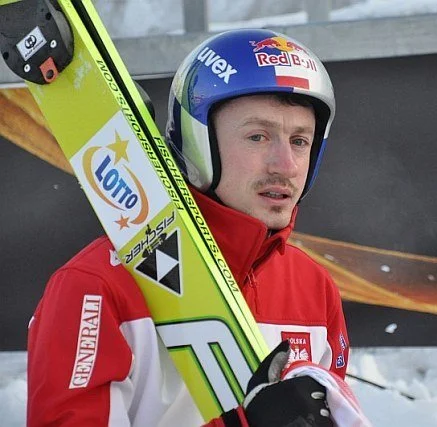
Malyszmania never fully repeated for another athlete, and maybe it never could — it was a specific collision of a country a decade out from Soviet rule, hungry for a symbol of what it could accomplish, and one unassuming ski jumper who happened to be extraordinarily good at exactly the right moment.
For a closer look at how Poland's other major sport built its own fan culture, see our guide to Poland's top football clubs. And if you're curious how one individual has captured an entire nation's pride before, Frederic Chopin's story — Poland's most famous composer — makes for a striking parallel a century and a half earlier, covered in our piece on Frederic Chopin's life in Poland.