Frederic Chopin left Poland at age 20 and never once set foot in the country again — yet he's still the name most people associate with Polish music, two centuries later. He wrote almost nothing but solo piano music, gave only about 30 public concerts in his entire life, and died at 39 in a Paris apartment surrounded by friends who couldn't understand a word of his native language. Somehow, that's the résumé of the composer Warsaw's main airport is named after.
This is the story of how a sickly, homesick child prodigy from a small manor house outside Warsaw became the composer whose mazurkas and polonaises turned Polish folk dances into concert-hall staples, whose heart is literally still in Poland while his body rests in France, and whose name still opens the world's most prestigious piano competition every five years.
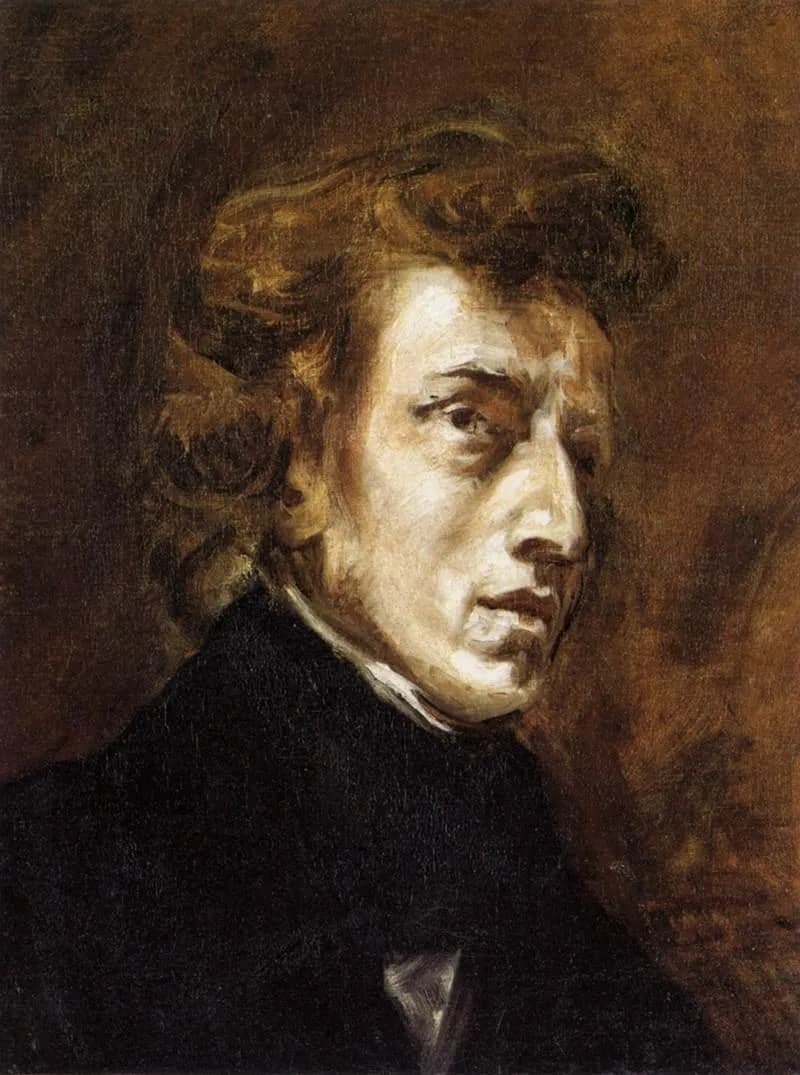
Who Was Frederic Chopin, Poland's Great Polish Composer?
Fryderyk Franciszek Chopin — the French spelling "Frédéric" came later, once he'd settled in Paris — was born on 1 March 1810 in Żelazowa Wola, a small village about 46 kilometers west of Warsaw. His father, Nicolas, was a French emigrant who had settled in Poland and taught French; his mother, Justyna Krzyżanowska, was Polish. Frédéric was the only son among four children, and the family moved to Warsaw just months after his birth.
Even by the standards of famous child prodigies, Chopin's start was fast. He was giving public concerts by age seven and had composed his first two polonaises by the time he was seven. His talent wasn't a family myth exaggerated later — it was documented in real time by teachers and critics who watched it happen.
A Child Prodigy in Warsaw
Chopin's formal training began with Czech pianist Wojciech Żywny, who taught him from 1816 to 1821. He then attended the Warsaw Lyceum from 1823 to 1826 before enrolling at the Warsaw Conservatory, where he studied composition under Józef Elsner. Elsner's final report on his student read simply: "exceptional talent, musical genius." It wasn't flattery — it was a teacher recognizing that the country's most important composer had just walked out of his classroom.
By his late teens, Chopin had already composed both of his piano concertos, works still considered staples of the Romantic repertoire. He was, by every account, ready for a bigger stage than Warsaw could offer. He just didn't know yet that leaving would be permanent.
Leaving Poland Forever: The November Uprising
On 2 November 1830, Chopin left Warsaw intending to travel through Vienna toward Italy — a fairly ordinary career move for a young composer looking to broaden his reputation. Weeks later, the November Uprising broke out back home, as Polish officers and cadets rose up against Russian imperial rule. Chopin's own travel companion, Tytus Woyciechowski, turned around immediately to go fight. Chopin kept traveling.
He arrived in Paris on 5 October 1831 and never went back. The uprising was crushed within a year, and Russian reprisals made return politically dangerous for someone with Chopin's connections and reputation. What started as a study trip became permanent exile — a pattern familiar to readers of Adam Mickiewicz's own story, Poland's other great Romantic-era export who also left after the same uprising and never returned either.
Life in Paris: Fame Without the Big Stage
Chopin's Paris debut came on 26 February 1832 at the Salle Pleyel, and it was an immediate triumph. He quickly fell in with the city's musical elite — Franz Liszt, Robert Schumann, and Hector Berlioz were now his peers and friends, not distant names in a Warsaw newspaper.
What's unusual is that Chopin never chased the kind of large-scale touring fame that made Liszt a household name across Europe. He gave roughly 30 public performances in his entire career, strongly preferring the intimacy of private Parisian salons over concert halls. He made his living mostly from teaching wealthy students and selling compositions to publishers — a quieter, more selective kind of celebrity that suited his health and temperament far better than a touring circuit would have. Classic FM's own biography of the composer calls him one of Romantic music's earliest advocates of "absolute music," valuing the sound of the piano itself over the show of performing it.
George Sand and the Most Productive Years of His Life
Chopin met the novelist George Sand — pen name of Aurore Dupin — in 1836, and his first reaction was not romantic. "What an unattractive person la Sand is," he reportedly said. "Is she really a woman?" Two years later, after an engagement to Maria Wodzińska quietly fell apart, Chopin and Sand became lovers.
Their relationship produced one of the odder chapters of 19th-century music history: a miserable winter together on Mallorca from November 1838 to February 1839, where local villagers turned hostile once they realized the couple wasn't married. Despite the cold, the tension, and Chopin's declining health, this period was remarkably productive — his 24 Preludes, Op. 28, were completed there. The relationship continued through summers at Sand's country estate at Nohant until it ended acrimoniously in 1847, two years before his death.
Mazurkas and Polonaises: Chopin Piano Music Rooted in Poland
Even after decades in Paris, Chopin never stopped writing in Polish forms. His mazurkas and polonaises are rooted directly in Polish folk dance — the mazurka from the folk dances of the Mazovia region around Warsaw, the polonaise from a stately processional dance with roots in the Polish nobility. He didn't just borrow the rhythms; he elevated them into serious concert repertoire, doing for Polish folk identity in music something similar to what later painters would do by weaving actual folk motifs into fine art — taking something rural and everyday and proving it belonged in the same rooms as European high culture.
This wasn't incidental. Chopin was writing for Parisian salons filled with fellow Polish émigrés who'd fled the same failed uprising he had. A mazurka wasn't just a pretty tune to that audience — it was a small act of cultural defiance, a reminder of a home none of them could safely visit.
The Revolutionary Étude and the Fall of Warsaw
Popular legend holds that Chopin wrote his Étude Op. 10, No. 12 — now nicknamed the "Revolutionary" — in a fit of rage upon hearing that Russian forces had crushed the uprising and captured Warsaw in September 1831. It's a great story, and the piece's stormy, relentless left-hand runs certainly sound like grief and fury translated into notes.
The honest answer is that historians can't fully confirm it. The étude's completion does line up roughly with the timeline, and Chopin's letters from that period are full of documented despair over Poland's defeat. But Chopin never attached titles or explicit programs to his études, and the "Revolutionary" nickname itself seems to have come later, from Polish exiles in Paris reading their own nationalist feeling into the music. Whether or not it was a direct reaction, it's become inseparable from that moment in Polish history regardless.
Illness, Decline, and Death in Paris
Chopin was never a healthy man. Serious illness became undeniable from 1842 onward — after a February recital that year he reported severe mouth and throat pain requiring bed rest. By late 1844, a visiting friend described him as "hardly able to move, bent like a half-opened penknife." His compositional output tracked the decline almost exactly: 12 works in 1841, down to just one sonata in 1844 and three short mazurkas in 1845.
His last public performance came on 16 November 1848 at London's Guildhall, a benefit concert for Polish refugees that reportedly exhausted him severely. By then he weighed under 45 kilograms. He died in Paris on 17 October 1849, at 39 years old; his death certificate names tuberculosis as the cause, though some modern researchers suspect a secondary condition may have compounded it. His funeral at the Church of the Madeleine drew such a crowd that over 3,000 people without tickets had to be turned away.
Why His Heart Is in Warsaw But His Body Is in Paris
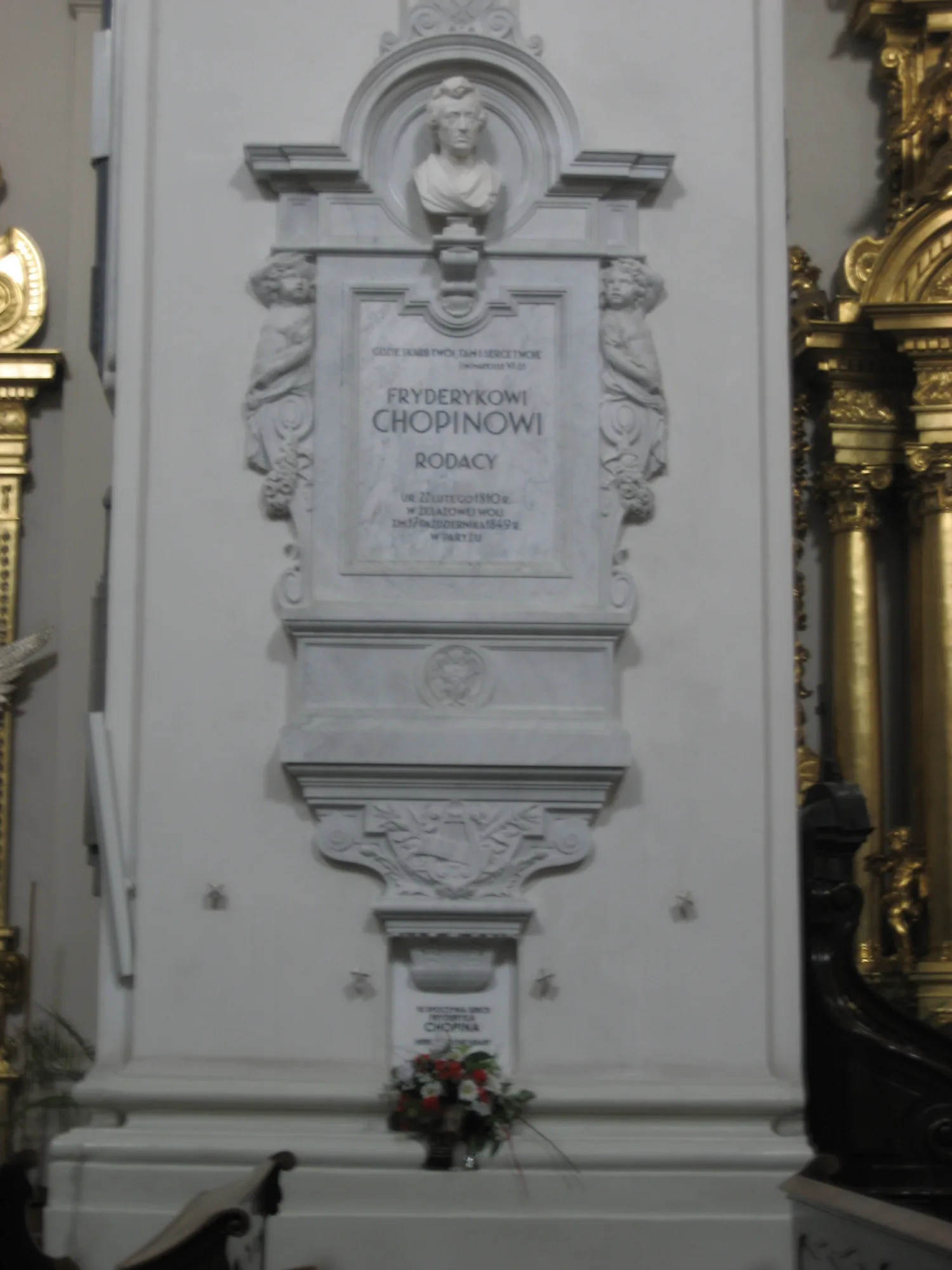
Chopin's final request was unusual and specific: he wanted his body buried in France, where he'd built his career, but his heart returned to Poland, the country he'd never seen again. Both wishes were honored. His body was buried at Père Lachaise Cemetery in Paris, with painter Eugène Delacroix among the pallbearers. His heart, preserved in alcohol, was smuggled back to Warsaw by his sister Ludwika in 1850.
It now rests inside a pillar at Holy Cross Church in Warsaw, sealed there since 1879 beneath a marble memorial reading, simply, "Fryderykowi Chopinowi — Rodacy" ("To Fryderyk Chopin — his countrymen"). Visitors still leave flowers at its base today.
The Chopin Warsaw Monument the Nazis Blew Up
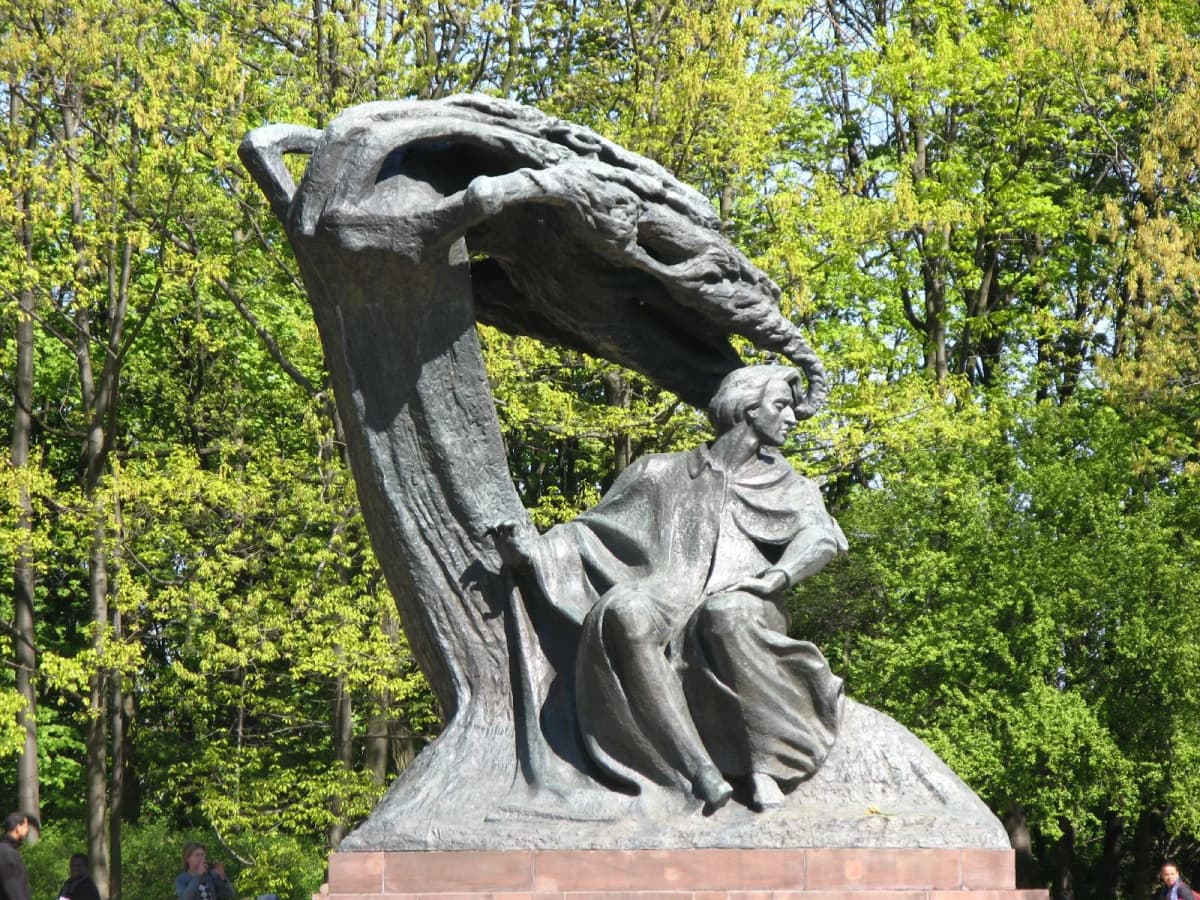
Warsaw's most famous Chopin tribute is the bronze monument in Łazienki Park, showing the composer seated beneath a wind-bent willow tree. It was designed in 1907, but disputes over the design and the outbreak of World War I delayed its casting for nearly two decades — it wasn't unveiled until 1926.
It didn't stay standing for long. In 1939, occupying Nazi forces banned Chopin's music outright, treating it as a symbol of Polish national identity too dangerous to allow. On 31 May 1940, on direct orders from Governor-General Hans Frank, the monument was blown up — the first public monument the Germans destroyed in occupied Warsaw. It's a story that echoes almost exactly what happened to the country's other wartime cultural resistance, from the codebreakers whose work never made the official history books to composers whose music itself became contraband.
The monument was rebuilt after the war and unveiled again in 1958. Since 1959, it's hosted free open-air piano recitals of Chopin's own music every summer Sunday — a quiet, deliberate act of putting back exactly what was destroyed.
The International Chopin Piano Competition: Poland's Olympics of Piano
Founded in 1927 and held in Warsaw every five years since 1955, the International Chopin Piano Competition is the closest thing classical piano has to an Olympic final. The New York Times has called it "the Olympics of the piano world," and it's exclusively devoted to Chopin's own compositions — nothing else is performed.
The jury doesn't hand out first prize lightly. It was withheld entirely in both 1990 and 1995 because no competitor was judged good enough that year. Winners who did clear the bar include Maurizio Pollini (1960), Martha Argerich (1965), and Krystian Zimerman (1975) — pianists who went on to define the instrument for entire generations after their win in Warsaw.
The Frederic Chopin Poland Still Celebrates Today
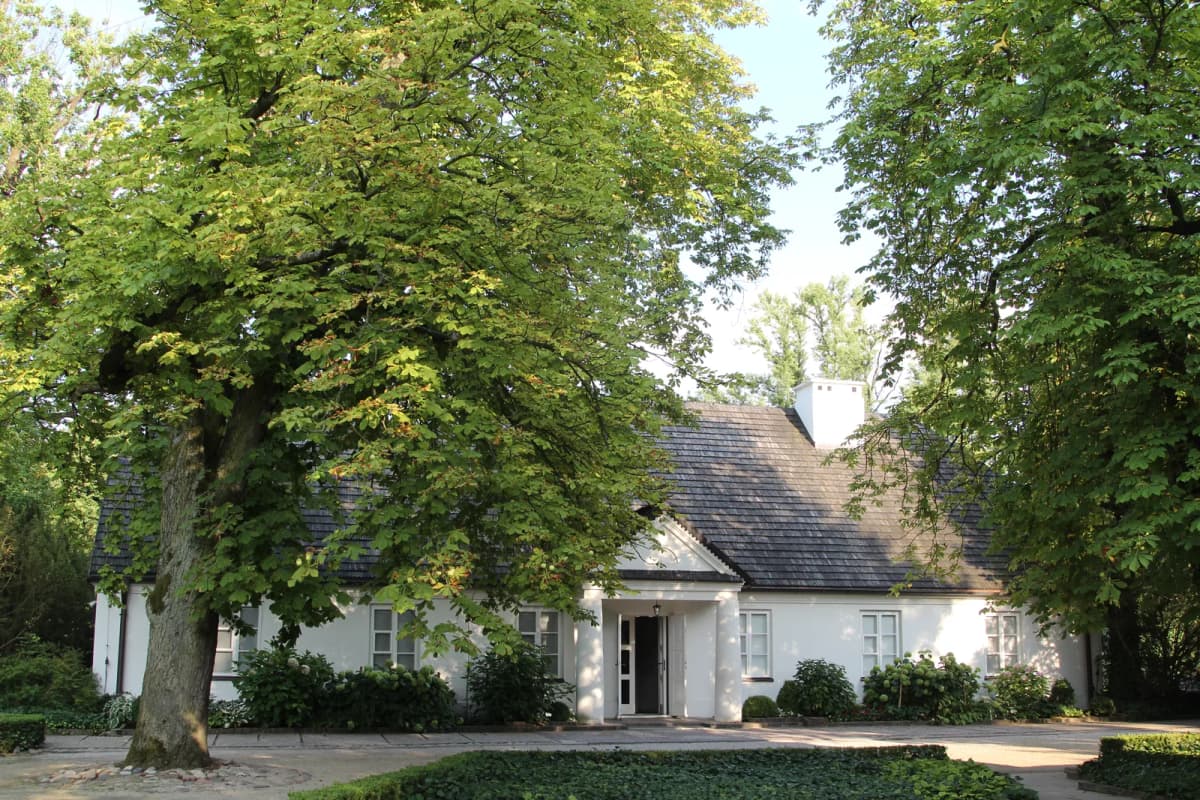
Chopin's name isn't confined to concert halls. Warsaw's main international airport carries his name, meaning most visitors to Poland encounter "Chopin" on a boarding pass before they ever hear a note of his music — a small, constant reminder for anyone researching where to actually go once they land. The Fryderyk Chopin Institute, established by the Polish parliament, maintains his manuscripts, funds the competition, and runs the museum at his birthplace in Żelazowa Wola, which is now open to visitors as a biographical park and museum.
Key Facts About Frederic Chopin
| Fact | Detail |
|---|---|
| Born | 1 March 1810, Żelazowa Wola, Duchy of Warsaw |
| Died | 17 October 1849, Paris, age 39 |
| Left Poland | 2 November 1830 — never returned |
| Main instrument | Piano — almost his entire output is solo piano music |
| Signature forms | Nocturnes, mazurkas, polonaises, ballades, études, preludes |
| Burial | Body at Père Lachaise, Paris; heart at Holy Cross Church, Warsaw |
| Named after him | Warsaw Chopin Airport; the International Chopin Piano Competition |
Common Misconceptions About Chopin
"The Revolutionary Étude was definitely written the day Warsaw fell." As covered above, this is a beloved but unconfirmed legend — the timeline lines up, but Chopin himself left no note attaching the piece to that specific event.
"He was a touring virtuoso like Liszt." He actually avoided large public concerts almost entirely, giving only around 30 in his lifetime and building his career instead through salons, teaching, and publishing.
"He was purely French, given his French father." He was born, raised, and educated entirely in Poland until age 20, spoke Polish as his first language, and used French-inspired dance forms far less than the Polish mazurka and polonaise that define his catalogue.
Frequently Asked Questions
Was Frederic Chopin Polish or French? Both, technically — his father was French and his mother Polish — but he was born, raised, and educated in Poland until he left at 20, and considered himself Polish throughout his life in Paris.
Why is Chopin's heart separate from his body? It was his own dying wish. He wanted his body buried in France, where his career was made, but asked for his heart to be returned to Poland, the country he could never safely visit again after 1830.
Did Chopin ever return to Poland? No. He left in November 1830, and the failed uprising that followed made it politically unsafe for him to go back. He died in Paris nineteen years later, having never seen Warsaw again.
What is Chopin most famous for composing? His nocturnes, mazurkas, polonaises, and 24 Preludes are the most performed today, along with his two piano concertos, written before he even left Warsaw.
How often is the Chopin Piano Competition held? Every five years in Warsaw, since 1955. It's one of the most prestigious classical music competitions in the world and is devoted entirely to his compositions.
Is Chopin's music still popular in Poland today? Extremely — his name is on the country's main airport, his monument hosts free public recitals every summer, and the Chopin Institute actively promotes his work through the museum, competition, and archive.
What language did Chopin speak? Polish was his native language, learned growing up in Warsaw; he was also fluent in French from his father and picked up French further after settling in Paris.
Two centuries on, it's still strange that so much of Poland's biggest cultural export never physically returned to the country after age 20 — and yet somehow that's exactly why the story sticks. A composer who spent nineteen years homesick in Paris, writing mazurkas for a room full of fellow exiles, ended up saying more about what home meant to Polish identity than almost anyone who stayed.