Polish wedding traditions pack more ritual into one weekend than most cultures fit into an entire event calendar: parents greeting the newlyweds with bread and salt, guests handing over cash in an envelope instead of a gift-wrapped box, a chant that only stops once the bride and groom kiss, and — if you're not warned in advance — a second wedding the very next day. If you're heading to one as a guest, or just trying to understand why your Polish partner's family talks about "wesele" like it's a three-day event, this is what's actually happening and why.
Unlike a lot of wedding customs that have quietly faded into optional extras, most Polish wedding traditions are still very much alive today, from tiny village ceremonies to big city affairs. Here's what to expect, in roughly the order it happens.
Brama: The Wedding Gate That Blocks the Road Until You Pay
Before the couple even reaches the church, they often have to get past a brama — literally "gate" — a barricade rigged up by neighbors and locals who weren't invited to the wedding but want in on the fun anyway. Usually strung across the road near the bride's house as a ribbon, rope, or decorated barrier, the brama blocks the wedding procession from passing until a toll is paid.
Each gate tends to come with its own little performance: someone might dress up as a fortune-teller, a beggar, or a laundress pretending to work, refusing to lower the barrier until the groom hands over payment — almost always a few bottles of vodka, sometimes with sweets or small change added in. In villages, a couple can run into more than one brama on the same short drive, paying their way through each in turn before they're finally allowed to reach the church.
It's playful rather than adversarial, and that's the point: the brama lets the wider community take part in the day, not just the guests who made the official list.
The Church Ceremony: Where Polish Wedding Traditions Begin
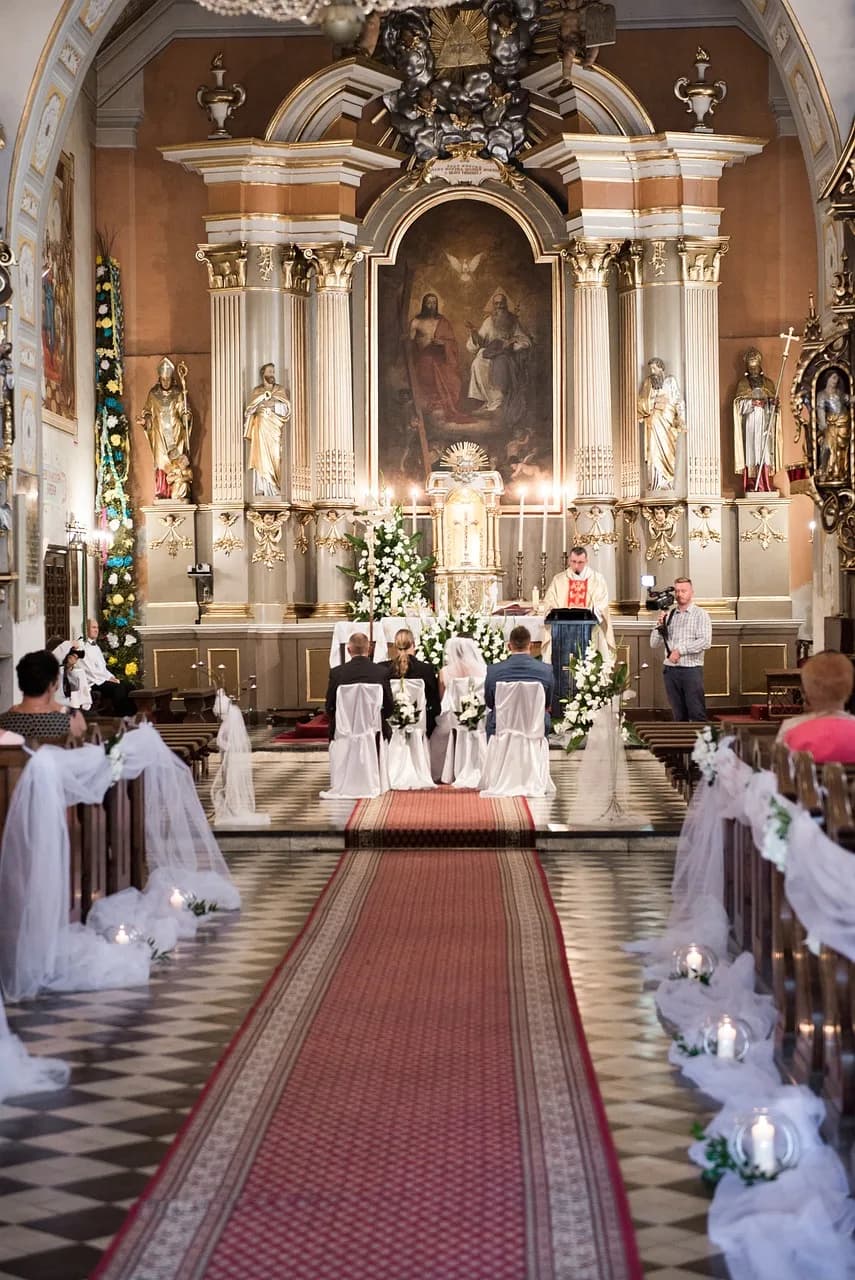
Most Polish wedding traditions still begin with a Catholic church ceremony (ślub kościelny), even among couples who aren't especially religious day-to-day — Poland remains one of Europe's more church-attending countries, and a church wedding is still the cultural default in a lot of families. The couple exchanges vows at the altar, usually with just two witnesses standing beside them rather than a full bridal party, and the rest of the guests fill the pews behind.
Historically, the whole event started even earlier than the ceremony itself. The groom would arrive at the bride's family home first, sometimes with music playing, and the guests would travel to the church together as a group — walking, if the village was small enough, or in a procession of cars honking the whole way if it wasn't. That noisy convoy on the road to the church is still a fairly common sight in smaller towns.
Chleb i Sol: The Bread and Salt Blessing in Polish Wedding Customs
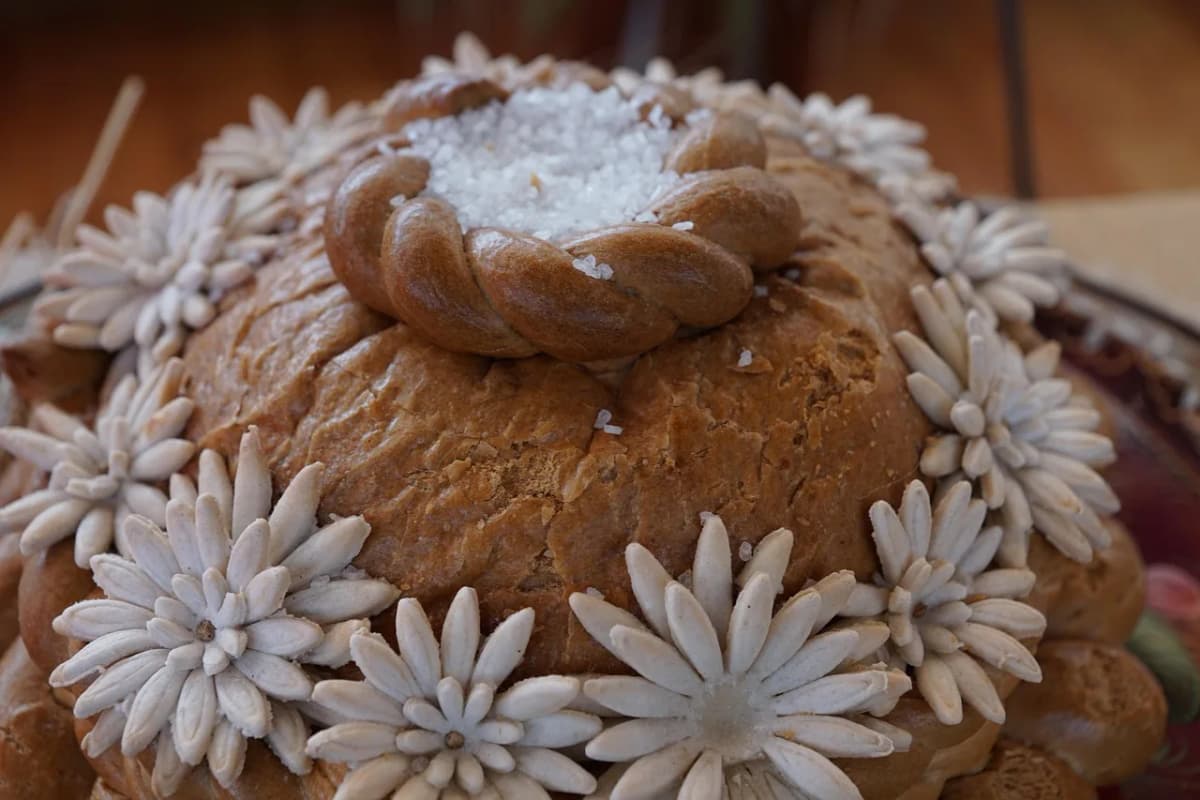
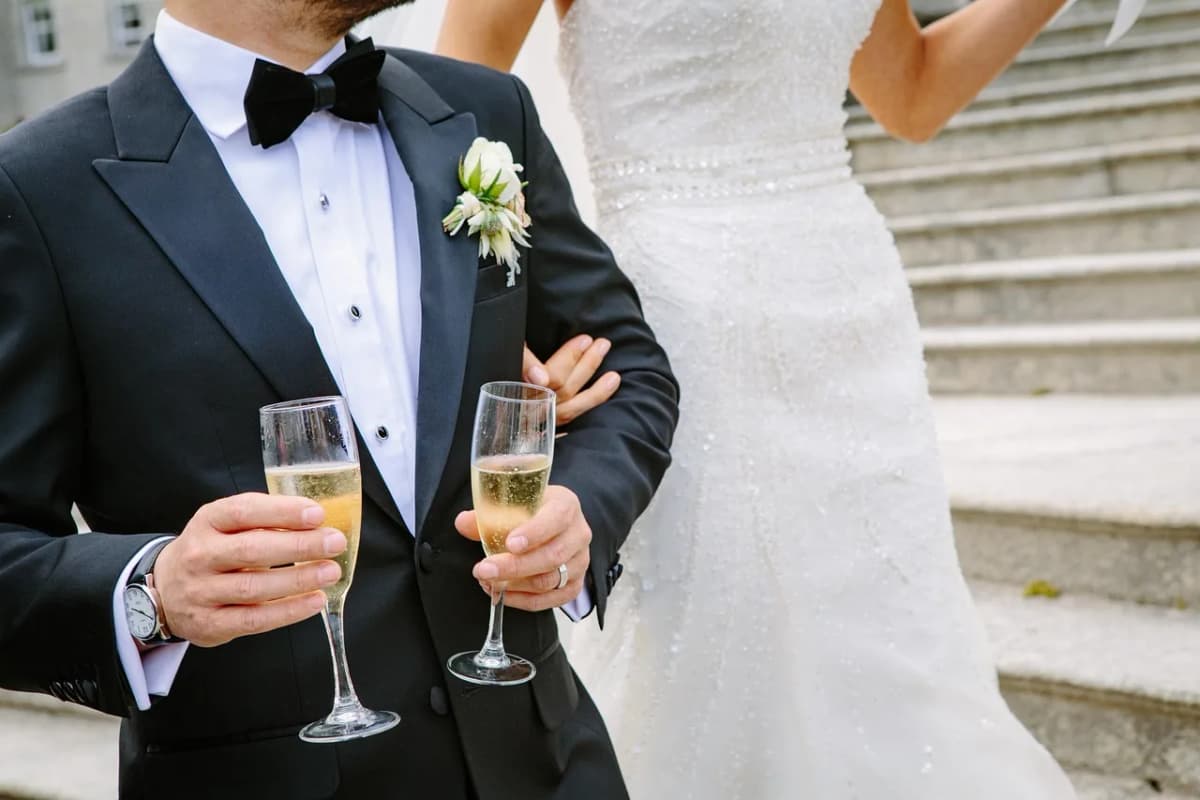
Once the ceremony ends and everyone moves to the reception venue, the parents of the bride and groom are usually the ones standing at the door — not a wedding planner, not a hired greeter. They welcome the newlyweds with a round loaf of bread, a small dish of salt, and a shot of vodka, in a ritual called chleb i sól ("bread and salt") that predates Christianity in Poland entirely.
The couple tears off a piece of the bread, dips it in the salt, and eats it, then drinks the vodka together before their parents kiss them in welcome. Each element carries its own meaning: the bread is a wish that the couple never go hungry, the salt is an acknowledgment that married life will have hard moments they'll need to face together, and the vodka is a wish for good cheer and closeness. In some families, the couple throws the empty glass over their shoulder to shatter on the ground afterward, symbolically breaking with any bad luck before the party really starts.
The Koperta: Why Guests Bring Cash, Not Gifts
If you're invited to a Polish wedding, don't show up with a blender. The near-universal gift at Polish weddings is a koperta — literally "envelope" — containing cash, handed directly to the couple, usually right after the ceremony or early in the reception. It's not considered impersonal; it's the expected contribution toward the cost of hosting you for what is often a very long, very well-fed night.
There's no fixed rule, but guests generally calibrate the amount to roughly cover what their attendance costs the couple — food, drink, and venue per head — plus a bit more as an actual gift. A card and a small bouquet for the bride often accompany the envelope, but the cash itself is the point. Skipping it, or bringing a wrapped present instead, tends to read as a genuine faux pas rather than a charming alternative.
Gorzko, Gorzko! The Chant That Won't Stop Until You Kiss
At some point during the reception — usually more than once — the room will suddenly start chanting "gorzko, gorzko!", meaning "bitter, bitter!" It sounds like a complaint about the vodka, and in a roundabout way, it is: the joke is that the drink in everyone's glass has turned bitter, and the only thing sweet enough to fix it is a kiss between the bride and groom. The couple kisses, the chanting stops, and everyone goes back to drinking until it inevitably starts up again twenty minutes later.
It's one of the more good-natured, low-stakes Polish wedding traditions, and also one of the most reliable ways to spot a Polish wedding from across a crowded venue — the sudden unison chant is unmistakable.
Sto Lat: The Song for Every Celebration
"Sto lat" ("a hundred years") is the song Poles sing to wish someone a long, happy life, and it shows up at birthdays, name days, retirements, and — constantly — at weddings. The lyrics are short and simple enough that every guest, regardless of how much they've had to drink by that point, can join in without hesitation. It's sung to the couple as they arrive, often again during the bread-and-salt blessing, and typically at least once more before the night is over.
If you only learn one thing to sing along to at a Polish wedding, it's this one — you'll hear it before you've even finished your first drink.
The Polonez: Poland's Processional Opening Dance
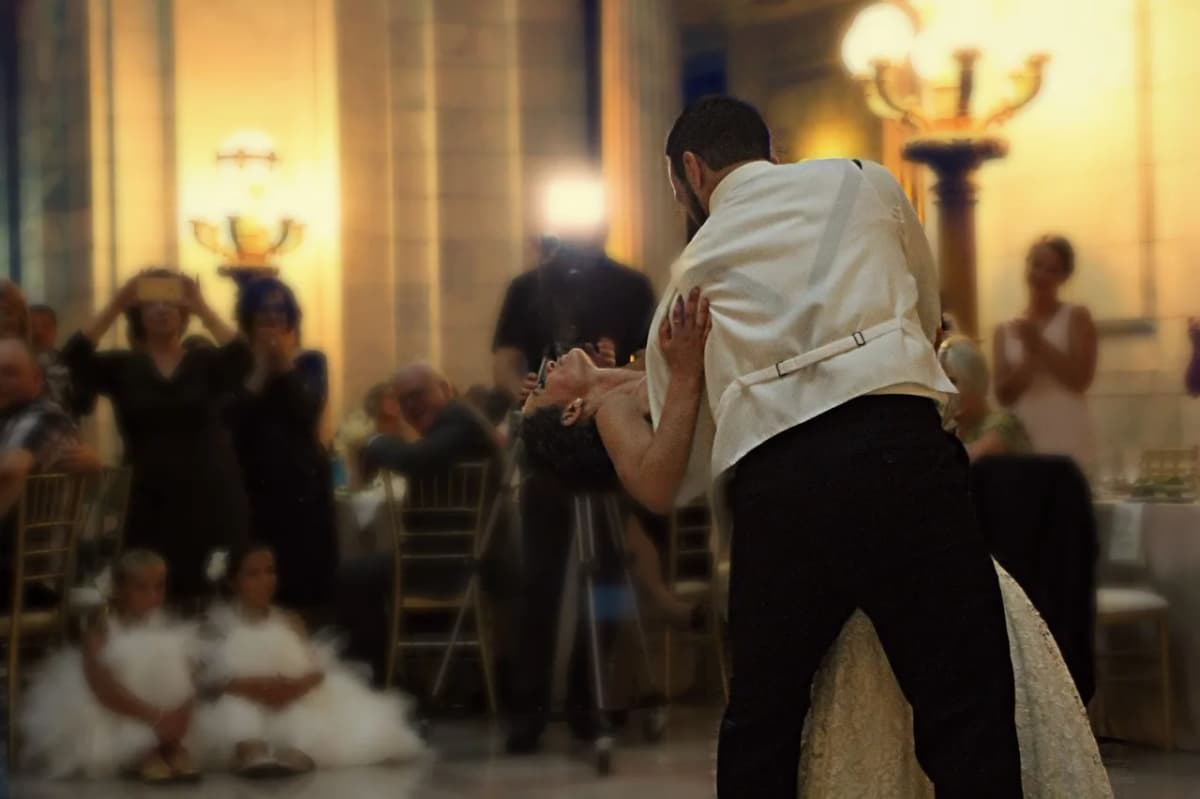
Many Polish weddings open their dancing not with a slow first dance but with the polonez, a stately, walking processional dance that's less about flashy footwork and more about everyone taking part together. Couples link arms and process around the room in a long, winding line, bowing and circling in coordinated patterns as more guests join in behind the newlyweds.
The polonez isn't unique to weddings — it's Poland's national dance, performed at school proms, New Year's celebrations, and formal community gatherings too — but its presence at a wedding reception signals the formal part of the evening is giving way to the party. It was inscribed on UNESCO's Intangible Cultural Heritage list in 2023, recognized specifically for the way it "commemorates important moments in family and community life" and draws in guests of every age rather than staying confined to a trained few.
Oczepiny: The Midnight Unveiling
Sometime around midnight, the mood shifts again for oczepiny, a ritual marking the bride's transition from single life into marriage. Traditionally, the bride sits surrounded by the unmarried women at the party and throws her veil into the group; whoever catches it is said to be next to marry. The groom does the same with his tie among the unmarried men. It's playful rather than solemn by this point in the evening, often accompanied by party games, and it doesn't mean the celebration is anywhere near finished — if anything, it's often treated as the unofficial start of the wedding's second wind.
Poprawiny: Why the Wedding Isn't Over the Next Day
Here's the detail that catches a lot of foreign guests off guard: Polish weddings routinely run two days, and the second day has its own name — poprawiny. Held the day after the main event, usually starting around midday and running into the evening, poprawiny brings back the closest family and friends (not the full guest list) for a more relaxed continuation, often at someone's home rather than the rented venue.
The tradition has practical roots — using up the mountain of leftover food, giving out-of-town relatives a reason not to rush home, and letting the immediate family unwind together after the intensity of the main event — but it's remained popular simply because Polish weddings are built to be marathons, not sprints. Some families stretch things even further into a third day, though two is the standard expectation.
Zaręczyny: The Engagement Before the Wedding
Polish wedding traditions don't start on the wedding day itself — zaręczyny, the engagement, has its own small set of customs leading up to it. Traditionally, the groom-to-be would formally ask the bride's father for permission before proposing, a custom that's softened over the decades but hasn't fully disappeared, especially in smaller towns and more traditional families. The engagement is often marked with a family gathering rather than a big public celebration, and the engagement ring is worn on the right hand in Poland, moving to the left only after the wedding ceremony itself.
Once the date is set, save-the-dates and formal invitations tend to go out well in advance, since Polish weddings — with their two-day structure and large guest lists that often include extended family and family friends rather than just close circles — take real logistical planning to pull off.
What Guests Wear to a Polish Wedding
Polish wedding traditions extend to the guest list's wardrobe, too, with one rule that trips up outsiders more than any other: never wear white, and avoid anything that could be mistaken for it, since that's reserved entirely for the bride. Beyond that, dress tends toward formal — suits and ties for men, cocktail or evening dresses for women — since a Polish wedding is treated as a significant, dressed-up occasion rather than a casual party, even in a barn or a garden venue. Comfortable shoes are worth packing regardless of formality, given how long the dancing runs.
Table of Key Polish Wedding Traditions
| Tradition | What It Means |
|---|---|
| Brama | Wedding gate set up by neighbors, blocking the road until the groom pays a toll (usually vodka) |
| Chleb i sól | Bread-and-salt blessing from parents, wishing prosperity and resilience |
| Koperta | Cash gift in an envelope, given instead of a wrapped present |
| Gorzko, gorzko! | Chant demanding the couple kiss to "sweeten" the bitter drinks |
| Sto lat | The traditional song wishing the couple a hundred years of happiness |
| Polonez | Processional opening dance performed by the couple and guests together |
| Oczepiny | Midnight veil-and-tie toss marking the bride and groom's transition to married life |
| Poprawiny | The second day of celebration, held for close family and friends |
| Zaręczyny | The engagement period leading up to the wedding, including asking for the bride's hand |
Common Mistakes Guests Make at a Polish Wedding
A few things trip up first-time guests specifically. Bringing a wrapped gift instead of a koperta is the biggest one — it's not offensive, but it does mark you as unfamiliar with the custom, and gift registries are essentially nonexistent. Assuming the wedding ends at a normal hour is another: receptions commonly run until sunrise, and leaving "early" at midnight can genuinely surprise your hosts. Guests also sometimes treat oczepiny as the finale, when it's really closer to a midpoint marker than a closing act. And if you're invited to poprawiny, know that it's an intimate, close-family affair — it's not automatically extended to every guest from the day before, so don't assume you're included unless it's explicitly mentioned.
Frequently Asked Questions
What is the traditional Polish wedding blessing with bread and salt called? It's called chleb i sól ("bread and salt"), performed when the newlyweds' parents greet them at the reception with bread, salt, and a shot of vodka, symbolizing prosperity, resilience, and shared joy.
Why do Polish wedding guests chant "gorzko, gorzko"? "Gorzko, gorzko" means "bitter, bitter," a lighthearted claim that the drinks have gone bitter and can only be sweetened by the bride and groom kissing. It repeats throughout the reception, not just once.
What do you give as a wedding gift in Poland? Cash in an envelope (koperta), typically handed to the couple directly, calibrated to roughly cover the cost of hosting you plus a genuine contribution toward their new life together. Wrapped gifts are uncommon.
How long does a Polish wedding last? The main event typically runs late into the night or until dawn, and is very often followed by a second day, poprawiny, held the day after for close family and friends. Some families extend the celebration to a third day.
What is oczepiny at a Polish wedding? Oczepiny is a midnight ritual where the bride throws her veil to the unmarried women and the groom throws his tie to the unmarried men, symbolizing the bride's transition into married life. It's playful rather than solemn and doesn't mark the end of the party.
Is the polonez the same as the first dance at a Polish wedding? Not exactly — the polonez is a group processional dance that many guests join, distinct from a couple's private first dance. It's Poland's national dance, also performed at school proms and formal community events, and was recognized as UNESCO Intangible Cultural Heritage in 2023.
Do all Polish weddings still follow these traditions? Most of them, yes, though the degree varies by family and region — bread and salt, the koperta, "gorzko gorzko," and a two-day structure remain close to universal, while things like the exact oczepiny games or how strictly the polonez is performed vary more.
What should you not wear to a Polish wedding? Avoid white or anything close to it — that color is reserved for the bride. Beyond that, Polish wedding traditions favor formal dress for guests, closer to an evening event than a casual celebration.
What happens during zaręczyny, the Polish engagement? Zaręczyny traditionally involves the groom asking the bride's father for permission before proposing, followed by a family gathering rather than a big public event. The engagement ring is worn on the right hand until the wedding, then moved to the left.
What is the brama tradition at a Polish wedding? Brama ("gate") is a barricade — often a ribbon or decorated rope — that neighbors set up near the bride's house to block the wedding procession on the way to church. The groom pays a toll, usually vodka, before the group is allowed to pass.
Between the church procession, the bread and salt at the door, a chant that hijacks the room every twenty minutes, and a second day nobody warned you about, a Polish wedding isn't so much an event as an entire weekend built around one couple. If you're building your Polish vocabulary for occasions like this, the celebratory spirit carries over directly into how Poles mark name days, and no wesele playlist is complete without a detour into disco polo, the genre that will absolutely be playing by the time the dancing gets serious.