Krzysztof Penderecki spent decades writing some of the most unsettling music of the 20th century, and most of the people who've heard it have no idea who he is. If you've ever watched The Exorcist with the lights off, or made it through the hedge-maze finale of The Shining, you've heard him — his shrieking strings and metallic drones are doing as much work in those scenes as anything on screen.
He wasn't a film composer by trade. Penderecki was Poland's most important avant-garde composer, a man who tore up traditional musical notation in the 1960s and then spent the back half of his career writing the kind of lush, romantic symphonies he'd once rejected. Horror directors just happened to notice that his experiments in dissonance sounded exactly like dread.
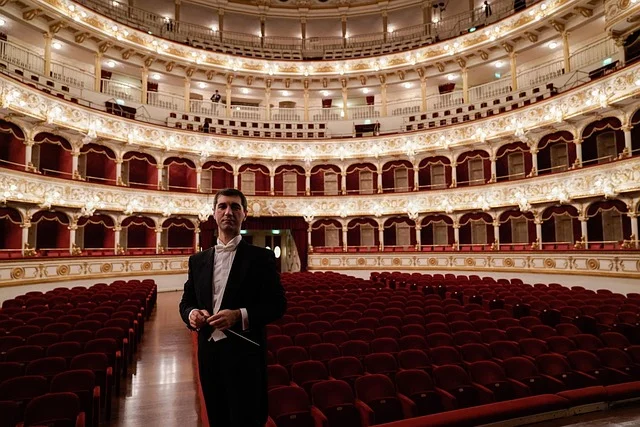
Who Was Krzysztof Penderecki? Poland's Polish Avant-Garde Composer
Krzysztof Eugeniusz Penderecki was born on November 23, 1933, in Dębica, a small town in southeastern Poland. His father, Tadeusz, was a lawyer who also played violin and piano — a household where music was a serious hobby, not yet a career path, and where Krzysztof absorbed both instruments early.
By the time Penderecki reached the Kraków music scene in the 1950s, Poland's isolation behind the Iron Curtain had, oddly, become an advantage. Composers there were cut off from Western commercial pressure and free to experiment in ways few other 20th-century musicians could afford to. Penderecki used that freedom aggressively, and within a few years he wasn't just part of the Polish avant-garde — he was leading it.
A Wartime Childhood in Dębica
Penderecki was six years old when Germany invaded Poland in 1939, and his early years were shaped by occupation rather than concert halls. Formal violin lessons didn't start until 1946, under a military bandmaster, once the war had ended and something like normal life had returned.
That timeline matters for understanding his later work. A composer who spent his first six years of life inside a country under occupation, and who grew up around the physical and psychological wreckage of wartime Poland, didn't need to invent the idea of dread from nothing. It was part of the world he was born into.
Kraków, the Academy of Music, and a New Sound
Penderecki moved to Kraków in 1951 to study at Jagiellonian University, then enrolled at the city's Academy of Music in 1954, where he switched his focus from violin performance to composition under Artur Malawski. By 1959, at the Warsaw Autumn festival — Poland's showcase for new music — the 25-year-old Penderecki entered a composers' competition and won all three top prizes under three different pseudonyms. The judges didn't realize they were rewarding the same composer three times over.
That single event effectively launched his career. Within a year, he'd write the piece that would define his reputation for the rest of his life.
Threnody to the Victims of Hiroshima: The Piece That Wasn't Supposed to Be About Hiroshima
Here's the detail almost every biography of Krzysztof Penderecki includes, because it's genuinely strange: his most famous piece wasn't written about Hiroshima at all. In 1960, Penderecki composed a piece for 52 string instruments and gave it an abstract technical title, "8′37″," referring to its length. Only after hearing the finished recording — full of shrieking, sliding, scraping string effects — did he retitle it Threnody to the Victims of Hiroshima, a memorial to the 1945 atomic bombing.
The renaming worked. Audiences hearing the new title heard exactly what Penderecki heard: air-raid sirens, screaming, structures collapsing. The piece won a UNESCO award and became the single work most associated with his name, even though the connection between the music and its subject was assigned after the fact rather than composed into it from the start.
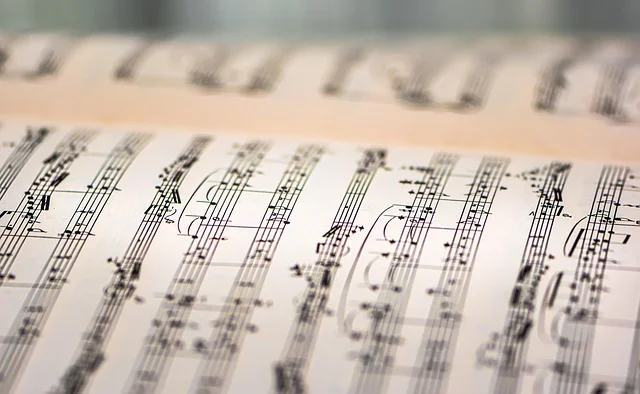
Tone Clusters, Bowed Tailpieces, and a Notation System He Invented
Threnody wasn't a fluke — it was Penderecki demonstrating a whole toolkit of techniques he'd developed for wringing new sounds out of traditional instruments. He wrote "tone clusters," dense stacks of adjacent notes played together instead of a clean chord, to create the piece's wall-of-noise effect. He had string players bow behind the bridge and directly on the tailpiece, producing scraping, metallic tones no string instrument was designed to make.
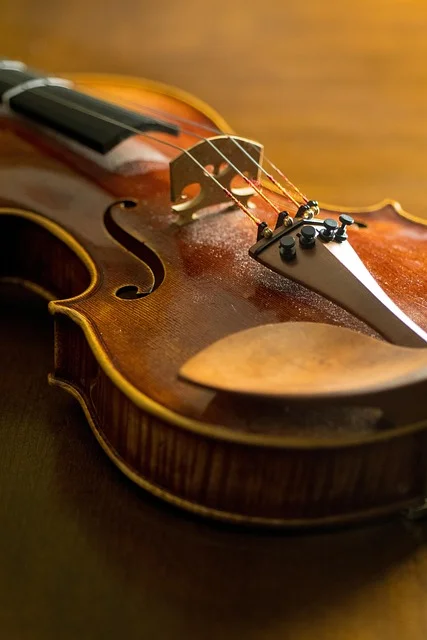
Standard sheet music couldn't capture any of this, so Penderecki invented his own graphic notation — wavy lines, shaded blocks, and symbols in place of conventional notes — to tell performers exactly how hard, how fast, and in what direction to scrape. It looked more like an engineering diagram than a musical score, and it's part of why his 1960s work still sounds genuinely alien more than sixty years later.
The St. Luke Passion and Fame Behind the Iron Curtain
Between 1963 and 1966, Penderecki composed the St. Luke Passion, a large-scale choral setting of Christ's crucifixion that fused his avant-garde textures with older Baroque forms and a hidden musical reference to Bach's own name spelled out in notes (B-A-C-H). It was a religious, overtly Christian work composed inside an officially atheist Communist state — and it became a sensation anyway, performed and broadcast across Eastern Europe.
The St. Luke Passion did something few pieces of experimental music manage: it made dissonance accessible to an audience that had never asked for it, by wrapping genuinely strange sounds inside a structure and subject matter listeners already understood.
How Krzysztof Penderecki Film Music Ended Up in The Exorcist
None of Penderecki's film music was actually written for film. Directors went looking for existing recordings that matched the mood they needed, and Penderecki's catalog — full of dread, tension, and sounds nobody had heard before — was exactly what horror needed. William Friedkin used Penderecki's 1961 piece Polymorphia, built from the same tone-cluster techniques as Threnody, in The Exorcist (1973) to score some of the film's most disturbing sequences, years before Penderecki had any idea his music would end up there.
It set a pattern. Directors working in horror and psychological thrillers kept rediscovering Penderecki's back catalog for the same reason: it already sounded like the inside of a breakdown.
The Shining Soundtrack: Kubrick's Nine-Piece Penderecki Playlist
Stanley Kubrick went further than anyone. For The Shining (1980), he handed his sound editor nine pieces of existing music to cut into the film, and seven of them were Penderecki compositions — Polymorphia, Kanon, De Natura Sonoris No. 1 and No. 2, Utrenja, and The Dream/Awakening of Jacob.
Polymorphia plays as Wendy discovers Jack's manuscript, page after page reading only "All work and no play makes Jack a dull boy." De Natura Sonoris No. 2 underscores Danny writing REDRUM in lipstick on the mirror, and returns — heavily looped and re-edited — for the film's maze finale. None of it was composed with a single frame of The Shining in mind; Kubrick simply recognized that Penderecki's sound design for orchestral instruments already matched the psychological collapse he was filming.
The pattern continued well past 1980. Martin Scorsese used Penderecki's music in Shutter Island (2010), and David Lynch built entire sequences of Twin Peaks around it — evidence that four decades after Threnody, Penderecki's catalog was still the go-to sound for dread.
Why Horror Directors Kept Finding Him
The honest answer is that Penderecki wasn't trying to frighten anyone — he was trying to expand what orchestral instruments could physically do, and the byproduct of that experimentation happened to sound like anxiety, breakdown, and the uncanny. Traditional horror scores lean on minor keys and sudden stings; Penderecki's tone clusters and scraping textures don't resolve into anything familiar at all, which is a large part of why they unsettle listeners who can't name what they're hearing.
Once one major director proved the technique worked, others followed the same trail back to the same catalog — which is how a Polish avant-garde composer with no interest in film became one of horror's most reused sources of unreleased dread.
The Mid-1970s Turn: Trading Dissonance for Melody
By the mid-1970s, while teaching at Yale School of Music in the United States, Penderecki began pulling away from the avant-garde style that had made his name. He later explained the shift bluntly: unrestrained experimentation, he said, "is more destructive than constructive." His Violin Concerto No. 1 and Symphony No. 2 (nicknamed the "Christmas Symphony" for its use of the carol Silent Night) marked a full return to melody, harmony, and the Romantic-era forms he'd spent the 1960s dismantling.
It's a genuinely unusual arc for a composer: build a reputation on radical sonic experimentation, then spend the second half of a career walking it back toward Brahms and Mahler. His 1984 Polish Requiem, composed in memory of victims of Poland's 20th-century tragedies, belongs fully to this later, more traditional period.
Kraków, Lusławice, and the Arboretum He Built

Penderecki kept close ties to Kraków for his entire life, living in the suburb of Wola Justowska. Outside the city, at his manor in Lusławice, he built and maintained a 16-hectare arboretum — a passion project as serious to him as composing, filled with rare trees he collected personally. It's a strange, quiet detail for a man whose music is best known for orchestrated dread, and it says something about how separate Penderecki-the-person was from Penderecki-the-sound. Kraków itself remains one of the cities where his legacy is most visible today.
Legacy: Grammys, the Wolf Prize, and a Renamed Academy
Penderecki's honors accumulated across six decades: four Grammy Awards, the Wolf Prize in Arts (1987), the Grawemeyer Award (1992), and Spain's Prince of Asturias Prize (2001). He died on March 29, 2020, at his home in Kraków at age 86, following a long illness, and was buried at the National Pantheon in the city's Saints Peter and Paul Church.
Poland's culture minister called him the nation's "most outstanding contemporary composer" in the days after his death, a judgment covered in detail by PBS NewsHour's obituary of his life and work. The following year, Kraków's Academy of Music — the same institution where he'd once switched from violin to composition — was renamed in his honor.
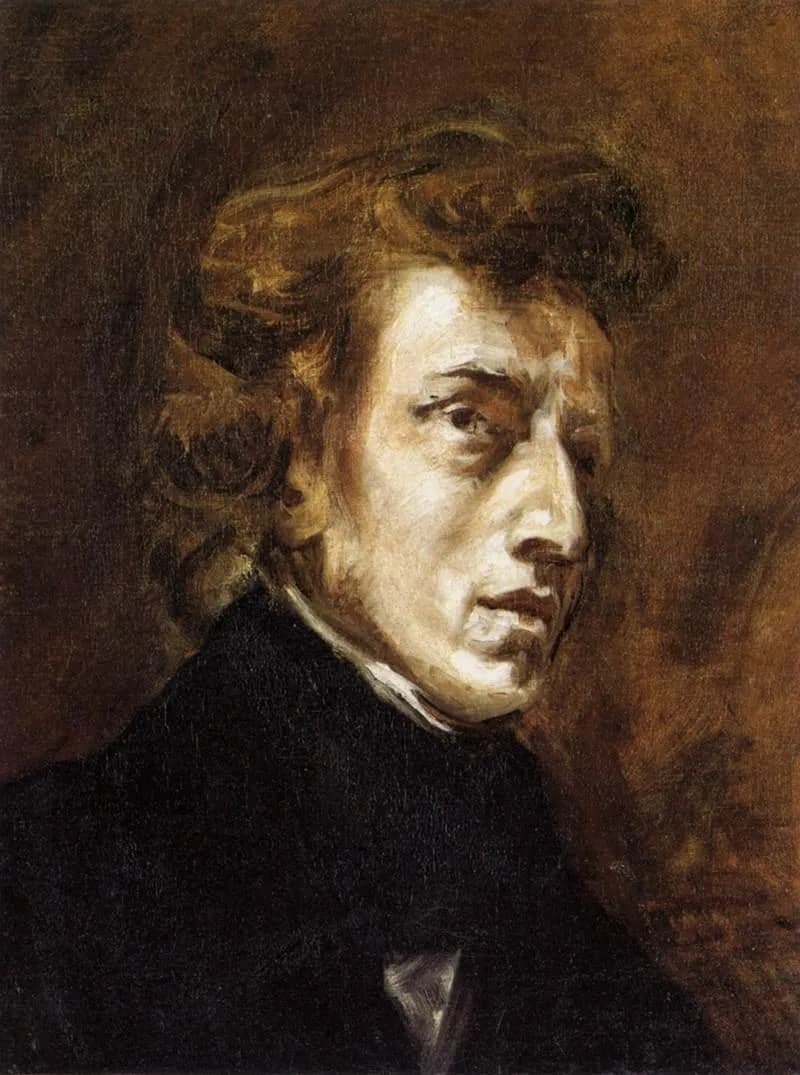
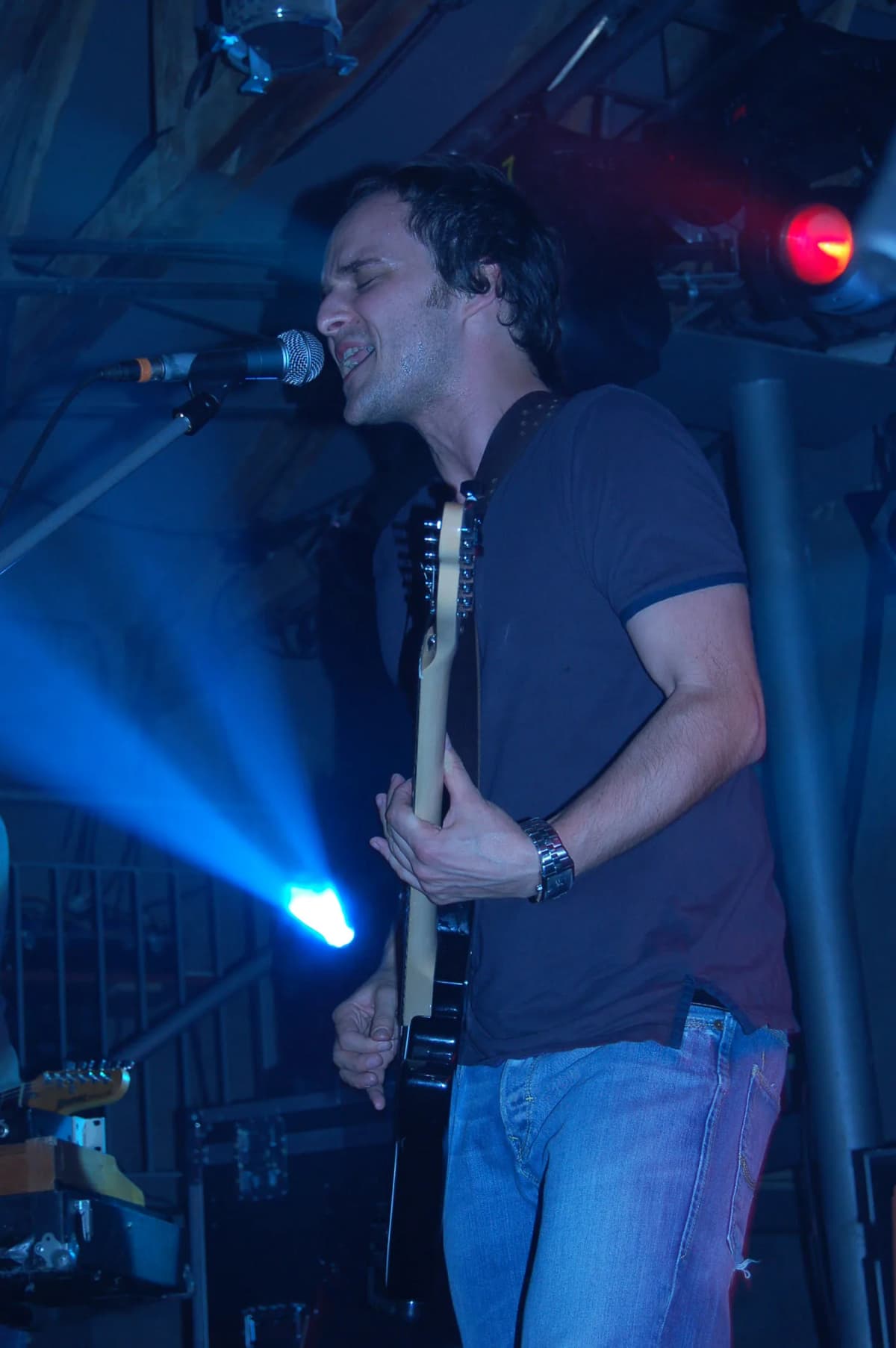
Poland's music scene runs from Penderecki's tone clusters at one extreme to the folk-rooted mazurkas of Frederic Chopin at the other, and both are considered part of the same national musical identity, a century and a half apart. Between the two of them sits a more recent generation — the shoegaze of Klimt and the alt-rock of Myslovitz — proof that Poland's musical output never stayed in one lane for long.
Key Facts About Krzysztof Penderecki
| Fact | Detail |
|---|---|
| Born | November 23, 1933, in Dębica, Poland |
| Died | March 29, 2020, in Kraków, age 86 |
| Breakthrough work | Threnody to the Victims of Hiroshima (1960) |
| Signature technique | Tone clusters and extended string techniques |
| Films featuring his music | The Exorcist, The Shining, Shutter Island, Twin Peaks |
| Stylistic shift | Avant-garde (1950s–60s) to neo-romantic (mid-1970s onward) |
| Major honors | 4 Grammy Awards, Wolf Prize, Grawemeyer Award |
Common Misconceptions About Krzysztof Penderecki
"He composed music specifically for horror movies." He didn't. Every use of his music in film came from directors selecting pre-existing concert works, not commissions — Penderecki never set out to write a horror score in his life.
"Threnody to the Victims of Hiroshima was written in response to Hiroshima." The piece existed as an abstractly titled work before Penderecki renamed it after hearing the finished recording — the connection to Hiroshima came second, not first.
"He only ever wrote dissonant, difficult music." His career splits almost exactly in half: the avant-garde experimentation most people associate with his name, and a much longer later period of melodic, Romantic-leaning symphonies and concertos that sound nothing like Threnody.
Frequently Asked Questions
What is Krzysztof Penderecki most famous for? He's best known for Threnody to the Victims of Hiroshima (1960), a piece for 52 strings built from tone clusters and extended techniques, and for having his avant-garde recordings used in The Exorcist and The Shining decades after he wrote them.
Did Krzysztof Penderecki write music for The Exorcist and The Shining? No — none of it was commissioned for either film. Directors William Friedkin and Stanley Kubrick both selected existing Penderecki recordings, including Polymorphia and De Natura Sonoris, and edited them into their soundtracks.
Is Krzysztof Penderecki considered a classical composer? Yes, though his career spans two very different classical traditions — 1960s avant-garde experimentation and a later neo-romantic style closer to traditional 19th-century composition.
Where was Krzysztof Penderecki born? He was born in Dębica, a town in southeastern Poland, in 1933, and later built his career and lifelong home base around Kraków.
Why does Penderecki's music sound so unsettling? His tone clusters and extended string techniques — bowing behind the bridge, scraping the tailpiece — don't resolve into familiar chords the way most music does, which is part of why listeners perceive it as tense or frightening even without understanding the technique behind it.
Did Penderecki write any other famous pieces besides Threnody? Yes — the St. Luke Passion (1966), a large-scale choral work, and the Polish Requiem (1984), composed in memory of victims of Poland's 20th-century tragedies, are both considered major works in his catalog.
Krzysztof Penderecki spent a career refusing to stay in one lane, and it's fitting that his music ended up somewhere he never aimed for — inside some of the most rewatched horror films of the last fifty years, still doing exactly the job he built it to do, just for an audience he never imagined.