
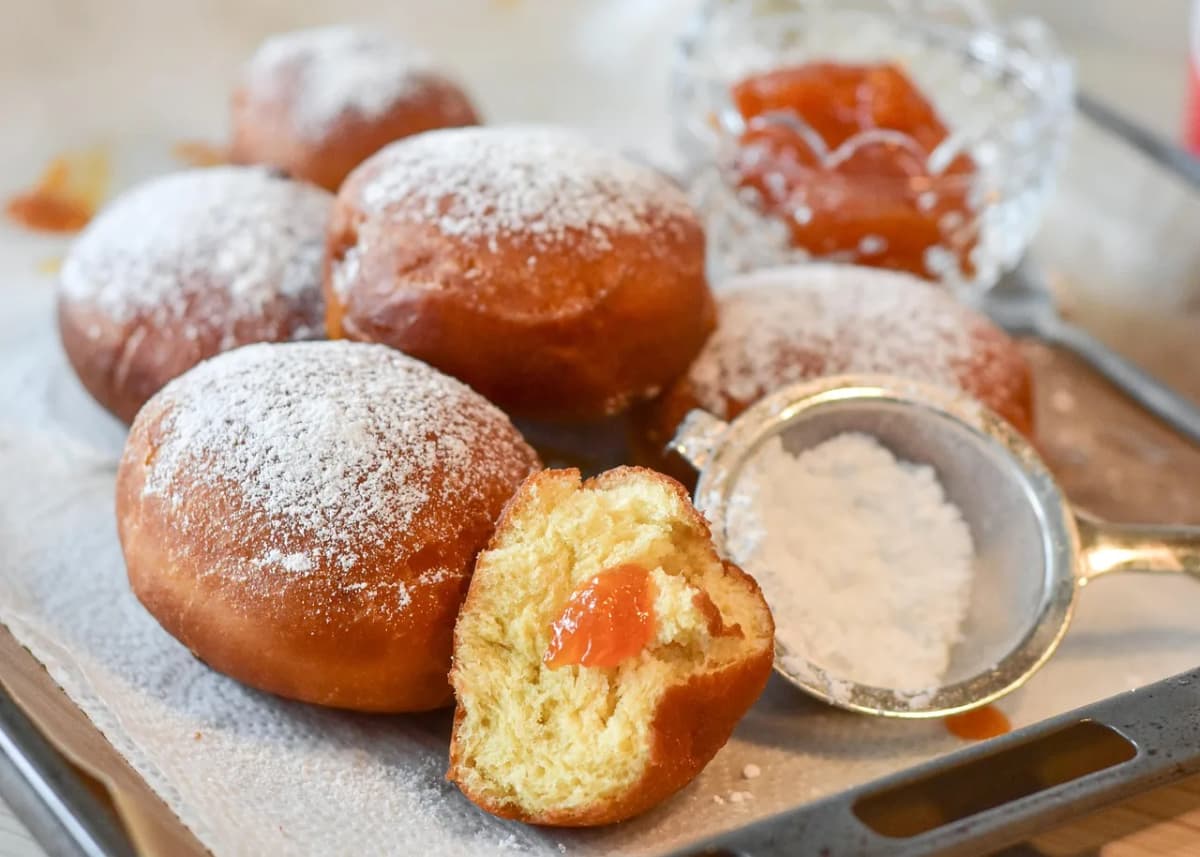
Paczki are the rich, jam-filled Polish donuts eaten once a year on Fat Thursday, the last binge before Lent's 40 days of fasting begin. In Poland, bakeries sell out by mid-morning and office break rooms fill with boxes of them; among Polish communities abroad — from Chicago to London to Toronto — the same tradition has taken on a life of its own. If you've never had one, imagine a jelly donut's richer, denser cousin: deep-fried dough loaded with egg yolks and butter, packed with filling, and dusted with powdered sugar or glazed.
The word is pronounced roughly "PONCH-kee," not "PATCH-kee," and getting that right on the one day a year everyone's talking about them is worth the two-second lesson. Say it correctly at a Polish bakery counter and you'll probably get a small nod of approval before you've even placed your order.
What Is Paczki, Exactly?
A paczek (singular; paczki is the plural) is a deep-fried Polish pastry made from an enriched yeast dough — meaning it's loaded with egg yolks, butter, and sometimes a splash of grain alcohol in the dough, which traditionally helped keep the pastry from soaking up too much frying oil. The result is noticeably denser and richer than a standard American donut, almost like a cross between a donut and a brioche.
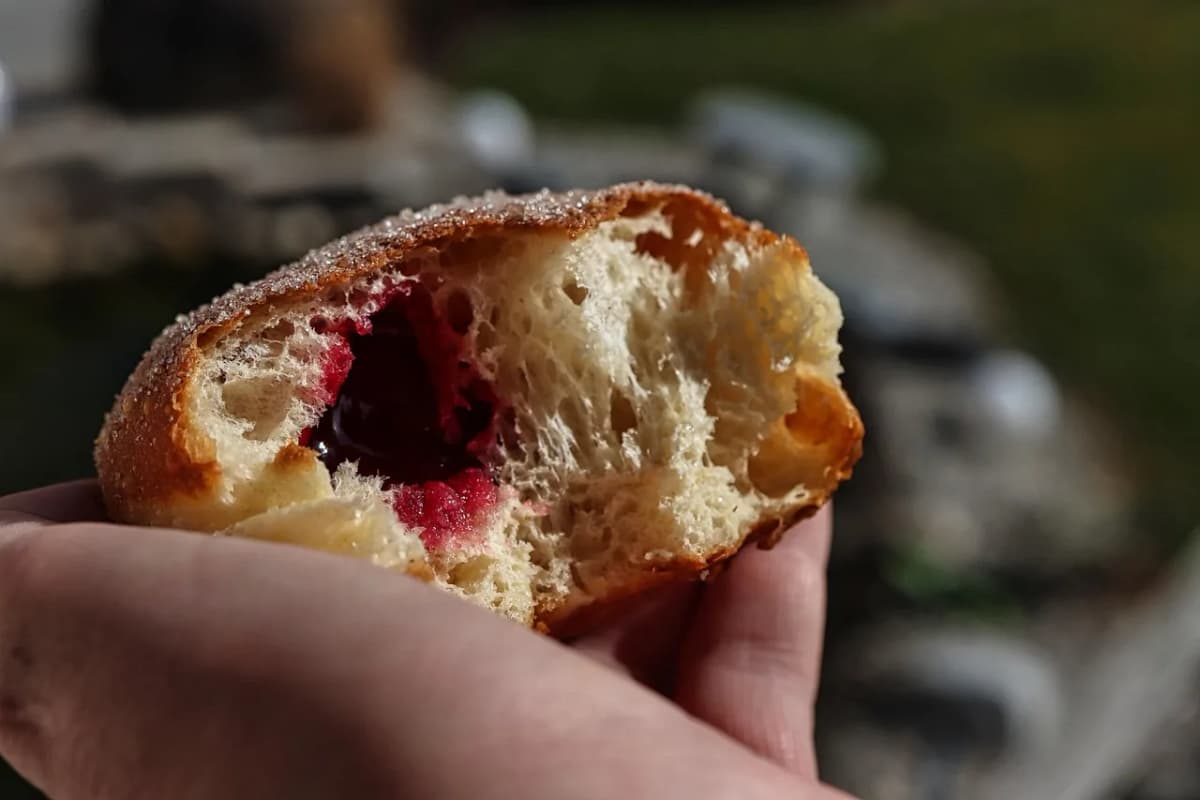
Unlike a ring donut, a paczek has no hole. Instead, it's filled — classically with rose petal jam (róża) or plum butter (powidła), though modern bakeries fill them with everything from custard to Bavarian cream to fruit preserves of every kind. The filling gets piped in after frying, and the whole thing is finished with powdered sugar, a thin glaze, or a scattering of candied orange peel.
The shape itself is distinctive too — round, slightly flattened, and noticeably larger than a standard American donut, closer in scale to a large hamburger bun. A skilled baker can tell whether the dough proofed correctly just by the way it puffs and cracks slightly around the middle during frying, a visual cue that separates a properly made batch from a rushed one. That crack, sometimes called the "belt," is actually considered a mark of quality rather than a flaw.
None of this is diet food, and nobody involved is pretending otherwise. A single one can easily run 300 to 500 calories depending on size and filling, which is exactly why the tradition is built around a single indulgent day rather than casual, everyday eating. That built-in scarcity — the sense that this specific richness only shows up once a year — is arguably as central to the appeal as the taste itself.
Fat Thursday (Tłusty Czwartek): Where the Tradition Actually Started
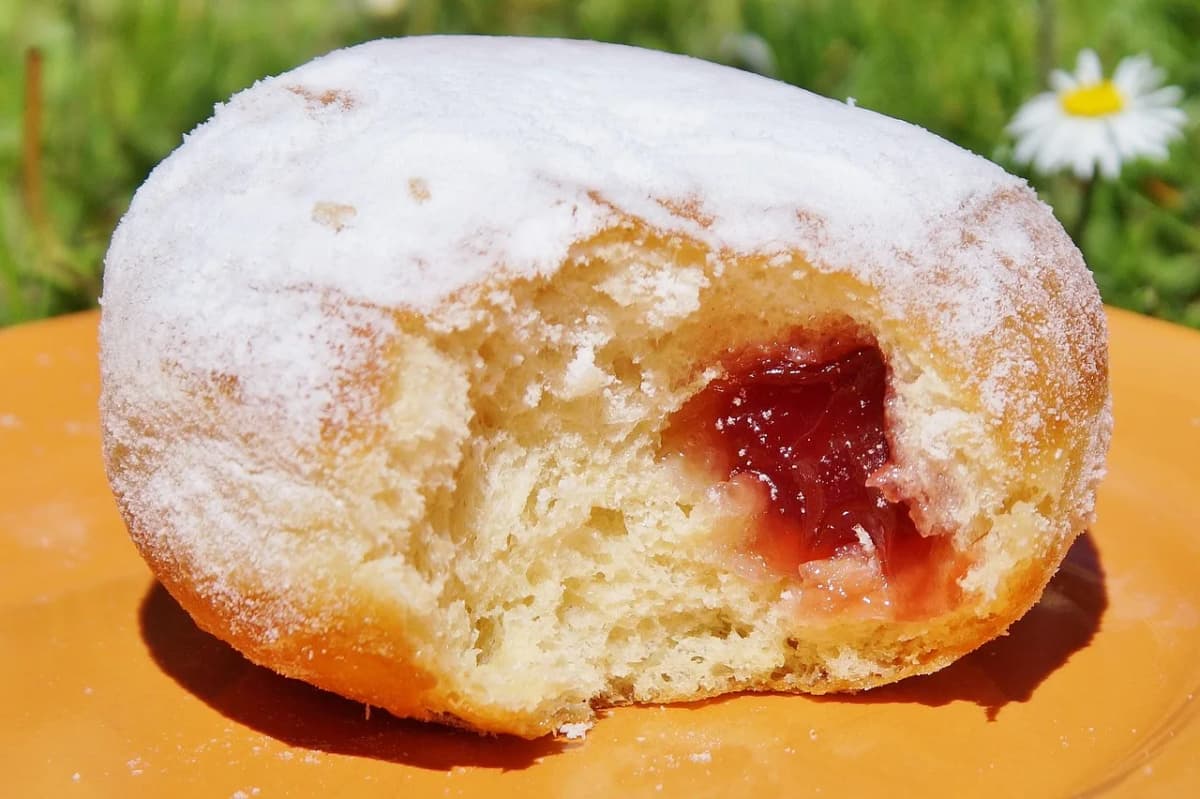
In Poland, paczki have nothing to do with a specific American date — they belong to Tłusty Czwartek, or Fat Thursday, the last Thursday before Lent begins. The tradition dates back to at least the Middle Ages, when Catholic households used the day to burn through their remaining stores of lard, sugar, and eggs before 40 days of Lenten fasting made those ingredients off-limits.
The logic was practical as much as festive: rather than let rich ingredients go to waste before a long fast, families fried them into something indulgent and ate as much as they reasonably could in one sitting. According to Smithsonian Magazine's history of the tradition, this same pre-Lenten indulgence has been documented since at least the Middle Ages. A well-known Polish saying claims that skipping the tradition entirely on Fat Thursday brings bad luck for the rest of the year — which, unsurprisingly, most Poles are more than happy to test.
That superstition isn't taken seriously by most modern Poles, but it's repeated so often it functions as a kind of cultural permission slip. Nobody needs convincing to eat something indulgent and delicious, but having an old saying to point to makes the extra calories feel like tradition rather than simple gluttony — and the excuse gets used, half-jokingly, every single year without fail.
Fat Thursday in Poland is a genuinely nationwide event. Office break rooms fill with boxes of paczki, bakeries sell out by mid-morning, and it's not unusual for someone to eat two or three in a single day, all in the spirit of using up what Lent is about to take away. It's one of many fixed points on Poland's calendar of holidays and traditions, most of which revolve around food in one way or another.
How Polish Communities Abroad Kept the Tradition Alive
Fat Thursday didn't stay confined to Poland's borders. Wherever Poles settled in large numbers — Chicago, London, Berlin, Toronto — the tradition traveled with them, kept alive in home kitchens and immigrant-run bakeries long before it became visible to anyone outside those communities.
Chicago's version happens to be the most widely covered example, mostly because of the sheer size and organization of its Polish American population: immigration waves stretching back to the 1830s and accelerating through the 1850s left the Chicagoland area with an estimated one million Polish Americans today. That concentration, paired with an active local media culture, turned what was originally a private family tradition into a citywide event that local news now covers every year.
What makes that particular version distinct is timing. Polish tradition keeps the celebration strictly on Thursday, but Polish American communities, Chicago included, often merged it with Fat Tuesday and Mardi Gras, creating two separate eating occasions in the same week. Grocery chains and big-box bakeries have leaned into the commercial opportunity too, though longstanding neighborhood bakeries still draw loyal customers who make the trip specifically because a particular shop's recipe tastes like home.
Other diaspora communities keep quieter versions of the same tradition. Polish communities in the UK, Germany, and Canada also mark Fat Thursday with paczki, generally without the same citywide media spectacle, but with the identical basic instinct: use the day to indulge before Lent, regardless of which country you happen to be doing it in. The scale of Chicago's celebration is a story about immigration history and local media, not about which country does the tradition "best" — the tradition belongs to Poland first, and to every community that carried it elsewhere second.
Paczki vs. Regular Donuts: What Makes Polish Donuts Different
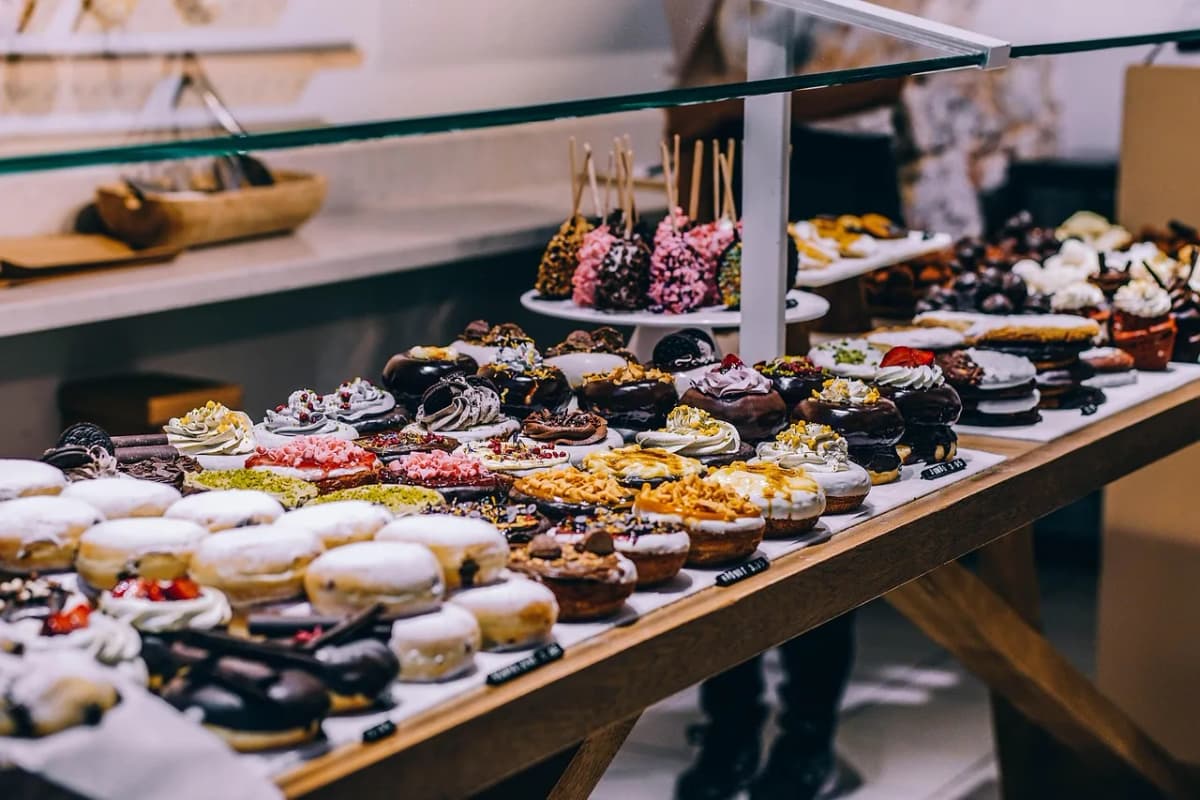
The comparison to a jelly donut is fair but underselling. A paczek's dough uses far more egg yolks and butter than a standard American donut recipe, giving it a heavier, richer crumb that's closer to a brioche or a Danish than a Krispy Kreme. Where an American jelly donut is often light and airy, a well-made paczek should feel substantial — dense enough that one is genuinely filling.
Filling and finish are the other big differences. Traditional Polish fillings lean toward rose petal jam or plum butter, flavors that barely exist in the American donut world, though Chicago bakeries have expanded the menu enormously — custard, Bavarian cream, raspberry, lemon, even savory or novelty flavors show up every February. Most skip the classic pink-sprinkle glaze entirely in favor of plain powdered sugar or a thin, translucent glaze that lets the dense dough underneath do the talking.
Frying technique matters too. Traditional recipes call for frying in lard rather than vegetable oil, which adds another layer of richness and a subtly different flavor that longtime bakers insist you can taste even under all that sugar. Some old-school bakeries still fry this way, though most large-scale commercial kitchens have shifted to oil for cost and shelf-life reasons, a change that purists occasionally grumble about but that hasn't slowed sales down in the slightest.
Poland Isn't the Only Country With a Pre-Lent Pastry
Poland is far from alone in treating the days before Lent as an excuse for one last indulgence. Germans have the Berliner, a nearly identical filled, sugar-dusted fried dough eaten around the same point in the calendar. New Orleans has king cake for Mardi Gras, a completely different pastry but the same underlying logic — use up the rich ingredients, mark the transition into a leaner season, and do it as a community rather than alone.
What sets the Polish and Polish American version apart is the sheer intensity of the single-day focus. Where Mardi Gras stretches across weeks of parades and parties, Fat Thursday concentrates almost entirely into one specific pastry eaten in one specific window of time. That narrowness is part of what makes it easy to explain to outsiders and easy to market commercially — there's no ambiguity about what the day is for.
It also makes the tradition unusually portable. A parade needs streets, floats, and city permits; a specific pastry just needs a bakery and a calendar date, which is a big part of why Polish communities in cities of every size, on every continent, have managed to keep their own versions of the tradition alive without needing anywhere near the same infrastructure or civic investment a parade would require.
When Is Paczki Day in 2026?
In Poland, Fat Thursday falls on February 12, 2026 — always the Thursday before Ash Wednesday, so the exact date shifts with the church calendar every year. In parts of Polish America, including Chicago, the bigger celebration often lands on Fat Tuesday, February 17, 2026, the day before Ash Wednesday itself, giving some communities two separate paczki occasions just five days apart.
Bakeries around both dates typically require preorders for popular flavors, and lines forming before opening hours are completely normal — some of the busiest bakeries sell out within the first hour. If you're planning to get in on the tradition anywhere it's celebrated, showing up early or ordering ahead isn't optional so much as expected.
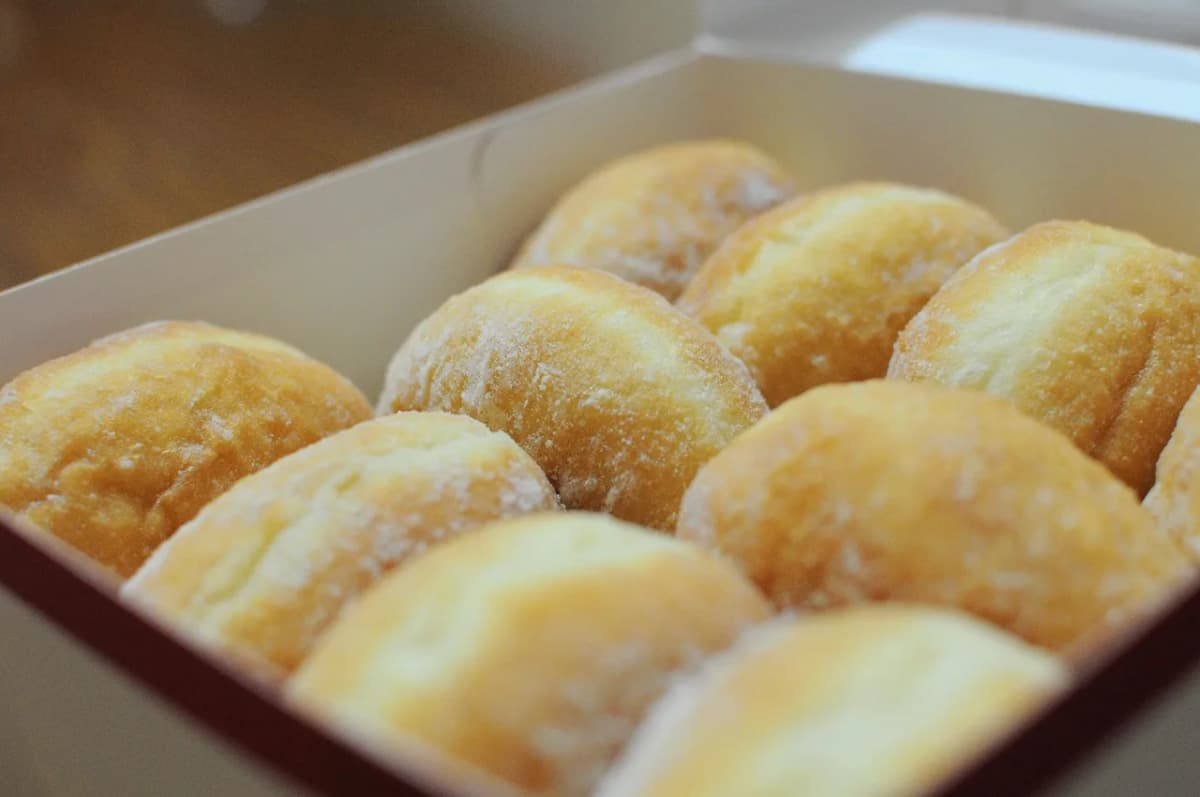
Workplaces often turn the day into its own small ritual, with someone bringing in a few dozen from a favorite local spot for the whole office to share before lunch. That habit alone accounts for a huge share of bakery sales on the day itself, since a single box rarely survives past mid-morning once word gets around the break room.
Scenario: What to Say When You Order Paczki at a Polish Bakery
Picture yourself walking into a Polish bakery on Fat Thursday morning. The case is already half empty, there's a line behind you, and the woman at the counter is moving fast. Knowing a few words in Polish — even mispronounced — tends to get you a warmer response and sometimes a recommendation on what's still fresh.
Here's roughly how that exchange might go:
- Sprzedawczyni (Shop assistant): "Słucham, co dla pana/pani?" — Yes, what can I get you?
- Ty (You): "Poproszę trzy pączki." — I'll have three paczki, please.
- Sprzedawczyni: "Z różą czy z budyniem?" — With rose jam or custard?
- Ty: "Poproszę dwa z różą i jeden z budyniem." — Two with rose, one with custard, please.
- Sprzedawczyni: "Coś jeszcze?" — Anything else?
- Ty: "To wszystko, dziękuję." — That's everything, thank you.
Ordering by filling type, rather than just pointing, signals you actually know what you're asking for — and in a shop moving at Fat Thursday speed, that small bit of clarity is genuinely appreciated. If the counter person switches to English the moment you walk in, that's completely normal too — most bilingual bakeries do it automatically, and continuing in Polish anyway, even just for the order itself, is usually met with a smile rather than confusion.
Table of Important Paczki Words
| Polish word | Rough pronunciation | English meaning |
|---|---|---|
| pączek | PON-chek | one paczki donut (singular) |
| pączki | PONCH-kee | paczki donuts (plural) |
| tłusty czwartek | TWOO-sti CHVAR-tek | Fat Thursday |
| róża | ROO-zhah | rose petal jam (filling) |
| powidła | po-VEED-wah | plum butter (filling) |
| budyń | BOO-din | custard (filling) |
| cukier puder | TSOO-kyer POO-der | powdered sugar |
| lukier | LOO-kyer | glaze / icing |
| piekarnia | pyeh-KAR-nyah | bakery |
| smaczne | SMAHCH-neh | tasty |
Even just ordering "poproszę pączka z różą" — one paczek with rose jam, please — is enough to make a Fat Thursday bakery visit feel less like tourism and more like joining in on something Poles have genuinely been doing for centuries, long before it ever crossed the Atlantic.
These pastries were never meant to be an everyday treat, which is exactly why the one-day-a-year urgency around them feels so genuine, whether you're standing in a bakery line in Kraków, Chicago, or London. The tradition survived Lent's austerity for centuries by leaning into indulgence rather than apologizing for it, and that's still the whole point — eat one, maybe three, and don't feel bad about it until tomorrow.
What's easy to miss, standing in a crowded bakery on the day itself, is how much history is packed into something so simple. A pastry designed to empty out a medieval pantry before weeks of fasting somehow survived church reform, mass emigration, two world wars, and decades of life in whichever new country Polish families eventually settled in — and came out the other side not diminished, but often more celebrated abroad than it started out at home. Few foods manage that kind of journey intact.
If this has you curious about Poland's other iconic foods, pierogi is the obvious next stop — another dish that made a similar journey from Polish kitchens into kitchens and menus worldwide, just by a slower, quieter route than a single frantic Thursday in February.