
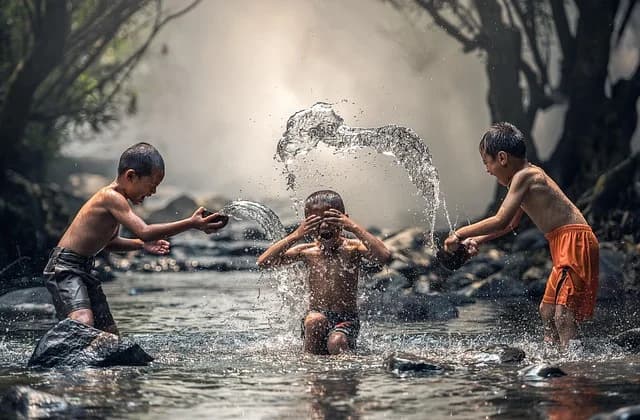
Smigus-Dyngus is the day Poland turns Easter Monday into a nationwide water fight, and if that sounds more like a summer festival than a religious holiday, that's exactly why the tradition has survived for over 600 years. Boys douse girls with buckets, water guns, and sometimes entire garden hoses; girls get their revenge the next day; and somewhere underneath all the soaked clothes is a custom that traces back to Poland's conversion to Christianity itself.
This guide covers where Smigus-Dyngus actually comes from, how it's practiced across Poland today, and why an American city thousands of miles from Warsaw throws one of the largest Dyngus Day celebrations on Earth.
What Is Smigus-Dyngus?
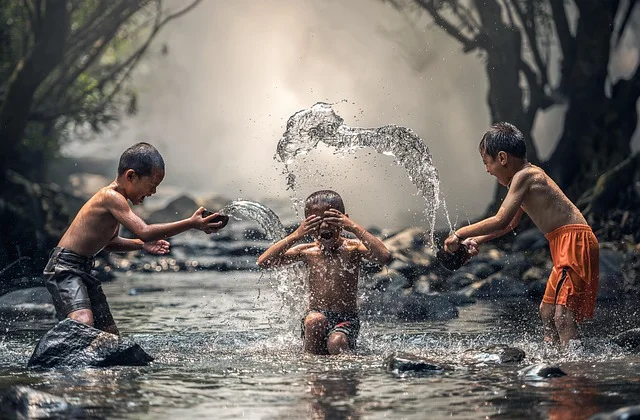
Smigus-Dyngus (pronounced SHMEE-goos DIN-goos) is Poland's Easter Monday tradition of dousing other people with water, historically as a symbolic act of purification marking the end of Lent and the arrival of spring. The name is actually two older customs fused into one word: śmigus, the water-throwing itself, and dyngus, a separate tradition of going door-to-door collecting treats or small ransoms, similar in spirit to trick-or-treating.
The core ritual is simple and has barely changed in centuries: on Easter Monday, boys throw water over girls, sometimes catching them still half asleep at home before dragging them outside for a full soaking. The following day, Easter Tuesday, the girls get to return the favor. In practice today, gender lines have mostly dissolved into a free-for-all — anyone in a Polish town on Smigus-Dyngus should expect to get wet, no exceptions for tourists.
Where the Word "Dyngus" Comes From
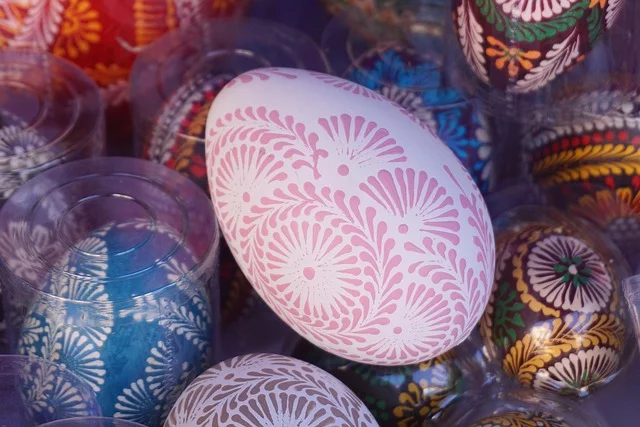
The etymology is genuinely contested, which makes it a rare case of a beloved national tradition whose own name historians can't fully agree on. Most scholars trace "dyngus" back to German roots — either Dingeier ("owed eggs," tied to the custom of giving decorated eggs as a ransom to avoid a soaking) or Dingnis/Dingnus, an old term for a ransom paid during wartime. Either origin fits the practice: for centuries, a girl could avoid getting drenched by handing over a pisanka, a hand-decorated Easter egg, which was itself treated as a small good-luck charm for harvests and healthy births.
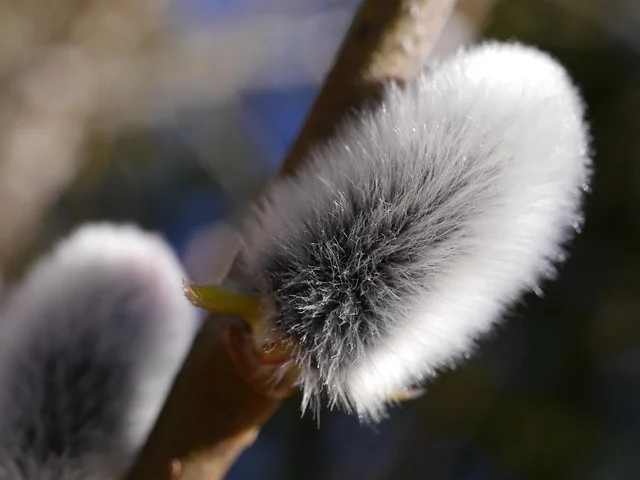
Śmigus, the other half of the name, comes from the Polish verb for a whipping or striking motion — describing the second core custom of gently tapping people with blessed pussy willow branches left over from Palm Sunday, rather than the water itself.
Pisanki themselves deserve a mention beyond their role as a ransom. Polish Easter egg decoration is its own detailed craft tradition, most famously using a wax-resist technique — melted beeswax is applied with a fine metal stylus called a pisak to draw a pattern on the shell, and the egg is then dipped in dye, usually made from natural sources like onion skins for a deep orange-brown. Wherever the wax sat, the shell stays undyed, leaving behind the pattern once the wax is scraped or melted away. This is the same craft tradition behind the eggs that were, and often still are, exchanged during Smigus-Dyngus door-to-door visits.
Palm Sunday and the Blessed Willows Behind the Tradition
Smigus-Dyngus can't really be separated from the Sunday before it. Poland has no native palm trees, so on Palm Sunday — Niedziela Palmowa — Polish churches bless bundles of pussy willow branches (bazie) instead of actual palm fronds, continuing a substitution that dates back centuries in colder parts of Christian Europe. In some regions, particularly around the town of Łyse in northeastern Poland, families and parish communities compete each year to build enormous decorative willow "palms," some towering several meters tall and covered in dried flowers, ribbons, and colored paper, in a tradition now recognized as part of Poland's intangible cultural heritage.
Those blessed branches don't get thrown away after the Palm Sunday service. They're kept for exactly one more week, until Smigus-Dyngus, when they're used for the gentle willow-tapping half of the tradition — a direct, physical thread connecting the solemn church ritual on Sunday to the chaotic water fight the following Monday. It's a rare case of a single plant carrying two completely different moods across one week of the liturgical calendar.
A Tradition Older Than Poland's Written History
Smigus-Dyngus is documented in written records going back to at least the 15th century, and the custom was already common enough by 1410 that the Bishop of Poznań issued a formal edict, Dingus Prohibetur, trying to restrict what he considered excessive "pestering." That an official church document was already trying to rein the tradition in over 600 years ago tells you it was already a well-established, slightly out-of-control custom by the late Middle Ages, not a new fad.
Many historians connect the tradition's deeper roots to Poland's mass baptism in 966 AD under Duke Mieszko I, the same conversion to Christianity that opened the door to the saint names covered in Polish Baby Names. Water, in that reading, carries its most literal meaning: a yearly reenactment of cleansing and rebirth, timed to land right after Lent and right alongside the death-and-resurrection themes of Easter itself.
Other researchers point to older, pre-Christian Slavic spring equinox rites that predate the church entirely, with Christianity layering new meaning onto a water ritual that already existed. Both explanations likely hold some truth — folk customs rarely have a single clean origin story, and Smigus-Dyngus looks like a case where an old pagan practice and a new religious meaning simply merged.
How Smigus-Dyngus Is Celebrated in Poland Today
Modern Smigus-Dyngus keeps the same basic shape as its centuries-old ancestor, just with modern equipment. Water guns, balloons, and buckets have mostly replaced the historical method of dragging a fully dressed girl to the nearest river, though in smaller towns and villages, some older door-to-door customs still survive — including boys dressed as bears or other folk characters going house to house collecting small treats, a tradition that has faded significantly in cities but persists in more rural regions.
One of the more elaborate surviving figures is the turoń, a costumed performer wearing a wooden animal head with snapping jaws, traditionally built around an ox or goat skull and covered in a dark hide or fur. Groups carrying a turoń would go from house to house performing short, often comic verses in exchange for food, drink, or small coins, in a custom that overlaps with older Slavic winter and spring folk-theater traditions rather than belonging to Smigus-Dyngus exclusively. Where it survives today, it's usually folded into the same door-to-door dyngus visits, giving the water fight a theatrical companion custom that most casual visitors never even hear about.
Streets in Polish towns genuinely do flood with people dousing each other on Easter Monday, and it's treated as good-natured fun rather than an inconvenience — getting soaked is, if anything, a sign you were included. Families also use the day for visiting relatives and sharing leftover Easter food, layering a warmer, more domestic custom on top of the chaos outside. Church attendance and the blessing of pussy willow branches on the preceding Palm Sunday remain part of the lead-up for religious households, connecting the water-throwing back to its liturgical roots even as the celebration itself has become largely secular for most participants.
What to Expect as a Visitor During Smigus-Dyngus
Tourists who happen to be in Poland on Easter Monday are not exempt from the tradition, and being caught off guard is part of the fun for locals watching. A few practical notes make the day easier to enjoy rather than endure: dress in clothes that dry quickly and that you don't mind getting soaked, since even a short walk through a town center on Smigus-Dyngus carries real odds of an ambush from a balcony, a doorway, or a passing group of kids with water guns. Phones and cameras are worth keeping in a waterproof bag or pocket rather than carrying openly.
Smaller towns and villages tend to lean into the more elaborate, communal version of the custom, with organized groups going house to house, while big cities like Warsaw see a more scattered, spontaneous version concentrated in parks, squares, and near rivers. Either way, the safest assumption for a first-time visitor is that Smigus-Dyngus is not something to opt out of politely — it's closer to a shared, low-stakes prank that apparently everyone in the country has silently agreed to keep playing on each other, year after year, since at least the 1400s.
Dyngus Day in America: Buffalo, the Capital of the World
Smigus-Dyngus didn't stay in Poland. Polish immigrants carried the tradition to the United States starting in the mid-19th century, and it survives today under its English name, Dyngus Day, most famously in Buffalo, New York — widely recognized as the Dyngus Day capital of the world. Buffalo's Polish community dates back to the 1860s, when industrial recruiters brought waves of Polish workers to the city, eventually making roughly a quarter of Buffalo's population Polish or of Polish descent.
Buffalo's modern Dyngus Day celebration traces to the 1960s, when the Chopin Singing Society began hosting fundraising parties around the holiday. What started small has grown into a full parade through the city's historic Polonia district, drawing tens of thousands of attendees, dozens of polka bands, and coverage from national outlets including Forbes.
Traditional foods like pierogi and kielbasa, polka dancing, krupnik (a spiced honey liqueur), and pussy-willow tapping all make an appearance, alongside the water fights the day is named for. Smaller but still lively Dyngus Day celebrations happen in other historically Polish American cities, including South Bend, Cleveland, and Chicago — each with its own local twist, from parish-hall polka dances to neighborhood parades, but all tracing back to the same Easter Monday custom their grandparents and great-grandparents carried over from Poland.
Smigus-Dyngus vs. Wigilia: Poland's Two Big Water-and-Feast Holidays
If you've read Wigilia: Poland's 12-Dish Christmas Eve Tradition, Smigus-Dyngus makes a natural companion piece — together they bookend Poland's religious calendar with two of its most elaborate customs. Wigilia is quiet, indoor, and food-centered, built around twelve symbolic courses shared with family the night before Christmas. Smigus-Dyngus is loud, outdoor, and almost entirely physical, built around a single simple act repeated by an entire country on the same morning. Where Wigilia asks you to sit still and share a wafer, Smigus-Dyngus asks you to run.
Smigus-Dyngus Vocabulary
| Polish Term | Pronunciation | Meaning |
|---|---|---|
| Śmigus-dyngus | SHMEE-goos DIN-goos | The full name of the Easter Monday tradition |
| Śmigus | SHMEE-goos | The water-throwing custom specifically |
| Dyngus | DIN-goos | The door-to-door treat-collecting custom |
| Pisanka | pee-SAHN-kah | A hand-decorated Easter egg, historically used as a ransom |
| Wierzba | VYEZH-bah | Willow, referring to the blessed pussy willow branches used for tapping |
| Poniedziałek Wielkanocny | poh-nyeh-JAH-wek vyel-kah-NOTS-nih | "Easter Monday," the formal Polish name for the holiday |
Smigus-Dyngus FAQ
When is Smigus-Dyngus celebrated? Always on Easter Monday, the day after Easter Sunday, which moves each year along with the wider Christian Easter calendar.
Is it rude to throw water on strangers in Poland on this day? No — on Smigus-Dyngus, getting soaked by strangers in the street is expected and generally treated as good-natured fun rather than an inconvenience, though visitors should dress accordingly and expect wet weather regardless of the actual forecast.
Why do boys pour water on girls specifically? Historically the custom ran in one direction on Easter Monday, with girls getting their turn to soak boys back on Easter Tuesday. In most of modern Poland, this gender divide has largely dissolved into an everyone-gets-wet free-for-all.
What is Dyngus Day in America? Dyngus Day is the English name for the same Smigus-Dyngus tradition, kept alive by Polish-American communities, most famously in Buffalo, New York, which holds the largest Dyngus Day parade and celebration in the country.
Does Smigus-Dyngus have anything to do with Poland's baptism? Many historians connect the tradition's symbolism of cleansing and rebirth to Poland's mass baptism in 966 AD, though others trace its roots to older, pre-Christian spring rituals that predate Christianity in Poland entirely.
What should I wear if I'm in Poland during Smigus-Dyngus? Clothes you don't mind getting soaked in, ideally quick-drying, since avoiding water entirely on this day is close to impossible in most Polish towns and cities.
Is Smigus-Dyngus celebrated anywhere else besides Poland? Yes — similar Easter Monday water-throwing customs exist across Central Europe, including locsolkodás in Hungary and oblievačka in Slovakia, both sharing the same basic water-and-ransom structure as the Polish tradition.
What are pisanki, and how do they connect to Smigus-Dyngus? Pisanki are hand-decorated Easter eggs, traditionally offered as a small ransom to avoid a soaking — a custom likely tied to the very origin of the word "dyngus" itself, which some scholars trace to a German term for "owed eggs."
Key Facts: Smigus-Dyngus
| Fact | Detail |
|---|---|
| Date | Easter Monday, the day after Easter Sunday |
| Core custom | Water dousing, historically boys soaking girls |
| Second custom | Tapping with blessed pussy willow branches |
| Earliest written record | Documented by at least the 15th century |
| 1410 church response | Bishop of Poznań's edict Dingus Prohibetur |
| US center | Buffalo, New York — the "Dyngus Day capital of the world" |
| Regional cousins | Locsolkodás (Hungary), oblievačka (Slovakia) |
| Etymology | "Dyngus" likely from German for "owed eggs" or wartime ransom |
The strangest part of Smigus-Dyngus isn't the water — it's how a custom this chaotic managed to survive a 1410 church crackdown, centuries of political upheaval, and an ocean crossing to Buffalo, all while staying recognizably the same simple idea: soak someone you like, on purpose, once a year.