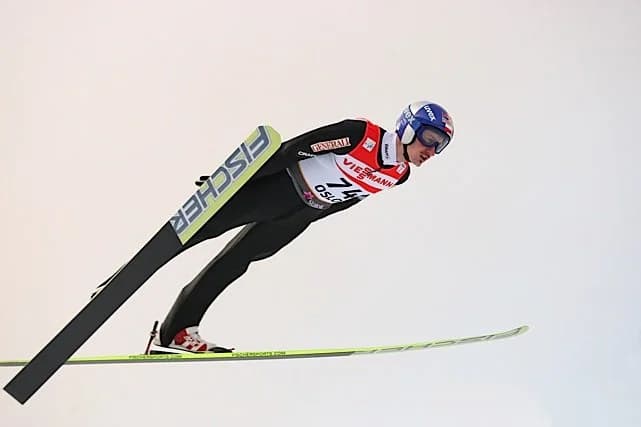
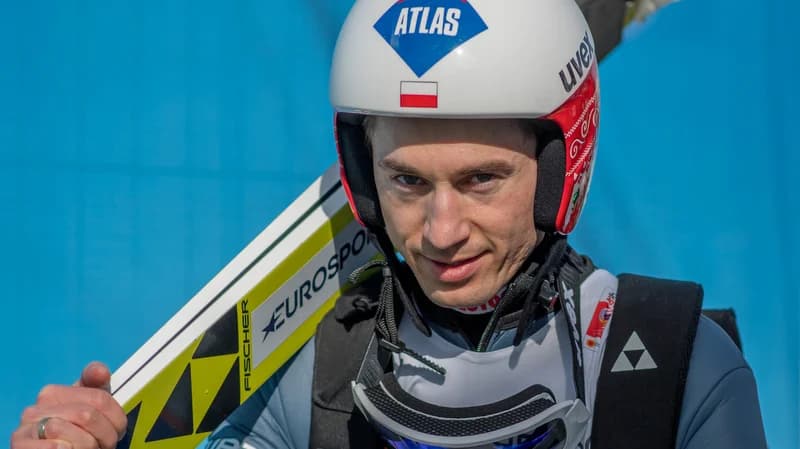
Kamil Stoch retired this year with three individual Olympic gold medals, a medal count that Adam Małysz — the man who made ski jumping a Polish national obsession in the first place — never managed to reach. That's not a knock on Małysz. It's the whole point of Stoch's career: he's the ski jumper Poland's Malyszmania years quietly built, and in February 2026 he carried the Polish flag into his sixth and final Olympics before hanging up his skis for good.
This guide covers who Kamil Stoch actually is, how his career compares to Małysz's, and what happened at his last Olympic Games just a few months ago.
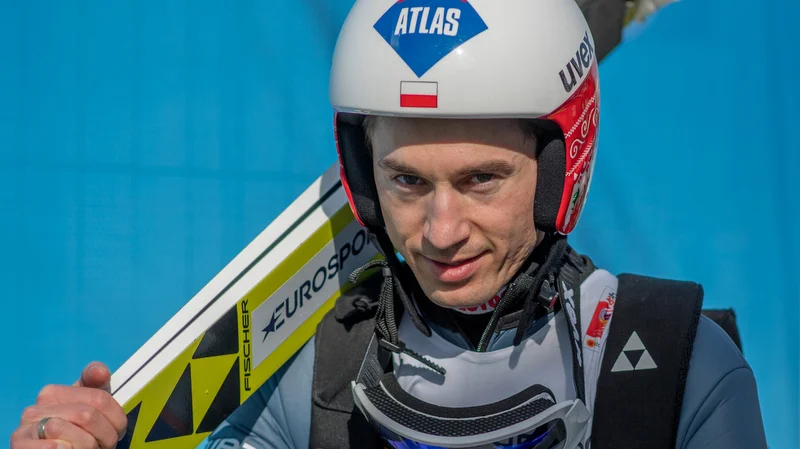
Who Is Kamil Stoch?
Kamil Wiktor Stoch was born on May 25, 1987, in Zakopane, Poland, and grew up in the nearby village of Ząb, in the same Podhale region covered in Gorale Polish Highlanders. He started skiing at age three and moved into ski jumping at four, receiving his first pair of jumping skis as a gift from his uncle at six. By eight he had joined the local sports club ŁKS Ząb under coach Mirosław Małuda, training first in Nordic combined before specializing in ski jumping alone.
Stoch didn't set his education aside for sport, either — he graduated from the School of Sports Championships in Zakopane in 2006 and later earned a master's degree in physical education from the University School of Physical Education in Kraków in 2012, finishing his studies in the same years he was becoming one of the best jumpers on Earth.
He grew up with two older sisters, Anna and Natalia, in a household that supported his early jumping ambitions rather than steering him toward the region's more traditional trades. He married Ewa Bilan on August 7, 2010, a little over a year before his breakout first World Cup win — meaning the biggest stretch of his competitive success, from that first Zakopane victory through three Olympic Games, unfolded entirely as a married man with a family watching from the stands.
Kamil Stoch's Career: Three Olympic Golds Małysz Never Won
Stoch's competitive career opened quietly. He made his Olympic debut at Turin 2006 at just 18, finishing 16th and 26th, and didn't win his first World Cup event until January 23, 2011 — fittingly, on Zakopane's own Wielka Krokiew hill, the same venue where Małysz retired from competition that same year.
Everything changed at the 2013 World Championships in Val di Fiemme, where Stoch won individual large hill gold with jumps of 131.5 and 130 meters. Then came the 2014 Sochi Olympics, where he won gold in both the normal hill and large hill individual events — becoming only the third man in ski jumping history, after Matti Nykänen and Simon Ammann, to sweep both individual hills at a single Olympics. A third individual gold followed at the 2018 PyeongChang Olympics on the large hill, plus a team bronze the same year, giving him four Olympic medals total and three of them gold — a medal Adam Małysz, for all his dominance, never once claimed across two Olympic Games.
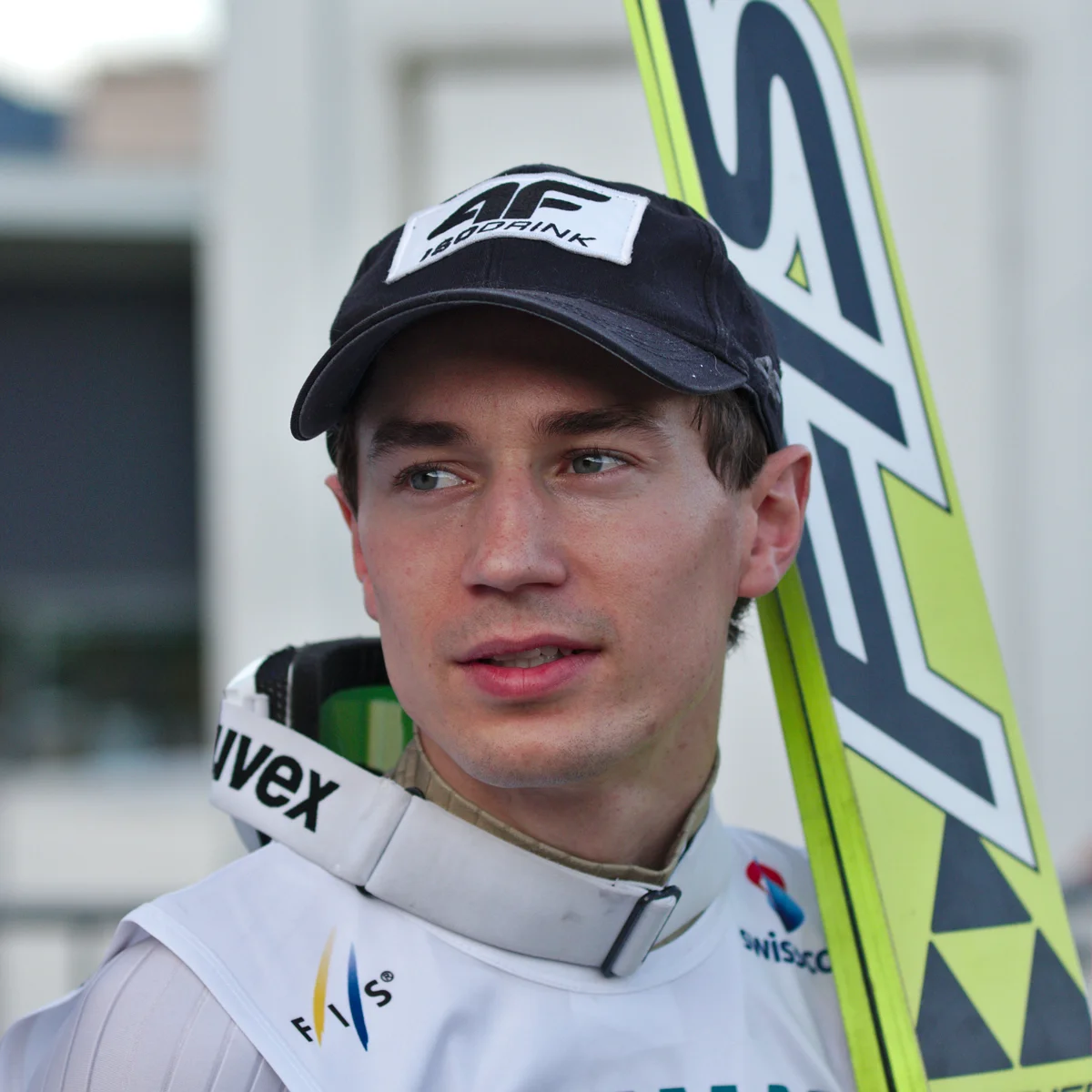
Kamil Stoch vs. Adam Małysz: Two Different Kinds of Greatness
Comparing Kamil Stoch and Adam Małysz head-on actually reveals two different shapes of greatness rather than a simple upgrade from one to the next. Małysz won four overall World Cup titles and 39 individual World Cup events — numbers Stoch matched almost exactly, also finishing his career with 39 individual World Cup wins — but Małysz never won Olympic gold across two Games (2002 and 2010), settling for two silvers and two bronzes instead. Stoch inverted that gap almost perfectly, converting three Olympic appearances into three individual golds while winning "only" two World Cup overall titles to Małysz's four.
The two careers are connected by more than just a shared sport and a shared home country. Stoch won his first individual World Championship gold in 2013, a mark that landed almost exactly ten years after Małysz won his own first World Championship title — a coincidence close enough that Polish sports commentators have treated it less as a coincidence and more as a symbolic handoff between eras.
Read together with Adam Malysz: Poland's Incredible 2001 Ski Jumping Icon, Stoch's career reads like the second act of a story Małysz started: the "Malyszmania" boom of the early 2000s filled Polish training programs and hillside crowds with a generation of kids who grew up wanting to jump, and Stoch — literally raised on Zakopane's home hill — became the clearest proof that the investment paid off.
Three Four Hills Tournament Titles
Winning the Four Hills Tournament (Turniej Czterech Skoczni), ski jumping's oldest and most prestigious event, is itself a career-defining achievement, and Stoch managed it three times: 2016-17, 2017-18, and 2020-21. His 2017-18 sweep of all four individual events made him only the second jumper in history to do it — after Sven Hannawald, the same German rival who defined Małysz's own Four Hills era back in 2001-02, described in detail on the Małysz article linked above. That two of the sport's biggest household names in Poland's ski jumping history — Małysz's rival and Stoch himself — both hold a piece of that same rare record is another small thread tying the two Polish eras together.
Stoch's résumé beyond the Tournament is just as deep: two Raw Air tournament victories, individual and team gold at the 2017 World Championships in Lahti, a silver medal at the 2018 Ski Flying World Championships — Poland's first ski flying medal in nearly 40 years — and a Polish national ski flying distance record of 251.5 meters, set at Planica in March 2017 and still standing. Ski flying, a variant contested on Planica's giant hill, covers distances well beyond a standard large hill jump, and setting a national record there marked him as excellent at the sport's most extreme and physically demanding discipline, not just its more conventional Olympic events.
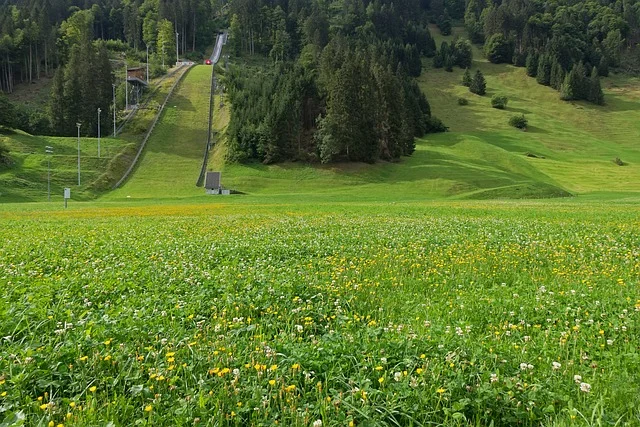
Kamil Stoch Olympics: A Flag-Bearer's Final Games at Milano Cortina 2026
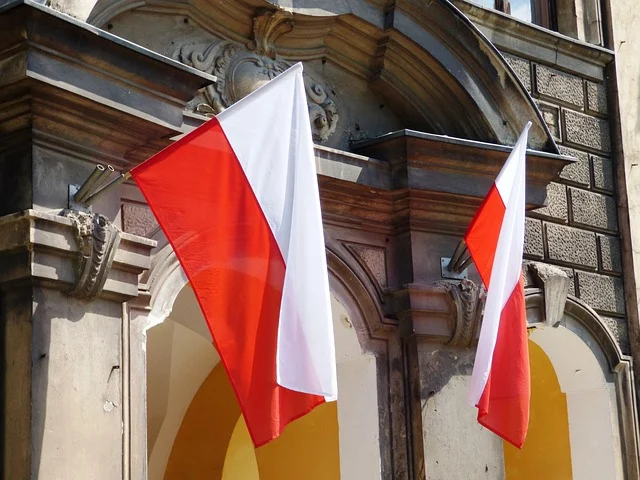
Stoch's sixth and final Olympic Games came at Milano Cortina 2026 this past February, and Poland gave him one of its highest honors on the way in: carrying the Polish flag at the opening ceremony. It was a fitting sendoff for an athlete who had represented the country at every Winter Olympics since 2006, spanning two full decades of the sport.
The competitive results were quieter than the ceremony. Stoch finished 21st in the large hill and 38th in the normal hill at Milano Cortina, closing out his Olympic career without a medal in his final appearance. That wasn't a surprise by 2026 — his last World Cup podium finish had come back in December 2021.
As he told NBC Sports ahead of his final season, Stoch specifically didn't want to keep competing into his 50s the way Japan's Noriaki Kasai famously has: "I don't want to be like Noriaki Kasai," he said, adding that he'd made clear to himself that his final World Cup season would be his last. Stoch formally retired at the end of the 2025-26 season, closing a competitive career that ran from 2004 to 2026 — 22 years, six Olympic Games, and three individual gold medals after it began on a hillside a few kilometers from where he was born.
A Career Built on Comebacks, Not Just Wins
What often gets lost in a highlight reel of golds is how many times Stoch had to rebuild his form from setbacks that would have ended a less durable career. An ankle injury limited his entire 2014-15 season right after his Sochi triumph, and he still managed to finish ninth overall in the World Cup standings that year rather than disappearing from contention. A similar pattern repeated at the tail end of his career: a left ankle injury in early 2022 came just weeks before the Beijing Olympics, and he competed anyway, finishing fourth in the normal hill and sixth in the large hill — respectable results for a jumper competing hurt, even if they fell short of gold.
That pattern of returning from injury rather than being defined by it runs through nearly every phase of his two-decade career, and it's arguably as central to understanding Stoch as the medal count itself. Longevity in ski jumping is unusual to begin with — the sport rewards younger athletes with lighter bodies and faster reflexes — and Stoch's ability to keep competing at a podium-relevant level into his late 30s, while jumpers a decade younger cycled in and out of the sport around him, is part of why his 2018 PyeongChang gold made him, at age 30, the oldest individual Olympic champion and World Cup titlist in ski jumping history.
Poland's Ski Jumping Legacy: More Than One Golden Generation
Together, Małysz and Stoch cover roughly a quarter-century of Polish ski jumping dominance without a real gap between them — Małysz's peak years ran from the late 1990s through 2007, and Stoch's breakthrough arrived just a few years later in the early 2010s, carrying the sport's national profile forward almost without interruption. The Adam Malysz article notes that the infrastructure and interest built during Malyszmania helped produce the next wave of Polish jumpers, and Stoch is the clearest, most decorated example of that wave — but not the only one.
Piotr Żyła and Dawid Kubacki, both mentioned alongside Stoch as part of his competitive generation, kept Poland fielding multiple World Cup-competitive jumpers well into the 2020s, meaning Poland's ski jumping success was never really a single-athlete story, even when Małysz and later Stoch were the two names carrying it internationally. That depth is itself part of Stoch's legacy: he didn't just win medals, he competed for two decades inside a national program deep enough to keep producing teammates capable of standing on World Cup podiums alongside him, long after his own best seasons had passed.
Life After Competition: What's Next for Stoch
Unlike Małysz, who moved into Dakar Rally racing and later Polish Ski Federation administration after retiring, Stoch's post-competitive plans remain less publicly mapped out as of his 2026 retirement — though given his physical education degree and two decades inside Poland's ski jumping program, a coaching or federation role, following a similar path to Małysz's own move into Polish Ski Federation leadership, would surprise no one who has followed his career closely. What is already certain is his place in the sport's history: alongside Małysz, Stoch cemented Poland as one of ski jumping's genuine powerhouse nations for over two uninterrupted decades, not just a single golden generation.
Kamil Stoch Vocabulary
| Polish Term | Pronunciation | Meaning |
|---|---|---|
| Skoki narciarskie | SKOH-kee nar-chee-AR-skyeh | Ski jumping |
| Skocznia | SKOCH-nyah | Ski jump (the hill/structure itself) |
| Turniej Czterech Skoczni | TOOR-nyey CHTEH-rekh SKOCH-nee | The Four Hills Tournament |
| Wielka Krokiew | VYEL-kah KROH-kyev | "Great Rafter," the name of Zakopane's ski jumping hill |
| Mistrz olimpijski | meestsh oh-leem-PEE-skee | Olympic champion |
| Zloty medal | ZWOH-tih MEH-dahl | Gold medal |
Kamil Stoch FAQ
How many Olympic gold medals does Kamil Stoch have? Three individual gold medals — normal hill and large hill at the 2014 Sochi Olympics, and large hill at the 2018 PyeongChang Olympics — plus a team bronze medal in 2018, for four Olympic medals total.
Did Kamil Stoch win more than Adam Malysz? It depends on the category. Malysz won more overall World Cup titles (four to Stoch's two), but Stoch won three individual Olympic golds compared to zero for Malysz, who took two silvers and two bronzes across two Olympics without ever winning gold.
When did Kamil Stoch retire? He retired at the end of the 2025-26 competitive season, shortly after competing in his sixth and final Olympics at Milano Cortina 2026 in February.
Where was Kamil Stoch born? Zakopane, Poland, in the Podhale region at the foot of the Tatra Mountains — he grew up in the nearby village of Ząb and won his first World Cup event on Zakopane's own Wielka Krokiew hill.
How many Four Hills Tournaments did Kamil Stoch win? Three: 2016-17, 2017-18, and 2020-21. His 2017-18 title included a sweep of all four individual events, a feat only one other jumper, Sven Hannawald, had achieved before him.
What is the connection between Kamil Stoch and Adam Malysz? The Malysz article on this site names Stoch directly as part of the generation produced by the training infrastructure built during "Malyszmania," Poland's early-2000s ski jumping boom. Stoch also won his first World Championship gold almost exactly ten years after Malysz won his own first title.
Did Kamil Stoch medal at his final Olympics? No. He finished 21st in the large hill and 38th in the normal hill at Milano Cortina 2026, ending his Olympic career without a medal in his sixth and final Games.
What honor did Kamil Stoch receive at the 2026 Olympics? He carried the Polish flag at the Milano Cortina 2026 opening ceremony, a recognition of his two-decade career representing Poland at every Winter Olympics since 2006.
Key Facts: Kamil Stoch
| Fact | Detail |
|---|---|
| Born | May 25, 1987, in Zakopane, Poland |
| Individual Olympic golds | 3 (2014 normal hill, 2014 large hill, 2018 large hill) |
| Total Olympic medals | 4 (3 gold, 1 team bronze) |
| Individual World Cup wins | 39 |
| Four Hills Tournament titles | 3 (2016-17, 2017-18, 2020-21) |
| First World Cup win | January 2011, on Zakopane's Wielka Krokiew hill |
| Final Olympics | Milano Cortina 2026, no medal, flag-bearer for Poland |
| Retired | End of the 2025-26 season |
Stoch's career closes an unusual loop: he was born a short walk from the hill where Adam Małysz turned ski jumping into a national event, grew up to win his first World Cup victory on that exact hill, and retired having done something Małysz's whole decorated career never quite managed — an Olympic gold. Poland didn't get one legendary ski jumper. It got two, back to back, for over twenty consecutive years.