The Polish alphabet is the first wall every new learner runs into, and usually the reason people quietly close the tab. Thirty-two letters, nine of them carrying accents most English speakers have never typed in their lives, arranged into consonant clusters that look unpronounceable on the page. It looks like a puzzle designed to keep outsiders out.
It isn't. Polish spelling is one of the most consistent writing systems in Europe — once you learn what each letter and letter combination sounds like, you can read almost any Polish word correctly on the first try, including ones you've never seen before. English can't make that promise. The trouble isn't that Polish is irregular; it's that it uses an unfamiliar toolkit to represent very regular sounds.
This guide breaks the whole system down letter by letter: the 23 shared with English, the 9 diacritic letters that do the real work, the consonant digraphs that trip up beginners, and the handful of rules that make the rest click into place.
How Many Letters in the Polish Alphabet? A Full Count
The Polish alphabet has 32 letters. It's built on the Latin alphabet, the same one English uses, but it drops three letters English speakers take for granted — q, v, and x only appear in foreign loanwords and brand names, never in native Polish vocabulary — and adds nine letters with diacritical marks: ą, ć, ę, ł, ń, ó, ś, ź, and ż.
Each diacritic changes a base letter into a completely different sound, and in Polish dictionaries and alphabetization, they're treated as fully separate letters, not variants of the ones they're built from. A word starting with ć is filed under its own section, not folded into the c's. The full letter-by-letter breakdown, including edge cases and regional pronunciation notes, is documented in detail on the Polish alphabet's reference entry on Wikipedia.
Polish Alphabet Order: Where Diacritics Fall
Polish dictionaries, phone books, and index pages follow a strict alphabetical order that slots each diacritic letter immediately after its plain counterpart: a, ą, b, c, ć, d, e, ę, f, g, h, i, j, k, l, ł, m, n, ń, o, ó, p, q, r, s, ś, t, u, v, w, x, y, z, ź, ż. Notice that ł falls after l but before m, and że falls at the very end after z and ź — a detail that catches out anyone trying to use a Polish dictionary with English alphabetization instincts.
This ordering matters more than it sounds. Search a Polish word list expecting "żaba" (frog) to sit near "z" words the way English speakers expect, and you'll find it correctly filed at the true end of the alphabet, past every plain z-word. Software that mishandles Polish diacritic sorting — treating ą as a plain a, for instance — is a common source of glitchy alphabetization in poorly localized apps and websites, since the two letters are visually similar but occupy completely separate positions.
The 9 Diacritic Letters That Define Polish
These are the letters that make Polish look intimidating and are, ironically, the reason it's more phonetically honest than English. Learn these nine and the rest of the alphabet mostly reads itself.
Ą and Ę — The Nasal Vowels
Ą and ę are nasal vowels, produced by letting air flow through the nose as you say them, similar to the nasal vowels in French. Ą sounds roughly like "on" in a word like "don't" said without the "d," while ę sounds like "en." Before the letters ł or l, both letters lose their nasal quality and are pronounced as plain "o" and "e." At the end of a word, ę is often pronounced closer to a plain "e" in casual speech, with the nasal quality softened.
Ć, Ś, Ź — The Soft Consonants
Ć, ś, and ź are the "soft" versions of c, s, and z — pronounced with the tongue positioned further forward and the middle of the tongue raised toward the palate. Ć sounds close to the "ch" in "cheese" but softer and more forward in the mouth. Ś is a soft "sh," gentler than English "sh." Ź is a soft, buzzy "zh," like the "s" in "measure" but softened.
Ż and Ł — The Letters That Don't Look Like Their Sound
Ż is pronounced like the "s" in "measure" — a hard "zh" sound, distinct from the softer ź. It's identical in sound to the digraph rz, which is one of the small mercies of Polish spelling once you notice the pattern.
Ł is the letter that breaks English speakers' brains fastest, because it looks like it should sound like an English "l" and doesn't. Modern Polish ł is pronounced like an English "w," the same sound that starts the word "window." So Wałęsa — the surname of Poland's former president — sounds roughly like "Va-WEN-sa," not "Wa-LEN-sa."
Ó and Ń — The Quiet Ones
Ó is pronounced identically to the letter u — a plain "oo" sound, as in "boot." Historically it represented a distinct long vowel, but in modern spoken Polish the two have merged completely; ó survives mainly because it flags a grammatical connection to a related word spelled with o. Ń is a soft, palatalized "n," close to the "ny" sound in the Spanish ñ or the English word "canyon."
Polish Alphabet Pronunciation for the Remaining Letters
Most of the 23 non-diacritic letters behave close enough to their English equivalents that they need only a quick note. A handful, though, are genuine traps for English speakers reading Polish alphabet pronunciation guides for the first time.
- C is always pronounced "ts," like the end of "cats" — never a hard "k" or soft "s" the way English c can be.
- J is pronounced like an English "y," as in "yes," not like the English "j" in "jump."
- W is pronounced like an English "v," not like an English "w" — which is exactly the sound that ł has already claimed.
- Y represents a vowel sound with no real English equivalent, produced further back in the mouth than the vowel in "sit," closer to the vowel in Russian "ы."
- H and CH are pronounced identically, a guttural sound similar to the "ch" in the Scottish "loch" or German "Bach."
Polish Consonant Digraphs: Sz, Cz, Rz, and Dz
Beyond the diacritic letters, the Polish alphabet uses consonant pairs to represent single sounds — a workaround for running out of available single characters centuries ago. These digraphs are consistent and predictable once memorized.
| Digraph | Sound | Example |
|---|---|---|
| sz | hard "sh," like "shop" | szkoła (school) |
| cz | hard "ch," like "chop" | czekolada (chocolate) |
| rz | identical to ż, a hard "zh" | rzeka (river) |
| dz | a soft "dz," like "adze" | dzwon (bell) |
| dź | a soft, palatalized version of dz | dźwięk (sound) |
| dż | like the "j" in "jungle" | dżem (jam) |
The overlap between rz and ż is the single most useful shortcut in Polish spelling: they sound completely identical, so if you can hear the sound, you have a 50/50 guess at spelling it correctly, and context or word history usually settles which one is right.
Where the Polish Alphabet Came From
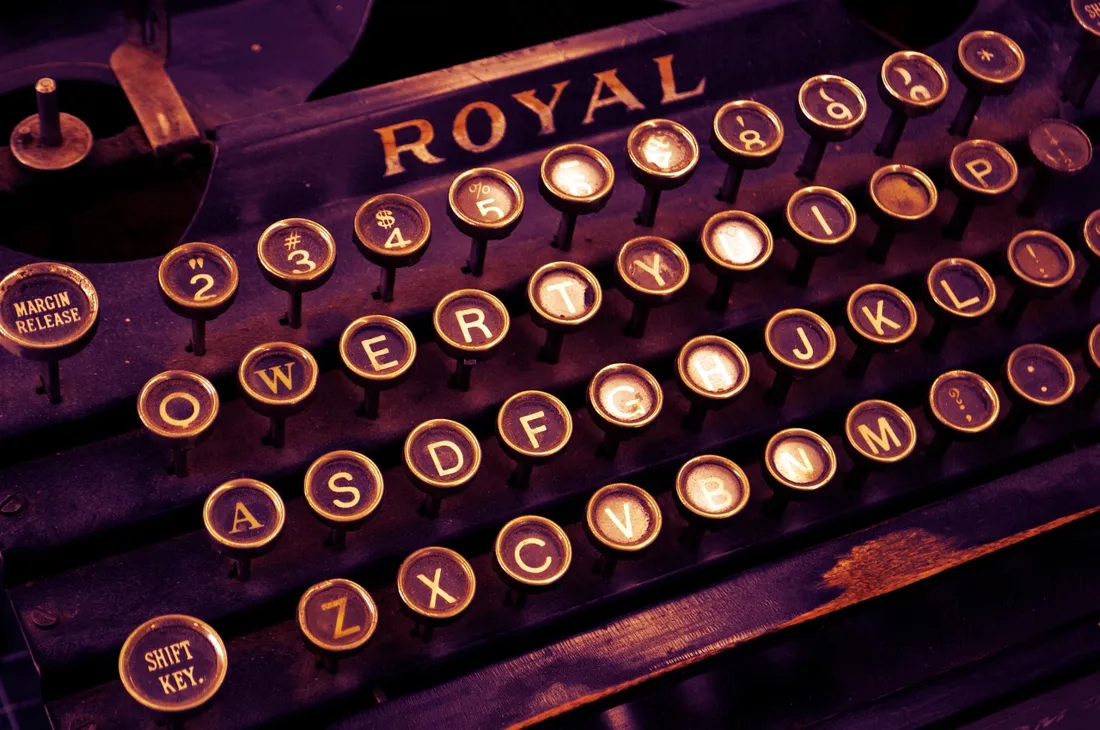
Polish wasn't always written with Latin letters modified by diacritics. Early Polish scribes in the medieval period tried to force the unmodified Latin alphabet — built for Latin's much simpler sound inventory — to represent sounds Latin never needed, like the soft consonants ś, ź, and ć, or the nasal vowels ą and ę. The results were inconsistent digraphs and trigraphs that varied wildly between scribes and regions.
The Polish alphabet stabilized gradually through the 16th century, driven largely by early printed Polish-language books and grammar treatises that needed a standard readers could rely on. The diacritic-heavy system that emerged was a deliberate engineering solution: rather than inventing entirely new letterforms the way Old English once used þ (thorn), Polish orthography adapted the existing Latin alphabet with small, consistent marks, keeping it printable on presses built for Latin script while still capturing sounds Latin never had.
Typing Polish Letters Without a Polish Keyboard
Anyone learning the Polish alphabet eventually needs to type ł, ż, or ą on a standard English keyboard, and every major operating system has a built-in workaround. On Windows, switching the keyboard language to Polish (Programmers) enables right-Alt key combinations — right-Alt + L produces ł, right-Alt + Z produces ż. On a Mac, adding the Polish keyboard layout in System Settings lets you access diacritics through the Option key. Most phone keyboards show diacritic variants automatically when you long-press the base letter — holding down "z" brings up ż and ź as options.
For quick one-off use, online tools that convert typed text into properly accented Polish are common and reliable, though anyone learning seriously benefits from switching their actual keyboard layout early, since muscle memory for the accent positions builds fast.
Why the Polish Alphabet Looks Harder Than It Is
The core issue with Polish spelling isn't inconsistency — it's density. English spreads its sound-to-letter oddities across silent letters, multiple pronunciations for the same vowel, and borrowed spelling conventions from French, Latin, and Old Norse all at once. Polish concentrates its complexity into diacritics and digraphs, which look more alarming on the page but behave with near-total consistency once learned.
A useful comparison: English "though," "through," and "tough" all end in the same four letters and are pronounced three completely different ways. Polish has no equivalent trap. Every ł is the same "w" sound, every rz is the same as ż, every ą nasalizes the same way in the same contexts. The Polish alphabet front-loads the difficulty; English hides it and springs it on you word by word, forever.
Common Mistakes Beginners Make with the Polish Alphabet
Most early frustration with the Polish alphabet comes from a handful of repeat offenders, and knowing them in advance saves weeks of confusion.
Reading ł as an English "l." This is the single most common mistake, and it distorts entire words. Beginners who read ł as "l" end up mispronouncing extremely common words like łatwo (easy) or żółty (yellow), and the habit is hard to unlearn once it sets in. Drilling ł as "w" from day one avoids the problem entirely.
Ignoring nasal vowels at the end of words. Ą and ę behave slightly differently depending on position, and learners who apply the same nasal pronunciation everywhere end up sounding stilted. In casual speech, a word-final ę often loses much of its nasal quality; textbooks that don't flag this leave learners overcorrecting.
Assuming diacritics are optional. Because English has no equivalent to marks that fully change meaning, some beginners treat Polish diacritics as decorative accents that can be dropped when typing quickly. In Polish, dropping a diacritic can turn one word into a completely different one — "kon" isn't a lazy spelling of koń (horse), it's simply not a word.
Mixing up sz/cz/rz with ś/ć/ź. The digraphs (sz, cz, rz) represent "hard" sounds, while the diacritic letters (ś, ć, ź) represent their "soft" counterparts. Confusing sz for ś, for example, swaps a hard "sh" for a soft one — subtle to an English ear, but a real distinction to a Polish one, and one native speakers pick up on instantly.
Polish Alphabet FAQ
How many letters are in the Polish alphabet?
- It uses the Latin alphabet minus q, v, and x (reserved for foreign words), plus nine letters with diacritical marks: ą, ć, ę, ł, ń, ó, ś, ź, and ż.
Is Polish pronunciation phonetic?
Yes, almost entirely. Once you know what each letter and letter combination represents, Polish words are pronounced consistently — unlike English, Polish spelling rarely has silent letters or multiple pronunciations for the same written form.
What does ł sound like in Polish?
Modern Polish ł is pronounced like an English "w," as in "window." It does not sound like an English "l," despite looking like a modified version of that letter.
Are rz and ż really pronounced the same?
Yes. Both represent an identical hard "zh" sound, similar to the "s" in the English word "measure." Which spelling a word uses is usually determined by its history or its relationship to other Polish words, not by how it sounds.
How do you type Polish diacritics on an English keyboard?
Switch to a Polish keyboard layout in your operating system's language settings — Windows and macOS both support this natively — or use the Polish (Programmers) layout, which maps diacritics to right-Alt key combinations.
Polish Alphabet: Key Facts at a Glance
| Fact | Detail |
|---|---|
| Total letters | 32 |
| Letters with diacritics | 9 (ą, ć, ę, ł, ń, ó, ś, ź, ż) |
| Letters not used natively | q, v, x (foreign words only) |
| Most misleading letter for English speakers | ł, pronounced like English "w" |
| Identical-sounding pair | rz and ż |
| Consonant digraphs | sz, cz, rz, dz, dź, dż |

Once the 32 letters stop looking like an obstacle and start looking like a set of fixed, learnable rules, the Polish alphabet stops being the intimidating wall it's reputed to be. Every learner's relationship with it follows roughly the same arc: two or three days of feeling like the diacritics are impossible to keep straight, followed by a fairly sudden click once the nine extra letters stop looking foreign and start looking like just another part of the toolkit.
The Polish alphabet is the whole foundation — grammar and vocabulary get harder later, but reading a Polish word correctly out loud, on the first attempt, is a skill the alphabet itself makes achievable in an afternoon, long before any of the grammar becomes intuitive.
For a deeper look at why Polish has this reputation in the first place, see Is Polish Hard to Learn?, and once the letters feel solid, Polish numbers pronunciation and how to pronounce Polish cities are the natural next steps for putting the alphabet into practice.