
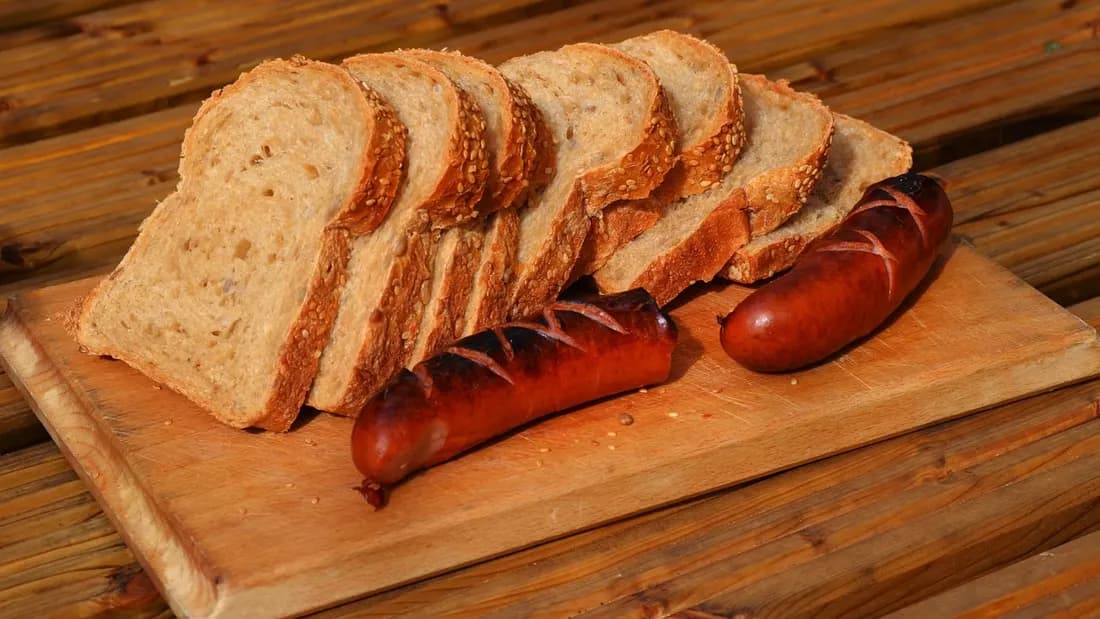
Kielbasa is probably the most successful Polish export nobody thinks of as Polish. It's stacked in the deli case of pretty much every American supermarket, grilled at tailgates from Chicago to Cleveland, and sold at hot dog stands that have never served another Polish item in their lives. And almost everyone who buys it says the word slightly wrong.
That's not a knock — English doesn't have a great way to represent Polish sounds, and the word made a long journey before it landed on a grocery store label. But there is an actual correct way to say it, a very specific reason most Americans don't quite hit it, and a genuinely interesting backstory involving Chicago hot dog stands, Jewish butchers, and a sound that doesn't exist in English at all, one that trips up even careful language learners the first several times they try it.
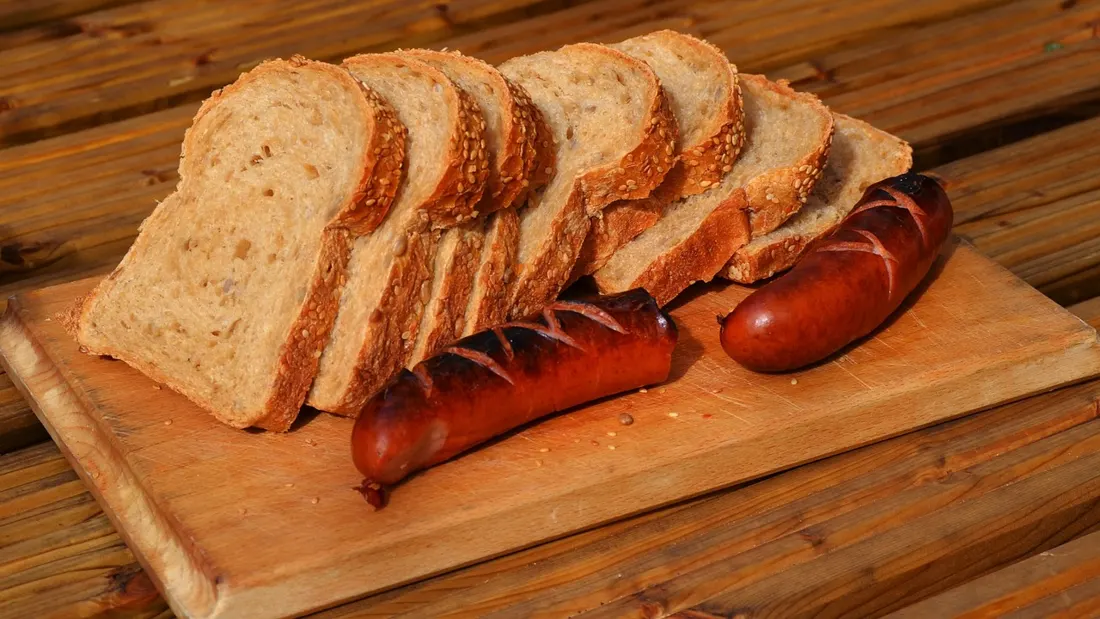
Kielbasa Pronunciation: How to Actually Say It
In Poland, kielbasa is spelled kiełbasa and pronounced roughly kyew-BAH-sah, with the stress on the second syllable. American English has flattened that down to keel-BAH-sah or kil-BAH-sah, which is close enough to be understood everywhere and is, at this point, its own legitimate pronunciation rather than a mistake — dictionaries list it as standard. British English tends to land somewhere similar, closer to keel-BASS-uh.
Where things really go sideways is a handful of folk pronunciations that have drifted even further from the original: "kol-bah-si" and "kabasa" both show up constantly in casual conversation, especially in regions with older Polish-American communities, and neither one is what a Polish speaker would recognize. Part of the confusion comes from the fact that most English speakers never hear the word spoken by a native Polish speaker at all — they learn it from a grocery store label, a menu, or a relative's approximation passed down a generation or two removed from Poland itself, and each step in that chain tends to smooth the pronunciation a little further from the original.
The Sound Everyone Skips: Polish Ł
The real gap between the Polish original and the American version comes down to a single letter: ł. It looks like an L with a slash through it, but it isn't pronounced like an L at all — it's pronounced like an English W. Say "kielbasa" with a normal English L sound and you've already drifted from the Polish; say it with a W sound where the L would go, and you're most of the way to kiełbasa as an actual Polish speaker says it.
This isn't a one-off quirk, either — it's one of the most common stumbling blocks for English speakers learning Polish, covered in more depth in our full breakdown of the Polish alphabet. Once the ł-as-W rule clicks, a whole category of Polish words that looked unpronounceable suddenly makes sense.
Where the Word Kielbasa Comes From
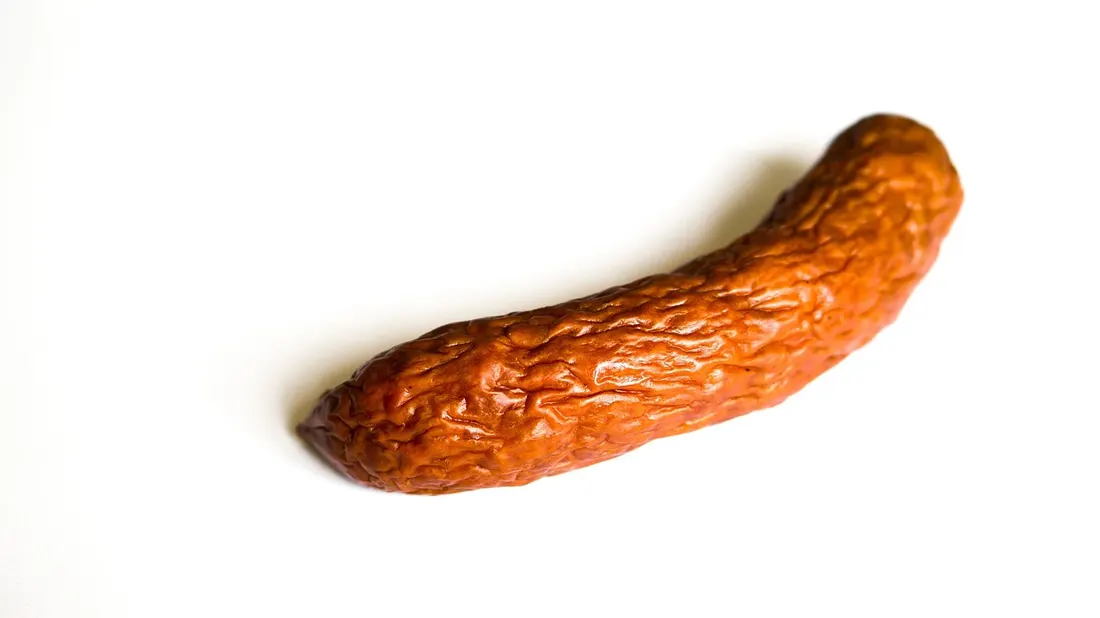
Kiełbasa simply means "sausage" in Polish — it's not the name of one specific product, it's the generic category, the same way "sausage" covers everything from a breakfast link to a bratwurst in English. That surprises a lot of people who assume it refers to one particular recipe.
The word's deeper origin is genuinely murky. Linguists trace it back to Proto-Slavic roots, with some evidence pointing toward a possible borrowing from Turkic languages, and other theories connecting it to Hebrew kolbasar by way of Jewish butchers working in Poland's meat trade — a detail that fits neatly with kielbasa's later role as a defining food in immigrant neighborhoods that were themselves ethnically mixed.
That murkiness isn't unusual for a food word this old. Sausage-making predates written records across most of Europe, and the vocabulary around it tended to travel through trade routes and shared markets long before anyone was writing dictionaries — which means a single "correct" etymology may not even exist in the way people sometimes want it to. What's clearer is how the word functioned once it settled into Polish: as a broad, everyday label for a category of food rather than a brand name or a single fixed recipe, closer in spirit to how English treats a word like "bread" than a word like "baguette."
Polish Sausage: Not One Type, But a Whole Category
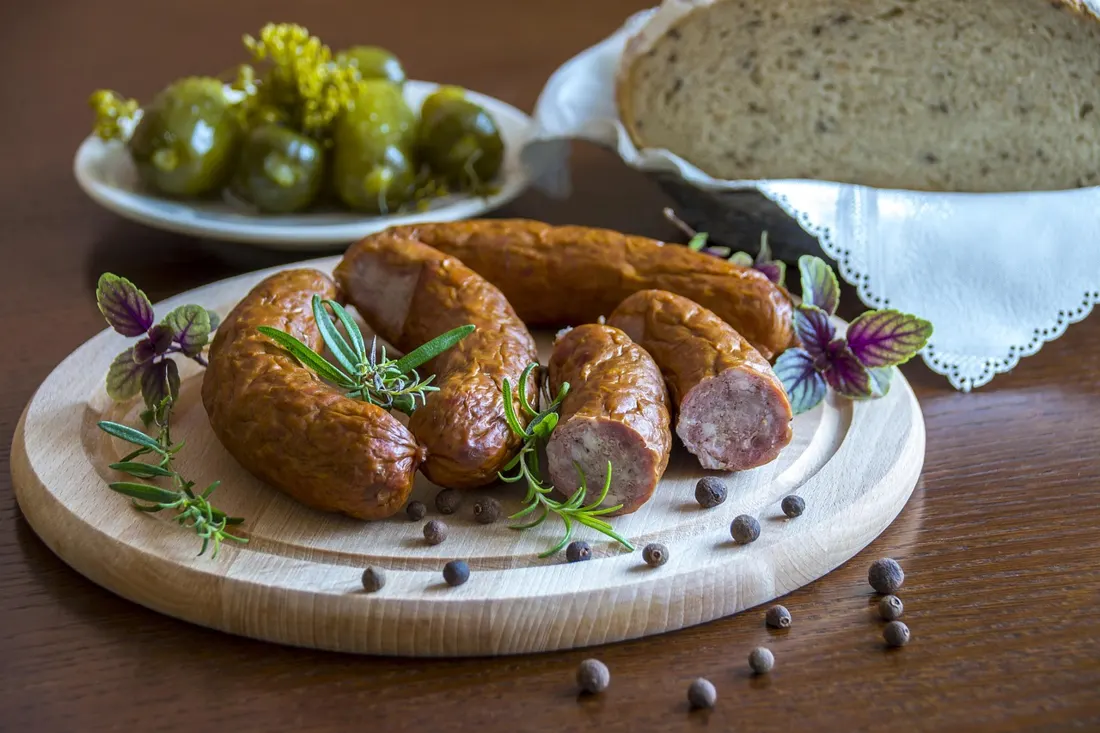
Because kiełbasa is a category rather than a single product, Poland produces dozens of regional types, each with its own name, texture, and seasoning. Kiełbasa krakowska is a thick, straight sausage hot-smoked with pepper and garlic, named for Kraków. Kiełbasa wiejska — "farmhouse sausage" — mixes pork and veal with marjoram and garlic. Kabanos is a thin, air-dried sausage flavored with caraway seed, closer to a snack stick than a dinner sausage. Kiełbasa biała, or white sausage, is a pale, uncured version traditionally simmered in soup rather than grilled.
Some of these regional varieties, including kiełbasa lisiecka and a traditional dry-cured Kraków style, carry protected status under EU food-naming rules, similar to how Champagne or Parmigiano-Reggiano are legally tied to their region of origin. That's a level of formal recognition most American grocery-store "Polish sausage" never comes close to.
How Kielbasa Became as American as Apple Pie
Its American story runs largely through Chicago's old Maxwell Street market, a bustling open-air bazaar shaped over generations by Eastern European Jewish immigrants and later by Polish, Italian, Greek, and Black Chicagoans during the Great Migration. In 1939, a Macedonian immigrant named Jimmy Stefanovic took over his aunt and uncle's hot dog stand at the corner of Maxwell and Halsted, renamed it Jim's Original, and started grilling it topped with onions, mustard, and pickled sport peppers on a bun — the Maxwell Street Polish, now considered one of the foods most synonymous with the city.
Cleveland took the idea somewhere stranger and arguably better: the Polish Boy, a sausage sandwich piled with french fries, barbecue sauce, and coleslaw, a combination credited to Black barbecue cooks and Polish immigrants swapping ideas in the same kitchens. It's since been featured on national food television more than once, evidence that a working-class sandwich invented out of convenience can still end up a genuine culinary landmark.
By the time it reached suburban supermarket shelves, it had been thoroughly Americanized — thicker, milder, usually beef-and-pork rather than the leaner all-pork versions common in Poland — but the name, and a real thread of the history, survived the trip intact.
From Ethnic Deli Case to National Grocery Aisle
That journey from immigrant neighborhood staple to mainstream supermarket product happened gradually, tracking the broader movement of Polish-American communities out of dense urban enclaves and into suburbs across the Midwest and Northeast through the mid-20th century. Regional meatpacking companies, many themselves founded by Polish or other Eastern European immigrant families, began producing it at a scale that made it viable for chain grocery stores rather than just neighborhood butcher shops. By the time it reached a national audience, most shoppers had no particular reason to think of it as a specifically "ethnic" food at all — it had simply become another sausage option next to bratwurst and Italian sausage, its origins mostly invisible unless you went looking for them.
Common Mispronunciations (and Why They Happen)
Most of the drift comes down to that missing ł sound plus a natural instinct to simplify unfamiliar syllable clusters. "Kol-bah-si" swaps the vowel sounds around entirely; "kabasa" drops a syllable altogether, likely influenced by how quickly the word gets said at a crowded grill or deli counter. In pockets of New Jersey, Pennsylvania, and Greater New York City with long-established Polish-American populations, you'll also hear the Polish plural form kiełbasy used casually in English, which technically means "sausages" but gets treated as its own singular-sounding word in local speech.
None of this is really "wrong" in a practical sense — language absorbed into everyday use tends to smooth itself out, and a regional pronunciation that everyone at the counter understands is doing its job. But if you're aiming for something closer to how a Polish speaker actually says it, the fixes are small: land the stress on the second syllable, and swap that L sound for a W.
This kind of drift isn't unique to kielbasa, either. Plenty of Polish loanwords that made it into everyday American English — food words especially — pick up a locally "smoothed" pronunciation within a generation or two, simply because most speakers are working from how they heard it said rather than from the original spelling. The gap tends to be biggest with words that entered English through spoken use in immigrant communities rather than through formal study, which is exactly this word's path.
It's worth comparing to how other borrowed food words settle into English over time. "Croissant" still gets a half-French, half-English treatment from most American speakers decades after it became a bakery staple, and "gyro" is famously split between two competing pronunciations depending on which part of the country you're in. Against that backdrop, a Polish sausage picking up a simplified American vowel sound isn't an outlier — it's just what happens to any loanword popular enough to outgrow the community that introduced it.
So, How Do You Order It Correctly?
In an American deli or at a summer cookout, keel-BAH-sah will get you exactly what you're pointing at every single time — there's no real need to overcorrect into a Polish accent nobody's expecting. If you're actually in Poland and want to ask for it, "Poproszę kiełbasę" ("I'll have some kielbasa, please") is the phrase to reach for, using the W-sound version of ł described above.
It's a good example of the kind of everyday, practical vocabulary covered throughout our broader guide to learning Polish for beginners — words you'll actually use, not just ones that look good on a flashcard. And if this has got you curious about other Polish foods with their own backstories, bigos, Poland's hunter's stew, and pierogi are natural next stops.
Spelling Variants You'll See on Packaging
Wander down a grocery aisle and you'll spot a handful of different spellings competing for shelf space: "kolbassa," "kolbasi," and "Polska kielbasa" all show up on product labels depending on the manufacturer and region. None of these are more "official" than the others in English — they're just different attempts by different companies, at different points in the 20th century, to represent a Polish word using English spelling conventions, long before there was any standardized way to do it. "Polska kielbasa" is the most literal of the three, since polska simply means "Polish," making the label roughly redundant but unmistakably clear about exactly what's inside the package.
Frequently Asked Questions
How do you pronounce kielbasa correctly? In Polish, it's roughly kyew-BAH-sah, with the ł pronounced like an English W. Standard American English pronunciation, keel-BAH-sah or kil-BAH-sah, is widely accepted and understood as its own correct form.
Why is kielbasa spelled with an "ł" in Polish? The Polish spelling is kiełbasa. The ł represents a sound close to the English W, not an L, which is why the anglicized spelling and pronunciation ("kielbasa," with an L) drifted from the Polish original.
Is "kielbasa" a specific sausage or a category? It's a category — kiełbasa simply means "sausage" in Polish. There are dozens of regional varieties, from the garlicky kiełbasa krakowska to the thin, air-dried kabanos.
What's the difference between kielbasa and a hot dog? It's typically coarser-textured, more heavily seasoned with garlic and marjoram, and usually smoked, while a hot dog is a finer emulsified sausage. American kielbasa is also usually sold as a larger link meant to be sliced and shared, rather than eaten whole in a bun.
Where does the word kielbasa come from? Its exact origin is debated, but linguists trace it to Proto-Slavic roots, possibly influenced by a Turkic word or by Hebrew kolbasar through Jewish butchers working in Poland's meat trade.
Why do some Americans say "kabasa" instead of kielbasa? It's a folk simplification that drops a syllable, likely reinforced by how the word gets shortened in casual speech at delis and cookouts, rather than a mispronunciation tied to any single region.
What is a Maxwell Street Polish? It's a Chicago sandwich of grilled kielbasa topped with onions, mustard, and pickled sport peppers on a bun, associated with Jim's Original, a stand founded at Chicago's Maxwell Street market in 1939.
What is a Polish Boy sandwich? A Cleveland specialty: a kielbasa sausage in a bun topped with french fries, barbecue sauce, and coleslaw, credited to Black barbecue cooks and Polish immigrants in the city.
Is it the same in Poland as in American stores? Not exactly. American kielbasa is usually milder and made from a beef-and-pork blend, while Polish varieties are more often all-pork, more heavily seasoned, and produced in dozens of distinct regional styles.
How do you ask for kielbasa in Poland? "Poproszę kiełbasę" ("I'll have some kielbasa, please") works well at a shop or deli counter. Pronouncing the ł as a W will get you noticeably closer to how it actually sounds to a native speaker.
Does kielbasa need to be cooked before eating? Most kielbasa sold in the US is pre-smoked and technically safe to eat cold straight from the package, but it's traditionally grilled, pan-fried, or gently simmered before serving, which noticeably improves both the texture and the overall depth of flavor.