Days and months in Polish are some of the most useful words you'll ever learn, because you need them constantly — booking a train, making plans, filling out a form, understanding a weather forecast. Unlike English, where the words are borrowed almost wholesale from Latin and Old Norse, Polish days and months carry their own distinct logic, and once you see the pattern, they're genuinely easy to remember.
This guide covers all seven days, all twelve months, how to actually use them in a sentence (Polish grammar changes the endings more than English does), and the seasons for good measure.
Days of the Week in Polish
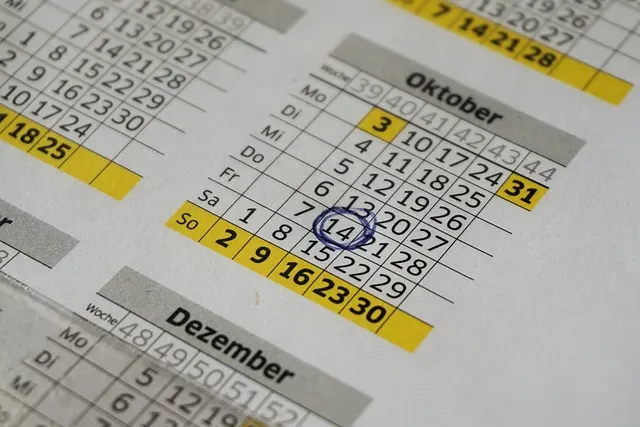
Polish weeks start on Monday, not Sunday — a detail that trips up a lot of English speakers filling out a Polish calendar for the first time.
| English | Polish | Pronunciation |
|---|---|---|
| Monday | poniedziałek | po-nyeh-JAH-wek |
| Tuesday | wtorek | FTOH-rek |
| Wednesday | środa | SHROH-dah |
| Thursday | czwartek | CHVAR-tek |
| Friday | piątek | PYON-tek |
| Saturday | sobota | so-BOH-tah |
| Sunday | niedziela | nyeh-DJEH-lah |
Where These Words Come From
Several days of the week in Polish literally describe their position in the week, which makes them easier to memorize than they look. Poniedziałek (Monday) comes from "po niedzieli" — "after Sunday." Wtorek (Tuesday) comes from "wtóry," an old word for "second." Środa (Wednesday) simply means "middle," since it sits in the middle of the traditional week. Czwartek (Thursday) comes from "czwarty" (fourth), and piątek (Friday) from "piąty" (fifth). Niedziela (Sunday) comes from "nie dziełać" — "not working" — the original day of rest.
Using Days of the Week in a Sentence
To say "on Monday," Polish uses the preposition "w" plus the accusative case: w poniedziałek (on Monday), we wtorek (on Tuesday, note the "we" instead of "w" for easier pronunciation), w środę (on Wednesday — notice środa changes to środę), w czwartek, w piątek, w sobotę (sobota becomes sobotę), and w niedzielę (niedziela becomes niedzielę). The feminine days (środa, sobota, niedziela) change their ending in this construction; the masculine ones mostly don't.
Months in Polish
This is where Polish genuinely diverges from most European languages. English, French, Spanish, German, and Italian all base their month names on the Roman calendar — January from Janus, March from Mars, and so on. Polish doesn't. Almost every Polish month name describes something happening in nature at that point in the year, a naming system Polish shares with several other Slavic languages.
| English | Polish | Pronunciation |
|---|---|---|
| January | styczeń | STIH-chen |
| February | luty | LOO-tih |
| March | marzec | MAH-zhets |
| April | kwiecień | KFYEH-chen |
| May | maj | mahy |
| June | czerwiec | CHER-vyets |
| July | lipiec | LEE-pyets |
| August | sierpień | SHER-pyen |
| September | wrzesień | VZHEH-shen |
| October | październik | pahzh-DJER-nik |
| November | listopad | lees-TOH-pahd |
| December | grudzień | GROO-djen |
What Each Month Name Actually Means
Styczeń (January) comes from "stykać się" — to meet or join — marking where the old year meets the new one. Luty (February) comes from an old word for "bitter" or "fierce," describing the harshest cold of winter. Marzec (March) comes from "marznąć," to freeze. Kwiecień (April) comes from "kwiat," flower — the month things start blooming.
Maj (May) is the one real exception, borrowed directly from the Roman goddess Maia, same as English "May." Czerwiec (June) comes from "czerw," a grub or larva, tied to an old dye-making insect harvested that month. Lipiec (July) comes from "lipa," the linden tree, which flowers in early summer. Sierpień (August) comes from "sierp," a sickle — harvest season.
Wrzesień (September) comes from "wrzos," heather, which blooms in early autumn. Październik (October) comes from "paździerz," the woody waste left over from processing flax, historically done that time of year. Listopad (November) is the most transparent of all — it literally means "falling leaves." Grudzień (December) comes from "gruda," a frozen clump of earth, describing the ground as winter sets in.
If you want the wider picture of how this naming system works across the Slavic language family — not just Polish — Wikipedia's entry on the Slavic calendar lays out the shared nature-based logic in detail, including where Polish overlaps with Czech, Ukrainian, and Croatian month names and where it diverges.

Talking About Dates in Polish
Once you know the days and months in Polish, the next hurdle is combining them into an actual date, which uses a grammar pattern English doesn't have.
Saying "On [Date]"
Polish uses ordinal numbers, not cardinal ones, for dates — the same shift English makes between "five" and "fifth," except Polish applies it more consistently. "May 3rd" is "trzeciego maja," where "trzeciego" is the genitive form of "third" and "maja" is the genitive form of "maj." Genitive case is the default for dates in Polish, which is why the month names above look slightly different once they're inside an actual date.
The Genitive Month Forms
| Polish month (dictionary form) | Genitive form (used in dates) |
|---|---|
| styczeń | stycznia |
| luty | lutego |
| marzec | marca |
| kwiecień | kwietnia |
| maj | maja |
| czerwiec | czerwca |
| lipiec | lipca |
| sierpień | sierpnia |
| wrzesień | września |
| październik | października |
| listopad | listopada |
| grudzień | grudnia |
So "today is May 3rd" becomes "dziś jest trzeci maja" (using the nominative "trzeci" since it's the subject), but "I'll see you on May 3rd" becomes "zobaczymy się trzeciego maja" (genitive throughout, since it's answering "when"). This genitive shift is one of the more genuinely tricky parts of Polish dates for English speakers, since English doesn't change the date's grammatical form at all.
Writing Dates Numerically
Written dates in Poland follow day-month-year order, like most of Europe, not the month-day-year order used in the US. 03.05.2026 in Poland means the 3rd of May, not March 5th — a distinction worth knowing before you book anything with a Polish date field.
Useful Time Expressions With Days and Months
Knowing the words is one thing; using them the way a native speaker actually talks is another. A handful of time expressions come up constantly once you start making plans in Polish.
"Next" uses "następny/następna": następny wtorek (next Tuesday), następny miesiąc (next month). "Last" uses "zeszły/zeszła": zeszły poniedziałek (last Monday), zeszły rok (last year). "Every" uses "każdy/każda": w każdy piątek (every Friday), co miesiąc (every month, using a slightly different construction with "co").
"This" uses "ten/ta": w tym tygodniu (this week), w tym miesiącu (this month). Notice that "week" (tydzień) and "month" (miesiąc) both take the locative case after "w" here, which shifts their endings from the dictionary form — tydzień becomes tygodniu, miesiąc becomes miesiącu.
Putting it together, "see you next Wednesday" becomes "do zobaczenia w następną środę," and "I was there last October" becomes "byłem tam w zeszłym październiku" — the same genitive-style shift covered in the dates section above, just applied to relative time instead of a calendar date.
Common Abbreviations for Days and Months in Polish
Polish calendars, forms, and planners commonly abbreviate days and months, and recognizing these shortcuts is useful once you're reading anything beyond a textbook.
| Day | Abbreviation | Month | Abbreviation |
|---|---|---|---|
| poniedziałek | pon. | styczeń | sty. |
| wtorek | wt. | luty | lut. |
| środa | śr. | marzec | mar. |
| czwartek | czw. | kwiecień | kwi. |
| piątek | pt. | maj | maj |
| sobota | sob. | czerwiec | cze. |
| niedziela | niedz. | lipiec | lip. |
| sierpień | sie. | ||
| wrzesień | wrz. | ||
| październik | paź. | ||
| listopad | lis. | ||
| grudzień | gru. |
These abbreviations show up on printed calendars, in TV schedules, and in official forms, so recognizing "śr." as środa (Wednesday) rather than sounding it out letter by letter saves real time once you're reading anything Polish day to day.
Seasons and More Polish Calendar Vocabulary
Rounding out the calendar vocabulary, the four seasons in Polish are straightforward and don't carry the same grammatical complications as months:
- wiosna — spring
- lato — summer
- jesień — autumn/fall
- zima — winter
"In spring" is "wiosną," "in summer" is "latem," "in autumn" is "jesienią," and "in winter" is "zimą" — all using the instrumental case, which is the pattern Polish uses for "during" a season or time period generally.
Weekdays Versus the Weekend
Polish doesn't have a single word that maps perfectly onto the English "weekend" the way some languages do — instead, "weekend" itself has simply been borrowed into Polish as "weekend" (pronounced roughly the same way, "WEE-kend"), which is what you'll hear and see used in everyday speech, on shop signs, and in event listings.
"Workdays" or "weekdays" is "dni robocze" (working days) or "dni powszednie" (ordinary days), used mostly in formal or official contexts like store hours and public transit schedules. If you see "pon.-pt." on a sign, that's the abbreviated form of poniedziałek through piątek — Monday through Friday — telling you the business hours apply on weekdays only.
A Few More Date-Related Phrases Worth Knowing
Beyond the words themselves, a handful of fixed phrases come up constantly once you start scheduling anything in Polish:
- dzisiaj / dziś — today (both are correct; dziś is slightly more casual)
- jutro — tomorrow
- wczoraj — yesterday
- pojutrze — the day after tomorrow (a single word, unlike English)
- przedwczoraj — the day before yesterday (also a single word)
- w weekend — on the weekend
- w tygodniu — during the week
- za tydzień — in a week (from now)
- tydzień temu — a week ago
Polish having single-word equivalents for "day after tomorrow" and "day before yesterday" is a small but genuinely useful efficiency English doesn't have — once you know pojutrze and przedwczoraj, you stop needing the clunkier multi-word English phrasing entirely.
Filling Out Polish Forms and Dates
If you're dealing with Polish paperwork — a PESEL application, a lease, a doctor's appointment form — dates show up constantly, and the conventions are worth knowing ahead of time. "Data urodzenia" is "date of birth," and it's almost always requested in the numeric DD.MM.RRRR format (RRRR being "rok," year), not spelled out with month names.
"Data dzisiejsza" or simply "data" at the top of a form means "today's date," and it's one of the first fields on nearly every official Polish document. If a form asks for "miesiąc" and "rok" as separate fields, those are just "month" and "year" — filling them in with the numeric month (05 for May, for instance) rather than the word "maj" is standard practice on official paperwork, even though you'd say the word form out loud.
Common Mistakes With Days and Months in Polish
Treating Sunday as the First Day
English-language calendars and apps often default to a Sunday-first week, which doesn't match how Polish weeks are actually organized. If you're building a study schedule or reading a Polish calendar, remember poniedziałek (Monday) is day one.
Forgetting Months Aren't Capitalized
Unlike English, Polish doesn't capitalize the names of days or months unless they start a sentence. "styczeń," "wtorek," and "niedziela" all stay lowercase mid-sentence — capitalizing them out of English habit is a small but noticeable tell that a text was written by a non-native speaker.
Mixing Up Nominative and Genitive Month Forms
Because the genitive forms (stycznia, lutego, marca) look different enough from the dictionary forms (styczeń, luty, marzec) that they can seem like separate vocabulary entirely. They're not — they're the same word changing its ending for grammatical context, the same underlying pattern covered in more depth in our guide to Polish cases.
Frequently Asked Questions
Does the Polish week start on Monday or Sunday? Monday. Poniedziałek literally means "after Sunday," which only makes sense if Sunday was understood as the end of the previous week, not the start of the new one.
Why don't Polish month names match the English ones at all? Because English month names come from the Roman calendar (gods, emperors, and Latin numbers), while Polish month names mostly describe natural events — freezing, flowering, harvest, falling leaves — a system shared with several other Slavic languages rather than borrowed from Latin.
Do I need to memorize the genitive month forms separately? Eventually, yes, since dates are one of the most common things you'll actually say in Polish, but you can get by pointing at a calendar with the plain dictionary form (styczeń, luty, marzec) while you're still building the habit.
Is "maj" really borrowed from the same root as English "May"? Yes — it's the one Polish month name that follows the Roman-calendar pattern instead of the native Slavic one, both ultimately from the Roman goddess Maia.
How do I ask "what day is it today" in Polish? "Jaki dziś jest dzień?" for the day of the week, or "który dziś mamy?" (literally "which do we have today") for the date — both are common, natural ways to ask.
Are there regional variations in Polish day or month names? The standard forms above are used across Poland; some regional dialects and older texts use alternate names for a few months, but the twelve names in this guide are what you'll see in any modern calendar, form, or news article.
Is there a Polish word for "weekend" or is it always borrowed from English? It's borrowed — "weekend" is used as-is in everyday Polish, pronounced close to the English original, rather than translated into a native Polish compound word.
Do Polish speakers say the year differently than English speakers do? Yes — Polish reads years as one long ordinal number rather than splitting them into pairs the way English does with "nineteen ninety-eight." 2026 is "dwa tysiące dwudziesty szósty," literally "two thousand twenty-sixth," using the ordinal form throughout since years follow the same date-grammar pattern covered above.
Once the days and months in Polish stop requiring a mental translation step, dates start feeling like one of the easier parts of the language rather than one of the hardest — which is a nice change of pace if you've been wrestling with Polish cases or pronunciation elsewhere. If numbers and dates together feel like the natural next combination to lock in, our guide to Polish numbers pronunciation pairs well with this one, and the two together cover almost every practical situation where Polish speakers actually use numbers out loud.