Learning the colors in Polish is one of the fastest ways to build usable vocabulary. Colors come up in nearly every conversation — describing what you are wearing, what you want to buy, what something looks like — and Polish color words follow a clear, consistent pattern that makes them easier to learn than many other vocabulary sets. This guide makes learning colors in Polish as efficient as possible by organizing them into clear patterns. What makes colors in Polish different from English is the gender agreement system: a red car is czerwony samochód (masculine), a red shirt is czerwona koszula (feminine), and a red apple is czerwone jabłko (neuter). The color adjective changes its ending to match the noun it describes, and once you learn the pattern for one color, you can apply it to almost every other color in the language.
This guide covers the essential colors in Polish — the basic terms, their gender forms, common shades and variations, and the idioms and expressions that use colors to convey emotions, politics, and cultural ideas. By the end, you will be able to describe anything in color, from your favorite sweater to the Polish flag.

Basic Colors in Polish
Here are the essential colors in Polish with their masculine, feminine, and neuter forms. The pattern is consistent: most basic colors end in -y in the masculine, change to -a for feminine, and -e for neuter.
| English | Masculine | Feminine | Neuter | Pronunciation |
|---|---|---|---|---|
| white | biały | biała | białe | BYAH-wi / BYAH-wa / BYAH-weh |
| black | czarny | czarna | czarne | CHAR-ni / CHAR-na / CHAR-neh |
| red | czerwony | czerwona | czerwone | cher-VOH-ni / cher-VOH-na / cher-VOH-neh |
| blue | niebieski | niebieska | niebieskie | nyeh-BYEH-skee / nyeh-BYEH-ska / nyeh-BYEH-skyeh |
| green | zielony | zielona | zielone | zheh-LOH-ni / zheh-LOH-na / zheh-LOH-neh |
| yellow | żółty | żółta | żółte | ZHUW-ti / ZHUW-ta / ZHUW-teh |
| gray | szary | szara | szare | SHAH-ri / SHAH-ra / SHAH-reh |
| orange | pomarańczowy | pomarańczowa | pomarańczowe | poh-mah-ran-CHOH-vi / -va / -veh |
| purple | fioletowy | fioletowa | fioletowe | fyoh-leh-TOH-vi / -va / -veh |
| pink | różowy | różowa | różowe | roo-ZHOH-vi / -va / -veh |
| brown | brązowy | brązowa | brązowe | brawn-ZOH-vi / -va / -veh |
| beige | beżowy | beżowa | beżowe | beh-ZHOH-vi / -va / -veh |
Note the pattern: colors ending in -ny in masculine (like czerwony, zielony, niebieski) follow a slightly different declension pattern from colors ending in -wy (like pomarańczowy, fioletowy, różowy). The basic feminine and neuter forms are the same either way, but the case endings differ in more advanced grammar contexts. Learning these patterns early makes mastering colors in Polish much easier.
The word niebieski is interesting because it literally means "of the sky" — it derives from niebo (sky), making Polish "blue" etymologically related to "sky" in the same way that English "azure" comes from the Persian word for lapis lazuli. The original Slavic word for blue was modry, which is now considered old-fashioned. You will still hear modry used for shades of deep blue, especially in poetry and regional dialects. Etymology like this makes learning colors in Polish more memorable.
How Gender Agreement Works with Colors in Polish
Understanding gender agreement is the most important step when learning colors in Polish because it applies to every sentence you will form.
The gender agreement rule for colors in Polish is simple: the adjective matches the noun it modifies in gender, number, and case. For colors used in the nominative case (describing a subject), the pattern from the table above is all you need.
Here is how the agreement works in practice:
Masculine nouns:
- Czerwony samochód — a red car (samochód is masculine)
- Niebieski długopis — a blue pen (długopis is masculine)
- Zielony stół — a green table (stół is masculine)
Feminine nouns:
- Czerwona sukienka — a red dress (sukienka is feminine)
- Niebieska koszula — a blue shirt (koszula is feminine)
- Zielona trawa — green grass (trawa is feminine)
Neuter nouns:
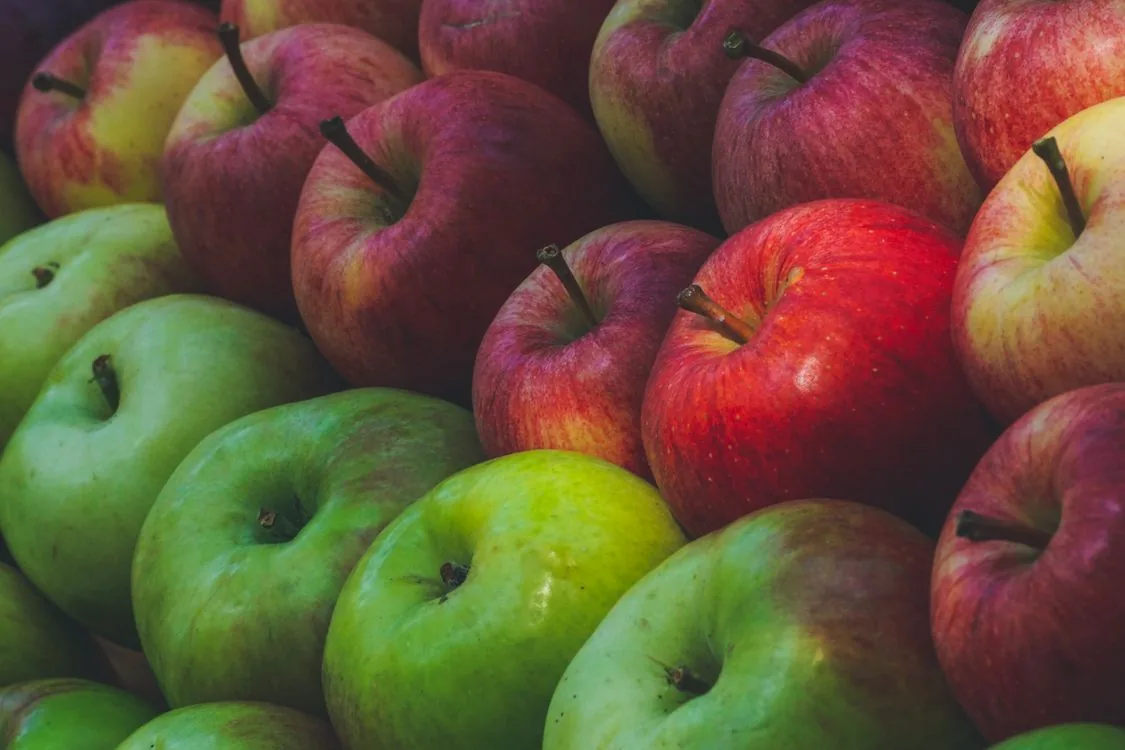
- Czerwone jabłko — a red apple (jabłko is neuter)
- Niebieskie niebo — a blue sky (niebo is neuter)
- Zielone pole — a green field (pole is neuter)
Plural forms:
- Czerwone samochody — red cars (masculine non-personal plural)
- Czerwoni mężczyźni — red men (masculine personal plural — note the -i ending)
- Czerwone sukienki — red dresses (feminine plural)
- Czerwone jabłka — red apples (neuter plural)
The masculine personal plural form (czerwoni instead of czerwone) is the one that most often catches learners off guard when studying colors in Polish. When the noun refers to a group of male people, the color ending changes to -i: wysocy mężczyźni (tall men), czerwoni strażacy (red firefighters). For groups of mixed gender, the masculine personal form is also used: czerwoni uczniowie could be a group of male students or a mixed group.
This gender agreement applies to all adjectives in Polish, not just colors. If you are still getting comfortable with noun genders, the noun gender reference
Shades and Nuances: Going Beyond the Basics
Once you have mastered the basic color words, you will want to describe specific shades. This is where colors in Polish really expand. Polish handles this in two ways: by modifying the basic color word with prefixes or qualifiers, and by using separate words for specific hues.
Common shade modifiers:
- Jasno- (light): jasnoniebieski (light blue), jasnozielony (light green)
- Ciemno- (dark): ciemnoczerwony (dark red), ciemnobrązowy (dark brown)
- Ciemny as a separate word: ciemny różowy (dark pink) — less common than the prefix form but equally correct
- Blado- (pale): bladoniebieski (pale blue), bladoróżowy (pale pink)
- Intensywnie (intensely): intensywnie czerwony (intense red)
- Jaskrawo- (bright/vivid): jaskrawoczerwony (bright red), jaskrawożółty (bright yellow)
Note that jasny means "bright" or "light" depending on context, and ciemny means "dark." A Polish speaker describing a car might say ciemnoczerwony samochód (dark red car) or jasnoniebieskie niebo (light blue sky).
Specific color words that are not simply modified basic colors:
- Granatowy — navy blue (from granat, the gemstone)
- Bordowy — burgundy (from French bordeaux)
- Turkusowy — turquoise
- Morski — sea green / teal (literally "of the sea")
- Błękitny — sky blue (used more in poetry and formal contexts than everyday speech)
- Karmazynowy — crimson (literary)
- Szkarłatny — scarlet (literary)
- Srebrny — silver
- Złoty — gold
- Kremowy — cream
The distinction between niebieski (everyday blue) and błękitny (sky blue) is subtle. Błękitny carries a more poetic, elevated tone. You would describe a blue shirt as niebieska koszula in everyday conversation, but the sky at sunset might be błękitny in a poem.
Granatowy (navy blue) is one of the most useful color words to know after mastering the basic colors in Polish because it is used constantly in clothing descriptions. Polish fashion vocabulary uses granatowy where English would use "navy," and it is considered a separate color rather than a shade of niebieski.
Color Idioms and Expressions in Polish
Colors in Polish extend far beyond description — they are woven into idioms, political symbolism, and cultural expressions. Knowing these expressions alongside the basic colors in Polish will make your speech sound significantly more natural.
Red (czerwony):
- Czerwona kartka — red card (in sports, same as English)
- Czerwony jak burak — red as a beetroot (Polish equivalent of "red as a tomato"; Poles use burak because beetroot is more culturally relevant)
- Czerwona plama — red stain / blot on one's reputation
- Czerwony dywan — red carpet (same as English)
- Czerwona zaraza — red plague (historical Cold War term for communism)
- Czerwone państwo — the Red State (historical term for communist Poland)
Green (zielony):
- Mieć zielone pojęcie — to have a green idea (means "to have no idea at all," usually in the negative: nie mam zielonego pojęcia — I have no idea)
- Zielona szkoła — green school (a multi-day school trip, usually to nature)
- Zielone światło — green light (permission, same as English)
- Zielona granica — green border (a forested, unpoliced border section)
- Na zielonej trawce — literally "on green grass," means illegally or under the table
Blue (niebieski):
- Niebieski ptak — blue bird (a lazy person who lives off others)
- Niebieska krew — blue blood (royalty, same as English)
- Niebieskie oczy — blue eyes (used metaphorically to mean innocence or naivety)
- Niebieskie paliwo — blue fuel (colloquial term for natural gas)
Black (czarny):
- Czarny humor — black humor (dark humor, same meaning as English)
- Czarna owca — black sheep (same as English)
- Czarna godzina — black hour (a rainy day, a time of trouble)
- Czarny rynek — black market (same as English)
- Czarna lista — blacklist (same as English)
- Czarne myśli — black thoughts (dark, pessimistic thoughts)
- Czarna rozpacz — black despair (complete hopelessness)
White (biały):
- Biały kruk — white raven (a rare or unique item, especially a rare book)
- Biała flaga — white flag (surrender, same as English)
- Biały personel — white staff (medical staff, for the white uniforms)
- Biały wiersz — white verse (blank verse, unrhymed poetry)
The idiom nie mam zielonego pojęcia (I have no idea, literally "I don't have a green idea") is one of the most common Polish expressions using a color. You will hear it constantly in everyday conversation. The word pojęcie (idea, concept) is in the genitive case after the negation, demonstrating the genitive case
The Colors of the Polish Flag and National Symbols
The Polish flag is biało-czerwony (white and red), and these two colors carry deep national symbolism. The white represents the white eagle (orzeł biały), the national symbol of Poland, while the red represents the field of the coat of arms. The flag is described in the Polish Constitution as having two horizontal stripes: white on top, red on bottom.
The specific shade of red used in the Polish flag was officially standardized in 1980 and is called czerwień flagowa (flag red) or czerwień heraldyczna (heraldic red). For everyday purposes, it is simply czerwony, but knowing the phrase biało-czerwony (white-and-red) is essential for describing anything Polish.
In Polish political vocabulary, czerwoni (the reds) can refer to socialists and left-wing parties (colloquially), while biali (the whites) referred to the conservative/royalist faction in historical contexts.
The colors of the Polish flag are also used for national sports teams. Biało-czerwoni (White-and-Reds) is the nickname for Polish national sports teams, particularly the men's football team. When Poland plays an international match, expect to hear Biało-czerwoni wygrali! (The White-and-Reds won!).
Colors in Polish for Shopping and Fashion
Colors in Polish are essential vocabulary for shopping, especially when describing clothing. Poland has a thriving fashion scene, and being able to describe colors accurately makes shopping for clothes, home items, or gifts much easier.
When shopping for clothes in Polish stores, you will frequently hear these phrases:
- Czy mają Państwo tę sukienkę w kolorze niebieskim? — Do you have this dress in blue?
- Wolę ciemniejszy odcień. — I prefer a darker shade.
- Czy jest to w innym kolorze? — Is this available in another color?
- Szukam czegoś w kolorze beżowym. — I am looking for something in beige.
Colors in Polish are often used in fashion contexts with the noun kolor (color) in the instrumental case: w kolorze niebieskim (in blue). This construction is more common than using the adjective directly in some contexts.
Online shopping in Poland uses specific color terminology. Kolor is the standard label on product pages. Odcień means shade or hue. Wzór means pattern — a patterned item is wzorzysty, while a solid-color item is jednokolorowy or gładki (smooth/solid). Understanding these terms alongside colors in Polish makes navigating Polish e-commerce sites like Allegro, Zalando, or Reserved much smoother.
The Polish fashion industry has also adopted many English color names directly. You will see pink, lime, coral, khaki, navy, and olive used on clothing tags and product descriptions alongside their Polish counterparts. This mixing of vocabulary is normal in modern Polish retail.
For learners practicing colors in Polish, describing what people are wearing is an excellent exercise. Try describing your own outfit in Polish: Mam na sobie niebieską koszulę i czarne spodnie (I am wearing a blue shirt and black pants). The combination of color adjectives with clothing vocabulary (koszula, spodnie, buty, kurtka) builds both grammar and practical vocabulary simultaneously.
How to Use Colors in Polish Sentences
Putting colors into full sentences is where you build fluency. Here are the most common patterns.
Subject + być (to be) + color:
- Ten samochód jest czerwony. — This car is red.
- Ta sukienka jest czerwona. — This dress is red.
- To jabłko jest czerwone. — This apple is red.
- Niebo jest niebieskie. — The sky is blue.
- Trawa jest zielona. — The grass is green.
Subject + mieć (to have) + noun + color:
- Mam czerwony samochód. — I have a red car.
- Ona ma zielone oczy. — She has green eyes.
- On ma niebieską koszulę. — He has a blue shirt.
Note that in the mieć construction, the color adjective and the noun both appear in the accusative case because they are the direct object. Czerwony samochód (nominative) becomes czerwony samochód (accusative, masculine inanimate does not change), but niebieska koszula (feminine nominative) becomes niebieską koszulę (feminine accusative).
Questions about color:
- Jaki to jest kolor? — What color is this?
- Jakiego koloru jest twój samochód? — What color is your car? (literally "Of what color is your car?" — using genitive)
- W jakim kolorze jest twoja sukienka? — What color is your dress? (literally "In what color is your dress?")
The question jakiego koloru (using genitive) is the most common pattern. You will use it constantly when shopping, describing things, or asking for preferences.
Frequently Asked Questions about Colors in Polish
Do I need to memorize all three gender forms for every color? For the most common colors (white, black, red, blue, green, yellow), yes, because you will need all three forms constantly. For less common colors (beige, burgundy, turquoise), you can focus on the masculine form and derive the feminine and neuter by pattern — they all follow the same rules. This systematic nature makes learning colors in Polish easier than memorizing unrelated vocabulary.
What is the difference between "niebieski" and "błękitny"? Niebieski is the standard everyday word for blue. Błękitny is a lighter, more poetic shade — sky blue. Use niebieski in daily conversation; reserve błękitny for literary or elevated contexts. Knowing these nuances shows you have truly learned the colors in Polish beyond basic vocabulary.
Is "kolor" masculine or feminine in Polish? Kolor is masculine. A colorful thing is kolorowy (masculine), kolorowa (feminine), kolorowe (neuter).
How do you say "light blue" in Polish? Jasnoniebieski (one word, with the prefix jasno-). You can also say jasny niebieski as two words, but the single-word form is more common.
Are there colors in Polish that don't change for gender? Colors borrowed from other languages sometimes remain invariable. Beż (beige), bordo (burgundy), lila (lilac), and khaki do not change their form regardless of the noun's gender. You would say both beż sweter and beż koszula.
How do colors work in the plural? For masculine non-personal, feminine, and neuter plurals, use the -e ending: czerwone samochody, czerwone sukienki, czerwone jabłka. For masculine personal plural, use -i: czerwoni mężczyźni. Mastering plural forms is the final step in fully understanding colors in Polish.
Colors in Polish Proverbs and Folk Sayings
Polish folk culture is rich with proverbs that use colors in Polish to convey wisdom, warnings, and observations about life. These expressions are a wonderful way to hear how Poles naturally use the basic and advanced colors in Polish that you have learned in this guide.
Nie wszystko złoto, co się świeci. — Not everything that shines is gold. This is the direct Polish equivalent of the English proverb and uses złoto (gold) as the color and material.
Czarna krowa w kropki borde — A black cow with burgundy dots. This is a classic Polish tongue twister (łamańce językowe) that tests your ability to pronounce krowa, kropki, and borde in sequence. You can find more of these in our Polish tongue twisters article.
Patrzeć przez różowe okulary — To look through rose-colored glasses. This is the same idiom as in English — it means to see things unrealistically positively. The Polish version uses różowy (pink) just like the English "rose-colored."
Mieć czarne myśli — To have black thoughts. This refers to pessimistic, dark thinking. The idiom is common in both everyday speech and literature.
Zielono mi — I am green (with envy or nausea). This expression is used both literally (feeling sick) and figuratively (jealous), depending on context. It is an example of how colors in Polish can express emotional states without naming the emotion directly.
Learning these proverbs and expressions alongside the basic colors in Polish helps you sound more natural and gives you insight into how Polish speakers think about color symbolically. Many of these expressions have no direct English equivalent, which makes them particularly valuable for moving beyond textbook Polish toward authentic, native-level expression.
Learning the colors in Polish does more than expand your vocabulary — it gives you a systematic way to practice adjective-noun gender agreement, the foundation of Polish grammar. Every color you learn reinforces the pattern: masculine -y, feminine -a, neuter -e. Once that pattern becomes automatic, you can apply it to every other adjective in the language.
The colors also introduce you to case usage in context. The genitive in jakiego koloru (what color), the accusative in mam czerwoną sukienkę (I have a red dress), the instrumental in jest czerwony (is red) — these are not abstract rules but patterns you encounter the moment you start describing the world around you in color.
For a complete understanding of the case system that colors participate in, the Cases Overview Nominative Gender lesson