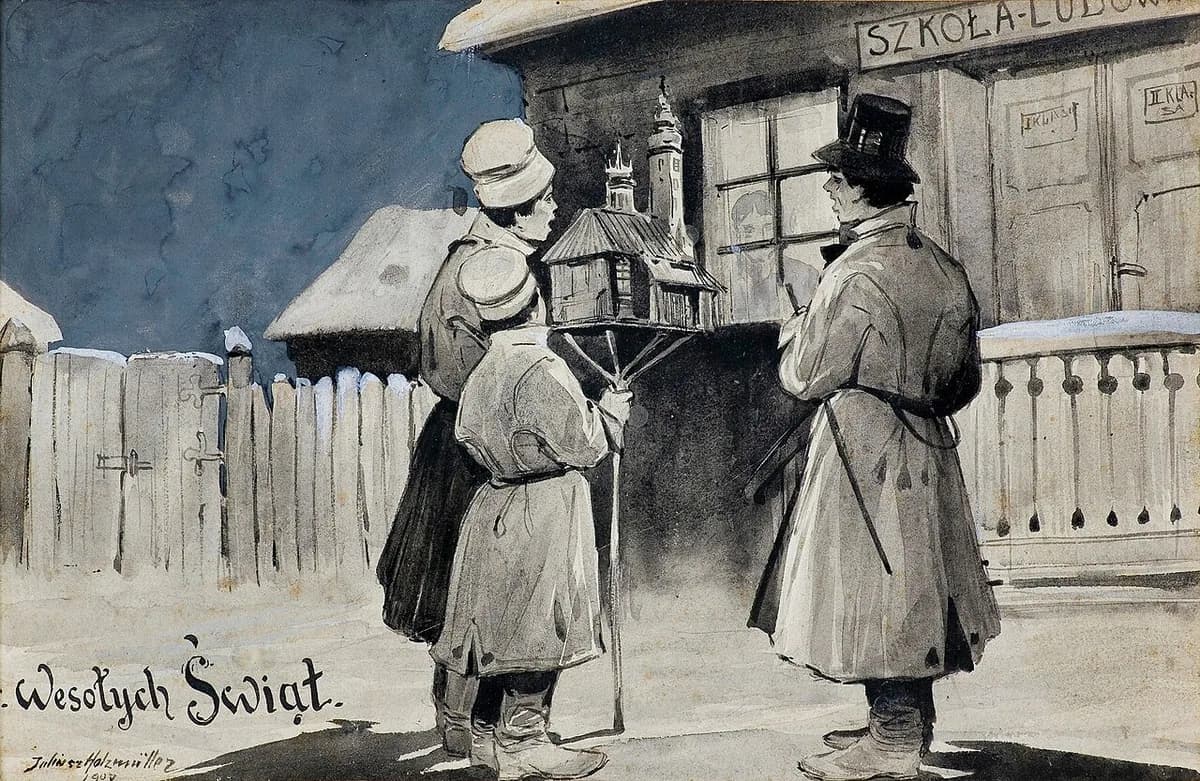
The quickest way to say merry Christmas in Polish is Wesołych Świąt! (veh-SOH-wihkh shfyohnt). Two words, one exclamation mark, and you can use it with your boss, your Polish grandmother, the cashier at Biedronka and your best friend alike. It works in a card, in a text message and shouted across a snowy car park.
There is a lot packed into those two words, though. "Święta" is plural, the endings are in the genitive case, and the full formal version adds two more words that most learners have never seen. Then there is the reply, the New Year wish that follows a week later, and an old phrase, Do siego roku, that even many Poles cannot fully explain.
This guide covers all of it: how to pronounce merry Christmas in Polish sound by sound, when to use the short or the long form, formal and informal wishes, ready-to-copy życzenia for cards and texts, how to answer, how to say happy New Year in Polish, and a bonus set of Easter greetings for spring.
How to Say Merry Christmas in Polish: Wesołych Świąt
Wesołych Świąt literally means "merry holidays". Wesoły means cheerful or merry, and święta means holidays or feast days. Context does the rest: say it in December and everyone hears merry Christmas in Polish, say it in April and they hear Happy Easter.
That flexibility is why the short form is the standard way to say merry Christmas in Polish. It is the default spoken greeting, the line people write at the bottom of emails before the break, and the phrase on shop windows in December. If you only remember one phrase from this article, make it this one.
Why "Święta" Is Plural
English has one Christmas Day. Poland celebrates several days in a row. The 25th and 26th of December are both public holidays, known as pierwszy dzień Świąt and drugi dzień Świąt (the first and second day of Christmas). Since 2025 the 24th, Christmas Eve, has also been a statutory day off for most workers.
So Poles do not talk about "Christmas" as a single day. They talk about Święta, the holidays, as a block of time, and merry Christmas in Polish is really "merry holidays". You will hear "Co robisz na Święta?" (What are you doing for Christmas?) and "Jadę do domu na Święta" (I'm going home for Christmas). The singular, święto, means one holiday, such as a national day.
The real heart of the season is the evening of the 24th, with its shared wafer, empty place at the table and twelve meatless dishes. Our guide to Wigilia, the Polish Christmas Eve supper explains why that night matters more to most families than Christmas Day itself.
Why the Ending Is "-ych"
Wesołe Święta is the basic (nominative) form, and you will see it on cards and decorations. So why does the greeting say Wesołych Świąt?
Because the full sentence is Życzę wesołych Świąt (I wish you merry holidays), and the verb życzyć (to wish) puts the thing you wish into the genitive case. The genitive plural of wesołe święta is wesołych świąt. Poles simply drop the życzę, exactly as English speakers drop "I wish you a".
The same logic explains every other wish in this article, from merry Christmas in Polish to New Year and Easter. Szczęśliwego Nowego Roku, zdrowia, spokoju, wszystkiego najlepszego: all genitive, all hanging on an invisible życzę.
Wesołych Świąt vs Wesołych Świąt Bożego Narodzenia
The long version is Wesołych Świąt Bożego Narodzenia (veh-SOH-wihkh shfyohnt boh-ZHEH-goh nah-roh-DZEH-nyah). Boże Narodzenie means "God's Birth", the Polish name for Christmas, and Bożego Narodzenia is its genitive form: "merry holidays of God's Birth".
It is the most complete and unambiguous way to write merry Christmas in Polish, so it suits:
- printed Christmas cards and company greetings,
- formal letters and emails,
- church newsletters and official wishes,
- any message where you want to sound a little more ceremonial.
In everyday speech it is a mouthful, and nobody expects it. Saying the full form to a shop assistant is not wrong, just noticeably formal, a bit like saying "I wish you a very merry Christmas" instead of "Merry Christmas!".
| Merry Christmas in Polish | Literal meaning | When to use it |
|---|---|---|
| Wesołych Świąt! | Merry holidays! | Everyday speech, texts, emails, almost anywhere |
| Wesołych Świąt Bożego Narodzenia! | Merry holidays of God's Birth! | Cards, formal and written wishes |
| Spokojnych Świąt! | Peaceful holidays! | A gentle, slightly warmer alternative |
| Zdrowych, wesołych Świąt! | Healthy, merry holidays! | Family and older relatives |
One spelling note: in greetings, Poles usually capitalise Świąt and Święta as a mark of respect, even though the word is a common noun elsewhere. Boże Narodzenie and Nowy Rok are always capitalised as holiday names.
Pronunciation: Merry Christmas in Polish, Sound by Sound
Polish spelling is very regular, so once you know a handful of sounds, you can read every greeting here. These are the ones that trip learners up when they first say merry Christmas in Polish.
| Letter | Sounds like | Example |
|---|---|---|
| ł | English "w" in "water" | wesołych = veh-SOH-wihkh |
| ś | a soft "sh", tongue behind the lower teeth | Świąt = shfyohnt |
| ą | nasal "on", like French bon; before t it sounds like "ohn" | Świąt |
| ę | nasal "en"; at the very end of a word it is barely nasal | życzę = ZHIH-cheh |
| ch | the throaty "kh" of Scottish loch | wesołych |
| w | English "v" (and "f" after a voiceless sound like ś) | Świąt = shfyohnt |
| ż | the "s" in "measure" | Bożego = boh-ZHEH-goh |
Two rules make the biggest difference.
Stress almost always falls on the second-to-last syllable. That gives us we-SO-łych, Bo-ŻE-go, Na-ro-DZE-nia, No-WE-go, RO-ku. Get the stress right and your merry Christmas in Polish will sound far more natural than a perfectly spelled one with the stress in the wrong place.
Sounds blend across letters. In Świąt, the w after ś is pronounced as an "f", so the word comes out close to "shfyohnt". Polish devoices consonants next to voiceless ones all the time.
Put together, merry Christmas in Polish sounds like veh-SOH-wihkh shfyohnt, with the stress on "SOH". Say it slowly three times, then at normal speed. If the nasal vowels still feel strange, the PolishPal phonetics lesson has every sound with audio you can tap and repeat.
Polish Phonetics & PronunciationFormal vs Informal: Merry Christmas in Polish to Friends or Strangers
Polish distinguishes between ty (informal "you") and Pan / Pani / Państwo (formal "Sir / Madam / you all"). The short merry Christmas in Polish, Wesołych Świąt!, avoids the problem entirely, because it has no "you" in it. Once you add "I wish you", you have to choose.
| Talking to | "I wish you…" | Example |
|---|---|---|
| A friend or family member | Życzę Ci | Życzę Ci wesołych Świąt! |
| Several friends | Życzę Wam | Życzę Wam wesołych Świąt! |
| A man (formal) | Życzę Panu | Życzę Panu wesołych Świąt! |
| A woman (formal) | Życzę Pani | Życzę Pani wesołych Świąt! |
| A group or couple (formal) | Życzę Państwu | Życzę Państwu wesołych Świąt! |
| From several people | Życzymy | Życzymy Państwu wesołych Świąt! |
These pronouns are in the dative case: the person receiving the wish. In written wishes, Poles often capitalise second-person pronouns such as Ci, Tobie and Wam out of politeness, which is why you will see "Życzę Ci" with a capital C in cards and messages.
Use the formal set with colleagues you do not know well, teachers, your landlord, older neighbours and clients. Use Ci and Wam with friends, family and anyone on first-name terms with you. When in doubt, the bare Wesołych Świąt! is the safest merry Christmas in Polish there is.
Polish Christmas Greetings for Cards and Texts (Życzenia)
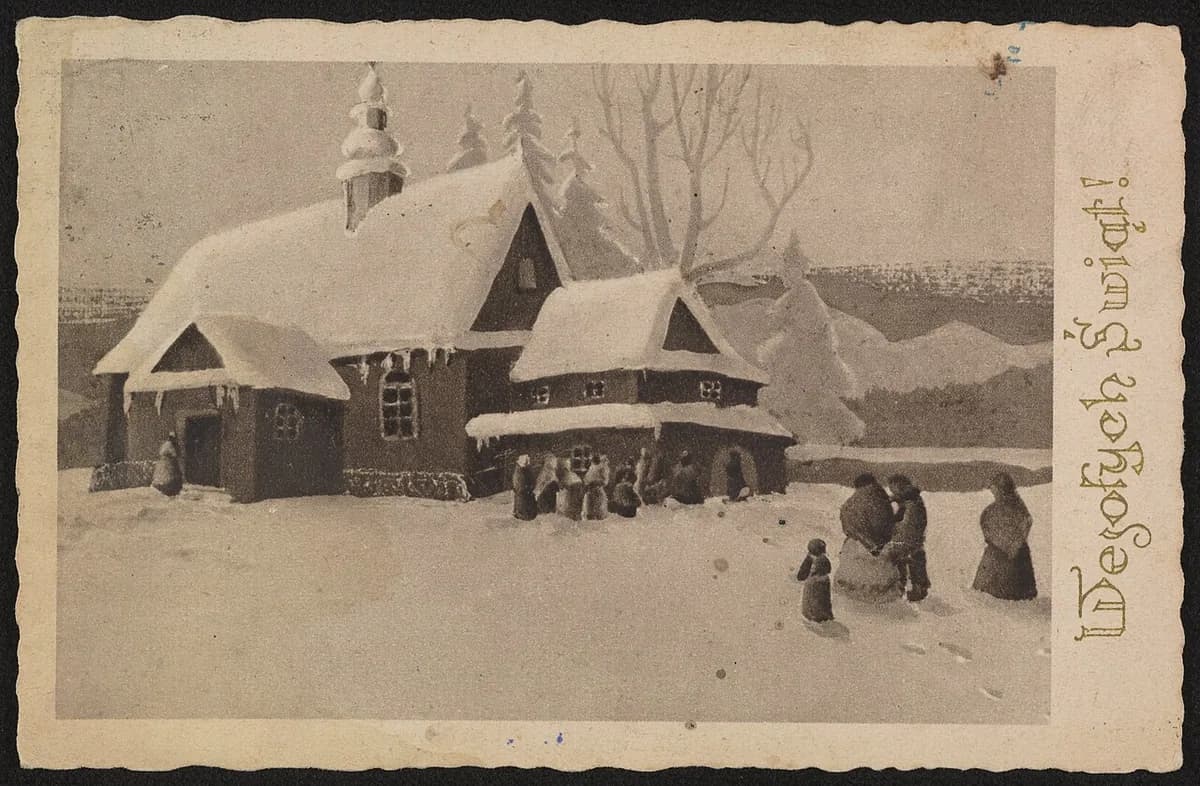
In Polish, Christmas wishes are called życzenia świąteczne, and writing them is taken seriously. Families send them to relatives, companies send them to clients, and the family group chat fills up with them on the 24th. Here are Polish Christmas greetings you can copy straight into a card or message, each one a ready-made way to write merry Christmas in Polish.
Short Ways to Text Merry Christmas in Polish
- Wesołych Świąt! Merry Christmas!
- Spokojnych i radosnych Świąt! Peaceful and joyful holidays!
- Wesołych Świąt i do siego roku! Merry Christmas and a happy New Year!
- Wesołych Świąt! Buziaki dla wszystkich. Merry Christmas! Kisses to everyone. (close friends and family only)
Warm Wishes for Family and Friends
- Zdrowych, spokojnych Świąt Bożego Narodzenia, pełnych ciepła i rodzinnej atmosfery. Healthy, peaceful Christmas holidays, full of warmth and a family atmosphere.
- Życzę Ci ciepłych, rodzinnych Świąt i wszystkiego najlepszego w Nowym Roku! I wish you a warm family Christmas and all the best in the New Year!
- Niech te Święta przyniosą Ci spokój i radość, a Nowy Rok wiele dobrych chwil. May this Christmas bring you peace and joy, and the New Year many good moments.
- Wesołych Świąt dla całej rodziny! Merry Christmas to the whole family!
Formal Wishes for Colleagues and Clients
- Z okazji Świąt Bożego Narodzenia życzymy Państwu zdrowia, spokoju i pomyślności w Nowym Roku. On the occasion of Christmas, we wish you health, peace and prosperity in the New Year.
- Życzę Pani wesołych, spokojnych Świąt. I wish you (to a woman) a merry, peaceful Christmas.
- Wesołych Świąt i szczęśliwego Nowego Roku życzy zespół [company name]. Merry Christmas and a happy New Year from the [company name] team.
The last one shows a very Polish card structure: the wish comes first, and the sender signs off with życzy (wishes, singular) or życzą (wish, plural), as in życzą Anna i Marek.
Lighthearted Wishes
- Wesołych Świąt i hojnego Mikołaja! Merry Christmas and a generous Santa!
- Wesołych Świąt, smacznych pierogów i mnóstwa prezentów pod choinką! Merry Christmas, tasty pierogi and loads of presents under the tree!
Notice that everything after the comma is still in the genitive: smacznych pierogów, mnóstwa prezentów. It is all still hanging on that invisible życzę. That is a handy pattern to remember when you build your own Polish Christmas greetings.
How to Reply to Merry Christmas in Polish: Nawzajem and Wzajemnie
Someone wishes you merry Christmas in Polish with a cheerful Wesołych Świąt! What now? The most natural answers are:
- Nawzajem! (nahv-ZAH-yem) The same to you!
- Wzajemnie! (vzah-YEM-nyeh) Likewise!
- Dziękuję, nawzajem! (jen-KOO-yeh nahv-ZAH-yem) Thank you, the same to you!
- Dziękuję, i wzajemnie! Thank you, and likewise!
Nawzajem and wzajemnie mean essentially the same thing here, and both work in formal and informal situations. Adding dziękuję (thank you) makes your reply warmer and slightly more polite.
You can also return the wish in full. Tobie też wesołych Świąt! (Merry Christmas to you too!) works with friends. With someone you address formally, say Dziękuję bardzo, Panu również! (Thank you very much, to you too, sir!) or Pani również! for a woman.
For written wishes, reply with Dziękuję za życzenia! (Thank you for the wishes!), and add your own: Dziękuję za życzenia i również życzę wesołych Świąt!
Happy New Year in Polish: Szczęśliwego Nowego Roku
To say happy New Year in Polish, use Szczęśliwego Nowego Roku! (shchen-shlee-VEH-goh noh-VEH-goh ROH-koo). It literally means "(I wish you) a happy New Year", and once again every word is in the genitive because of the hidden życzę.
Other common New Year wishes:
- Wszystkiego najlepszego w Nowym Roku! All the best in the New Year!
- Udanego Sylwestra! Have a great New Year's Eve! (said before the party)
- Do siego roku! Happy New Year! (more on this one below)
In December, Christmas and New Year wishes usually travel together. Wesołych Świąt i szczęśliwego Nowego Roku! is the classic double greeting on cards: merry Christmas in Polish and happy New Year in one line. After the 26th, people switch to the New Year wish alone.
The night of 31 December is called Sylwester, after the saint whose feast falls that day. If you will be in Poland for it, our guide to Sylwester, the Polish New Year's Eve covers the parties, the open-air concerts and the midnight countdown.

Do Siego Roku: What It Means and Where It Comes From
Do siego roku! (doh SHEH-goh ROH-koo) is a set phrase used as a New Year wish, and dictionaries treat it as a synonym of Szczęśliwego Nowego Roku. You will hear and read it throughout late December and around New Year, very often in the combination Wesołych Świąt i do siego roku!
The puzzling word is siego. It is a fossil: the genitive form of a very old Polish pronoun, si / sia / sio, which once meant "this". Poland's National Centre for Culture notes that this pronoun has survived almost only in fixed expressions such as ni to, ni sio and do siego roku.
So do siego roku is roughly do tego roku, "until this year". Polish Wiktionary glosses it as a wish along the lines of "may we live to see it", and the English Wiktionary entry for do siego roku translates it literally as "till the next year". In other words, you are wishing someone a safe arrival in the year ahead.
Two practical tips. First, it is always written as three words: dosiego roku as one word is a common spelling mistake. Second, it has a slightly old-fashioned, warm feel. It is perfectly normal in cards and in speech, but Szczęśliwego Nowego Roku is the more neutral choice.
Bonus: Easter Greetings in Polish
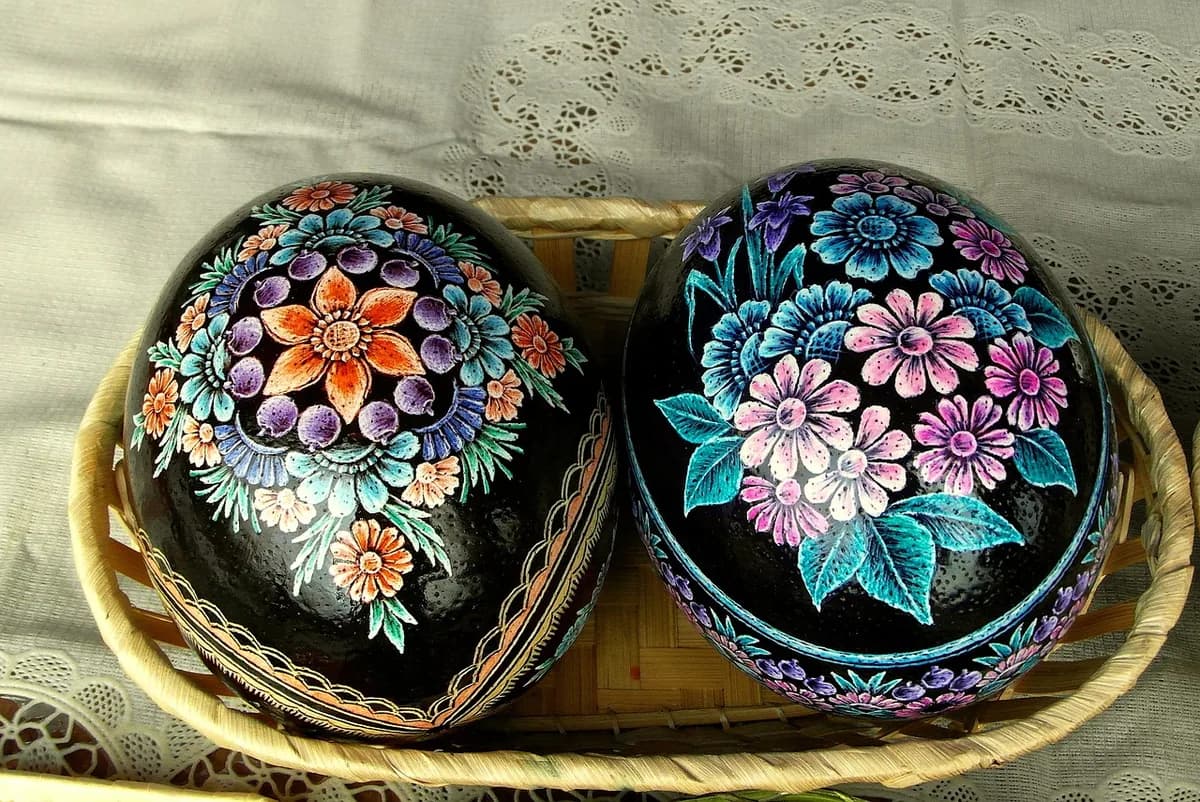
Because Wesołych Świąt means "merry holidays", the merry Christmas in Polish you just learned does double duty at Easter. Add the right ending and you have a full set of spring wishes.
- Wesołych Świąt Wielkanocnych! (veh-SOH-wihkh shfyohnt vyel-kah-NOTS-nihkh) Happy Easter! (literally "merry Easter holidays")
- Wesołego Alleluja! (veh-soh-WEH-goh ah-leh-LOO-yah) Happy Easter! (literally "merry Alleluia")
- Zdrowych, pogodnych Świąt Wielkanocnych! Healthy, cheerful Easter holidays!
- Smacznego jajka! Enjoy your Easter egg! (literally "tasty egg", from the Easter custom of sharing a blessed egg)
- Mokrego dyngusa! Have a wet Dyngus Day! (Easter Monday is the day of the water fight)
A typical Easter card line combines them: Zdrowych, pogodnych Świąt Wielkanocnych, smacznego jajka i mokrego dyngusa! If you want the full picture of the Easter basket, the egg-sharing and the Monday water fights, read our guide to Wielkanoc and Polish Easter traditions.
Christmas Words You Will Hear Around the Greetings
Merry Christmas in Polish rarely comes alone. These are the words that surround it in December conversations, cards and shop windows.
| Polish | Pronunciation | English |
|---|---|---|
| Święta | SHFYEN-tah | the holidays (Christmas or Easter) |
| Boże Narodzenie | BOH-zheh nah-roh-DZEH-nyeh | Christmas (God's Birth) |
| Wigilia | vee-GEE-lyah | Christmas Eve and its supper |
| Gwiazdka | GVYAHST-kah | the first star; colloquially Christmas or a Christmas present |
| choinka | hoh-EEN-kah | Christmas tree |
| prezent | PREH-zent | present |
| opłatek | oh-PWAH-tek | Christmas wafer shared on Wigilia |
| kolęda | koh-LEN-dah | Christmas carol |
| życzenia | zhih-CHEH-nyah | wishes, greetings |
| kartka świąteczna | KART-kah shfyohn-TECH-nah | Christmas card |
| Sylwester | sil-VES-ter | New Year's Eve |
| Nowy Rok | NOH-vih rok | New Year, New Year's Day |
A few useful collocations: składać życzenia (to give wishes), dzielić się opłatkiem (to share the Christmas wafer), ubierać choinkę (to decorate the tree) and prezenty pod choinką (presents under the tree).
Scenario: Wishing a Neighbour Merry Christmas in Polish
Tom, an English teacher living in Kraków, meets his older neighbour, Pani Krystyna, on the stairs on 23 December. She says merry Christmas in Polish first, and because they are not on first-name terms, he answers with the formal Pan / Pani.
Pani Krystyna: Dzień dobry! Wesołych Świąt! Good morning! Merry Christmas!
Tom: Dzień dobry! Dziękuję, nawzajem! Wesołych Świąt dla całej rodziny! Good morning! Thank you, the same to you! Merry Christmas to the whole family!
Pani Krystyna: Dziękuję bardzo. Jedzie Pan na Święta do domu? Thank you very much. Are you going home for Christmas?
Tom: Nie, zostaję w Krakowie. Spędzam Wigilię u przyjaciół. No, I'm staying in Kraków. I'm spending Christmas Eve with friends.
Pani Krystyna: To wspaniale! W takim razie spokojnych Świąt i do siego roku! That's wonderful! In that case, a peaceful Christmas and a happy New Year!
Tom: Dziękuję, wzajemnie! Szczęśliwego Nowego Roku! Thank you, likewise! Happy New Year!
Later that evening, his friend Kasia texts him merry Christmas in Polish, and Tom replies informally.
Kasia: Wesołych Świąt, Tom! Zdrowia, spokoju i mnóstwa prezentów pod choinką! Merry Christmas, Tom! Health, peace and loads of presents under the tree!
Tom: Dziękuję, Kasiu! Nawzajem! Buziaki dla całej rodziny. Thanks, Kasia! Same to you! Kisses to the whole family.
Notice Kasiu: when you address someone directly, Polish names change form (the vocative case), so Kasia becomes Kasiu. It is a small touch that Polish friends notice and appreciate.
Frequently Asked Questions
How do you say merry Christmas in Polish?
Say Wesołych Świąt! (veh-SOH-wihkh shfyohnt). It is the everyday way to say merry Christmas in Polish. The full, more formal version is Wesołych Świąt Bożego Narodzenia!
Is it rude to just say "Wesołych Świąt"?
Not at all. It is the standard merry Christmas in Polish in shops, offices and families. The long form with Bożego Narodzenia is mainly for cards and formal writing.
How do I respond when someone says merry Christmas in Polish?
Say Nawzajem! or Wzajemnie! (The same to you!), ideally with Dziękuję (Thank you) in front. Both replies work in formal and informal situations.
How do you write merry Christmas in Polish in a card?
Write Wesołych Świąt Bożego Narodzenia for a formal card, or Wesołych Świąt! for a casual one. Add a wish such as Zdrowych, spokojnych Świąt and sign off with życzy plus your name.
How do you say happy New Year in Polish?
The standard form is Szczęśliwego Nowego Roku! You can also say Wszystkiego najlepszego w Nowym Roku! (All the best in the New Year!) or the traditional Do siego roku!
What does "Do siego roku" literally mean?
Siego is the old genitive of a pronoun that meant "this", so the phrase is close to "until this year". It is usually explained as a wish that the other person lives to see the coming year, and it is used as a New Year greeting. Write it as three words, never dosiego.
Can I use Wesołych Świąt at Easter too?
Yes. Because święta simply means holidays, the merry Christmas in Polish greeting works at Easter as well. To be specific, say Wesołych Świąt Wielkanocnych! or the cheerful Wesołego Alleluja!
Why do Poles say "Świąt" instead of "Święta"?
This merry Christmas in Polish is short for Życzę wesołych Świąt (I wish you merry holidays). The verb życzyć takes the genitive case, and Świąt is the genitive plural of Święta.
Learning to say merry Christmas in Polish takes thirty seconds. Saying it with the right stress, the right level of formality and a proper Nawzajem! in return takes a little practice, and Poles notice the difference immediately. Start with Wesołych Świąt, add one card wish from the lists above, and you will already be ahead of most visitors this December.