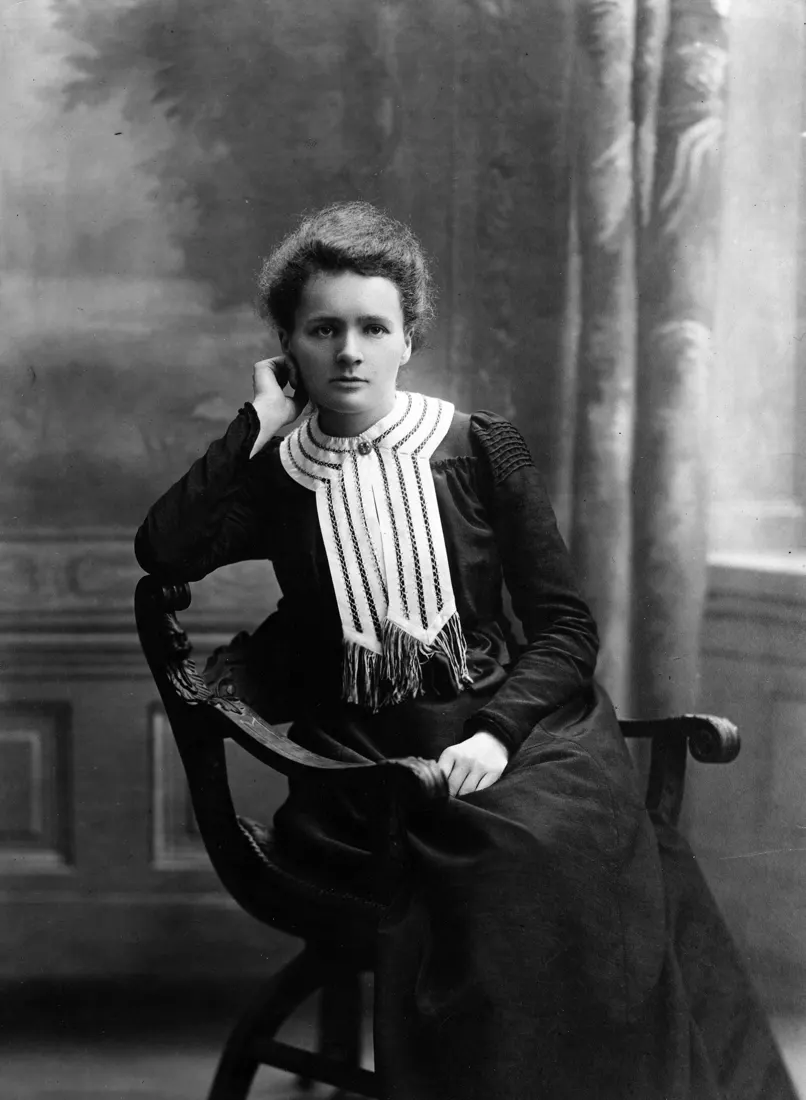
Ask most people where Marie Curie is from, and they'll say France. It makes sense — she spent her career in Paris, published in French, married a French physicist, and is buried in the Panthéon alongside France's other national heroes. But Marie Curie was born Maria Skłodowska in Warsaw, grew up speaking Polish under a foreign occupation that tried to erase it, and never once let go of the identity she carried out of Poland.
Her story is one of the most misfiled biographies in modern history. Not because anyone is lying about her — France's claim on her adult life and work is entirely real — but because the framing almost always starts in Paris, skipping the twenty-four years that made her who she was. Understanding Marie Curie properly means starting where she did: a partitioned, occupied Poland where being Polish, let alone being an educated woman, was itself a quiet act of defiance.
This article traces that fuller story: the Warsaw childhood, the underground schooling, the reasons she left, the discoveries that made her the only person in history to win Nobel Prizes in two different sciences, and the ways she spent the rest of her life proving that leaving Poland was never the same as leaving it behind.
Who Was Marie Curie? The Warsaw Girl Born Maria Skłodowska
Marie Curie was born Maria Salomea Skłodowska on November 7, 1867, at ul. Freta 16 in Warsaw's Old Town — a house that today holds a museum dedicated to her. She was the youngest of five children born to Władysław Skłodowski, a mathematics and physics teacher, and Bronisława Skłodowska, who ran a prestigious girls' boarding school until tuberculosis forced her to stop.
Both parents were educators with strong patriotic convictions, and both paid for it. Warsaw at the time sat inside Russian-controlled Congress Poland, and the Skłodowski family's Polish nationalism cost them financially and professionally under a regime actively hostile to Polish identity. Maria grew up watching her father lose income for his political leanings and her mother's health decline under the same pressures that shaped an entire generation of Poles living without a country on the map.
She was a gifted student from the start, graduating from secondary school at fifteen with a gold medal. But being brilliant in occupied Warsaw came with a hard ceiling: the University of Warsaw did not admit women. If Maria Skłodowska wanted higher education in the sciences, she would have to find it somewhere else, or invent it herself.
Growing Up Polish Under Russian Occupation
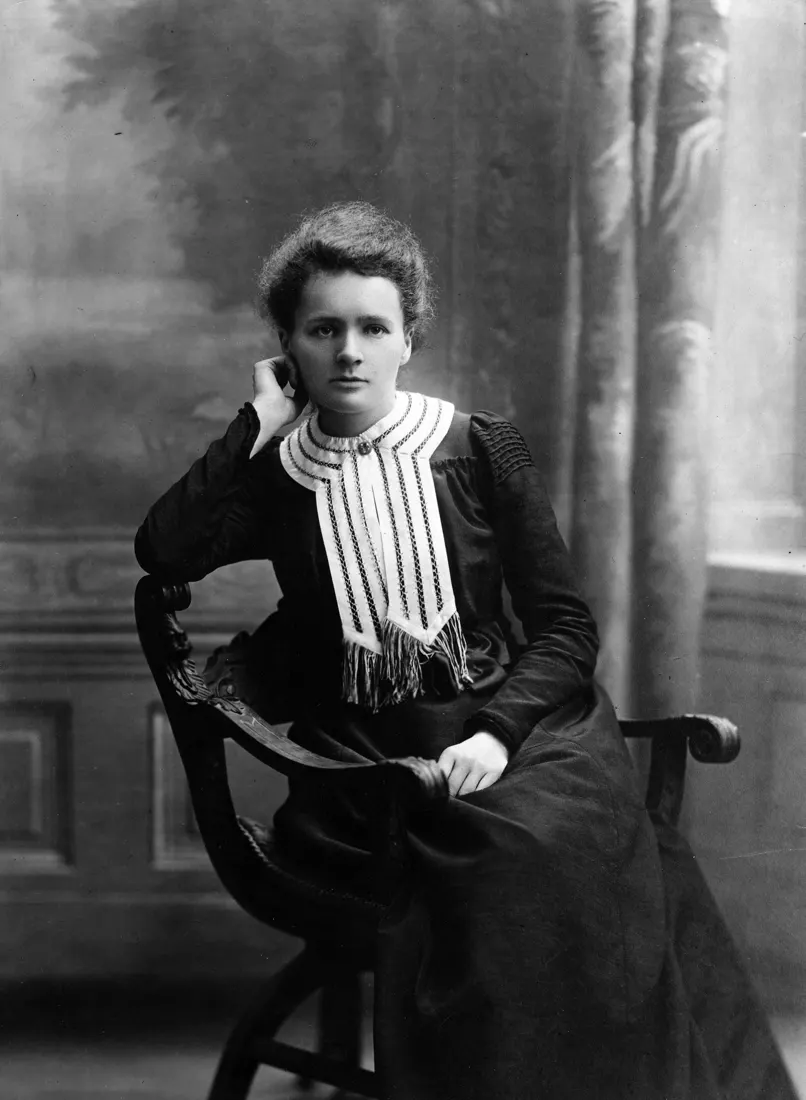
To understand why Marie Curie's Polish identity mattered so much to her, it helps to understand what Poland actually was during her childhood: nothing, officially. The country had been carved up by Russia, Prussia, and Austria in the late 1700s and wouldn't reappear on a map as an independent state until 1918 — fifteen years after she'd already won her first Nobel Prize.
In Russian-controlled Warsaw, the Polish language was pushed out of official schooling, replaced by mandatory Russian instruction. Polish history and literature were censored. For a family like the Skłodowskis, keeping Polish culture alive at home wasn't sentimental — it was resistance, carried out in a language the occupying government wanted extinguished within a generation.
The Flying University: Poland's Secret Classroom
Barred from the University of Warsaw, young women with academic ambitions turned to the Uniwersytet Latający, or "Flying University" — an underground network of secret classes that moved locations constantly to dodge Russian authorities. Maria Skłodowska studied there in her late teens, absorbing physics, chemistry, and natural science taught in Polish, by Polish instructors, in direct violation of imperial law.
It was this experience — risking arrest for the right to learn in her own language — that shaped how seriously she would later take science, and how permanently she would associate education itself with national survival.
Why Marie Curie Left Poland for Paris
Higher education for women simply did not exist in any formal sense in Russian Poland. So Maria Skłodowska and her older sister Bronisława struck a deal: Maria would work as a governess for years to fund Bronisława's medical studies in Paris, and once Bronisława qualified and could support herself, she would help fund Maria's turn.
The arrangement held. In 1891, at twenty-four, Maria arrived in Paris and enrolled at the Sorbonne — one of the only universities in Europe that would let a woman study physics and mathematics seriously. She lived in poverty, surviving on bread and tea in an unheated attic room, and graduated first in her class in physics in 1893, then second in mathematics a year later. She had gone to Paris because Poland's occupiers wouldn't let her study at home — not because Warsaw meant any less to her.
Meeting Pierre Curie and the Discovery of Radioactivity
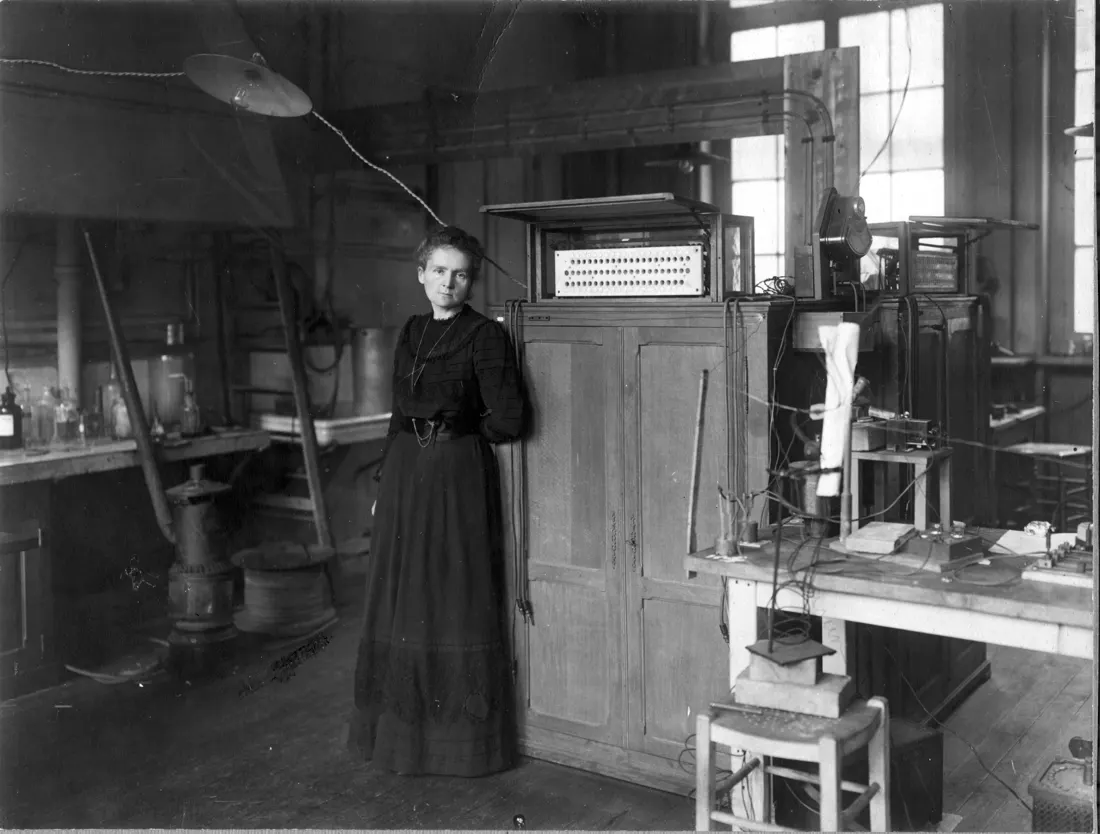
In 1894, Maria met Pierre Curie, a physicist already respected for his work on crystals and magnetism. They married the following year in a plain civil ceremony — Maria wore a dark blue dress instead of a wedding gown, practical enough to keep wearing in the lab. It's here that "Maria Skłodowska" became "Marie Curie" in most historical accounts, though she continued signing scientific papers with both names throughout her career.
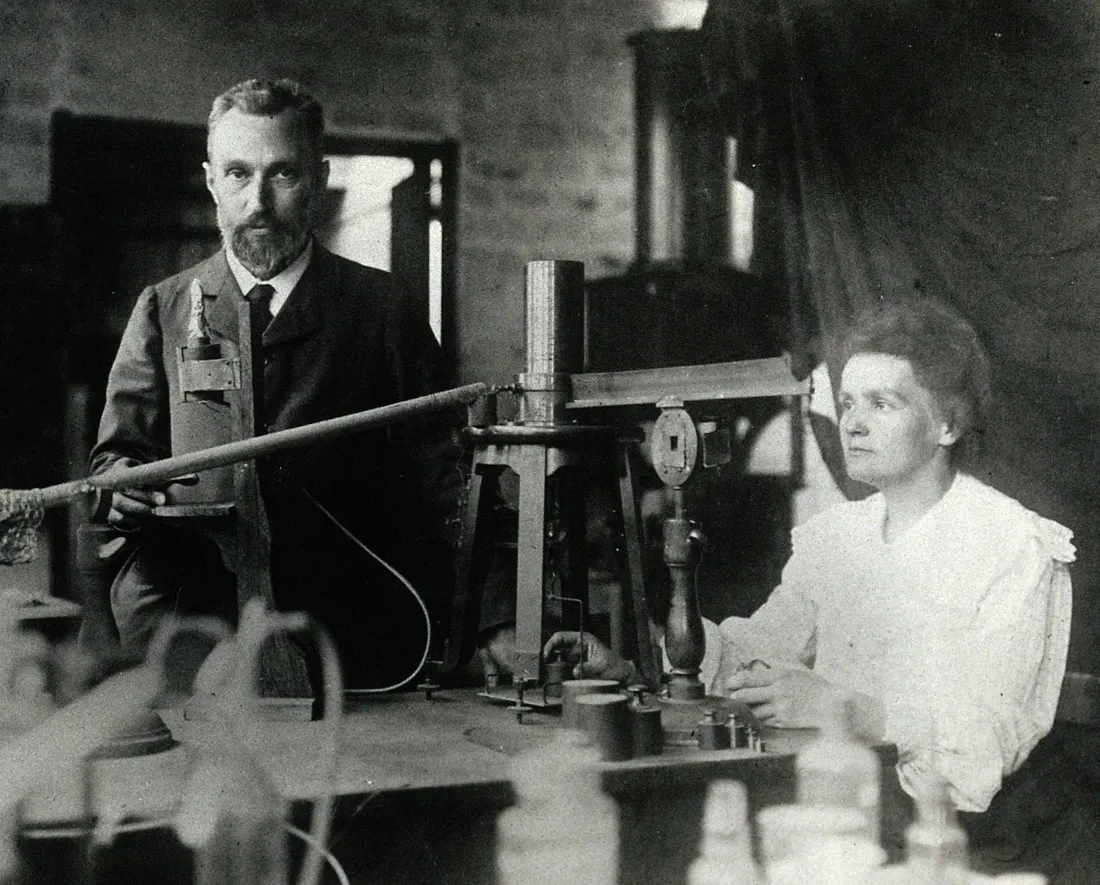
Working together, the Curies investigated the mysterious rays that Henri Becquerel had discovered coming from uranium. Marie Curie coined the term "radioactivity" to describe the phenomenon, and through punishing physical labor — processing tons of pitchblende ore by hand in a leaky shed — the couple isolated two new radioactive elements in 1898: polonium and radium.
Marie Curie Nobel Prize Record No One Has Matched
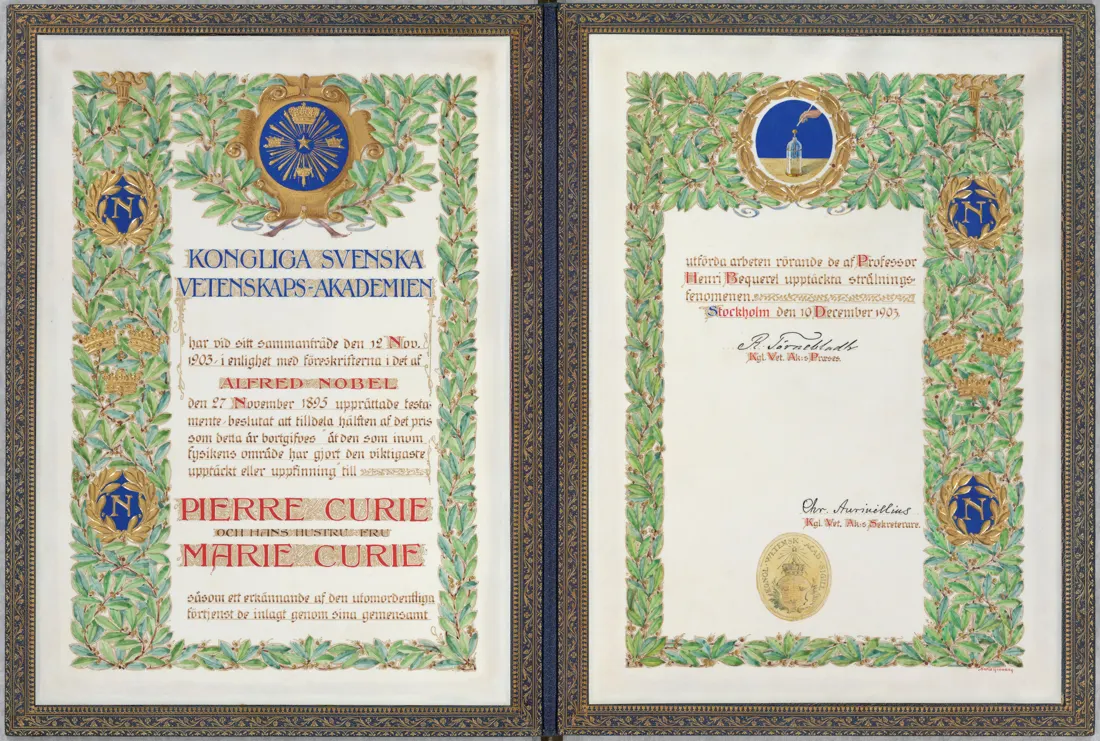
In 1903, Marie Curie, Pierre Curie, and Henri Becquerel shared the Nobel Prize in Physics for their work on radioactivity, making her the first woman ever to win a Nobel Prize. The Swedish Academy initially planned to honor only Pierre and Becquerel; it was Pierre who insisted her name be added, refusing to accept the prize without her included as an equal contributor.
Pierre died suddenly in a street accident in 1906, struck by a horse-drawn cart in the Paris rain. She continued their research alone, taking over his teaching position at the Sorbonne and becoming the university's first female professor. In 1911, a second Nobel Prize followed — this time in Chemistry, for isolating pure radium and determining its atomic weight. According to the official Nobel Prize record, she remains the only person in history to win Nobel Prizes in two different scientific fields, and one of only five people ever to win two Nobel Prizes at all.
Poland's "Little Curies" of the First World War
The Nobel Prizes weren't the end of her scientific contributions. When the First World War broke out, she realized mobile X-ray units could help battlefield surgeons locate bullets and shrapnel without guesswork, saving limbs and lives. She personally designed and drove these vehicles to the front lines, training over a hundred women as radiography technicians along the way.
French soldiers nicknamed the vans "petites Curies" — little Curies — and by the war's end, her mobile units had treated an estimated one million wounded soldiers. It was unglamorous, exhausting, and physically dangerous work, done years after she'd already secured a place in scientific history, because she saw a practical problem and built the tool to fix it herself — the same instinct that had driven her since the Flying University.
Polonium: The Element Named After Poland
When Marie Curie discovered the first of her two new elements in 1898, she made a deliberate, political choice: she named it polonium, after Poland — a country that, at that exact moment, did not legally exist. It was a scientific paper smuggling a protest into the historical record, a way of putting her occupied homeland on the periodic table when it couldn't be put on a map.
Curie was explicit about her intent, writing later that she hoped the name would draw international attention to Poland's political situation, even if only through a footnote in a chemistry journal. It's one of the clearest single pieces of evidence for how central Polish identity remained to her, even at the height of her acceptance into French scientific life.
Marie Curie Never Stopped Being Polish
Marie Curie's French career never came at the cost of her Polish ties. She taught her two daughters, Irène and Ève, to speak Polish at home, and took them on visits to Poland throughout their childhood. She kept close friendships with Polish scientists and stayed engaged with Polish scientific institutions for the rest of her life, even while running the Radium Institute in Paris.
In 1932, four years before Poland regained the independence she'd waited her whole life for, Marie Curie traveled to Warsaw for the opening of the Radium Institute she had personally helped establish and fund — a Polish counterpart to her Paris laboratory, built so Polish scientists and cancer patients wouldn't have to leave the country the way she once had to. She gave the opening address in Polish.
So Was Marie Curie Polish or French?
The honest answer is both, depending on what you're measuring. By citizenship, she became French in 1895 when she married Pierre. By her own repeated declarations, her upbringing, her language at home, the name she gave an element, and the causes she funded, she remained unmistakably Polish her entire life. The confusion comes from a framing shortcut: biographies default to where someone achieved fame, not where they were formed. Marie Curie achieved fame in France. She was formed in Poland, under conditions specifically designed to prevent someone like her from succeeding at all.
A Scientific Dynasty That Started in Warsaw
The habit of discovery didn't stop with one generation. Her elder daughter, Irène Joliot-Curie, went on to win her own Nobel Prize in Chemistry in 1935, alongside her husband Frédéric Joliot-Curie, for synthesizing new radioactive elements — meaning the Skłodowska line collected five Nobel Prizes across three people, an achievement no other family in history has matched. Irène had spent her teenage years being personally tutored in physics and mathematics by her mother's own circle, including a rotating group of Paris's leading scientists who taught a small cooperative school just for their children.
Her younger daughter, Ève, took a different path entirely, becoming a journalist and pianist, and later writing the definitive biography of her mother — a book credited with cementing much of the popular understanding of Marie Curie's life for English-speaking readers, including, ironically, the version that tends to foreground Paris over Warsaw.
Marie Curie's Legacy in Poland Today
Poland has never let the world forget where Marie Curie came from. Her childhood home on Freta Street is now the Maria Skłodowska-Curie Museum, run by the Polish Chemical Society. Poland's National Research Institute of Oncology carries her name across its branches, continuing the cancer-research mission she personally founded in Warsaw in 1932. She appears on Polish currency, in Polish school curricula as a national figure rather than a footnote, and in the name of hospitals, streets, and universities across the country.
When she died of aplastic anemia in 1934 — almost certainly caused by decades of unprotected exposure to radiation, a risk barely understood at the time — she was buried beside Pierre outside Paris. In 1995, both were reinterred in the Panthéon, making Marie Curie the first woman honored there for her own achievements rather than as someone's wife. Even that resting place carries a Polish footnote: soil from her native Poland was placed in her casket.
Marie Curie FAQ
Was Marie Curie Polish or French?
Both, in different senses. She was born and raised in Warsaw, Poland, and remained culturally and personally Polish throughout her life. She became a French citizen through marriage in 1895 and spent her scientific career in Paris. Most popular accounts default to "French" because that's where she worked, not because her Polish identity was ever in question.
What was Marie Curie's real name?
She was born Maria Salomea Skłodowska. She adopted "Marie" after moving to France and became "Marie Curie" after marrying Pierre Curie in 1895, though she continued using "Skłodowska-Curie" in scientific publications for the rest of her career.
Why did Marie Curie name an element after Poland?
She discovered polonium in 1898 and named it deliberately after her homeland, which at the time was partitioned and did not exist as an independent country. It was a calculated act of political visibility, drawing attention to Poland's occupation through a scientific discovery that the world would have to take seriously.
How many Nobel Prizes did Marie Curie win?
Two: the 1903 Nobel Prize in Physics (shared with Pierre Curie and Henri Becquerel) and the 1911 Nobel Prize in Chemistry, which she won alone. She remains the only person in history to win Nobel Prizes in two different scientific disciplines.
Did Marie Curie ever return to Poland?
Yes, repeatedly. She visited throughout her life and taught her daughters Polish. In 1932 she traveled to Warsaw to open the Radium Institute, a cancer-research and treatment center she personally helped fund and establish in her home country.
Marie Curie: Key Facts at a Glance
| Fact | Detail |
|---|---|
| Birth name | Maria Salomea Skłodowska |
| Born | November 7, 1867, Warsaw, Poland (then under Russian occupation) |
| Died | July 4, 1934, near Sallanches, France |
| Nobel Prizes | Physics (1903), Chemistry (1911) — the only person to win in two sciences |
| Elements discovered | Polonium and radium (1898) |
| Element named for Poland | Polonium, from the Latin Polonia |
| Education | Sorbonne, Paris (Flying University, Warsaw, before that) |
| Legacy in Poland | Maria Skłodowska-Curie Museum (Warsaw); National Research Institute of Oncology branches bear her name |
Marie Curie's life resists the tidy label most people reach for. She built her career in France, but she built her convictions in Poland — in a Warsaw classroom that had to hide from the police, taught in a language the government wanted gone. The element she pulled out of pitchblende and handed to the world still carries her country's name, which is about as permanent a way as anyone has ever found to say where they're really from.
For more on the Poles who left an outsized mark on history without ever losing their roots, see famous Polish people and Frederic Chopin, another Polish genius whose career took him abroad without ever loosening his ties to home. If it's specifically Poland's Nobel record that interests you, Poland's Nobel Prize winners in literature covers the other side of the country's Nobel legacy.