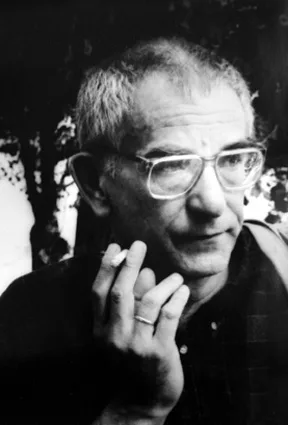
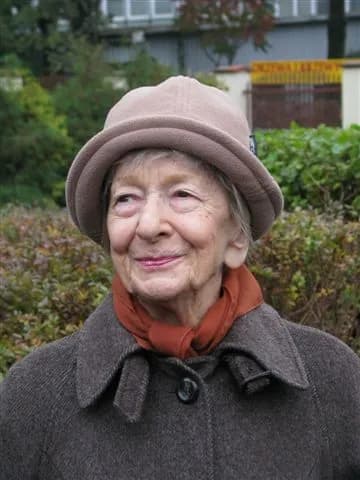
Wislawa Szymborska has a strange relationship with fame: enormous inside Poland, and almost entirely limited to a single fact everywhere else — that she won the 1996 Nobel Prize in Literature. Most people who could name her can't name a single poem, which is a genuine loss, because Szymborska wrote some of the most quietly devastating, plainly funny, deceptively simple poetry of the twentieth century, and almost none of it requires a literature degree to love.
PolishPal's own roundup of Poland's Nobel Prize winners in literature gives her one entry among five. That undersells someone who, in Poland, is genuinely a household name in a way most Nobel laureates never manage — quoted in graduation speeches, printed on postcards, read at funerals, and beloved specifically because her poems don't sound like literature. They sound like someone talking to you directly, with better timing than you have.
This is the fuller story: who Wislawa Szymborska actually was, why the Swedish Academy singled her out, what her poetry actually does that makes it so quotable, and why she spent the last sixteen years of her life half-joking that winning the Nobel Prize was the worst thing that ever happened to her.
Who Was Wislawa Szymborska? Poland's Reluctant Polish Poet
Wislawa Szymborska was born on July 2, 1923, in Bnin, a small town in western Poland now absorbed into Kórnik. Her father managed an estate for a countess; when Szymborska was eight, the family relocated to Kraków, the city that would remain her home for the rest of her life, through occupation, communism, fame, and old age, almost without exception.
She studied Polish literature and sociology at Kraków's Jagiellonian University starting in 1945, though wartime disruption and postwar poverty meant she never formally completed her degree — a gap in her formal credentials that never once slowed the trajectory of her writing career. In 1953 she joined the editorial staff of Życie Literackie ("Literary Life"), a Kraków weekly, where she worked for nearly three decades — first as a poetry editor, later writing a beloved, wry books column under the title "Lektury Nadobowiązkowe" ("Nonrequired Reading"), reviewing everything from serious literature to gardening manuals and cookbooks with the same dry attention.
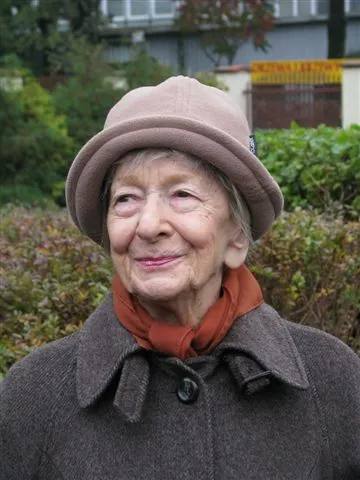
Photo: Mariusz Kubik, CC BY 3.0, via Wikimedia Commons.
From Socialist Realism to Her Own Voice
Szymborska's earliest published work does not resemble the poet she'd become. Her first two collections, published in the early 1950s under communist Poland's officially mandated Socialist Realist style, were competent propaganda — poems about factory workers and collective progress that she later disowned almost entirely, refusing to let them be reprinted during her lifetime.
The real turning point was her 1957 collection, Wołanie do Yeti ("Calling Out to Yeti"), where the ironic, precise, deceptively conversational voice she'd become known for first fully emerged. From that point forward, her poetry moved decisively away from grand political statements and toward small, specific, human moments — a cat left behind in an empty apartment, the strange etiquette of writing a résumé, the impossibility of ever stepping into the same moment twice — treated with a mix of tenderness and dry wit that never tipped into sentimentality.
Szymborska Nobel Prize: What She Actually Won It For
In 1996, the Swedish Academy awarded Wislawa Szymborska the Nobel Prize in Literature "for poetry that with ironic precision allows the historical and biological context to come to light in fragments of human reality." In plainer terms: she took enormous, unanswerable questions — mortality, chance, memory, the sheer improbability of any individual life happening at all — and approached them through small, specific, almost domestic details instead of abstraction.
Her body of work is famously compact for a Nobel laureate — fewer than 350 published poems across her entire career, the result of a self-editing standard so strict that she reportedly threw away far more poems than she ever published. She wasn't prolific by output; she was prolific by how much each short poem managed to hold, a discipline that made every new collection a genuine event among Polish readers rather than a routine release.
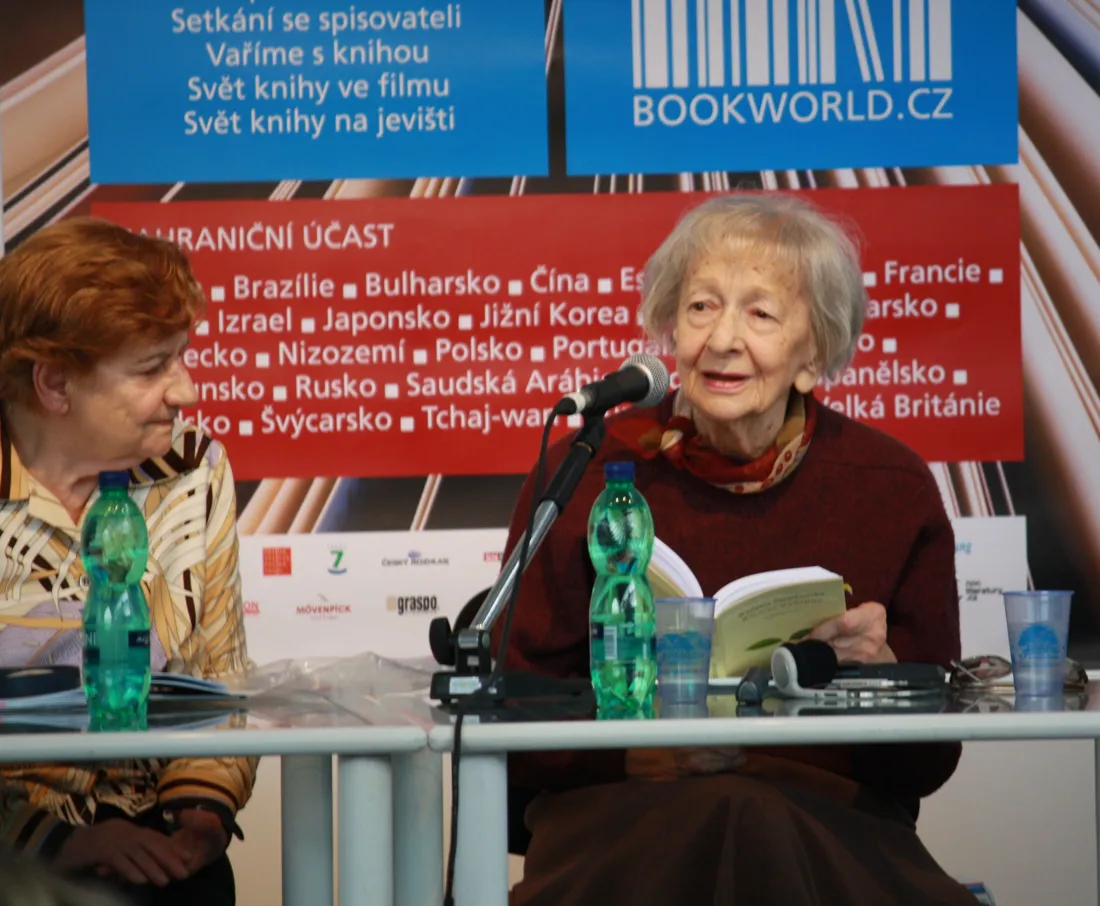
Photo: Juan de Vojníkov, CC BY-SA 3.0, via Wikimedia Commons.
The "Stockholm Tragedy": Szymborska's Reluctant Fame
Szymborska was famously, deeply private, and the Nobel Prize was, by her own account, close to a disaster for her personal life. She and her close friends started calling it "the Stockholm tragedy" — a joke with real weight behind it — because the sudden global attention buried her in correspondence, interview requests, and public appearances, the exact opposite of the quiet, unhurried life she needed to actually write.
She gave interviews sparingly, avoided television when she could, and once remarked that she envied Robert Frost for winning acclaim without ever having to leave his farm. After 1996, she wrote noticeably less poetry than before — not because she'd run out of things to say, but because fame had eaten the solitude the writing depended on.
Postcards, Not Poems: Szymborska's Secret Hobby
Away from poetry, Szymborska had an eccentric private art practice almost nobody knew about until after her death: handmade postcard collages, cut from old magazines and newspaper clippings, which she mailed to friends for decades starting in the late 1960s. The hobby began partly as a playful way to dodge postal censorship under Poland's communist government, sending a coded, image-based message instead of words a censor might flag.
She made them in small batches, choosing whichever collage suited the specific friend and occasion, treating the whole practice as a kind of private, disposable art form never meant for gallery walls. After her death, collections of these postcards were exhibited and published, revealing a playful, visual sense of humor that ran alongside her poetry rather than separate from it.
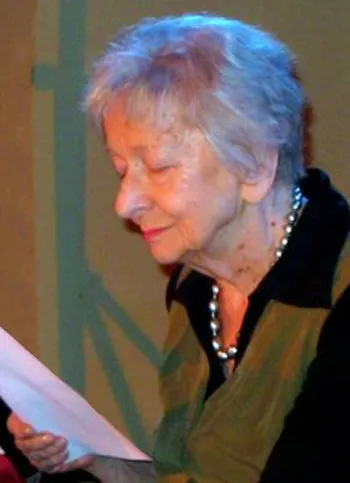
Photo: Michał Kobyliński, CC BY-SA 2.5, via Wikimedia Commons.
Wislawa Szymborska's Most Beloved Poems
A handful of Szymborska's poems have taken on a life well beyond Poland's borders, translated into dozens of languages and quoted far outside literary circles.
The Nothing Twice Poem That Made Her Famous
The nothing twice poem — "Nic dwa razy" in the original Polish — is about the impossibility of ever repeating a single moment exactly, and it's probably her single most quoted work: direct enough to work as a greeting card line, sharp enough to survive scrutiny as serious poetry, a balance almost nobody else pulls off. It opens with the line "Nothing can ever happen twice," and spends the rest of the poem working out exactly what that means for how carelessly people tend to live anyway.
"Cat in an Empty Apartment," written about the death of her longtime partner, the writer Kornel Filipowicz, approaches grief sideways, through the confused perspective of a pet waiting for someone who isn't coming back — one of the most quietly devastating poems about loss written in the twentieth century, without ever using the word "grief."
"True Love" turns her ironic eye on romance itself, treating the concept with open skepticism while still somehow being one of the most-quoted love poems of her generation. "The End and the Beginning," written after witnessing postwar reconstruction, is about the unglamorous, unphotographed labor of literally rebuilding after catastrophe — who sweeps the rubble, who fixes the bridges, and how quickly the people who lived through it get erased from the story.
Why Wislawa Szymborska Translates So Well
Poetry is notoriously hard to translate — rhythm, sound, and wordplay rarely survive the jump between languages intact — but Szymborska's work has traveled unusually well, largely because so much of its power sits in imagery and idea rather than in sonic tricks specific to Polish. Her longtime English translators, Stanisław Barańczak and Clare Cavanagh, are widely credited with capturing her tone so precisely that English-language readers often describe her poems as sounding like they were written directly in English, a rare compliment in translated poetry.
That translatability is a big part of why she has real staying power outside Poland despite never courting an international audience the way some contemporaries did. Her poems get assigned in university courses, quoted in eulogies delivered in languages she never wrote in, and shared individually online completely divorced from any biographical context — proof that the ideas themselves, not just the Polish craftsmanship, are doing the work.
Szymborska's Complicated Relationship With Politics
It would be incomplete to describe Szymborska only as a gentle, ironic observer of small moments, because her relationship with Poland's postwar communist government was genuinely complicated and shifted hard over her lifetime. Beyond the Socialist Realist poems of her early twenties, she was a member of the ruling Polish United Workers' Party for over two decades, a fact she later described with open regret, calling her youthful political conformity a mistake she'd spent the rest of her career quietly correcting.
She left the party in 1966 in protest after a respected philosophy professor was expelled from it for ideological dissent, and by the 1980s she was writing and publishing poetry under a pseudonym in Poland's underground literary press, in open and genuinely risky defiance of martial law censorship. That arc — from state-approved propagandist in her twenties to underground dissident writer in her fifties — rarely makes it into short biographical summaries, but it's essential to understanding why her mature poetry treats grand ideological certainty with such consistent suspicion. She'd been burned by it personally, and it shows in nearly everything she wrote afterward.
Wislawa Szymborska's Legacy in Kraków
Szymborska died in her sleep on February 1, 2012, in Kraków, at eighty-eight, having lived in the same city for eight decades. Her funeral drew large public crowds, and she was buried at Kraków's Rakowicki Cemetery, in the same city that had shaped nearly everything she wrote.
Kraków has kept Wislawa Szymborska's presence visible since her death. A mural of "Nothing Twice" — full lines of the poem alongside an illustrated portrait — was painted on a building near the city center, turning one of her most famous poems into public art anyone can walk past. Streets, a park, and literary prizes in Poland now carry her name, and Życie Literackie's old offices, where she edited poetry for decades, remain a point of literary pilgrimage for readers tracing her career.
According to the Nobel Prize's official biographical record, Wislawa Szymborska remains one of relatively few poets — as opposed to novelists or playwrights — to win literature's most prestigious award in the prize's history, a distinction that puts her in unusually rare company among Nobel laureates in literature generally.
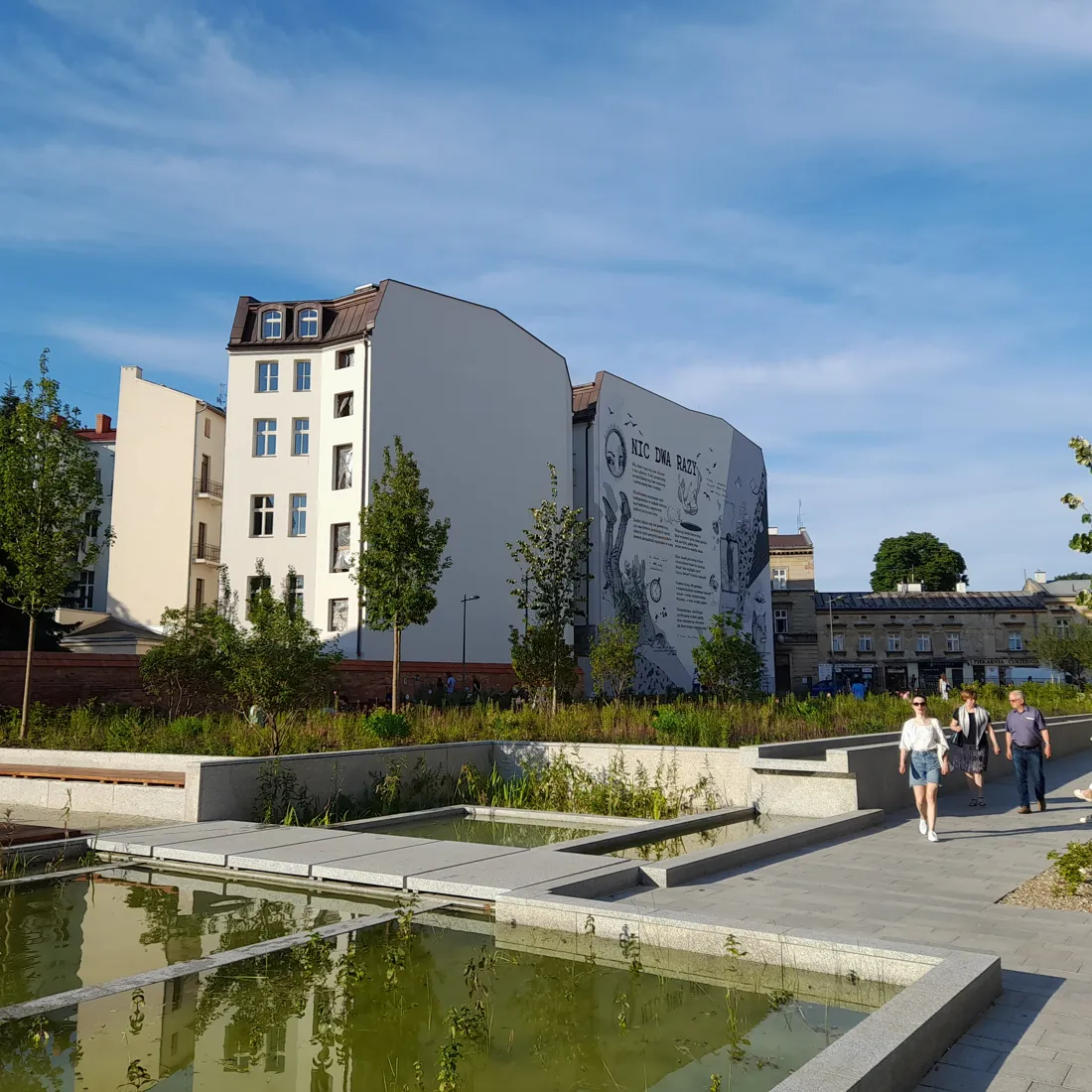
Photo: Archiwald, CC BY-SA 4.0, via Wikimedia Commons.
Wislawa Szymborska FAQ
Why did Wislawa Szymborska win the Nobel Prize?
The Swedish Academy awarded her the 1996 Nobel Prize in Literature for poetry that approaches large, universal questions — mortality, chance, memory — through small, precise, ironic observations of ordinary human life rather than abstraction.
How many poems did Wislawa Szymborska write?
Fewer than 350 published poems across her entire career, a notably small body of work for a Nobel laureate, the result of an unusually strict self-editing process; she reportedly discarded far more poems than she ever allowed into print.
What is Wislawa Szymborska's most famous poem?
"Nothing Twice" (Nic dwa razy) is generally considered her most widely quoted work, though "Cat in an Empty Apartment," "True Love," and "The End and the Beginning" are all frequently cited as favorites among English-language readers.
Why did Szymborska call the Nobel Prize a "tragedy"?
She and her friends jokingly called it "the Stockholm tragedy" because the sudden fame and flood of correspondence and interview requests disrupted the quiet, private life she needed to write, and she published noticeably less poetry in the years that followed.
Where is Wislawa Szymborska buried?
She is buried at Rakowicki Cemetery in Kraków, the city where she lived for nearly her entire life, from age eight until her death in 2012.
Wislawa Szymborska: Key Facts at a Glance
| Fact | Detail |
|---|---|
| Born | July 2, 1923, Bnin (now Kórnik), Poland |
| Died | February 1, 2012, Kraków, Poland |
| Nobel Prize | Literature, 1996 |
| Total published poems | Fewer than 350 |
| Home city | Kraków (from age 8 until her death) |
| Day job | Poetry editor and columnist, Życie Literackie, 1953–1981 |
| Secret hobby | Handmade postcard collages, mailed to friends for decades |
| Most quoted poem | "Nothing Twice" (Nic dwa razy) |
Wislawa Szymborska spent a career proving that poetry didn't need to sound important to matter — it just needed to notice something true and say it precisely. That's a much harder trick than it looks, and it's why her lines keep surfacing in places far outside literary anthologies: in eulogies, in graduation speeches, on postcards not unlike the ones she used to make herself.
She never once chased an international readership, never wrote with translation in mind, and still ended up as one of the most quietly influential poets a small, occupied, then communist country ever produced across the entire twentieth century. That's the part her Nobel citation captures and her reputation as merely "the 1996 winner" completely misses: Wislawa Szymborska didn't get famous by writing for the world. She got famous by writing precisely enough about her own small corner of it that the world eventually noticed anyway.
For more on the writers who shaped Poland's literary identity, see the rest of Poland's Nobel Prize winners in literature and Adam Mickiewicz, the national poet Szymborska grew up reading. And if it's specifically Poland's global scientific legacy that interests you rather than its literary one, Marie Curie is the other side of that story — a very different kind of Nobel Prize, a very different kind of fame.