The most common Polish surnames are not random collections of syllables. They are occupational labels, geographic descriptors, and patronymic markers that have been passed down through generations since the late Middle Ages. Understanding what these surnames actually mean is one of the quickest ways to connect with Polish culture on a deeper level, whether you are researching your own family history or simply trying to make sense of the names you encounter in Polish media. For learners of the language, the most common Polish surnames are also a surprisingly useful vocabulary lesson — the root words that appear in them, like nowy (new), kowal (blacksmith), and wieś (village), are high-frequency words that appear everywhere in everyday Polish.
Learning the meanings behind the most common Polish surnames reinforces your core vocabulary while giving you a window into how Poles have thought about identity for centuries. Polish surname patterns are also remarkably transparent compared to English ones. Once you learn the common suffixes — -ski, -wicz, -ak, -czyk — you can often guess a surname's type even before you know the root. This guide breaks down the most common Polish surnames by category, explains what each one means, and gives you the pronunciation tools to say them correctly. Whether you are researching genealogy, learning Polish, or simply curious about the most common Polish surnames and what they reveal about the culture, the categories that follow will give you a complete picture.
The Top 10 Most Common Polish Surnames and Their Meanings
According to Polish government registries and academic studies of surname frequency, these ten surnames consistently rank as the most common Polish surnames nationwide. Together, they account for millions of Polish citizens and an even larger number of Polish diaspora members worldwide.
| Rank | Surname | Approximate Number of Bearers | Meaning |
|---|---|---|---|
| 1 | Nowak | 200,000+ | "New one" — from nowy (new), originally given to newcomers in a village |
| 2 | Kowalski | 140,000+ | "Blacksmith's" — from kowal (blacksmith) + -ski suffix |
| 3 | Wiśniewski | 100,000+ | "Of the cherry tree" — from wiśnia (cherry) |
| 4 | Wójcik | 100,000+ | "Little mayor's son" — from wójt (village mayor) + -ik diminutive |
| 5 | Kowalczyk | 95,000+ | "Little blacksmith" — from kowal (blacksmith) + -czyk diminutive |
| 6 | Kamiński | 90,000+ | "Of the stone" — from kamień (stone) |
| 7 | Lewandowski | 85,000+ | "Of the lavender field" — from lewanda (lavender, archaic) |
| 8 | Zieliński | 80,000+ | "Green one" — from zielony (green) |
| 9 | Szymański | 75,000+ | "Simon's" — patronymic from Szymon (Simon) |
| 10 | Woźniak | 70,000+ | "Wagon driver" — from wóz (wagon/cart) |
Nowak is the single most common Polish surname by a significant margin, and its meaning is surprisingly literal. It derives from nowy (new) and was originally given to newcomers who settled in a village after the original families had already established themselves. If you meet a Polish Nowak, their surname says that somewhere in their family tree, an ancestor was "the new guy." This pattern of naming newcomers is why many of the most common Polish surnames have such transparent, everyday meanings.
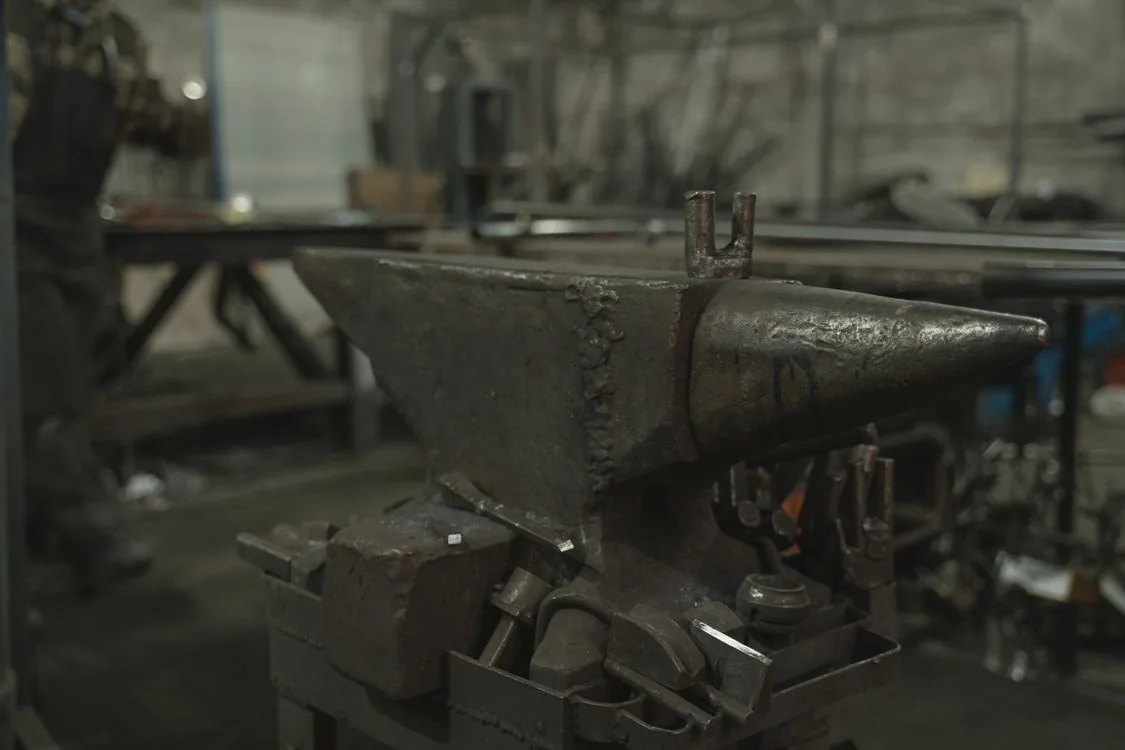
Kowalski and Kowalczyk both come from kowal (blacksmith), one of the most important professions in pre-industrial Poland. The difference between the two is the suffix: -ski indicates a connection or belonging, while -czyk is a diminutive that originally meant "son of the blacksmith" or "apprentice blacksmith." The existence of two separate entries among the most common Polish surnames from the same root tells you something about how important blacksmithing was in Polish village life.
Wiśniewski comes from wiśnia (cherry) and likely referred to someone who lived near a cherry orchard or cherry tree. Similarly, Zieliński comes from zielony (green) and probably described someone who lived near a green field or had green eyes. These "nature-themed" surnames are a large category among the most common Polish surnames.
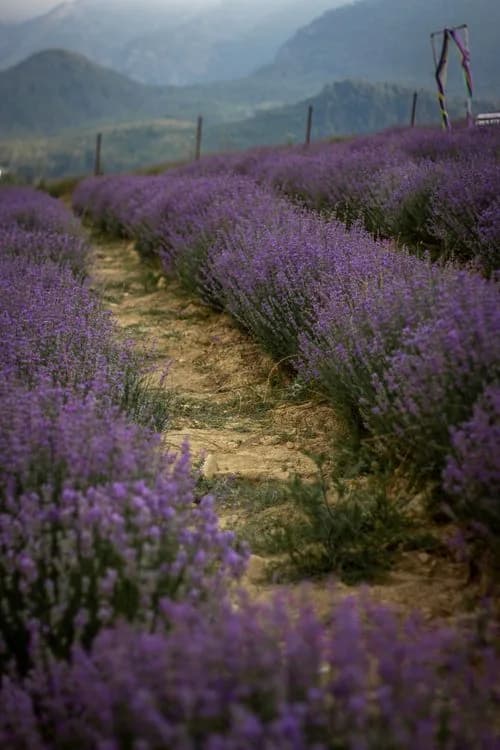
Lewandowski has an unexpectedly pleasant origin for such a common name. It comes from an archaic word for lavender, lewanda, and originally meant someone who lived near or worked with lavender fields. The surname has gained enormous international recognition thanks to Robert Lewandowski, the Polish footballer who is one of the most recognizable athletes in the world. For Poles, hearing "Lewandowski" is as common as "Smith" is for English speakers, but knowing it means "of the lavender field" adds a layer of poetry to an everyday name.
Occupational Surnames: What Your Ancestor Did for a Living
The largest category among the most common Polish surnames is occupational — names that describe what the original bearer did for work. Understanding this category is key to learning the most common Polish surnames because it covers such a large percentage of the population. This pattern is identical to English (Smith, Baker, Cooper, Miller) but the Polish versions are more visibly transparent because the root words remain in common use.
Kowalski and Kowalczyk (blacksmith) are the most obvious examples, but there are many others that appear in the top 100 Polish surnames:
- Woźniak — wagon driver, from wóz (wagon, cart)
- Młynarz — miller, from młyn (mill)
- Krawiec — tailor, from krawiec (tailor — still the modern Polish word)
- Szewczyk — little shoemaker, from szewc (shoemaker)
- Bednarski — cooper's, from bednarz (barrel maker)
- Cieślak — little carpenter, from cieśla (carpenter)
- Rzeźnik — butcher, from rzeźnik (butcher — still the modern word)
- Kołodziej — wheelwright, from koło (wheel)
- Górski — of the mountain, which could be geographic but also sometimes indicated a miner or someone who worked in the mountains
What makes these names so useful for Polish learners is that the root word is often still the everyday word for that profession. If you learn krawiec (tailor) because you want to understand the surname Krawiec, you have added a genuine vocabulary word to your Polish repertoire. This connection between the most common Polish surnames and everyday vocabulary makes learning them a two-for-one language lesson. The same applies to kowal (blacksmith), szewc (shoemaker), młyn (mill), and wóz (wagon).
The -ski suffix that appears on so many of the most common Polish surnames deserves special attention — it is arguably the single most defining feature of Polish naming. It is an adjectival suffix that roughly means "of" or "belonging to." Kowalski means "blacksmith's" or "of the blacksmith." It was historically associated with the nobility (szlachta), who used -ski in their toponymic (place-based) surnames to signal land ownership. Over time, the suffix spread to all social classes through a process called "ennoblement mimicry" — commoners adopted it to sound more prestigious. Today, -ski is so widespread that it is the single most recognizable feature of the most common Polish surnames internationally.
Patronymic Surnames: Named After Your Father
Patronymic surnames — names derived from a father's given name — are another major category among the most common Polish surnames. These names tell you what the original bearer's father was called, using suffixes that signal "son of" or "descendant of."
The most common patronymic suffix in Polish surnames is -wicz (or -icz), which is the equivalent of the English -son or the Russian -ovich. Examples include:
- Mickiewicz — son of Mikołaj (Nicholas), from Mikołaj + -ewicz
- Adam Mickiewicz himself, Poland's national poet, carried a surname that simply means "son of Mikołaj" — his father was indeed named Mikołaj Mickiewicz
- Szymański — though it uses -ski rather than -wicz, this is ultimately patronymic, derived from Szymon (Simon)
- Piotrowicz — son of Piotr (Peter)
- Pawłowicz — son of Paweł (Paul)
- Jakubowski — of Jakub (Jacob), combining the root with -owski
The -wicz suffix is particularly common in eastern Poland and in the Polish-Lithuanian Commonwealth territories (modern-day Lithuania, Belarus, and Ukraine). It is the same suffix that appears in Russian patronymics like "Ivanovich," and its prevalence in Polish surnames reflects the long history of Polish-East Slavic cultural exchange.
A related suffix is -ak, which also forms patronymic and descriptive surnames. Woźniak (from wóz — wagoner, but by extension "wagoner's son") and Kowalczyk (from kowal — blacksmith — plus the diminutive -czyk, meaning "little blacksmith" or "blacksmith's son") both fall into this broader category of filial naming.
Toponymic Surnames: Named After a Place
Toponymic surnames — names derived from a place name — are one of the largest and most transparent categories among the most common Polish surnames. If a Polish surname ends in -ski, there is a good chance it originated as a toponymic name, identifying the bearer by the village, town, or estate they came from. This category overlaps heavily with other categories, which is why studying the most common Polish surnames reveals so much about Polish history.
The pattern is straightforward: take a place name and add -ski (masculine) or -ska (feminine). Warsaw is Warszawa, so someone from Warsaw might be Warszawski. Kraków gives Krakowski. Poznań gives Poznański.
In practice, most toponymic Polish surnames refer to smaller villages rather than major cities. The most common Polish surnames in this category include:
- Wiśniewski — from wiśnia (cherry) + -ewski, indicating a place where cherry trees grew
- Kamiński — from kamień (stone), indicating a place with stone or a stony landscape
- Zieliński — from zieleń (green, greenery), indicating a green area
- Sadowski — from sad (orchard)
- Ostrowski — from ostrów (river island)
- Zalewski — from zalew (floodplain, inlet)
- Borkowski — from bór (pine forest)
The distinction between -ski and -cki/-dzki is purely phonetic — if the place name ends in a hard consonant, the suffix becomes -ecki or -ocki. For example, from gród (fortified settlement) you get Grodzki or Gródecki, not Gródzki.
For Polish learners, toponymic surnames are a goldmine of geographic and nature vocabulary. Learning that bór means "pine forest" because you looked up the surname Borkowski is vocabulary acquisition that sticks, because it is tied to a real, concrete meaning rather than an abstract flashcard.
Nature and Trait-Based Surnames
Not all of the most common Polish surnames fit neatly into occupational or toponymic categories. A significant number come from physical traits, personal characteristics, or natural phenomena. These are often the most poetic and the most memorable of all the most common Polish surnames.
- Zieliński — green, as discussed above
- Wesołowski — cheerful, from wesoły (happy, cheerful)
- Białek — little white one, from biały (white), likely referring to fair hair or complexion
- Czarny — black, from czarny (black), referring to dark hair or complexion
- Król — king, either a nickname for someone who acted "kingly" or an occupational name for someone who worked in a royal court
- Długosz — long, from długi (long), likely referring to a tall person
- Głowacki — of the head, from głowa (head), probably describing someone with a distinctive head shape or size
- Nosek — little nose, from nos (nose)
- Sikora — titmouse (the bird), a nature-based nickname that became a surname
Nature-based surnames are particularly common and particularly charming in Polish. Gołębiewski comes from gołąb (pigeon). Jastrzębski comes from jastrząb (hawk). Kwiatkowski comes from kwiatek (little flower). These names tell you that the original bearer lived near or had some connection to those animals or plants — or, in some cases, that they resembled them in some way.
To learn Polish through these names is to build a vocabulary of everyday words while simultaneously understanding the culture that created them. The fact that "green" (Zieliński) and "cherry" (Wiśniewski) are among the most common Polish surnames tells you something about the agricultural, nature-oriented world of medieval and early modern Poland, where your identity was tied to the landscape you lived in and the work you did.
How Polish Women's Surnames Work
One of the most distinctive features of the most common Polish surnames — and one that confuses many learners — is the way they change for women. In Polish, a woman's surname is grammatically feminine, which means it takes a feminine form if the structure allows it. This is a grammatical rule, not a social statement, and it applies to about 70% of the most common Polish surnames.
Surnames ending in -ski change to -ska for women:
- Robert Kowalski → Anna Kowalska
- Jan Wiśniewski → Maria Wiśniewska
- Piotr Zieliński → Katarzyna Zielińska
Surnames ending in -wicz, -ak, or a consonant generally do not change:
- Mickiewicz stays Mickiewicz for women
- Woźniak stays Woźniak for women
- Kowalczyk stays Kowalczyk for women
Historically, unmarried women sometimes used -ówna or -anka suffixes (meaning "daughter of"), and married women used -owa (meaning "wife of"). Maria Kowalczykówna was "Maria, daughter of Kowalczyk." Anna Kowalczykowa was "Anna, wife of Kowalczyk." These forms are now archaic and rarely used in modern Poland, but you will encounter them in historical documents and nineteenth-century literature.
For Polish learners, the masculine-feminine surname alternation is excellent practice for the gender agreement system that permeates the language. Just as adjectives change their endings based on gender (nowy for masculine, nowa for feminine), surnames ending in -ski follow the exact same pattern. Getting comfortable with Kowalski → Kowalska reinforces the same grammatical muscle you use for dobry → dobra.
The Polish -ski vs. English Naming Traditions Compared
English speakers often find Polish surnames difficult to process because the naming logic is different from what they are used to. In English, the Top 10 surnames are Smith, Jones, Williams, Brown, Taylor, Davies, Wilson, Evans, Thomas, and Roberts. Notice the pattern: occupational (Smith, Taylor), patronymic (Jones = John's, Williams = William's, Wilson = Will's son), and color/descriptive (Brown).
Polish and English naming traditions convergently evolved many of the same categories. The Polish equivalent of Smith is Kowalski (blacksmith). The Polish equivalent of Jones (John's son) would be Janowicz or Jankowski. The Polish equivalent of Brown could be Brązowy (literal) or something like Borkowski (from bór — pine forest, giving a "dark green/brown" association).
This makes the most common Polish surnames surprisingly accessible to English speakers once the pattern is explained. You already understand the concept of a patronymic — you just call them "Johnson" instead of "Janowicz."
How to Pronounce Common Polish Surnames
Pronunciation is where most learners stumble with Polish surnames. The spelling looks intimidating, but the rules are completely consistent. Here are the most common pronunciation pitfalls and how to handle them:
- Nowak — /ˈnɔ.vak/ — NO-vack, with a short o like in "not"
- Kowalski — /kɔˈval.ski/ — koh-VAL-skee, stress on the second syllable
- Wiśniewski — /viɕˈɲef.ski/ — veesh-NYEF-skee, the ś is soft like English "sheep" but shorter
- Wójcik — /ˈvui.tɕik/ — VOOY-cheek, the ój is a diphthong like "oy"
- Kowalczyk — /kɔˈval.tʂɨk/ — koh-VAL-chik, the cz is hard like "ch" in "chunk"
- Lewandowski — /lɛ.vanˈdɔf.ski/ — leh-van-DOFF-skee
- Zieliński — /ʑɛˈliɲ.ski/ — zheh-LEEN-skee, the ź is soft like "zh" but palatalized
- Woźniak — /ˈvɔʑ.ɲak/ — VOZH-nyak
The most common mistake English speakers make with the most common Polish surnames is pronouncing the w as English "w" instead of Polish "v." Another frequent error is stressing the wrong syllable — Polish stress is almost always on the second-to-last syllable, so Kowalski is koh-VAL-skee, not KOH-val-skee.
For a deeper dive into Polish sounds, see our guide on the Polish alphabet and pronunciation. The rules that apply to surnames are exactly the same rules that apply to all Polish words.

The History Behind Polish Surname Patterns
Polish surnames developed later than English or German surnames. While English surnames were largely fixed by the 14th century, the Polish nobility (szlachta) only began adopting hereditary surnames in the 15th and 16th centuries. Peasants and townspeople followed much later — many Polish peasants did not have fixed hereditary surnames until the 19th century, when the partitioning powers (Prussia, Austria, Russia) imposed mandatory surname registration.
This late adoption is why the most common Polish surnames are so transparent in meaning. They were created at a time when the root words were still in everyday use, so the connection between Kowalski and kowal (blacksmith) was immediately obvious to the people adopting the name. By contrast, an English speaker named Smith rarely thinks about blacksmithing because the name is centuries older and the word "smith" has shifted in meaning.
The partitions also influenced surname distribution. Some of the most common Polish surnames are more frequent in certain regions, reflecting the administrative boundaries of the 19th century. Surnames ending in -ski are slightly more common in former Prussian and Austrian partitions, while -wicz surnames are concentrated in the eastern territories that were part of the Polish-Lithuanian Commonwealth.
For Polish diaspora families — particularly Polish-Americans, Polish-Canadians, and Polish-Brits — the surname is often the only Polish word that survives in the family after a few generations. Understanding its meaning is a way of reconnecting with a language and culture that may have been partially lost. The most common Polish surnames are also the most common Polish-American surnames for the same reason: the mass migrations of the late 19th and early 20th centuries took these names to Chicago, Detroit, London, and beyond.
Frequently Asked Questions
What is the most common Polish surname? Nowak is the most common Polish surname, with over 200,000 bearers in Poland and millions more in the global Polish diaspora. It comes from nowy (new) and originally referred to a newcomer or recent arrival in a village.
Why do so many Polish surnames end in -ski? The -ski suffix is an adjectival ending meaning "of" or "belonging to." It was historically associated with the nobility and later spread to all social classes. It is the most recognizable feature of Polish surnames internationally.
Do Polish women change their surnames differently? Yes. Surnames ending in -ski change to -ska for women (Kowalski → Kowalska). Other endings typically stay the same. Historical suffixes like -ówna (unmarried woman) and -owa (married woman) are now largely obsolete.
Are Polish surnames hard to pronounce? Polish pronunciation is consistent once you learn the rules. The main traps for English speakers are the w pronounced as "v," the ł pronounced as "w," and the soft consonants ś, ć, ź, ń which require the tongue to be raised toward the palate.
Can I trace my Polish surname to a specific village? Often, yes. The most common Polish surnames that end in -ski frequently originate from a specific place name. If your surname is Warszawski, it likely traces to Warsaw. If it is Wiśniewski, it traces to a place associated with cherry trees. Professional genealogical research can often identify the specific village.
What does the suffix -wicz mean in Polish surnames? -wicz (or -icz) means "son of," equivalent to the English -son or the Russian -ovich. A surname like Piotrowicz means "son of Piotr (Peter)."
Polish Surnames as a Gateway to the Language
The most common Polish surnames are not just historical artifacts — they are living vocabulary lessons. Every time you encounter a Nowak, you are encountering the word nowy (new). Every time you meet a Kowalski, you are reminded that kowal is the Polish word for blacksmith. Every Wiśniewski reinforces the word wiśnia (cherry). This connection between identity and vocabulary makes Polish unusually rewarding to learn: the language is everywhere, even in the names on a mailbox.
For a broader look at naming conventions and family vocabulary, check out our article on Polish baby names and their meanings. And if you want to start building actual Polish sentences using the vocabulary you have picked up from these surnames, the Family & Possessives lesson noun gender reference
Resources for Researching Polish Surname Meanings
If you want to go deeper into the most common Polish surnames and your own family's history, several excellent resources are available online. Genealogia Polska (Polish Genealogy) offers surname etymology lookups and historical distribution maps showing where specific surnames were most common in different historical periods. The Polish government's Archiwum Główne Akt Dawnych (Central Archives of Historical Records) holds parish registers and census documents that can trace surname origins to specific villages.
For Polish diaspora families researching their roots, the Polish Genealogical Society of America provides resources specifically designed for English speakers navigating Polish records. The most common Polish surnames in the United States — Nowak, Kowalski, Kamiński, Lewandowski, and Zieliński — closely mirror the most common Polish surnames in Poland, which makes it easier to research family history across borders.
When researching the most common Polish surnames, remember that spelling variations are common due to the historical lack of standardized spelling and the influence of partition-era bureaucracies. A surname recorded as Wojciechowski in one document might appear as Voytsehowski in another, reflecting the German or Russian transcription of Polish sounds. Understanding the root meanings gives you the tools to recognize these variants as the same name.
The next time you read a Polish news article and see the name Lewandowski, you will know something that most readers do not: that one of Poland's most recognizable names, one of the most common Polish surnames in the country, means "of the lavender field." And that is the kind of knowledge that turns a random fact into a real connection with the language.