Zapiekanka is the dish every visitor to Poland eventually eats standing up, usually late at night, usually from a stand that's been in the same spot for decades. It's a toasted open-face sandwich — half a baguette piled with mushrooms, melted cheese, and a squiggle of ketchup — and it has exactly the kind of unglamorous origin story that makes it more interesting than half the "official" national dishes on a tourism brochure.
It was born out of communist-era shortages, nearly died out when Western fast food arrived, and is now having a genuine comeback, complete with a 2024 news story about a beloved Warsaw stand facing the wrecking ball. If you've ever wondered what that cheesy, crispy thing is that every Polish student swears by after midnight, this is it.
What Is Zapiekanka, Exactly?
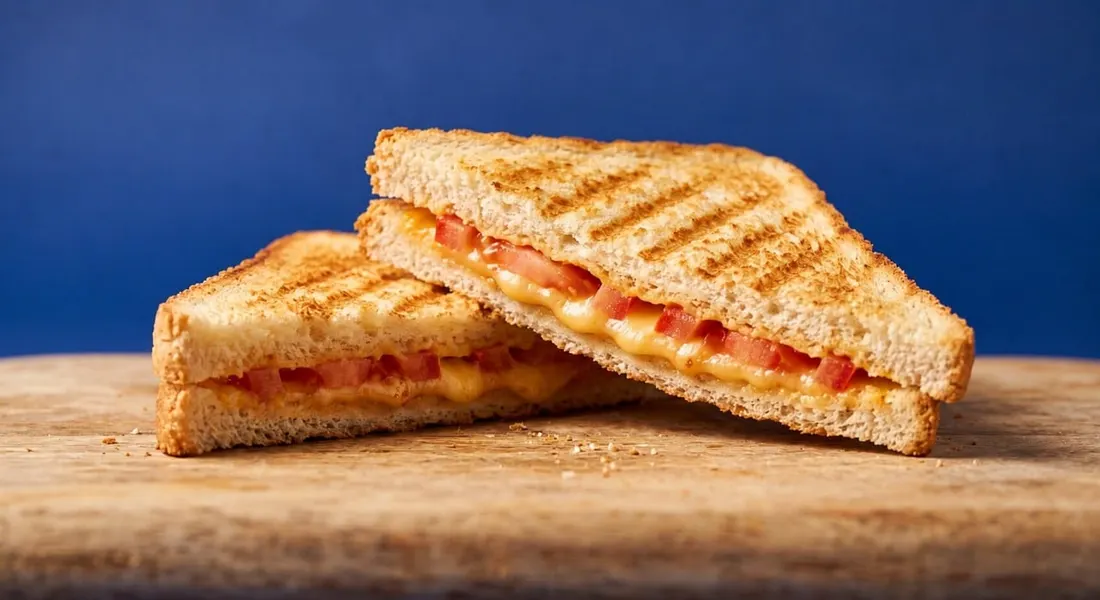
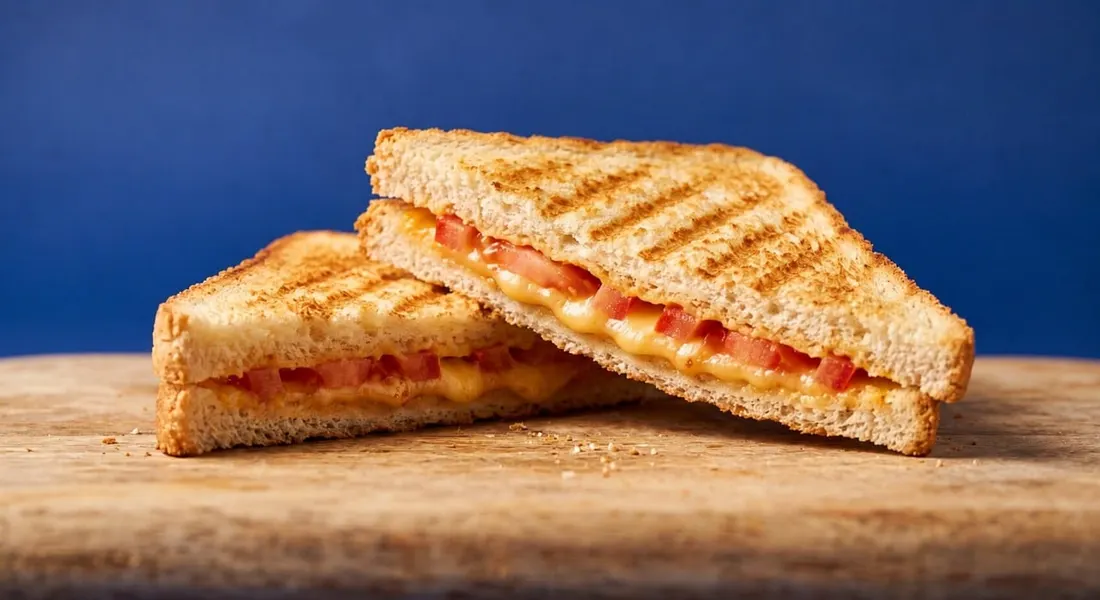
At its simplest, zapiekanka is a halved baguette (or long roll), topped with sautéed white mushrooms and a layer of hard, meltable cheese — traditionally Gouda or Edam, sometimes the smoked mountain cheese oscypek — then toasted until the top browns and crisps. It comes out of the oven and gets a generous drizzle of ketchup on top, non-negotiable, before it's handed over wrapped in paper.
The name itself explains the cooking method: the word comes from the Polish verb zapiekać, "to bake something until its ingredients fuse together and a browned crust forms on top." It's the same root you'll find in other Polish baked dishes, and once you know it, you'll start noticing zapiekać-related words all over Polish menus. It's a small but useful piece of vocabulary that unlocks more than just this one sandwich.
The Communist-Era Origins Behind an Unlikely Comfort Food
Zapiekanka wasn't invented by a chef chasing a trend — it came out of 1970s economic policy. Under leader Edward Gierek, Poland acquired French baguette-production licenses, a choice historians trace partly to Gierek's own formative years living in France and Belgium before returning to Poland. Suddenly, bakeries across the country had access to a bread format nobody quite knew what to do with yet.
Around the same time, the government allowed a small wave of private catering enterprises to open, a shift known as mała gastronomia — literally "small gastronomy." Cramped food stands and converted trailers began appearing on street corners, serving cheap, fast meals to a population dealing with chronic shortages in state-run shops. Baguettes, mushrooms, and cheese were relatively easy to source even when other food was scarce, and zapiekanka was the simple, filling result.
Gierek's era is often remembered as a period of borrowed prosperity — his government took on large foreign loans to fund consumer goods and modernize industry, a strategy that briefly made everyday life feel more comfortable before the debt caught up with the economy later in the decade. Small conveniences like an affordable hot sandwich sold from a street window fit neatly into that brief window of relative plenty, even as the shortages that had originally created the dish never fully went away.
Through the 1980s, these stands multiplied, serving it alongside more traditional Polish fare and the occasional attempt at Western-style fast food. It was cheap, it was hot, and it didn't require ingredients that were hard to find — three qualities that mattered enormously in a decade defined by empty shop shelves.
How to Order (or Make) a Proper Zapiekanka
The classic version starts with half a baguette, sometimes stretching up to 50 centimeters, split lengthwise and toasted until sturdy enough to hold toppings without going soggy. Sautéed white mushrooms go down first, followed by a generous layer of cheese — Gouda and Edam are the standard choices because they melt evenly and brown nicely under the grill. The whole thing goes back under heat until the cheese bubbles and the edges of the bread crisp up.
Then comes the part that's non-negotiable to most Poles: ketchup, drizzled or squeezed in lines across the top, sometimes alongside a garlicky or herb-based sauce. Order one at any stand and the first question you'll usually get isn't about toppings — it's how much ketchup you want.
The Toppings Wars: Diablo, Gypsy, Hawaiian, and the Student's Special
The mushroom-and-cheese base is really just a canvas. Over the decades, stand owners have layered on enough variations that most menus now run a dozen options deep. A "diablo" version adds bacon and pickled cucumber for a sharper, saltier bite. A "Gypsy" (cygańska) version brings ham and a sweet-and-sour sauce. There's a "Hawaiian" take with pineapple, for anyone who's already picked a side in that particular pizza debate.
Then there's the "student's" version — not a fixed recipe so much as a philosophy: whatever's in the kitchen that day goes on top. It's the variation that best explains why this dish has survived as long as it has. It flexes to whatever ingredients are cheap and available, which is exactly the trait that got it invented in the first place. Some stands also run seasonal specials, swapping in local mushrooms during autumn foraging season or leaning on pickled vegetables through the winter months when fresh produce gets more expensive.
Plac Nowy Krakow: Zapiekanka's Spiritual Home
If it has a capital, it's Plac Nowy, a small square in Kraków's Kazimierz district. At its center sits the Okrąglak, a round 19th-century market hall now ringed by competing windows, each with loyal regulars who'll argue for hours about which one is actually the best. Some of these stands have been serving the same recipe, sometimes the same family recipe, for decades, and they've earned a kind of cult status among locals and travelers alike. A few have picked up nicknames from regulars over the years, passed along by word of mouth rather than signage, the way a good dive bar earns its reputation without ever needing to advertise.
Plac Nowy at 2 a.m. on a weekend is its own cultural institution — a mix of students, night-shift workers, and tourists who wandered too far from the Main Square, all standing around eating out of paper wrapping while chalkboard menus list toppings and prices in złoty. It's one of the few places in Poland where a piece of street food functions almost like a landmark in its own right, and it's the reason so many "best of Kraków" food lists treat this one square as a required stop rather than an optional detour.
From Decline to Hipster Revival
Zapiekanka's popularity wasn't a straight line upward. When Poland's market economy opened up in the 1990s, Western fast-food chains arrived in force, and a lot of the small, family-run stands from the 1970s and '80s struggled to compete with the novelty (and marketing budgets) of international burger chains. Plenty of zapiekanka windows closed for good during this period.
But the dish never fully disappeared, and in the last decade it's found a second life. As street-food culture in general shifted back toward local, small-scale options — the same wave that's revived night markets and food trucks elsewhere in Europe — zapiekanka came back into fashion, this time with a slightly ironic, nostalgic edge. Gourmet versions with unusual toppings have shown up in trendier neighborhoods, while the old-school stands keep doing exactly what they've always done.
Bar Lussi: The Zapiekanka Stand Warsaw Almost Lost
The clearest sign that zapiekanka still matters came in 2024, when Warsaw's Bar Lussi made headlines. The stand had operated for 32 years directly in front of the Palace of Culture and Science, Warsaw's most recognizable landmark, opening in 1991 during the country's transition to a market economy. City authorities eventually pushed the owner — whose parents had founded the stand — to leave, arguing it didn't "aesthetically fit" the city center, and years of unpaid fines for operating without a permit finally caught up with it, as Notes from Poland reported.
Bar Lussi wasn't just any stand, either — a YouTuber with over a million subscribers had previously called it the best in the country, and its farewell event included an attempt to break the world record for the longest zapiekanka ever made, a record that stood at 108 metres. A humble street sandwich, in other words, with enough cultural weight to make national news when it's threatened.
The Bar Lussi saga also reflects a wider pattern in Warsaw's ongoing redevelopment, where older, informal kiosks and stands near landmark buildings have increasingly faced pressure to either formalize into licensed premises or relocate entirely, as the city tries to modernize its central districts. It's a tension that shows up in plenty of European capitals: the same scrappy street-food culture that makes a city feel alive is often the first thing city planners want tidied away.
Zapiekanka in the Wider World of Polish Street Food
It sits alongside a specific category of Polish food born from necessity rather than fine dining — the communist-era canteens known as bar mleczny fed a similar role indoors, serving cheap, filling meals when money and ingredients were both tight. This did the same job outdoors, on the street, for people grabbing food between classes or after a night out.
It's a useful contrast to Poland's more internationally famous dishes, too. Where pierogi is the polished, sit-down version of Polish comfort food — the kind that ends up on restaurant menus abroad — zapiekanka has stayed resolutely a street thing, cheap and unpretentious, rarely making it onto a formal menu at all. Together they show two very different sides of how Poland actually eats, a theme covered in more depth in the wider guide to Polish food culture.
Learning to Order Zapiekanka Like a Local
Pronunciation-wise, zapiekanka breaks down as za-pyeh-KAHN-ka, with the stress falling on the second-to-last syllable, as it almost always does in Polish. Walking up to a stand and asking for "jedna zapiekanka" (one zapiekanka) will get you understood immediately, even with imperfect pronunciation — vendors at busy stands hear every possible accent on this word nightly.
If you want to sound a little more natural, "z ketchupem" (with ketchup) or "bez ketchupu" (without ketchup) are the two phrases you'll actually need, since that's the question you'll be asked at the counter regardless of which stand you choose. It's a small, practical example of the kind of real-world vocabulary covered in our broader list of essential Polish phrases for travelers — the sort of Polish that gets used in daily life rather than textbooks.
Frequently Asked Questions
What is zapiekanka made of? The classic version is half a toasted baguette topped with sautéed mushrooms and melted cheese, usually Gouda or Edam, finished with a drizzle of ketchup. Modern variations add ingredients like bacon, ham, pickled cucumber, or pineapple.
Where does the word zapiekanka come from? It comes from the Polish verb zapiekać, meaning to bake something until its ingredients combine and a browned crust forms on top — a description of the cooking method rather than a proper noun.
When was it invented? It emerged in the 1970s, after Poland acquired French baguette-production licenses under leader Edward Gierek and the government permitted a wave of small private food stands known as mała gastronomia.
Is zapiekanka the same as pizza? Not really — while both involve bread, cheese, and toppings, this one uses a baguette base rather than dough, is always open-faced, and is finished with ketchup rather than tomato sauce baked in.
Where can I find the best one in Poland? Plac Nowy in Kraków's Kazimierz district is considered the spiritual home of the dish, with several competing stands around the historic Okrąglak market hall. Warsaw's Bar Lussi, near the Palace of Culture and Science, was also famously praised as one of the best before its 2024 relocation.
Is it vegetarian? The classic mushroom-and-cheese version is vegetarian by default. Many modern variations add meat like bacon or ham, so it's worth checking toppings before ordering if you're vegetarian.
How much does zapiekanka cost in Poland? Prices vary by stand and toppings, but it remains one of the cheapest hot meals available in Poland, generally a few złoty for a basic version — consistent with its origins as an affordable, fast street food.
Why did zapiekanka almost disappear in the 1990s? When Poland's market economy opened up after communism, international fast-food chains arrived and competed heavily with small, family-run stands, and many closed. The dish survived through loyal regional holdouts and has since seen a broader revival.
Can I make it at home? Yes — the classic version only requires a baguette, mushrooms, cheese, and ketchup, making it one of the easiest Polish dishes to recreate outside Poland, though the crispiness of a proper street-stand grill is hard to fully replicate in a home oven.
Is it only eaten late at night? No, though it has a strong late-night, post-party reputation among students. It's sold throughout the day at most stands and is a common quick lunch or snack as much as a post-midnight staple.
How do you pronounce zapiekanka? Roughly "za-pyeh-KAHN-ka," with stress on the second-to-last syllable, which is the default stress pattern for almost all Polish words.