Sylwester is what every Pole calls New Year's Eve, and the name has nothing to do with the number of the year changing. It comes from a fourth-century pope whose death just happened to fall on December 31st — a coincidence of the church calendar that turned into the default word for the biggest party night of the year, in Poland and a handful of its neighbors.
If you've spent any time learning Polish and assumed "Nowy Rok" (New Year) was the word for the countdown night itself, you've made a completely reasonable mistake. Nowy Rok is January 1st, the day. The night before it — the fireworks, the toasts, the TV specials — belongs entirely to Sylwester.
What Sylwester Actually Means
The name traces back to Pope Sylvester I, who led the early Church from 314 to 335 AD and presided over the First Council of Nicaea, one of Christianity's most consequential early gatherings. He died on December 31st, and in the Western liturgical calendar, saints and popes are commemorated on the date of their death — which made December 31st, permanently, his feast day.
Poland follows the older European custom of naming a date after whichever saint's feast falls on it, the same logic behind imieniny, or Polish name days. Every day of the year has at least one assigned saint in the Catholic liturgical calendar, and Poland's version of that calendar is dense enough that most first names in common use have their own designated day.
Once a date has an assigned saint, it's common for the associated name to become shorthand for the day itself. December 31st got stuck with "Sylwester" the same way certain other days absorbed the name of whoever's feast landed there — it's just that this particular date happens to be the last one on the calendar, which is exactly why the name ended up attached to an entire night of celebration rather than a quiet, private one.
Pope Sylvester I: The Man Behind the Party
Very little is reliably known about Pope Sylvester I as a person — most of what circulated about him for centuries turned out to be later invention, including a popular legend that he cured Emperor Constantine of leprosy through baptism. That story was part of the Donation of Constantine, a forged medieval document later used to argue for papal authority over secular rulers. The historical Sylvester I is a much quieter figure: bishop of Rome during a pivotal stretch of church history, remembered today mostly because of when, not how, he died.
Germany, Austria, and several other Central European countries use some version of the same name — Silvester — for their own December 31st. It's a shared quirk of the region's religious calendar rather than something uniquely Polish, but Poland has built one of the more elaborate secular celebrations around it.
How Poland Actually Celebrates Sylwester
Modern Polish New Year's Eve traditions lean heavily on spectacle. Major cities host large open-air concerts headlined by well-known musicians, drawing crowds who brave the winter cold to be there at midnight rather than watch from home. For everyone else, television carries the night just as reliably as the countdown itself.
The TV Galas Everyone Half-Watches
Poland's public broadcaster TVP runs competing live variety broadcasts every December 31st — Sylwester w Stolicy ("New Year's Eve in the Capital") from Warsaw and Sylwester z Dwójką, which rotates to a different host city each year and has featured international headline acts alongside Polish stars. These galas run for hours, mixing musical performances, comedy sketches, and the kind of mainstream variety-show format that's become as much a fixture of the night as the fireworks themselves — background noise for some households, appointment viewing for others.
The format itself is older than it looks. State television ran a version of the Sylwester variety broadcast throughout the communist era, when it was one of the few nights a year state TV leaned fully into glamour and spectacle rather than its usual programming. Censors kept a close eye on the scripts and the music, but the basic shape of the night — comedians, singers, a countdown, a toast broadcast into millions of living rooms — was already locked in decades before today's competing productions existed. Most of what changed after 1989 was the budget, the guest list, and how much of the show could poke fun at politicians without consequence.
More Polish New Year's Eve Traditions for Luck
Beyond the concerts and galas, a whole layer of smaller, superstition-driven Polish New Year's Eve traditions plays out at kitchen tables rather than on stage. Keeping cash in your pocket or wallet at the stroke of midnight is supposed to guarantee a financially comfortable year — showing up empty-handed is considered bad luck, so plenty of people quietly slip a banknote into a pocket before heading out.
Food carries its own superstitions too. Lentils and other round, coin-shaped foods are eaten for prosperity, echoing a belief found in several other European New Year's tables. Herring, already a Wigilia staple, reappears here for some households as a good-luck dish specifically because of its silvery, coin-like scales. And doing laundry on January 1st itself is widely avoided — an old belief holds that washing on New Year's Day risks "washing away" a family member before the year is out, so the chore gets pushed to January 2nd almost universally.
Opening a window or door right at midnight is another small ritual some households keep, symbolically letting the old year physically leave the house before the new one settles in. None of these customs carry the weight of something like the Wigilia dinner, but taken together they show the same instinct at work: treating the exact turn of the calendar as a moment worth actively managing, not just watching happen.
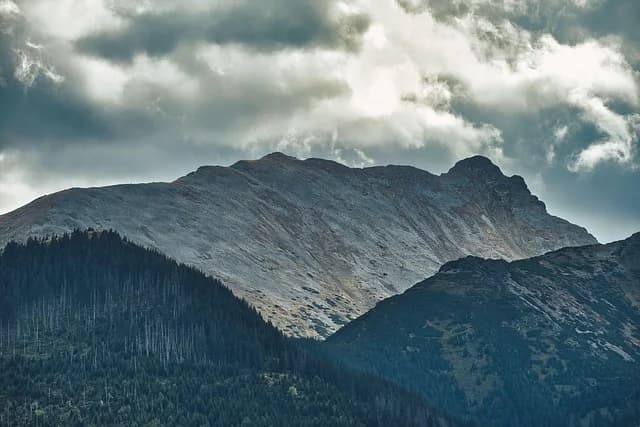
Away from the cities, some of the more distinctive ways Poles spend Sylwester have nothing to do with a stage at all. Underground balls have become a genuine trend, held roughly 250 meters below ground in the working salt mines at Wieliczka or Bochnia. Others head for the mountains, timing a hike up Giewont peak in the Tatras to catch the new year from altitude, or book a Baltic cruise built entirely around the crossing from one year into the next.
The Quieter Side of Sylwester
Not every Sylwester tradition is loud. Monasteries around Poland — Benedictines at Tyniec, Franciscans at Kalwaria Pacławska among them — host what are sometimes described as "anti-Sylwester" retreats: quiet, reflective evenings built around meditation rather than a countdown, aimed at people who'd rather end the year in silence than in a crowd.
One smaller folk custom ties the loud and quiet versions of the night together: writing down a worry, a grudge, or a bad memory from the outgoing year on a slip of red paper, then burning it before midnight. The idea is straightforward — you don't carry the previous year's baggage across the threshold into the next one. It's not treated with any particular solemnity, more a small private ritual squeezed in between dinner and the countdown, but it's common enough that most Poles have either done it themselves or watched a relative do it.
Midnight, Fireworks, and the Toast
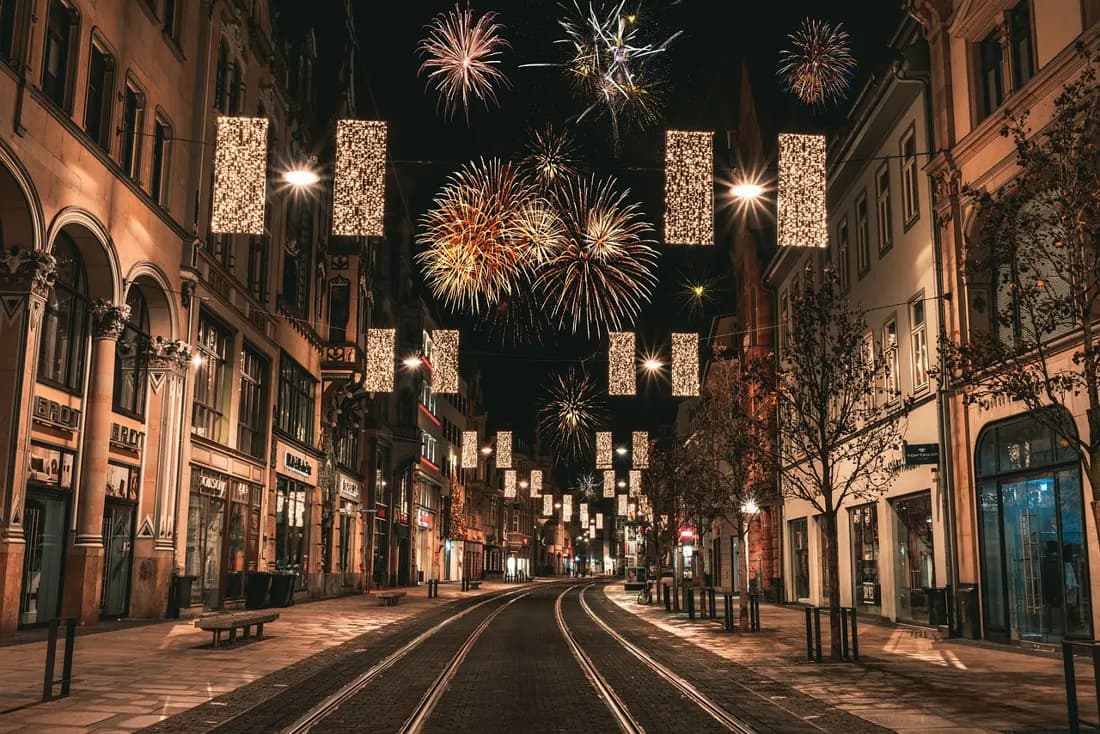
However the evening is spent, the actual turn of the year looks remarkably consistent across Poland. Fireworks go up nationwide right at midnight, often organized informally by whoever's hosting rather than any official display. Champagne or sparkling wine gets poured for a toast, phones come out for a round of "Szczęśliwego Nowego Roku" (Happy New Year) messages to anyone not in the room, and the room generally spends the next several minutes hugging, calling relatives, and comparing whichever fireworks show is visible from the window.

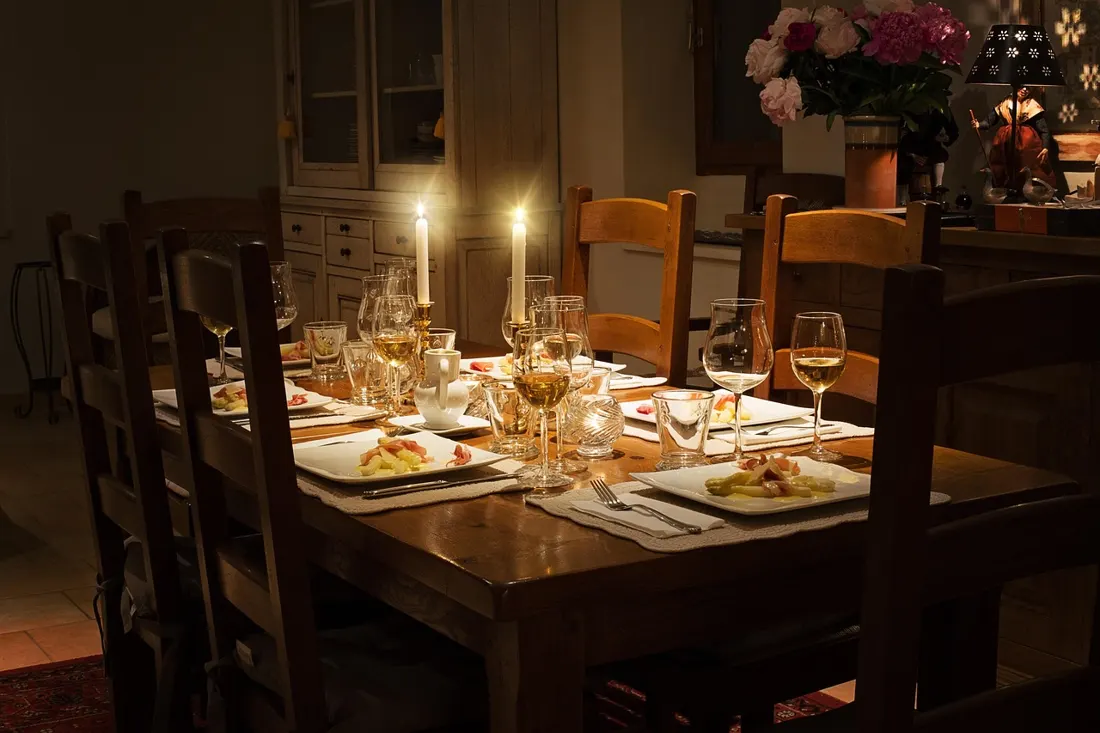
Unlike Wigilia, Poland's tightly scripted Christmas Eve dinner with its twelve dishes and empty place setting for an unexpected guest, Sylwester carries almost none of that formal structure. There's no required menu, no mandatory ritual everyone has to perform in sequence — just an expectation that midnight itself gets marked properly, however each household or city decides to do that.
For Poles living abroad, the phone calls that follow midnight are often the part of Sylwester that matters most. Poland sits an hour ahead of the UK and six or more ahead of most of the United States, so diaspora families frequently end up marking two separate midnights in one night — celebrating locally, then calling relatives back in Poland hours later once their own countdown arrives, or vice versa. It's a small logistical quirk of the holiday that doesn't come up in most descriptions of Sylwester, but for a lot of Polish families scattered across time zones, coordinating those calls is as much a part of the night as the fireworks themselves.
Sylwester Outside Poland
Polish diaspora communities keep Sylwester alive well beyond the country's borders, and the format travels surprisingly well. Polish cultural centers, parishes, and social clubs in cities with large Polish communities — Chicago, London, and Toronto among them — routinely host their own Sylwester balls, complete with a formal dinner, live music, and a midnight toast timed to whichever local midnight the group is celebrating. For second- and third-generation Polish families who may not keep up with every tradition from the old country, Sylwester tends to be one of the ones that sticks, likely because a New Year's party needs very little translation to make sense to anyone at the table.
Sylwester in the Wider Polish Calendar
Sylwester sits alongside imieniny, Poland's name-day tradition, as a second example of the same underlying habit: letting the church calendar's saint assignments quietly reshape how ordinary people talk about time. Where imieniny turns an assigned saint's day into a personal celebration for anyone sharing that name, Sylwester turned one pope's feast day into the name for an entire country's biggest secular holiday. For a broader look at how Poland's calendar is dotted with these kinds of occasions, the roundup on Polish holidays and traditions covers the rest of the year.
Frequently Asked Questions
What does "Sylwester" mean in Polish? It's the Polish name for New Year's Eve, December 31st, taken from Pope Sylvester I, whose feast day falls on that date because he died on it in 335 AD.
Is Sylwester the same as Nowy Rok? No. Nowy Rok is January 1st, New Year's Day itself. Sylwester is specifically the night before it — the celebration, not the holiday it leads into.
Do other countries call New Year's Eve Sylwester too? Yes, in a slightly different spelling. Germany and Austria both use "Silvester" for December 31st, along with several other Central European countries that follow the same saint's-day naming convention — a reminder that Poland's calendar quirks aren't always uniquely Polish, even when the specific customs built around them are.
What is Sylwester w Stolicy? It's one of Poland's flagship live New Year's Eve television broadcasts, produced by public broadcaster TVP from Warsaw, featuring musical performances and variety entertainment that runs for several hours through the countdown to midnight and well into the first hour of the new year.
Why do some Poles celebrate Sylwester in a salt mine? Underground New Year's Eve balls held roughly 250 meters below ground in the historic salt mines at Wieliczka or Bochnia have become a popular, distinctly Polish alternative to a standard party — a mix of novelty and genuine local pride in the mines themselves.
What is the red paper custom on Sylwester? It's a small folk ritual where someone writes down a worry or bad memory from the past year on red paper and burns it before midnight, symbolically leaving it behind as the new year begins.
Is Sylwester a religious holiday in Poland today? Not really, despite its origin in a pope's feast day. The religious connection is historical rather than practiced — Sylwester today is treated as a secular celebration, though some Poles do choose quiet, faith-based retreats as an alternative to a loud party.
What do Poles eat and drink on Sylwester? There's no fixed menu the way there is for Wigilia. Champagne or sparkling wine for the midnight toast is close to universal, but the rest of the evening's food varies entirely by household, city, or which party someone's attending — though lentils and herring both show up often as good-luck foods.
Why do people keep money in their pocket on Sylwester? It's a superstition meant to ensure financial stability for the coming year — showing up to midnight without any cash on you is considered an unlucky way to start the new year.
Is it true Poles avoid doing laundry on New Year's Day? Yes, this is a genuinely widespread superstition. Washing clothes on January 1st is believed to risk "washing away" good fortune, or even a family member, so the load typically waits until January 2nd.
Do Poles make New Year's resolutions on Sylwester? Yes, though the tradition isn't treated with much more seriousness than it is anywhere else. Postanowienia noworoczne — New Year's resolutions — get discussed around the same midnight toast, with the same mix of genuine intention and half-joking follow-through as resolutions made anywhere in the world.
Sylwester is a good reminder that a lot of what feels like ordinary, unremarkable vocabulary in Polish is carrying centuries of church-calendar history nobody's actively thinking about anymore. Learning why a word like this exists tends to make it stick a lot better than memorizing it cold — if that's the kind of detail that helps a language click for you, our guide to learning Polish for beginners is built around exactly that approach.