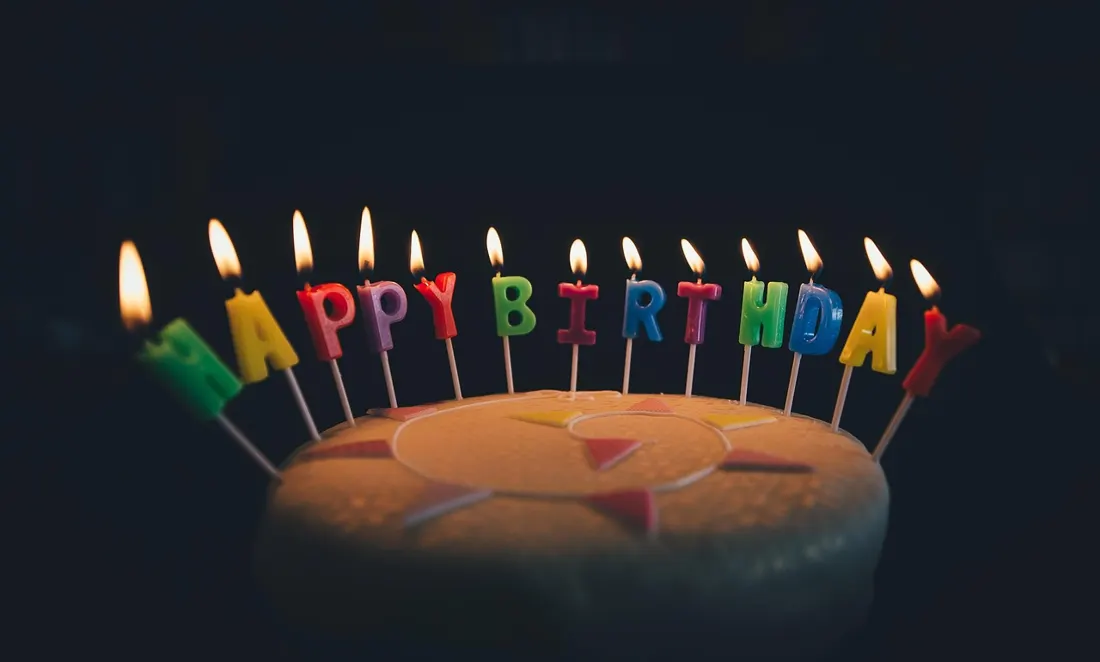
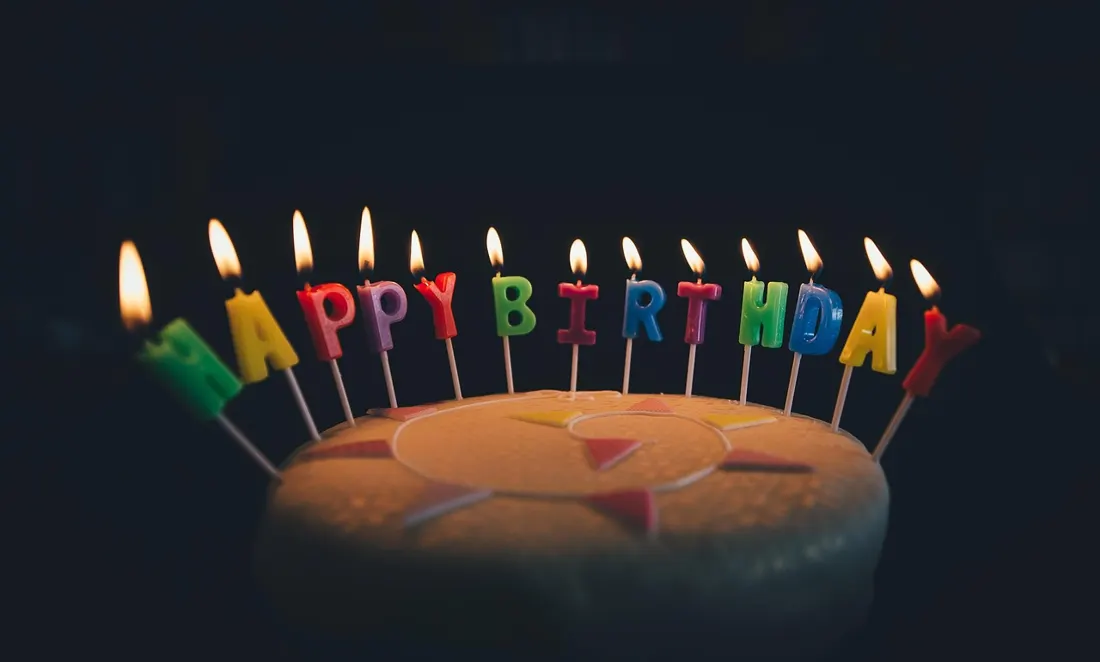
The sto lat song is the first thing most people learn when they start studying Polish, usually by accident, at somebody's birthday party, when an entire room suddenly starts singing four lines in unison and looking directly at one very embarrassed person. It sounds simple — repetitive, almost childlike — and that simplicity is exactly the point. "Sto lat" means "a hundred years," and the song is Poland's way of wishing someone precisely that: a hundred more years of life, sung loudly, sung often, and sung by absolutely everyone in the room whether they can carry a tune or not.
What most people never learn, even after hearing the sto lat song a dozen times, is how differently it behaves from its closest English equivalent. "Happy Birthday to You" spent decades tangled in one of the most notorious copyright disputes in music history, with restaurants and filmmakers paying licensing fees just to sing four lines on camera. Nobody has ever owned "Sto lat." Nobody ever could. Its author is unknown, its exact origin undocumented, and its status as an unclaimed piece of Polish folk culture is a large part of why it survived more than a century completely intact.
Sto Lat Meaning: What Does This Polish Birthday Song Actually Say?
The core lyric is short enough to learn in under a minute: "Sto lat, sto lat, niech żyje, żyje nam. Sto lat, sto lat, niech żyje, żyje nam. Jeszcze raz, jeszcze raz, niech żyje, żyje nam, niech żyje nam!" Translated roughly, that runs: "A hundred years, a hundred years, may they live, live for us. A hundred years, a hundred years, may they live, live for us. Once more, once more, may they live, live for us, may they live for us!"
Grammatically, the wish is phrased in the third person even when the room is looking directly at the birthday person — "niech żyje" means "may they live," not "may you live," a small quirk that trips up a lot of Polish learners the first time they try to sing along. The melody is deliberately simple: four repeated musical phrases, no real range, nothing that requires singing lessons. That is a feature, not a limitation. A song meant to be shouted by an entire wedding hall, half of whom have had several toasts already, cannot ask too much of anyone's vocal cords.
The Song Nobody Owns: Sto Lat's Murky Origins
Ask a musicologist who wrote the sto lat song and you will get a shrug. Unlike most national songs, which can usually be traced to a specific composer, court, or publishing house, "Sto lat" simply appears in the historical record as something Poles were already singing, with no attributed author and no claimed copyright. Most sources place its roots in the nineteenth century, passed down informally through families and communities rather than published and sold.
That lack of ownership stands in sharp, almost comic contrast to the English-language song most people assume is its equivalent. "Happy Birthday to You" was, for most of the twentieth century, aggressively controlled: Warner/Chappell Music charged licensing fees of over a thousand dollars to any film or television production that wanted to use it, and the company collected those fees for decades.
A 2015 federal court ruling finally found the copyright claim invalid and put the song in the public domain, a fact you can read more about on Wikipedia's own entry for "Sto lat", which documents the two songs' strikingly different legal histories side by side. For most of that same period, Poles were singing "Sto lat" at every birthday, wedding, and name day in the country without anyone ever demanding a license fee, because there was never anyone to demand one from.
That contrast is not just trivia. It says something real about how the two songs function culturally. "Happy Birthday to You" was, for a long stretch of its life, treated as commercial property. "Sto lat" was never treated as anything but common cultural inheritance — something every Pole is simply handed by their community, the same way they are handed their native language.
When Poles Actually Sing Sto Lat
Outside Poland, people tend to assume the sto lat song is strictly a birthday tune, the direct equivalent of "Happy Birthday to You." Inside Poland, its actual range is much wider, and understanding that range is the fastest way to understand how central the song really is to Polish social life.
Birthdays are the obvious occasion, but imieniny, or Polish name days, get the same treatment — arguably more so, since name days have historically mattered more than birthdays in Polish culture, and a workplace, church group, or extended family will often break into "Sto lat" for a colleague's imieniny with just as much enthusiasm as for a birthday. Weddings are another major occasion: guests sing it to the newlyweds during the reception, sometimes more than once over the course of the night, and it shows up again at traditional Polish wedding celebrations alongside toasts and other rituals that mark the couple's transition into married life.

Beyond family occasions, "Sto lat" is Poland's default way of publicly celebrating almost any milestone. Retirements, graduations, promotions, medical recoveries, a colleague's last day at a job, a coach's final match, a politician's anniversary in office — all of these can trigger a spontaneous chorus. It is also a fixture of Sylwester, Poland's New Year's Eve celebrations, sung as the clock turns over into January, wishing the entire room — and by extension the whole country — a good hundred years ahead.
Sto Lat as a Toast, a Cheer, and a Response to a Sneeze
Beyond its role as a full song, the phrase "Sto lat!" functions on its own as an all-purpose toast — something you can raise a glass and shout without needing the melody or the other three lines at all. It works the way "cheers" or "here's to you" works in English: short, flexible, appropriate for almost any celebratory moment, from a promotion at work to a grandmother's ninetieth birthday.
One place "Sto lat" is often assumed to apply but usually does not is sneezing. In English, "bless you" follows a sneeze automatically; in Poland, the standard response is "na zdrowie" ("to your health"), the same phrase used for drinking toasts, not "sto lat." Occasionally people do use "sto lat" for a sneeze as a joking variation, but it is very much the exception, and Polish learners who assume the two phrases are interchangeable will get some confused looks the first time they try it.
The Lyrics, Line by Line, for Anyone Learning Polish
For language learners, the sto lat song is a genuinely useful first text, because every word in it recurs constantly in ordinary Polish conversation. "Sto" is the number one hundred, a number that shows up everywhere from prices to phone numbers. "Lat" is the genitive plural form of "rok" (year) used after numbers five and above — an irregular pattern that trips up beginners, and one the song teaches by pure repetition long before a grammar textbook gets around to explaining it. "Niech żyje" (may they live) uses the subjunctive-like "niech" construction, one of the most common ways Polish expresses a wish or blessing about a third party.
There is also an informal second verse, sung mostly at adult celebrations rather than children's parties, that adds a joking threat: those who refuse to drink to the birthday person's health will supposedly end up asleep under the table by the end of the night. It is not part of the core song and is left out entirely at more formal or family-friendly events, but it is a good example of how a supposedly simple folk song has quietly absorbed a little dry Polish humor over the generations.
Sto Lat's Slavic Cousins
The sto lat song is not entirely alone in the world. Ukraine has its own close relative, "Mnohaya lita" (many years), and Russia has "Mnogaya leta" — both tracing back to the Byzantine polychronion, a liturgical acclamation once sung at the end of Orthodox church services to bless a ruler or bishop with long life. Over time, that formal church blessing drifted into secular life across the Orthodox Slavic world, becoming a celebratory song for birthdays, name days, and weddings in much the same way "Sto lat" did in Catholic Poland.
The two traditions likely share deep common roots in older Slavic and Byzantine customs of wishing long life through repeated, ritualized song, even though Poland's Catholic history and Ukraine and Russia's Orthodox history pulled the two customs in slightly different directions over the centuries. Hearing "Mnohaya lita" sung at a Ukrainian wedding and "Sto lat" sung at a Polish one, a listener with no language in common with either culture would still recognize instantly what kind of moment they were witnessing.
When an Entire Nation Sang It to a Pope
Perhaps the most striking documented use of the sto lat song had nothing to do with a birthday at all. During Pope John Paul II's historic first pilgrimage to communist Poland in 1979, crowds of hundreds of thousands gathered at his open-air Masses, and again and again, spontaneously, they broke into "Sto lat" — not as a request for a hundred more years in any literal sense, but as a defiant, joyful expression of hope directed at a Polish pope standing on Polish soil in front of a government that had spent decades trying to suppress exactly that kind of public religious feeling.
The moment stuck. Decades later, when Pope Benedict XVI visited Poland and drew a crowd estimated at nine hundred thousand people, the same chant rose up again. A song built for birthday parties had become, in the right context, something closer to a national statement — proof that the sto lat song was never really only about turning one year older.
Sto Lat in the Polish Diaspora
The sto lat song travels unusually well. Polish communities abroad — in Chicago, London, Toronto, and dozens of other cities with significant Polish immigrant populations — keep singing it at family celebrations for generations after their families first left Poland, often long after everyday fluency in Polish has faded. Grandchildren who cannot hold a full conversation in Polish can frequently still sing all four lines of "Sto lat" from memory, because it was drilled in through decades of birthdays before any grammar lesson ever was.
That durability is arguably the clearest sign of how deeply the song is embedded in Polish identity. Songs written and copyrighted by a specific composer tend to fade once their commercial promotion stops. A song that belongs to everyone, that was never sold and never had to be, just keeps getting sung.
Frequently Asked Questions About the Sto Lat Song
What does "sto lat" mean in English? "Sto lat" literally translates to "a hundred years." As a song and a toast, it is a wish for someone to live a hundred more years, roughly equivalent in function to "Happy Birthday to You" but used far more broadly across Polish celebrations.
Is the sto lat song only sung on birthdays? No. It is sung at birthdays, but also at Polish name days (imieniny), weddings, retirements, graduations, promotions, and other milestone celebrations, plus general toasts and New Year's Eve.
Who wrote the sto lat song? No one knows. Unlike most national songs, "Sto lat" has no documented composer or lyricist. It emerged as Polish folk culture sometime in the nineteenth century and was passed down informally rather than published or copyrighted.
Is "Sto lat" the same as "Happy Birthday to You"? They serve a similar purpose but differ significantly. "Happy Birthday to You" was commercially copyrighted for most of the twentieth century, with licensing fees charged for its use, until a 2015 court ruling placed it in the public domain. "Sto lat" has never been owned by anyone.
Do Poles say "sto lat" when someone sneezes? Not usually. The standard Polish response to a sneeze is "na zdrowie" ("to your health"), the same phrase used for drinking toasts. "Sto lat" is occasionally used as a joking variation, but it is the exception rather than the rule.
What is the second verse of the sto lat song about? An informal, humorous second verse warns that anyone who refuses to drink to the birthday person's health will end up asleep under the table. It is sung mostly at adult celebrations and skipped at family-friendly or formal events.
Why is "niech żyje" used instead of "niech żyjesz" in the lyrics? "Niech żyje" ("may they live") is phrased in the third person as a formal-style blessing directed at the person being honored, rather than addressing them directly with the second person "niech żyjesz." It is a stylistic convention of the song, not a grammar mistake.
Did Poles really sing this to Pope John Paul II? Yes. During his 1979 pilgrimage to communist Poland, crowds spontaneously sang "Sto lat" at his open-air Masses, and the same chant recurred at later papal visits, including Pope Benedict XVI's, turning a birthday song into a moment of national and religious expression.
Is the sto lat song still sung by Polish communities outside Poland? Yes, extensively. Polish diaspora communities in cities with large immigrant populations continue singing it at family celebrations for generations, often outlasting general fluency in the Polish language itself.
How is "sto lat" used as a toast? On its own, "Sto lat!" functions as a short toast, similar to "cheers," raised with a drink at almost any celebratory occasion without needing the rest of the song.
Is there a standard number of times the song is repeated? There is no fixed rule, but it is common for a room to sing "Sto lat" more than once during a single celebration, especially at weddings, where it may be repeated several times across the evening as different guests lead it.
Can "sto lat" be used sarcastically? Occasionally, in a lightly teasing tone among friends — for example, jokingly wishing someone "sto lat" after they complain about getting older — but the song's default use remains sincere and celebratory.
Are there similar songs in other Slavic countries? Yes. Ukraine and Russia have their own closely related traditions, "Mnohaya lita" and "Mnogaya leta," both rooted in the older Byzantine polychronion blessing and both serving a similar celebratory function to the Polish sto lat song, despite the two customs developing along separate Catholic and Orthodox paths.
The sto lat song will likely outlive most of the birthday songs currently under active copyright somewhere in the world, for the simple reason that it was never anyone's property to control in the first place. It belongs to whoever is in the room when someone turns a year older, and in Poland, that has kept it alive, unchanged, and completely free for roughly two centuries running.