Polish Independence Day falls on 11 November, and for Poles it marks something most countries take for granted: simply existing on the map. On that date in 1918, after 123 years in which there was no Polish state at all, Józef Piłsudski took command of a newly free Polish army in Warsaw. The day has been banned, celebrated in secret and restored again since then, and today it is one of the most important dates in the Polish calendar.
If you are learning Polish, living in Poland, or reconnecting with Polish roots, Polish Independence Day is a great window into the country. It explains why the white-and-red flag shows up on so many balconies in November, why runners pull on red and white hats, and why people in Poznań queue for an enormous croissant filled with white poppy seeds.
This guide covers the history behind the date, how the holiday was erased and brought back, how Poles celebrate it today, the St Martin's croissant tradition, and the Polish words you will hear on and around 11 listopada.
What Is Polish Independence Day?
In Polish the holiday's full name is Narodowe Święto Niepodległości, which means "National Independence Day". In everyday speech, people shorten it to Święto Niepodległości or just say jedenasty listopada ("the eleventh of November").
Polish Independence Day is a national public holiday and a non-working day. Schools, offices and most large shops close. In 2026 it falls on a Wednesday, so it is a midweek break rather than a long weekend.
The holiday does not celebrate a battle or a treaty signing. It marks the moment Poland began to function as a sovereign state again after the First World War. That makes Polish Independence Day different in tone from Armistice or Remembrance Day elsewhere in Europe, even though it falls on the same date. Other countries remember the end of a war; Poland celebrates the return of a country.
Why 11 November? The Story of 1918
To understand Polish Independence Day, you need to go back to the end of the 18th century. In three partitions, in 1772, 1793 and 1795, the Russian Empire, the Kingdom of Prussia and the Habsburg monarchy divided the Polish-Lithuanian Commonwealth between them. After the third partition, Poland disappeared from the map of Europe.
123 years without a state
From 1795 to 1918, Poles lived under three different empires. Poles call these the rozbiory (the partitions), and the occupied zones the zabory: the Russian, Prussian and Austrian partition. Uprisings in 1830 and 1863 were crushed, and in some areas the use of Polish in schools was restricted.
Yet the language, the church, literature and family life kept a shared identity alive. We tell that story in more detail in our article on how Polish survived 123 years without a country, and it is the backdrop to every celebration on 11 November.
Piłsudski arrives in Warsaw
By the autumn of 1918, all three partitioning powers were collapsing at once. Germany released Józef Piłsudski, a socialist-turned-military leader, from imprisonment in Magdeburg on 8 November. He reached Warsaw by train on 10 November.
The next day, 11 November 1918, the Regency Council, a body set up under German and Austrian occupation, appointed him Commander-in-Chief of the Polish armed forces. On 14 November, he was asked to provisionally take charge of the country's administration, and on 22 November he officially received the title of Provisional Chief of State (Tymczasowy Naczelnik Państwa).
So why does Polish Independence Day fall on the 11th, when Poland's rebirth was really a process lasting weeks? Partly symbolism: the same day, the armistice that ended the fighting on the Western Front was signed at Compiègne. Partly politics: the transfer of military command to Piłsudski was the first clear moment when power passed into Polish hands.
Borders were not settled in 1918
It is worth knowing that 11 November did not finish the job. The new state fought over its borders until 1921, including the Greater Poland Uprising and the Polish-Soviet War. Polish Independence Day is therefore a symbolic date rather than the day everything was resolved.
A Holiday That Was Taken Away and Restored
The story of Polish Independence Day as an official holiday is almost as dramatic as the history it remembers.
The interwar years
From 1920, the date was marked with military ceremonies. In 1926, Piłsudski, then prime minister, made 11 November a day off for state officials. A law passed on 23 April 1937 finally made it an official state holiday. Only two state celebrations took place under that law, in 1937 and 1938, before the Second World War began.
Under occupation and communism
During the Second World War, Poland was occupied by Germany and the Soviet Union, and open celebration of Polish Independence Day was impossible. People marked the date in secret, and underground slogans such as Polska walczy ("Poland fights") appeared on walls.
After the war, the communist authorities did not want a holiday tied to Piłsudski and the interwar republic. A law of 22 July 1945 abolished the 11 November holiday. In its place came 22 July, the Narodowe Święto Odrodzenia Polski (National Day of Poland's Rebirth), which marked the 1944 manifesto of the Soviet-backed Polish Committee of National Liberation.
For four decades, Polish Independence Day survived only unofficially. Families remembered it privately, and in the 1980s opposition groups organized their own 11 November marches, which police often broke up.
1989: the return of 11 November
As communism ended, the date came back. On 15 February 1989, the Sejm passed a law restoring Narodowe Święto Niepodległości on 11 November. In April 1990, the 22 July holiday was abolished, leaving 11 November as the only independence day.
That is why many Poles feel Polish Independence Day celebrates two things at once: regaining a state in 1918 and regaining the freedom to celebrate it in 1989.
How Polish Independence Day Is Celebrated Today
Modern celebrations mix official ceremony, community events, sport and food. Here is what you are likely to see.
State ceremonies at the Tomb of the Unknown Soldier
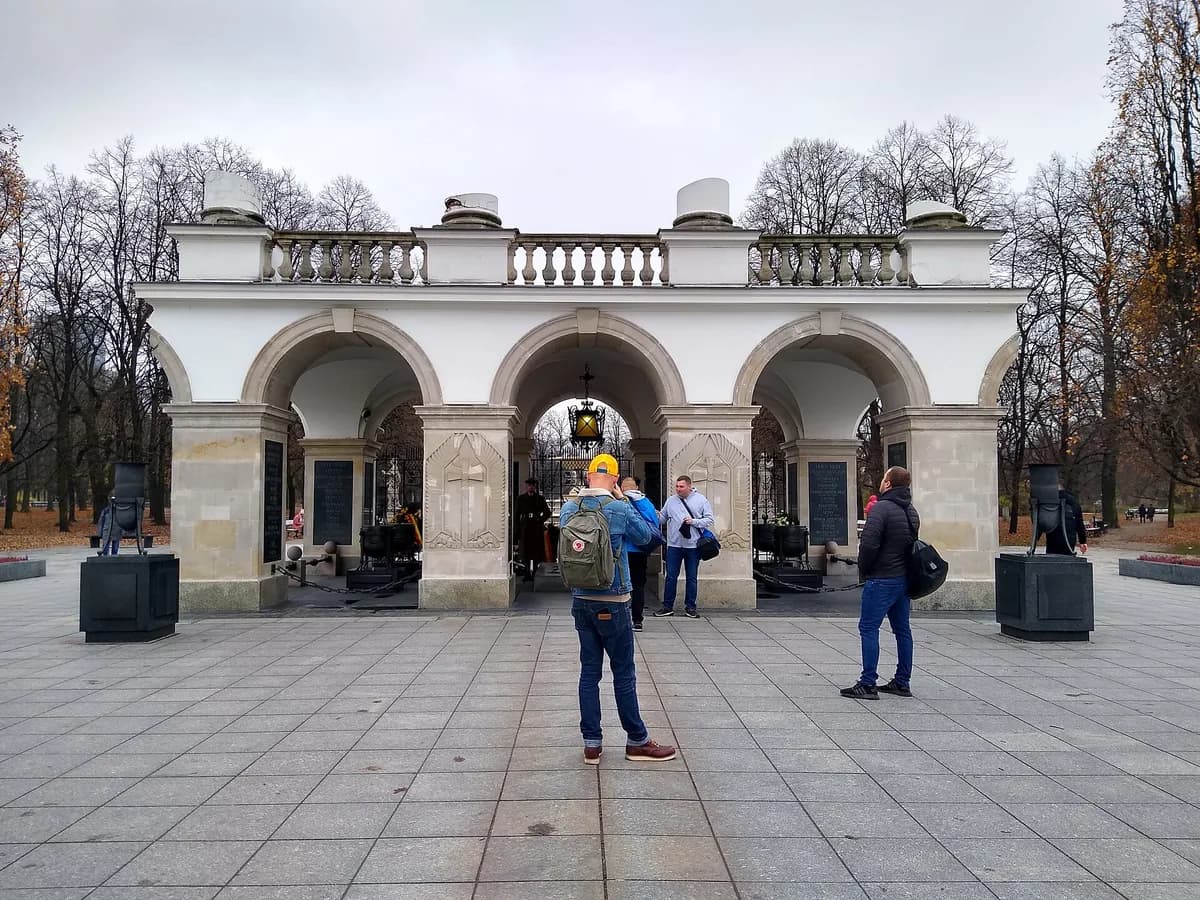
The central state ceremony takes place on Piłsudski Square in Warsaw, at the Grób Nieznanego Żołnierza (Tomb of the Unknown Soldier). The tomb is the only surviving part of the colonnade of the Saxon Palace, which was destroyed in the Second World War. It has held the remains of an unidentified young soldier, who fell defending Lwów, since 1925, and an eternal flame burns there.
On Polish Independence Day, the President, as commander-in-chief of the armed forces, leads a televised ceremony. It typically includes raising the flag, the national anthem, an artillery salute, a changing of the guard (zmiana warty) and the laying of wreaths. On ordinary days, the guard at the tomb changes every hour, which makes it worth visiting at any time of year.
Flags on every balcony
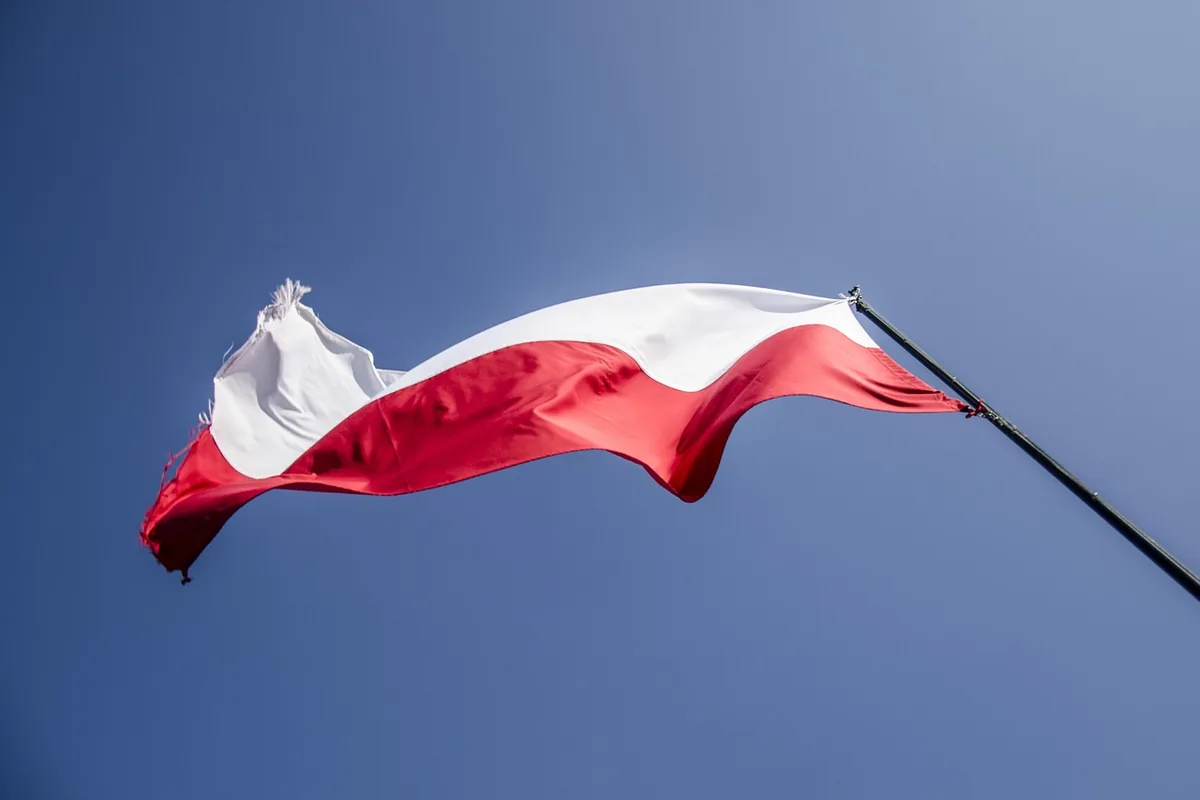
The simplest way Poles take part in Polish Independence Day is by hanging out the flag. The phrase you will hear is wywiesić flagę ("to hang out the flag"). The flag is often called simply biało-czerwona ("the white-and-red"), and on 11 November the colors appear on buildings, buses and trams across the country.
Some people also wear a kotylion, a small white-and-red rosette pinned to a coat. Children often make them at school in the days before the holiday.
Independence runs
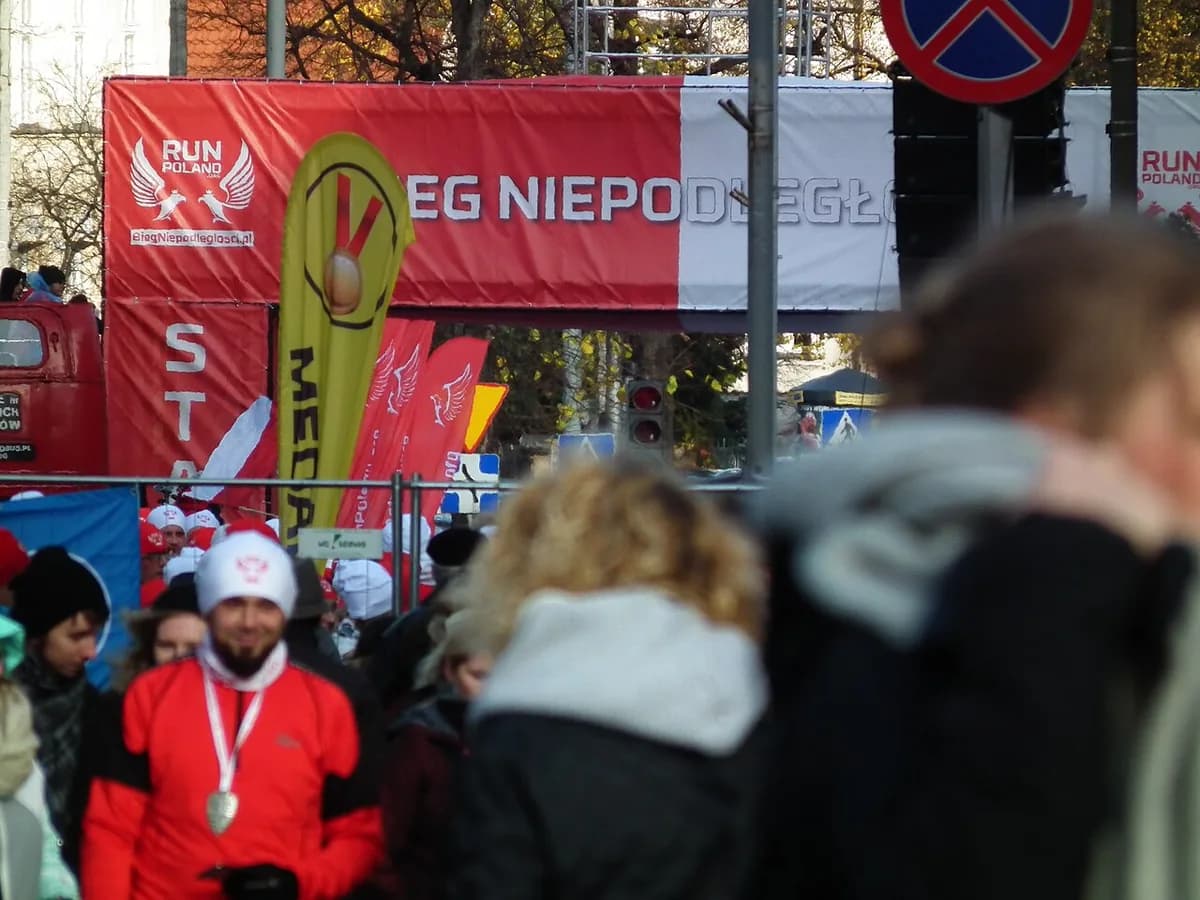
Running has become one of the most popular ways to mark Polish Independence Day. The Bieg Niepodległości (Independence Run) has been held in Warsaw since 1989, and many other cities now organize their own runs on 11 November. Participants often wear red and white, so the start line turns into a sea of the national colors.
Polish communities abroad hold events too, from runs to concerts and community masses, so you may find a celebration of Polish Independence Day near you even outside Poland.
Singing the anthem at noon
In recent years, an initiative called Niepodległa do hymnu has invited people to sing the national anthem, Mazurek Dąbrowskiego, together at exactly 12:00 on Polish Independence Day. Radio stations broadcast the anthem at the same moment, so people join in from schools, offices, squares and their own kitchens.
The anthem's opening lines date from 1797 and are worth learning:
Jeszcze Polska nie zginęła, Kiedy my żyjemy.
In plain English: "Poland has not yet perished, as long as we are alive." The words were written during the partitions, which is why they carry so much weight on Polish Independence Day.
Concerts, parades and the Warsaw march
Cities across the country organize concerts, historical reenactments, lectures and family parades for Polish Independence Day. Since 2009, the Warsaw Rising Museum has hosted a Koncert Niepodległości (Independence Concert). Wrocław and Gdańsk hold their own independence parades.
The largest street event in Warsaw is the Marsz Niepodległości (Independence March). It was started by nationalist groups, has been organized by the Independence March Association since 2011, and regularly draws tens of thousands of participants. It is also the most debated part of the day: supporters describe it as a patriotic gathering, while many journalists and observers have criticized far-right slogans and groups seen at the march. Visitors who prefer quieter events often choose the official ceremonies, runs or concerts instead.
St Martin's Croissant: Poznań's Sweet Tradition
Not everyone spends 11 November thinking only about 1918. In Poznań and the wider Greater Poland region, the date is also St Martin's Day (dzień świętego Marcina), and that means one thing: the rogal świętomarciński, or St Martin's croissant.
What is in a St Martin's croissant?
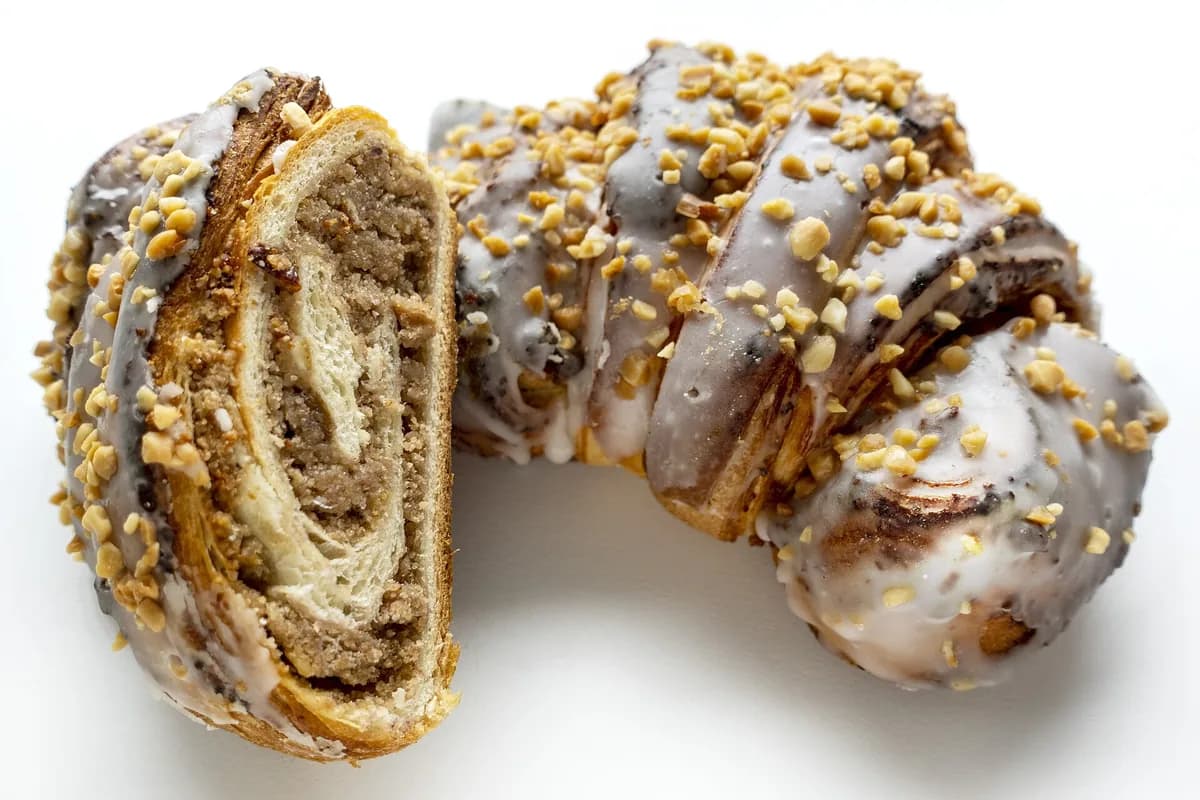
This is not a light French croissant. The rogal świętomarciński is a large horseshoe of laminated, buttery dough wrapped around a rich filling of white poppy seeds (biały mak) mixed with sugar, crumbs, eggs, raisins, nuts and candied fruit. The top is brushed with icing (lukier) and scattered with chopped nuts.
It is heavy, sweet and very filling. Locals often buy a whole box of them on Polish Independence Day and share them with family.
A protected name
The St Martin's croissant is legally protected. In 2008, the European Union entered rogal świętomarciński into its register as a protected geographical indication. Only certified bakeries and confectioners in the defined region can sell pastries under that name, and they must follow the official specification, which sets a weight of 150 to 250 grams per croissant.
So if you see a "St Martin's croissant" on sale in another city, it may be tasty, but legally it cannot carry the protected name unless it meets those rules.
Where the tradition comes from
The pastry's history in Poznań goes back at least to 1860, when the oldest known advertisement for it appeared in a local newspaper. A popular story says the modern version began in 1891: a parish priest asked his congregation to help the poor, and a confectioner named Józef Melzer persuaded his employer to bake the croissants. Wealthier residents bought them, and the poor received them for free.
The street's name day
Poznań's main street is called Święty Marcin, and every 11 November the city celebrates the street's "name day" (Imieniny ulicy Święty Marcin). A colorful parade, led by a rider dressed as St. Martin on a white horse, travels along the street. In many years the mayor hands St. Martin the symbolic keys to the city, and there are concerts, a market and, of course, plenty of croissants.
Name days (imieniny) are a big deal in Poland, and giving one to a street is a very Polish joke that everyone takes seriously. For Poznań, the combination of a saint's day and Polish Independence Day turns 11 November into the city's biggest festival.
Useful Polish Vocabulary for 11 Listopada
Here are the words and phrases you are most likely to hear around Polish Independence Day. They also make a good mini-lesson in dates, because Polish dates use ordinal numbers and the genitive case.
| Polish | English |
|---|---|
| Narodowe Święto Niepodległości | National Independence Day |
| Święto Niepodległości | Independence Day |
| niepodległość | independence |
| odzyskanie niepodległości | regaining independence |
| jedenasty listopada | the eleventh of November |
| jedenastego listopada | on the eleventh of November |
| rozbiory | the partitions |
| flaga / biało-czerwona | flag / the white-and-red |
| wywiesić flagę | to hang out the flag |
| kotylion | rosette (in the national colors) |
| hymn narodowy | national anthem |
| Grób Nieznanego Żołnierza | Tomb of the Unknown Soldier |
| zmiana warty | changing of the guard |
| Bieg Niepodległości | Independence Run |
| rogal świętomarciński | St Martin's croissant |
| biały mak | white poppy seeds |
| dzień wolny od pracy | day off work |
Saying the date correctly
Notice the difference between jedenasty listopada and jedenastego listopada. You say Dziś jest jedenasty listopada ("Today is the eleventh of November"), but Jedenastego listopada mamy wolne ("On the eleventh of November we have a day off"). The month name, listopad, stays in the genitive (listopada) in both cases.
The name listopad itself is lovely: it comes from liść (leaf) and padać (to fall), the month when leaves fall. If you want to practice month names, see our guide to days and months in Polish.
Years are ordinal numbers too. Polska odzyskała niepodległość w 1918 roku ("Poland regained independence in 1918") is read aloud as w tysiąc dziewięćset osiemnastym roku. Ordinal numbers like these take practice, and our numbers lesson is the best place to start:
Numbers & Counting in PolishScenario: Planning the Day Off
Two friends in Warsaw talk about their plans the evening before Polish Independence Day.
Ania: Masz jutro wolne? (Do you have tomorrow off?)
Tomek: Tak, jutro jest jedenasty listopada. Święto Niepodległości! (Yes, tomorrow is the eleventh of November. Independence Day!)
Ania: Co robisz? (What are you doing?)
Tomek: Rano wywieszamy flagę, a potem startuję w Biegu Niepodległości. (In the morning we're hanging out the flag, and then I'm running in the Independence Run.)
Ania: A po biegu? (And after the run?)
Tomek: Jadę do babci do Poznania. Kupię rogale świętomarcińskie. (I'm going to my grandma's in Poznań. I'll buy St Martin's croissants.)
Ania: Z białym makiem? Kup też dla mnie! (With white poppy seeds? Buy some for me too!)
Tomek: Jasne. Miłego świętowania! (Sure. Enjoy the holiday!)
Notice w Biegu Niepodległości (locative after w), do Poznania (genitive after do) and z białym makiem (instrumental after z). One short conversation, three cases.
Tips for Visitors on Polish Independence Day
If you happen to be in Poland on 11 November, a little planning helps.
- Shops: Under Poland's trading restrictions, large supermarkets and shopping centers are usually closed on public holidays. Petrol stations, pharmacies, some small shops and most restaurants stay open, so plan your groceries a day early.
- Transport: Public transport usually runs on a holiday or Sunday timetable, and central Warsaw can have road closures around the official ceremonies and marches.
- Events: Check your city's official website for runs, concerts and family events. Many are free.
- Poznań: If you are anywhere near Poznań, go for the croissants and the St Martin's parade. Bakeries can sell out, so buy early.
- Etiquette: Ceremonies at the Tomb of the Unknown Soldier are solemn. Stand quietly during the anthem and remove your hat.
Polish Independence Day sits inside a dense run of autumn holidays, right after All Saints' Day on 1 November. For a full overview of the year, see our calendar of Polish holidays and traditions.
Frequently Asked Questions
Is Polish Independence Day a public holiday?
Yes. Polish Independence Day, 11 November, is a statutory non-working day in Poland. Schools and offices close, and most large shops are closed under the rules on trading on public holidays.
Why is Polish Independence Day on 11 November?
On 11 November 1918, the Regency Council handed command of the Polish army to Józef Piłsudski, who had arrived in Warsaw the day before. It was the first clear transfer of power into Polish hands after 123 years of partitions, and it coincided with the armistice that ended the First World War.
Was Polish Independence Day celebrated under communism?
Not officially. The communist government abolished the holiday in 1945 and replaced it with 22 July. People still marked 11 November privately, opposition groups held unofficial marches in the 1980s, and the holiday was restored by law in February 1989.
What is a St Martin's croissant?
The St Martin's croissant (rogal świętomarciński) is a large horseshoe-shaped pastry from Poznań, filled with white poppy seeds, nuts and dried fruit and topped with icing. It is eaten on 11 November, St Martin's Day, and its name has been protected in the EU since 2008.
How do you say "Independence Day" in Polish?
Say Święto Niepodległości. The official name is Narodowe Święto Niepodległości. Stress falls on the second-to-last syllable of each word: ŚWIĘ-to, nie-pod-le-GŁOŚ-ci.
What do Poles do on 11 listopada?
Many people hang out the flag, watch or attend official ceremonies, join an independence run, sing the anthem at noon, go to concerts or simply enjoy a day off with family. In Poznań, the St Martin's croissant and the street parade are central to the day.
To read more about the history behind the date, the National Independence Day article on Wikipedia is a useful starting point.
Whether you celebrate with a flag on the balcony, a run through the city or a box of croissants, Polish Independence Day is about something simple and powerful: a language and a people that outlasted the empires that tried to erase them. Learning a few of the words above is a small way to join in, wherever you are on 11 November.