
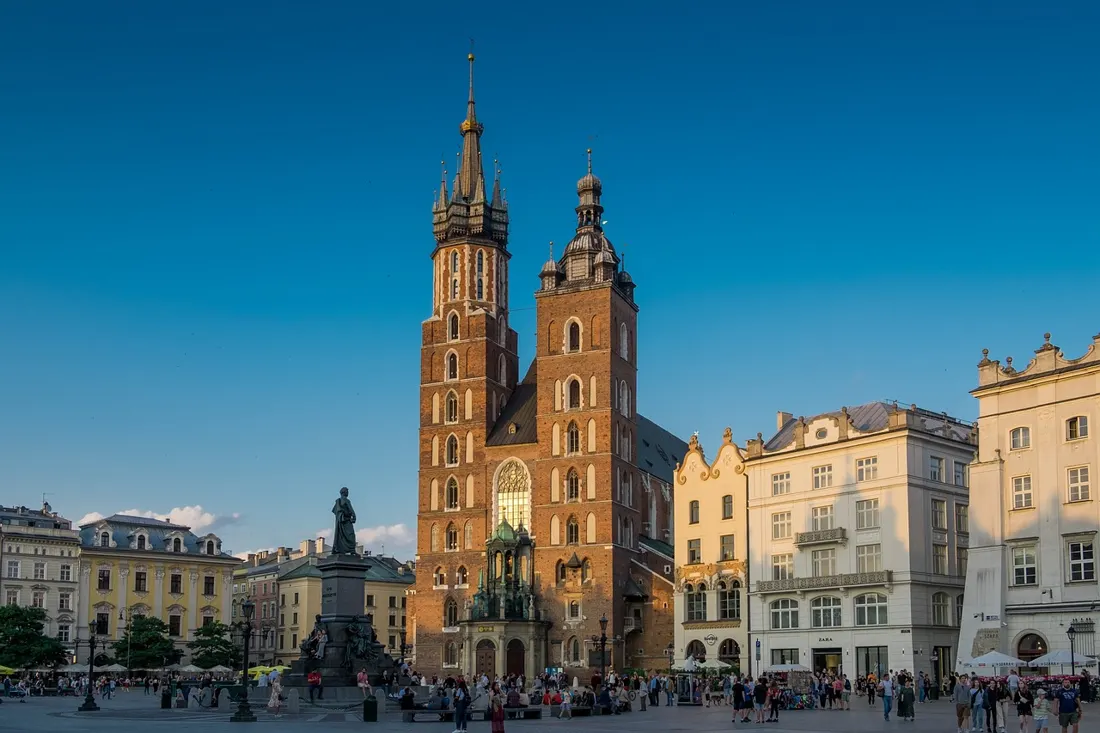
Every December, a small crowd gathers around the Adam Mickiewicz monument in Kraków's Main Square to watch grown adults carry cathedrals. Not real cathedrals — tiny ones, built from cardboard, foil, and cellophane over the course of an entire year, some standing taller than the people who made them. This is the Krakow nativity scene competition, and once you understand what actually goes into one of these structures, it stops looking like a craft fair and starts looking like something closer to architecture built at dollhouse scale by people who happen to be devout, stubborn, and slightly obsessive.
The tradition is called szopka krakowska, and it is unlike any other nativity scene tradition on earth. Instead of a simple manger scene with a few painted figures, each szopka reimagines Kraków's own skyline — the spires of St. Mary's Basilica, the towers of Wawel Castle, the arcades of the Cloth Hall — as a glittering, miniature stage for the Christmas story. In 2018, UNESCO recognized the Krakow nativity scene tradition as Intangible Cultural Heritage of Humanity, Poland's first-ever entry on that list. Almost nobody outside Poland has heard of it.
What Makes a Krakow Nativity Scene Different From Any Other
A typical Western nativity scene is a stable, a manger, and a handful of figures — Mary, Joseph, the shepherds, the Magi. A szopka krakowska starts from a completely different premise: build a miniature version of Kraków itself, then tuck the nativity scene inside it.
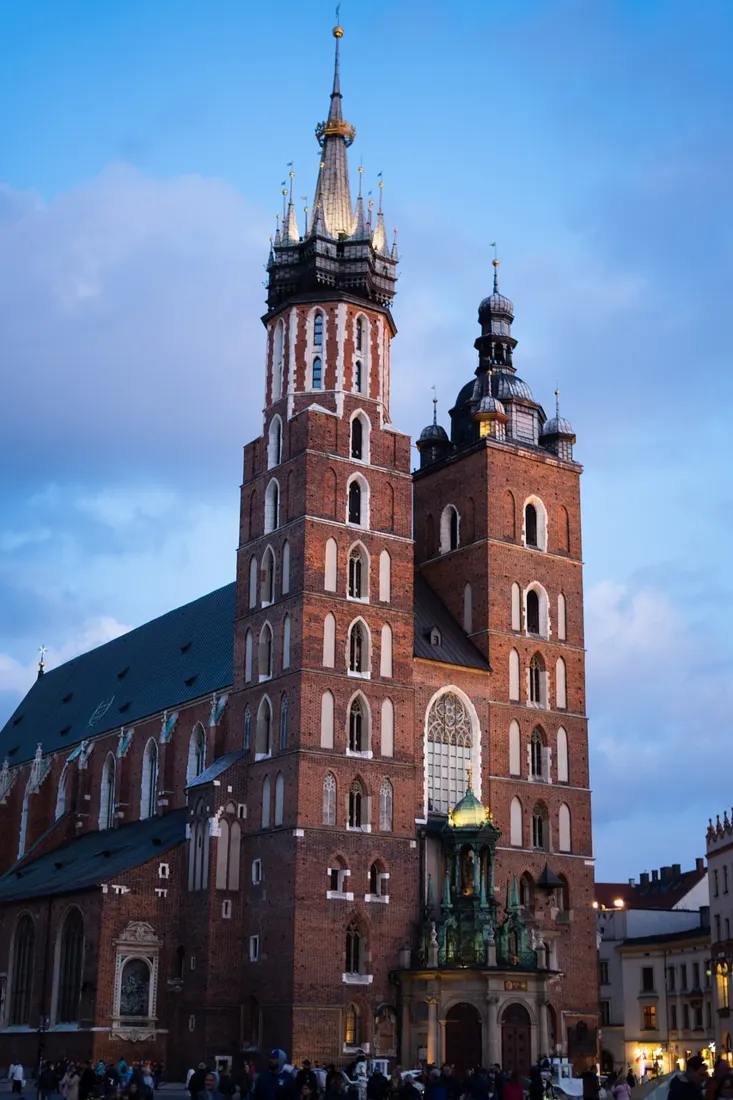
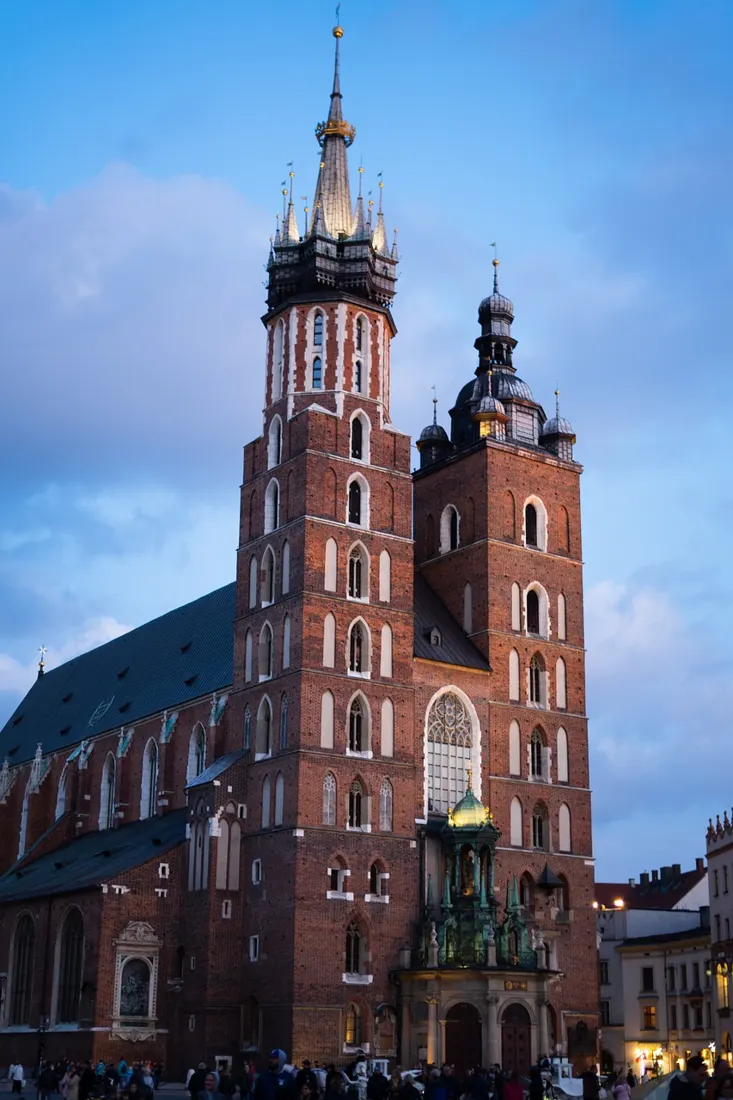
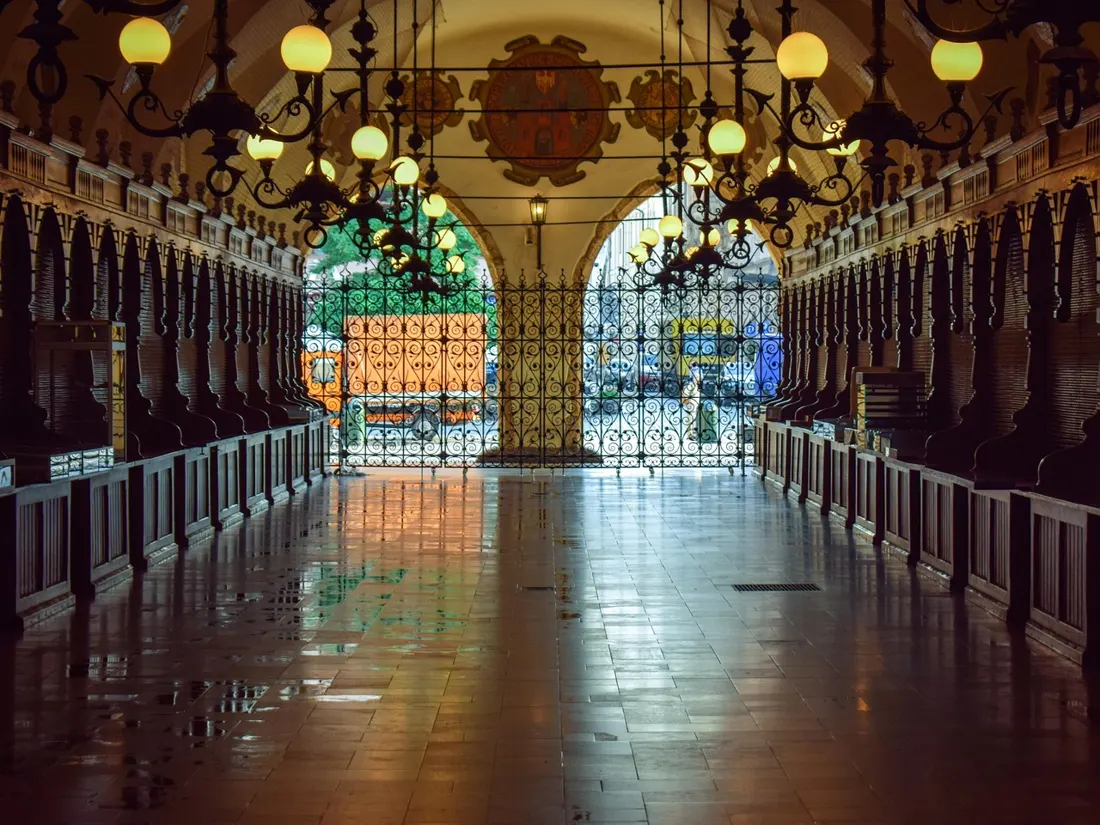
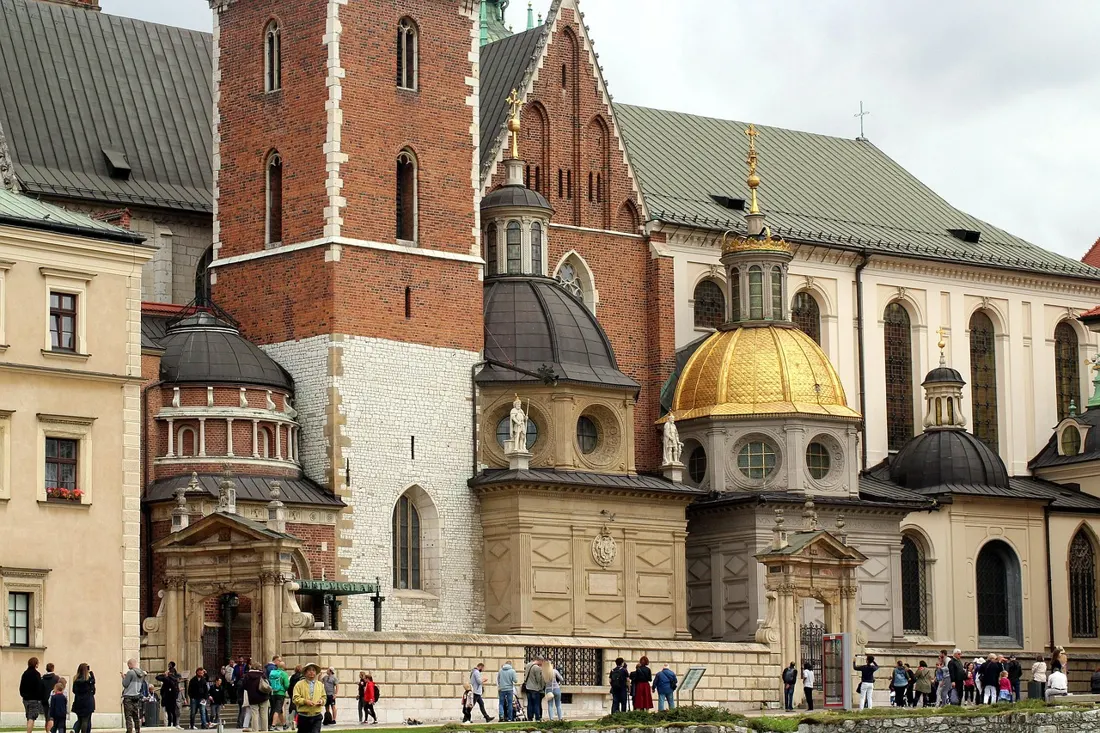
Look closely at any prize-winning szopka and you will recognize the city immediately. The twin uneven towers of St. Mary's Basilica are the single most common architectural reference, rebuilt in miniature with obsessive attention to their real asymmetry. Wawel Castle's turrets, the Cloth Hall's arcaded roofline, and the spires of half a dozen other Kraków churches all show up regularly, compressed and layered into structures that can range from a shoebox-sized miniature to a towering, multi-tiered construction over two meters tall.
The materials are deliberately humble. Builders work with cardboard, wood, tin foil, sequins, cellophane, colored tissue paper, glass beads, and — historically — the foil wrappers pulled from cigarette packets and chewing gum, because for most of this tradition's history its makers were working-class Kraków families with no budget for anything else. What looks, from a few feet away, like gilded stonework is often just carefully layered scrap foil catching the light exactly right.
Born From Unemployed Bricklayers in a Kraków Winter
The Krakow nativity scene tradition did not start in a church or a workshop. It started with construction workers who had nothing to do.
In the middle of the nineteenth century, Kraków's carpenters and bricklayers faced the same seasonal problem every winter: the building trade shut down once the ground froze, and there was no work — and no income — until spring. Some of these craftsmen began building elaborate portable nativity scenes out of the same materials they used on job sites, then carried them from house to house through the city, singing carols and performing small puppet shows for whatever coins or food a household could spare.
It worked well enough that it stopped being a one-off winter hustle and became a genuine seasonal profession. By the second half of the nineteenth century, the bricklayers and builders who specialized in making szopki had effectively formed their own informal guild within Kraków's construction trade, passing techniques down from master to apprentice the same way any other building skill would be taught. The habit of modeling the szopka's architecture on real Kraków landmarks likely grew directly out of this: these were, after all, people who spent their working lives literally building the city's skyline, and it was the one form they knew how to construct from memory.
The Competition That Saved the Tradition
By the 1930s, the door-to-door caroling custom had faded, and the Krakow nativity scene tradition was at real risk of dying out along with the generation of builders who had invented it. In 1937, Dr. Jerzy Dobrzycki, director of the city's Municipal Art Propaganda Office, launched a formal public competition to keep it alive — inviting anyone in the city to build a szopka and compete for cash prizes and, memorably, pastries, a genuinely significant prize in the middle of the Great Depression.
The competition worked. It gave the tradition a fixed annual occasion, a public stage, and a reason for families to keep teaching the craft to their children even after construction work stopped being the trade that fed it. World War II interrupted the competition entirely between 1939 and 1945, but it resumed almost immediately after the war, and organizational responsibility eventually passed to the Historical Museum of the City of Kraków — now known as the Museum of Kraków — which still runs the competition every single year without exception.
How Kraków Judges Its Szopki Krakowskie
The Krakow nativity scene competition still follows the format Dobrzycki set up nearly ninety years ago, almost unchanged. Every year, on the first Thursday of December, makers gather in the Main Square around the Adam Mickiewicz monument to present their finished szopki to the public and to a jury made up of historians, ethnographers, art historians, architects, and working artists.
Entries are judged across several size categories — typically large, medium, small, and miniature — so a builder working on a two-meter cathedral-scale piece is not competing head-to-head against someone who spent the year perfecting a szopka that fits in the palm of a hand. Roughly forty dedicated makers submit new pieces in a typical year, a number that has held remarkably steady even as the craft has shifted from a working-class necessity into something closer to a devoted art form practiced largely by families who inherited it.
After judging, the winning and shortlisted szopki move to the Museum of Kraków for public display, where they remain on exhibit from December through February. That gives visitors a full winter season to see up close what usually gets only a few minutes of attention in the cold December square.
The Malik Family and Kraków's Nativity Dynasties
Almost every serious account of the Krakow nativity scene tradition eventually arrives at one name: Malik. The Malik family is now in its sixth generation of szopka builders, a lineage that started with a grandfather named Walenty, passed to his son Włodzimierz, then to his grandson Stanisław, and continues today with descendants still submitting entries to the same competition their ancestor helped keep alive nearly a century ago.
The Maliks are not unique in this — several of Kraków's most consistent competition entrants are multi-generational family workshops, with techniques, tools, and even specific architectural details passed down the way any skilled trade would be. That continuity is part of why UNESCO's Intangible Cultural Heritage listing singles out the tradition's living, actively-transmitted nature rather than treating it as a historical curiosity: this is a craft still being taught parent to child, not one being reconstructed from old photographs.
Szopki Krakowskie and the UNESCO Krakow Listing Few Outside Poland Know About
In 2018, the Nativity Scene (Szopka) Tradition in Kraków was formally inscribed on UNESCO's Representative List of Intangible Cultural Heritage — Poland's first entry on that list, ahead of any other Polish custom, food, or craft. The listing specifically credits the tradition's builders for keeping a nineteenth-century working-class skill alive through active transmission, competition, and public display rather than letting it calcify into a museum piece.
That distinction matters. Plenty of European folk crafts survive today only as historical reenactments, performed occasionally for tourists by people who learned the technique from a book rather than a grandparent. The Krakow nativity scene tradition is the opposite: roughly forty new, original szopki are still built completely from scratch every single year, judged by a jury that has no patience for shortcuts, and displayed to a public that has strong, specific opinions about whose spires look most like the real St. Mary's Basilica.
Szopki krakowskie also increasingly reach beyond Kraków's own Main Square. Pieces from the competition have traveled to international folk art exhibitions, and some builders now incorporate contemporary Kraków landmarks, current events, or well-known local figures into their designs alongside the traditional nativity scene — a small, constantly updating record of what the city considers worth remembering that particular year, built by amateurs in cardboard and foil rather than commissioned as official public art.
More Than a Nativity: The Puppet Play Hidden Inside a Szopka Krakowska
Older szopki were not just static display pieces — they were working puppet theaters. Traditional builders fitted the structure with rod-operated figures, each one controlled from below through a slot in the base, so a puppeteer could act out a full jasełka, or Christmas play, using the szopka itself as the stage.
The cast went well beyond Mary, Joseph, and the shepherds. A classic jasełka performance featured King Herod, the Devil, and Death as recurring antagonists, plus a rotating cast of regional folk characters — a Krakowiak and Krakowianka in traditional costume, and often a cameo from Lajkonik, the costumed Tartar-rider figure from Kraków's own separate folk parade tradition. Many szopki were built with three visible levels, representing Heaven, Earth, and Hell, so that a defeated King Herod could be dramatically dragged downward at the story's climax in front of an audience of children and adults alike.
Most modern competition szopki are built purely for display rather than performance, since a working puppet mechanism adds enormous complexity on top of an already demanding architectural build. But the tradition of packing in extra folk characters alongside the nativity figures never disappeared — look closely at a contemporary szopka krakowska and you will often still find a small Lajkonik, a folk dancer, or a nod to a well-known Kraków figure tucked somewhere among the spires.
Why This Tradition Pairs So Well With the Rest of Kraków's Christmas
If you already know Kraków for its other famous legends and rituals — the Wawel Dragon still guarding the castle hill above the city, or the unfinished trumpet call played every hour from St. Mary's Basilica tower — the szopka tradition fits the same pattern. Kraków has an unusual habit of turning its own history and landmarks into living folk practices that ordinary residents still actively participate in, rather than leaving them to plaques and postcards.
The Krakow nativity scene competition also sits naturally alongside the rest of Poland's Christmas Eve, or Wigilia, traditions: both are built around the same instinct to turn a religious observance into something intensely, specifically local, layered with generations of family practice that outsiders rarely get to see up close. Visiting Kraków in December specifically to see the szopki, rather than just passing through the Christmas markets, is one of the more rewarding ways to experience a side of Polish Christmas that most tourists walk straight past.
Frequently Asked Questions About the Krakow Nativity Scene Tradition
What is a szopka krakowska? A szopka krakowska is the Polish name for a Krakow nativity scene: an elaborate miniature structure that combines a traditional Christian nativity scene with a model of Kraków's own architecture — typically featuring the spires of St. Mary's Basilica, Wawel Castle, or the Cloth Hall, built from cardboard, foil, and colored paper.
When is the Krakow nativity scene competition held? The competition takes place every year on the first Thursday of December, when makers present their finished szopki around the Adam Mickiewicz monument in Kraków's Main Square.
Why is the Krakow nativity scene UNESCO-listed? UNESCO inscribed the tradition on its Representative List of Intangible Cultural Heritage in 2018, Poland's first entry on the list, citing the craft's continuous, actively-taught transmission from generation to generation rather than treating it as a historical relic.
Who started the Krakow nativity scene tradition? The Krakow nativity scene tradition began in the mid-nineteenth century with Kraków's bricklayers and construction workers, who built portable nativity scenes to earn extra income during the winter months when building work stopped.
How big is a typical Krakow nativity scene? Sizes vary enormously. The competition judges entries across large, medium, small, and miniature categories, ranging from pieces small enough to hold in one hand to elaborate towers over two meters tall.
What materials are used to build a Krakow nativity scene? Traditional materials include cardboard, wood, tin foil, sequins, cellophane, colored tissue paper, and glass beads — historically including foil salvaged from cigarette packets and gum wrappers, since most builders were working-class families with limited budgets.
Where can I see the winning nativity scenes after the competition? The Museum of Kraków displays the competition's winning and shortlisted szopki from December through February, giving visitors a full winter season to view them up close indoors.
Is the Malik family still building Krakow nativity scenes? Yes. The Malik family is now in its sixth generation of szopka builders, tracing back to a grandfather named Walenty, and remains one of the tradition's most recognized multi-generational workshops.
How many people still build szopki every year? Roughly forty dedicated makers submit new, handmade entries to the competition in a typical year, a number that has held steady for decades.
Did World War II interrupt the tradition? Yes. The competition, first held in 1937, was suspended during the German occupation from 1939 to 1945 and resumed shortly after the war ended, with the Museum of Kraków eventually taking over its organization.
Can tourists watch the competition in person? Yes. The judging and public presentation take place outdoors in Kraków's Main Square and are open to anyone who happens to be in the city on the first Thursday of December.
Do modern szopki only depict the traditional nativity story? Most still center on the nativity, but many builders now weave in contemporary Kraków landmarks, current events, or recognizable local figures alongside the traditional religious scene.
Is the Krakow nativity scene tradition only found in Kraków? Smaller, less formal nativity-building traditions exist elsewhere in Poland and Central Europe, but the specific architectural style, the century-and-a-half of continuous history, and the UNESCO listing are unique to the Krakow nativity scene tradition. Builders elsewhere do not model their nativity scenes on Kraków's own skyline the way szopki krakowskie do.
How long does it take to build one Krakow nativity scene? Serious competitors typically work on a single Krakow nativity scene entry across most of the year, fitting construction around jobs and family life, which is part of why the finished pieces reach such an extreme level of architectural detail by the time December arrives.
A szopka krakowska rewards close, patient looking in a way most public art does not — the closer you get, the more absurdly detailed it turns out to be, right down to individually cut foil roof tiles and hand-painted figures barely larger than a fingernail. That kind of patience is exactly what has kept the Krakow nativity scene tradition alive for a hundred and fifty years, through a world war, a communist government that had little use for religious folk custom, and a century of technology that made almost every other handmade winter craft obsolete. It is still, every December, built entirely by hand.