Wielkanoc is Poland's Easter, and in a country as devoutly Catholic as Poland, it rivals Christmas for the title of most important holiday on the calendar — which is saying something, given how seriously Poles take Wigilia. But where Christmas Eve is quiet, candlelit, and indoor, Wielkanoc is a week-long build-up of baskets, blessings, elaborate handmade palms, and a dawn procession that half the country actually gets up before sunrise to attend.
It's also a holiday that blends centuries of Catholic ritual with folk customs that predate Christianity in Poland entirely, which is part of what makes it such a rich one to actually dig into rather than just wave at as "Polish Easter." Here's what the week actually looks like, from Palm Sunday through the Monday water fight everyone's heard of.
What Is Wielkanoc, Exactly?
Wielkanoc literally translates to "Great Night," and it marks the same event as Easter anywhere else in the Christian world — the resurrection of Christ. What sets the Polish version apart isn't the theology, though, it's the density of surrounding ritual: an entire Holy Week of distinct, named observances, most of which have survived essentially intact from a pre-industrial, deeply rural Poland into the present day.
A lot of that survival comes down to how Wielkanoc layers Christian meaning on top of much older spring folk customs — fertility symbols, seasonal renewal, and protective rituals that were already in place before the Church arrived and gave them a new frame. Eggs, greenery, and water all show up repeatedly through the week, and all three have obvious pre-Christian roots as symbols of new life, even as they've been folded into a thoroughly Catholic holiday.
The lead-up matters too. Wielkanoc sits at the end of Wielki Post, the forty-day Lenten fast that begins on Ash Wednesday, and much of the week's emotional weight comes from that contrast — weeks of restraint and quiet giving way, almost overnight, to the biggest feast of the year. Poles who've spent Lent avoiding meat, sweets, or other small pleasures treat the Saturday-to-Sunday turn with real intensity, which is part of why the food at the center of the holiday carries so much symbolic freight.
Palm Sunday: Poland's Not-So-Simple Palms
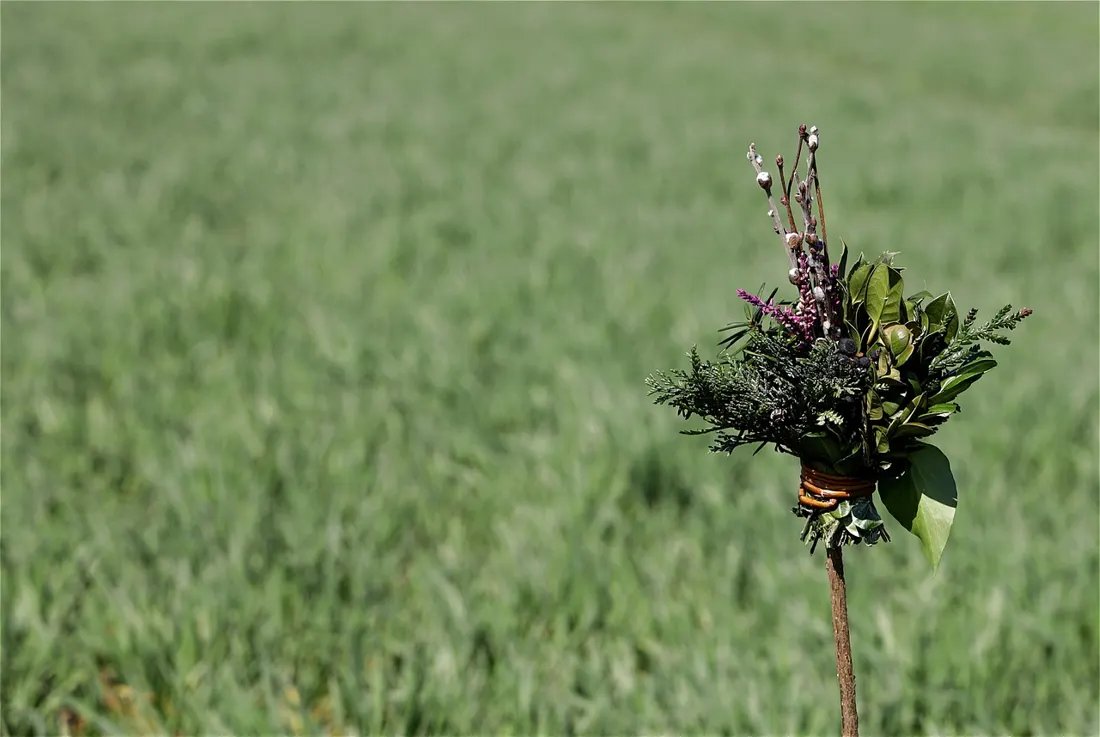
Holy Week opens with Niedziela Palmowa, Palm Sunday, and in most of the Christian world that means a single frond blessed at church. In parts of Poland, particularly the Kurpie region, it means something closer to a competitive craft project: hand-built palms made from dried flowers, colored grasses, and ribbon-wrapped branches that can tower several meters tall, carried into town and blessed alongside much smaller, more conventional versions everyone else brings.
The village of Łyse, in the heart of Kurpie, has turned this into an annual competition, with local makers spending weeks constructing entries judged on height, craftsmanship, and how densely the dried botanicals are arranged, drawing crowds who come specifically to see whose palm towers over the rest. It's a striking example of how a single religious observance can produce wildly different regional expressions depending on local craft traditions — the same blessed-palm ritual happening in a Warsaw parish looks almost nothing like it does in rural Kurpie.
Pisanki and Kraszanki: The Art of the Polish Easter Egg
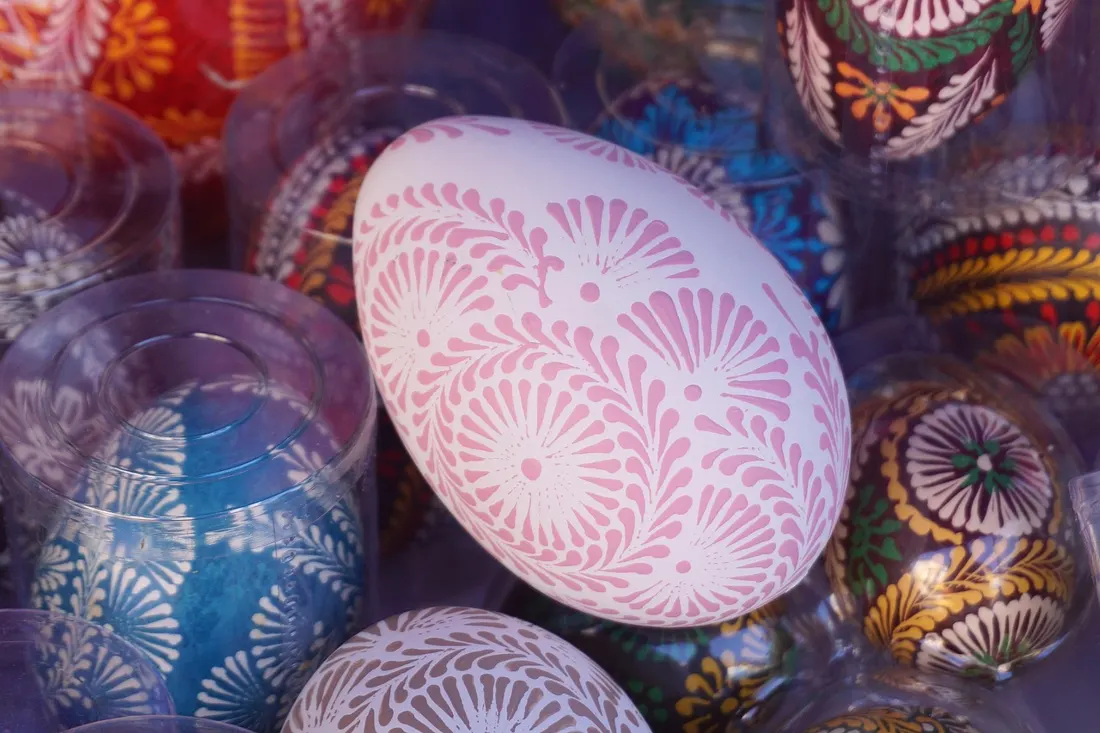
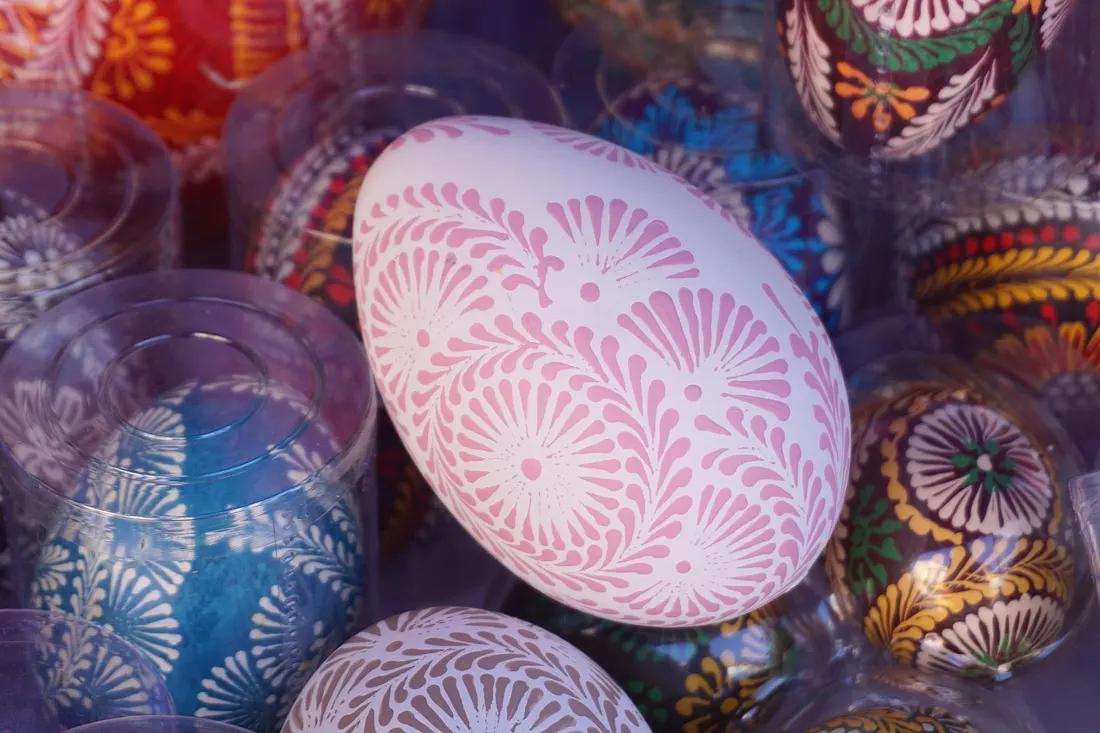
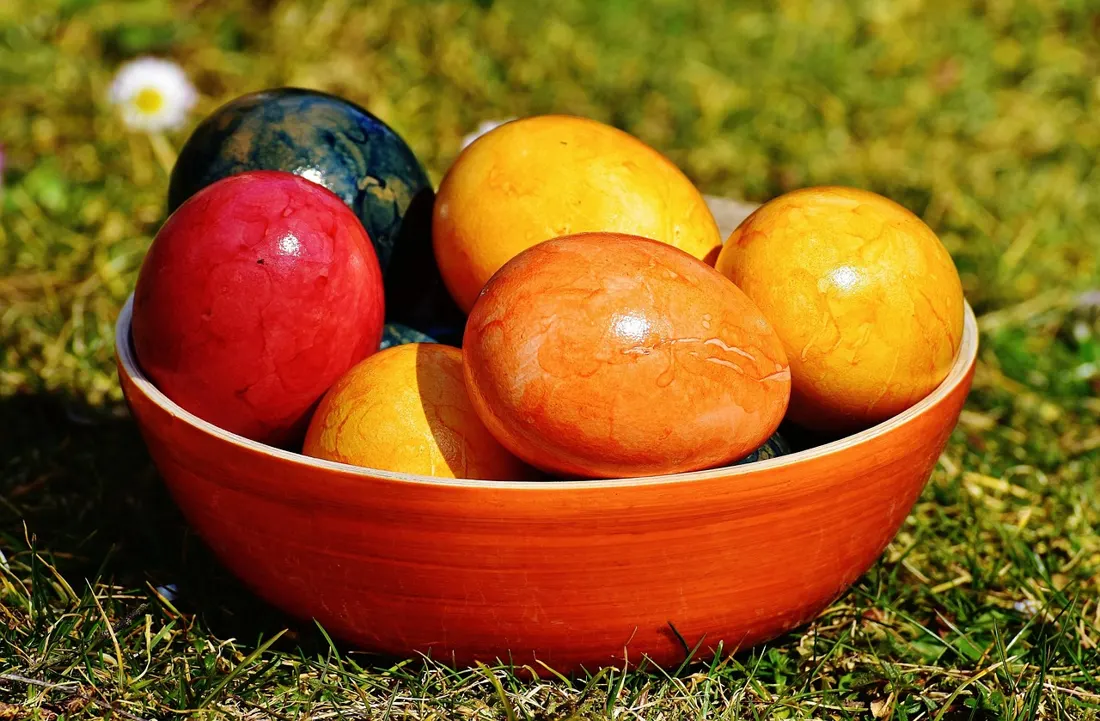
The decorated egg is probably the single most recognizable symbol of Wielkanoc, and it actually covers two distinct traditions. Kraszanki are eggs dyed a single solid color using natural materials — onion skins for a deep amber-brown, beets for red, certain greens for a soft yellow — boiled directly in the dye so the color and the cooking happen at once.
Pisanki are the more elaborate cousin: eggs decorated using a wax-resist method close to batik, where melted beeswax is drawn onto the shell with a pin-like stylus called a kistka before the egg is dyed, then dyed again after more wax is added, building up multi-layered patterns before the wax is finally melted off to reveal the finished design underneath. The word pisanka comes from pisać, "to write," describing exactly what the stylus is doing.
This isn't a modern craft revival, either — archaeologists have found decorated clay eggs at a Slavic stronghold near Opole dating back to the 10th century, which puts documented Polish egg decoration at over a thousand years old, predating most of the country's written history.
Regional styles add another layer entirely. In the Łowicz and Opoczno areas, eggs are sometimes decorated with intricate cut-paper appliqué instead of wax and dye, echoing the same paper-cutout folk-art tradition (wycinanki) those regions are already known for. Other techniques involve scratching a design directly into a dyed shell with a sharp point, revealing the white underneath in fine, engraved lines rather than building up color in layers — a completely different set of tools producing an equally recognizable result.
Święconka: Blessing the Easter Basket
On Holy Saturday, families across Poland pack a small woven basket with a specific set of symbolic foods and carry it to church to be blessed — a tradition called Święconka. What goes in the basket isn't random: a pisanka or two represents new life, bread stands in for Christ, salt symbolizes purification, a twist of horseradish nods to the bitterness of the Passion, and a slice of kiełbasa or ham represents abundance and plenty after the fasting of Lent. Many baskets also include a small lamb figurine made of butter or sugar, sitting on top like a centerpiece.
The blessed basket doesn't get touched again until Easter Sunday morning, when its contents open the family's Easter breakfast — which means the sausage in that basket is doing double duty as decoration and as tomorrow's meal.
Church lines for the Święconka blessing on Holy Saturday afternoon are their own small tradition — priests often bless dozens of baskets in quick succession as families queue up outside, baskets balanced on arms and covered with an embroidered linen cloth specifically kept for the occasion in many households, sometimes passed down for generations. The size and contents of the basket have shrunk somewhat over the decades, from a genuine meal's worth of food in leaner rural households to a smaller, more symbolic sampling today, but the ritual itself has barely changed.
Rezurekcja: The Dawn Procession
Easter Sunday itself starts before most of the country is properly awake. Rezurekcja, the Resurrection Mass, traditionally begins before sunrise — the first moment church bells are permitted to ring since Holy Thursday, when they fall silent as a mark of mourning. The priest leads the congregation outside to process around the church three times, carrying a cross wrapped in a red stole, a figure of the Risen Christ, and the Host, while bells ring continuously overhead.
Historically, the exact timing varied by setting — midnight in large cities, closer to 9 p.m. in cathedrals, and dawn in smaller towns and villages — but the dawn version is what's survived most widely today, and it remains one of the most heavily attended religious events on the entire Polish calendar.
Getting up before sunrise for it is genuinely common practice, even among people who aren't otherwise especially observant the rest of the year — a pattern similar to how Wigilia pulls in far more participation than an average Sunday Mass. For a lot of Polish families, Rezurekcja functions as much as a shared cultural marker of the season turning as it does a strictly religious obligation.
Easter Sunday Breakfast
After Mass, the blessed Święconka basket finally gets opened, and the extended family gathers for śniadanie wielkanocne, Easter breakfast — really more of a multi-hour feast than a breakfast in the usual sense. It typically opens with everyone sharing a slice of the blessed egg, followed by żurek, a sour rye soup often served in a bread bowl, along with biała kiełbasa (a pale, uncured white sausage distinct from the smoked kiełbasa most people picture), cold cuts, and a mustard-and-horseradish relish called ćwikła.
Dessert gets just as much attention as the main spread: mazurek, a flat, densely decorated cake, and babka, a tall, eggy yeast cake baked in a fluted ring pan, both make near-mandatory appearances on Wielkanoc tables across the country. Unlike Wigilia's single evening meal, the Easter spread is deliberately built to last — most of it is served cold, precisely so the table can be picked at across the entire long weekend rather than reheated and served formally at one sitting, which suits a holiday that's as much about extended family lingering around a table as it is about any single meal.
Easter Monday: Śmigus-Dyngus and the Emaus Fair
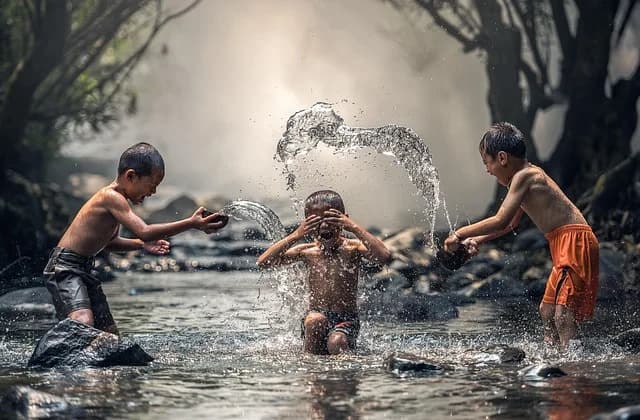
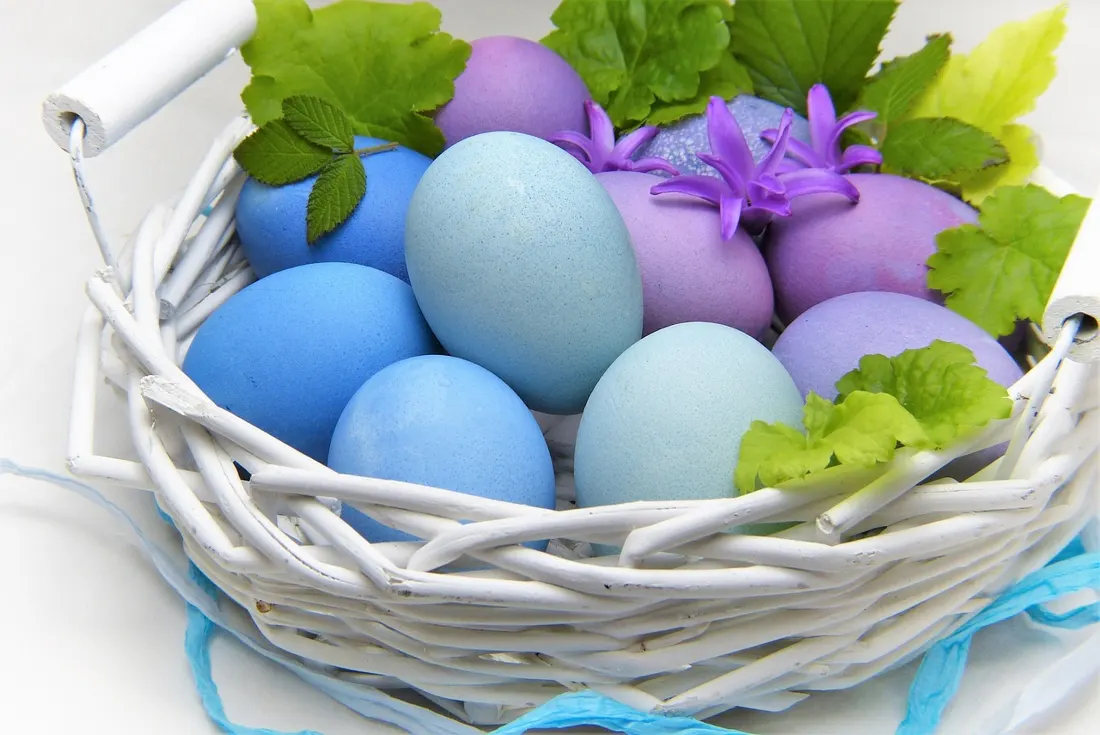
Easter Monday is when Wielkanoc turns rowdy. Most people outside Poland who've heard of any Polish Easter custom have heard of this one: Śmigus-Dyngus, the day everyone is fair game to get soaked with water, a tradition covered in full in its own dedicated piece.
Kraków adds a second Easter Monday tradition entirely its own: Emaus, a centuries-old fair tied to a Norbertine convent dating back to the 12th century, commemorating the resurrected Christ's walk to the village of Emmaus with his disciples. What began as a solemn pilgrimage site evolved by the 19th century into a full folk fair, and today it's a family event of market stalls, traditional toys, honey, and small pretzels strung on thread into wearable necklaces, as Kraków's official tourism board describes it.
For much of the 19th century, Emaus doubled as a genuine social occasion for the city's residents — a chance to show off new spring outfits, catch up with acquaintances, and generally be seen, closer in spirit to a promenade than a religious observance. The fair has since relocated from its traditional home near the Norbertine convent in Zwierzyniec to the open Błonia Meadows, a practical shift to accommodate the crowds it now draws, but the basic shape of the day — walk, browse, socialize, eat something sweet — has carried through more or less unchanged for well over a century.
Polish Easter Traditions in the Wider Calendar
Wielkanoc sits alongside Wigilia as one of the two anchor points of the Polish religious calendar, and both share the same underlying pattern: an elaborate, symbol-dense ritual meal, a specific set of foods that mean something beyond nutrition, and traditions passed down largely unchanged for generations. Between the two of them, and the wider calendar of Polish holidays that fills the rest of the year, it's hard to find a culture more committed to marking time through food, ritual, and family gathering.
For anyone actually planning to spend Wielkanoc in Poland, or just trying to follow along with Polish relatives describing it over a video call, a little of the vocabulary above goes a genuinely long way — the kind of practical, real-world Polish covered more broadly in our guide to learning Polish for beginners. Even just recognizing words like święconka, pisanki, and rezurekcja when they come up in conversation puts you well ahead of most casual observers of the holiday.
Frequently Asked Questions
What does Wielkanoc mean? Wielkanoc translates roughly to "Great Night" and is the Polish word for Easter, marking the resurrection of Christ in the Catholic calendar.
What is the difference between pisanki and kraszanki? Kraszanki are Easter eggs dyed a single solid color, often using natural materials like onion skins or beets. Pisanki instead use a wax-resist batik technique with a small stylus called a kistka to build up multi-layered patterns before dyeing.
What is Święconka? Święconka is the Easter basket Polish families prepare on Holy Saturday, filled with symbolic foods like eggs, bread, salt, horseradish, and sausage, and brought to church to be blessed.
What is in a traditional Polish Easter basket? A typical Święconka basket includes a decorated egg, bread, salt, horseradish, and a slice of sausage or ham, often topped with a small butter or sugar lamb figurine.
What is Rezurekcja? Rezurekcja is the Easter Sunday Resurrection Mass, traditionally held before sunrise, featuring a solemn procession around the church and the very first ringing of bells since Holy Thursday.
Is Śmigus-Dyngus part of Wielkanoc? Yes — Śmigus-Dyngus is the water-throwing tradition observed on Easter Monday, the final day of the core Wielkanoc holiday period.
What food is traditionally eaten on Easter Sunday in Poland? A typical Easter Sunday breakfast includes żurek (sour rye soup), biała kiełbasa, cold cuts, ćwikła relish, and desserts like mazurek cake and babka.
How old is the tradition of decorating Easter eggs in Poland? Archaeological evidence, including decorated clay eggs found near Opole, suggests Polish egg-decorating traditions go back over a thousand years, to at least the 10th century.
What is the Emaus fair in Kraków? Emaus is a centuries-old Easter Monday fair in Kraków tied to a historic Norbertine convent, commemorating a biblical pilgrimage and now held as a family-friendly market with food, toys, and pretzel necklaces.
Why are Polish Palm Sunday palms sometimes so large? In regions like Kurpie, Palm Sunday palms are handmade from dried flowers, grasses, and ribbon and can grow several meters tall, a folk-art tradition distinct from the single blessed frond used elsewhere.
Is Wielkanoc as important as Christmas in Poland? Yes — Wielkanoc is widely considered on par with Wigilia (Christmas Eve) as one of the two most significant holidays in the entire Polish calendar, both religiously and culturally, drawing similarly high levels of family gathering and participation.