The Polish diaspora is one of the largest in the world. Poles call it Polonia: the millions of people of Polish origin who live outside Poland, from Chicago and Toronto to London, Paris and São Paulo. If you're reading this, there's a good chance you're part of it, or you married into it, and you'd like the Polish language to be part of your life again.
This guide explains who the Polish diaspora is, where Poles live today, the official ties Poland offers to people of Polish descent (including the Karta Polaka and citizenship), and, most importantly, a practical way for heritage learners to reconnect with the language.
What Is the Polish Diaspora (Polonia)?
In Polish, the word Polonia (pronounced po-LO-nya) means the Polish community abroad. It covers several groups:
| Group | Who they are | Typical relationship with Polish |
|---|---|---|
| Emigrants | People born in Poland who moved abroad | Native speakers |
| Their children | Born abroad, raised in Polish-speaking homes | Often understand well, speak less |
| Later generations | Grandchildren and great-grandchildren of emigrants | A few words, family recipes, traditions |
| Polacy za granicą | Poles living outside Poland, sometimes because borders moved, not people | Native speakers, often bilingual |
The last group matters: some Polish communities, for example in Lithuania, Belarus and Ukraine, never emigrated at all. The borders moved around them. Poland's official name for the whole community reflects this: Polonia i Polacy za granicą, "Polonia and Poles abroad".
Poland celebrates its diaspora every year on 2 May, the Dzień Polonii i Polaków za Granicą (Day of Polonia and Poles Abroad), established by an act of parliament in 2002.
How Big Is the Polish Diaspora?
Official Polish estimates put the Polish diaspora at more than 20 million people. A government atlas published in January 2026 estimates over 22 million people of Polish origin living abroad.
These numbers come from Polish embassies and consulates and are based largely on how people describe themselves, so they are estimates rather than a census. Still, they give a clear picture of where Polonia lives.
| Country | Estimated Polish community (2026 Atlas) |
|---|---|
| United States | about 10 million |
| Brazil | about 3 million |
| Germany | about 2.2 million |
| United Kingdom | about 1.3 million |
| France | about 1 million |
| Canada | about 1 million |
The US Census Bureau counts differently: in 2022 about 8.2 million Americans reported Polish ancestry, making it the sixth most-reported ancestry in the country. Either way, Polish Americans are the largest single part of the Polish diaspora.

Why Many Heritage Speakers Lose Polish (and Why It Comes Back)
If you grew up hearing Polish but answer in English, you're a classic heritage speaker. You probably:
- understand far more than you can say;
- have good pronunciation but gaps in grammar, especially the endings that change with each case;
- know "kitchen Polish" (food, family, feelings) but not the vocabulary for work or the news;
- feel shy speaking with relatives because you know you make mistakes.
The good news is that heritage learners usually progress faster than complete beginners. The sounds are familiar, a lot of vocabulary is already there, and your ear often tells you when something sounds wrong even before you can explain why.
| What heritage learners usually have | What usually needs work |
|---|---|
| Natural pronunciation and intonation | Case endings (mama, mamy, mamie, mamę…) |
| Listening comprehension | Speaking confidence |
| Family and food vocabulary | Reading and writing, including Polish letters |
| A feel for informal speech | Formal Polish (Pan, Pani) and verb aspect |
If cases are your weak spot (they are for most heritage speakers), start with our Polish cases overview. If you never learned to write Polish, our guide on how to type Polish letters gets you set up in minutes.
A Practical Plan for Heritage Learners
Here's a simple, realistic routine that works whether you have 10 minutes or an hour a day.
| Step | What to do | Why it works for heritage learners |
|---|---|---|
| 1. Fill the grammar gaps | Learn the case endings and verb patterns systematically | You already know many words; grammar is what holds you back |
| 2. Read every day | Short news articles, children's books, song lyrics | Turns listening skills into reading skills |
| 3. Talk to family on purpose | Ask a relative for one short Polish phone call a week | Real conversation, with people who want you to succeed |
| 4. Write small things | Birthday wishes, messages, a short diary | Writing exposes the endings you guess when speaking |
| 5. Use real tools | A good dictionary and a corpus for checking phrases | Stops you from learning family mistakes as rules |
For step 5, our guide to the best Polish English dictionary tools covers free dictionaries and the National Corpus of Polish, which shows how a phrase is really used. For a wider look at study options, see how to learn Polish online.
A family-vocabulary refresher is a great first step, because it's the Polish you'll use most with relatives. Our list of family members in Polish covers everything from babcia (grandma) to teściowa (mother-in-law).

Polish Schools and Courses Abroad
Polish communities have long run weekend Polish schools for children, often called Saturday schools (szkoły sobotnie), where kids study the language, history and geography of Poland.
The Polish state also supports education abroad through ORPEG (Ośrodek Rozwoju Polskiej Edukacji za Granicą), an agency of the Ministry of National Education. ORPEG runs Polish schools at embassies and consulates, runs a distance-learning school (Szkoła im. KEN), sends teachers to work with Polish communities and keeps a database of Polish schools abroad.
There are also independent options, such as Libratus, a free online Polish school for children aged roughly 6 to 14.
For adults, the main options are online courses, tutors and apps. If you want an official way to prove your level, Poland runs state certificate exams in Polish as a foreign language, from A1 to C2 for adults, organised by a state commission with applications through NAWA, the Polish National Agency for Academic Exchange.
Official Ties: Karta Polaka and Polish Citizenship
Many people in the Polish diaspora want more than the language: they want a formal connection to Poland. There are two main routes, and Polish matters in both.
Karta Polaka (the Pole's Card)
The Karta Polaka confirms that you belong to the Polish nation. It is not citizenship and doesn't by itself give you the right to settle in Poland, but it brings real benefits. Since 14 July 2019, people from any country can apply; before that, it was mainly for people in former Soviet countries.
| Requirement (current rules) | What it means in practice |
|---|---|
| At least basic knowledge of Polish | The consul checks it when you apply, so this is where learning pays off |
| Knowledge of Polish traditions | Basic awareness of Polish customs and culture |
| Written declaration of belonging to the Polish nation | Signed before the consul |
| Polish descent or community involvement | A Polish parent or grandparent, or two Polish great-grandparents, or a certificate showing at least 3 years of active work for Polish language or culture in a Polish organisation |
| Not already a Polish citizen or permanent resident | The card is for people outside the Polish system |
You usually apply through a Polish consul. Benefits include the right to work and study in Poland on the same terms as Poles, emergency healthcare, discounted train tickets, free entry to state museums, and a cash benefit for up to nine months if you apply for permanent residence.
Changes have been proposed. A 2026 government draft would, among other things, introduce an application fee and narrow the routes and benefits. At the time of writing it is still a draft, so check the current rules on gov.pl before you apply.
Polish citizenship by descent
Many people in the diaspora are already Polish citizens without knowing it, because Polish citizenship passes through descent. In that case you don't "get" citizenship; you ask a voivode (a regional governor's office) to confirm it, by providing documents about your parents and grandparents. This confirmation procedure doesn't list a Polish language requirement.
Language does matter if you are not a citizen by descent and want to be recognised as one through residence. That route currently requires proof of Polish at B1 level, usually the state certificate. A government draft from 2026 proposes raising this to B2 and adding a civics test, but it hasn't become law. Again, check the current rules before you plan around them.
| Route | Polish language required? |
|---|---|
| Karta Polaka | Yes, basic Polish, checked by the consul |
| Confirmation of citizenship by descent | No language requirement listed |
| Recognition as a citizen (residence route) | Yes, B1 certificate under current rules (B2 proposed) |

Staying Connected: Culture, Media and Community
Language sticks best when it's part of your life. A few ways to keep Polish around you:
- Join a local Polish organisation. Parishes, cultural clubs, folk dance groups and Saturday schools exist in many cities with a Polish community.
- Follow Polish media. Polish radio and TV are easy to stream abroad. Start with music and children's programmes, then move to news.
- Celebrate the holidays in Polish. Wigilia, Easter, name days and 2 May are natural moments to use the language with family.
- Learn the anthem. Our guide to the Polish national anthem explains every line.
- Visit Poland. Even a short trip makes Polish feel real. If you're thinking about living there for a while, see our comparison of the best cities in Poland for expats.
Diaspora communities also create their own culture. In Vienna, for example, the Złota Sowa Polonii (Golden Owl of Polonia) award has honoured creative work by Poles abroad since 2005, and Polish-language magazines have appeared in Austria for decades.

Frequently Asked Questions
What does Polonia mean?
Polonia is the Polish word for the Polish community living abroad: emigrants, their descendants and Poles who live outside Poland's borders. It comes from the Latin name for Poland.
How many people are in the Polish diaspora?
Official Polish estimates put it at more than 20 million people; a 2026 government atlas estimates over 22 million. The largest community is in the United States, followed by Brazil, Germany, the United Kingdom, France and Canada.
Do I need to speak Polish to get the Karta Polaka?
Yes. You need at least a basic knowledge of Polish and of Polish traditions, which the consul checks when you apply. Basic means everyday communication, not perfect grammar.
Do I need to speak Polish to get Polish citizenship by descent?
If you are already a Polish citizen by descent, the confirmation procedure doesn't list a language requirement. Recognition as a citizen through residence currently requires a B1 Polish certificate, and a 2026 draft proposes raising it to B2.
Is Polish easier for heritage speakers?
Usually, yes. Heritage speakers tend to have good pronunciation and listening skills, so they can focus on grammar, reading and speaking confidence. Our honest guide to whether Polish is hard to learn explains what trips learners up.
When is the Day of Polonia and Poles Abroad?
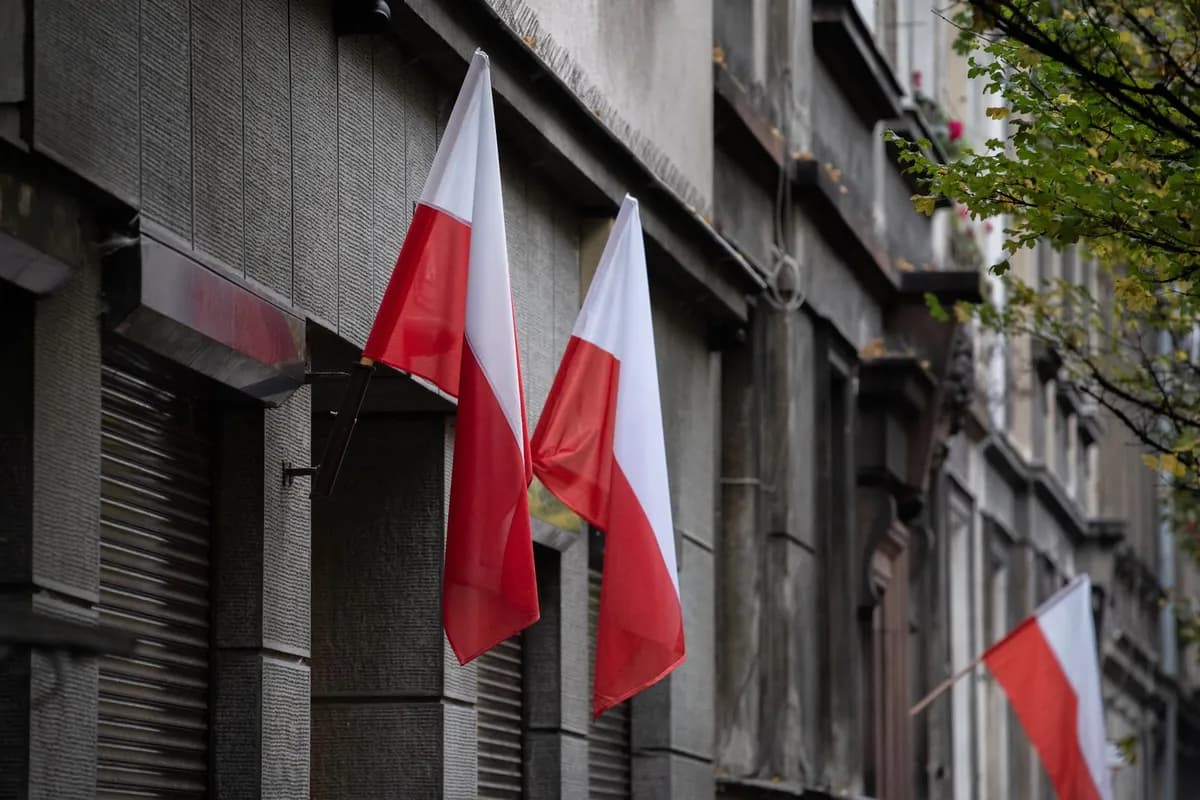
It's celebrated every year on 2 May, the same day as Polish Flag Day and the day before Constitution Day (3 May). It was established by the Polish parliament in 2002.