Piernik is Polish gingerbread: a dark, honey-sweetened, heavily spiced bake that can be a soft loaf cake layered with plum jam, a chocolate-covered heart from Toruń, or a tray of small iced cookies hanging from a Christmas tree. Unlike the crisp ginger snaps many English speakers grew up with, a good piernik is dense, aromatic and a little chewy, and it gets better after a few days rather than worse.
The word covers a whole family of bakes, and one city has made it famous. Toruń, the medieval town on the Vistula where Copernicus was born, has been baking gingerbread for more than six centuries, and Poles still associate the two so closely that "Toruń" and "piernik" almost come as a pair.
This guide explains what piernik is, where its name comes from, which spices go into it, how the old-Polish aged version works, and why Toruń matters so much. You'll also learn the gingerbread vocabulary, a few city adjectives, and one of the funniest idioms in Polish.
What Is Piernik?
At its core, piernik (said PYER-neek) is a sweet bake made with honey and a blend of warm spices. The Polish dictionary PWN defines it simply as a brown cake made with honey and przyprawy korzenne (pshih-PRAH-vih koh-ZHEN-neh), the Polish term for warm "root" spices like cinnamon, cloves and ginger. That honey base is why you'll sometimes see piernik described in English as Polish honey cake.
In practice, the word covers several things:
- Piernik as a cake: usually baked in a loaf tin or a tray, often sliced into layers and filled with plum jam, then glazed with chocolate.
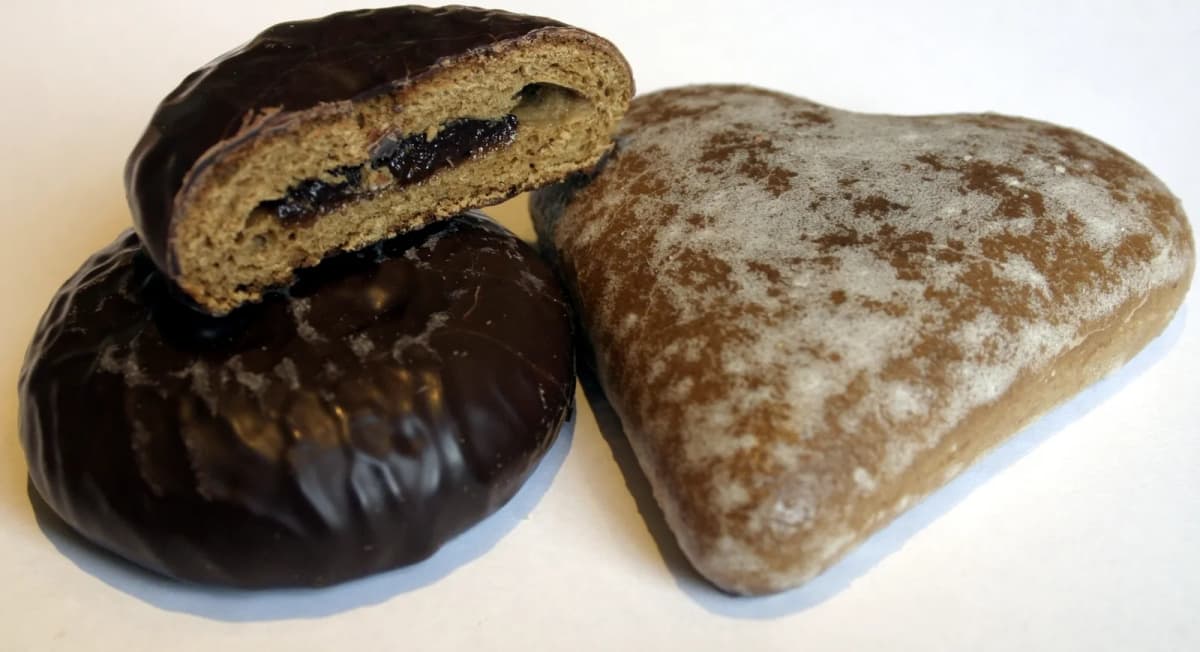
- Pierniki (pyer-NEE-kee), the plural: individual gingerbread pieces, like the filled, chocolate-coated rounds and hearts sold in Toruń.
- Pierniczki (pyer-NEECH-kee): small cut-out gingerbread cookies, decorated with icing, the classic Christmas cookie in Poland.
So when a Polish friend says they're baking gingerbread, it's worth asking which kind. The answer could be anything from a single family cake to two hundred tiny stars.
Where the Name Comes From
The word piernik comes from Old Polish pierny, meaning "peppery", the same root as modern pieprz (pyepsh), "pepper". Polish-language Wikipedia traces the name to this sense of something hot and spicy. It makes sense once you see the old spice lists: medieval gingerbread really did contain pepper, alongside the cinnamon and cloves that dominate today.
There's a nice lesson here for learners. In English, the bake is named after one spice, ginger. In Polish, it's named after the general idea of heat and spice. Neither language is wrong, but the two names tell you something about how each culture first experienced these expensive imported flavours.
The Spices in Polish Gingerbread
Spice is what separates Polish gingerbread from an ordinary honey cake. The official listing for Toruń gingerbread on Poland's list of traditional products, kept by the Ministry of Agriculture, names the spices used in the Toruń tradition:
| Spice | Polish | Pronunciation |
|---|---|---|
| Pepper | pieprz | pyepsh |
| Cinnamon | cynamon | tsih-NAH-mon |
| Cardamom | kardamon | kar-DAH-mon |
| Ginger | imbir | EEM-beer |
| Coriander | kolendra | koh-LEN-drah |
| Cloves | goździki | goz-JEE-kee |
| Nutmeg | gałka muszkatołowa | GAHW-kah moosh-kah-toh-WOH-vah |
| Star anise | anyż gwiaździsty | AH-nish gvyahzh-JEES-tih |
At home, most Polish cooks don't measure out eight separate spices. They buy a ready-mixed sachet labelled przyprawa do piernika (pshih-PRAH-vah doh pyer-NEE-kah), "spice for gingerbread", which you'll find in every Polish supermarket, especially in November and December. Blends vary by brand, but the warm, clove-heavy smell is unmistakable.
Fun detail for learners: goździki also means "carnations". Wiktionary traces goździk to gwóźdź (gvooshch), "nail", plus a diminutive ending: a "little nail", which is exactly what a dried clove looks like.
Piernik Staropolski: The Gingerbread That Waits
The most traditional home version is piernik staropolski (PYER-neek stah-roh-POL-skee), "old-Polish gingerbread". Its secret is time. Polish-language Wikipedia notes that the longest-lasting pierniki are the so-called maturing ones, pierniki dojrzewające (doy-zheh-VAH-yon-tseh), whose raw dough is left to rest in a cool place before baking. In factory production this resting period can last several weeks.
At home, families who make piernik staropolski often mix the dough in November, store it in a cool pantry or fridge, and bake it a few weeks before Christmas. During that time the honey and spices develop and the dough changes texture. After baking, the cake is usually cut into layers, spread with powidła (poh-VEED-wah), a thick plum butter, reassembled, and covered in chocolate.
A Simple Home Piernik Outline
Not every version needs weeks of patience. The quick everyday version is a soft loaf you can mix and bake in an afternoon. A typical outline looks like this:
- Base: flour, honey (or honey with some sugar), butter, eggs and a little milk or yogurt.
- Spice: a generous spoonful or two of przyprawa do piernika, sometimes with cocoa for colour.
- Raising: baking soda, for a soft, tender crumb.
- Extras: chopped nuts, raisins or candied orange peel, if you like them.
- Finish: a chocolate glaze, polewa czekoladowa (poh-LEH-vah cheh-koh-lah-DOH-vah), or a slice of plum butter through the middle.
Like the aged kind, an everyday loaf is better the next day, once the spices have settled. Wrapped well, it keeps for days, so it's an easy cake to make ahead of a busy holiday.
Torun Gingerbread: Seven Centuries of Baking
No place in Poland is more closely tied to gingerbread than Toruń (usually written Torun in English). The government listing records that the city's gingerbread history reaches back to the mid-14th century, based on the account books of the Teutonic Order, and that the first gingerbread baker known by name appears in 1380. Toruń was a wealthy trading town, which mattered: honey came from the surrounding forests, and expensive spices arrived along the trade routes.
Toruń's gingerbread makers are called piernikarze (pyer-nee-KAH-zheh), singular piernikarz, a word built from piernik plus the ending -arz, which Polish uses for many trades: piekarz (baker), lekarz (doctor), kucharz (cook).
From Medieval Bakers to the Kopernik Factory
The best-known Toruń gingerbread company today traces its roots to the 18th century. According to the company's own history, Johann (Jan) Weese became the owner of a gingerbread workshop in 1763. His grandson Gustav Weese turned it into a modern factory in 1824, a new factory building went up on Strumykowa Street in 1885, and a larger plant opened on the edge of Toruń in 1913, where production continues today.
After the Second World War, the factory was renamed Kopernik in 1951, after Toruń's most famous son, Nicolaus Copernicus. In 1991 it became a joint-stock company, Fabryka Cukiernicza Kopernik. If you've ever bought a box of Toruń gingerbread in a Polish shop abroad, there's a good chance it came from here.
One point that often gets confused online: Toruń gingerbread is not registered as an EU protected geographical indication. It is, however, on Poland's national list of traditional products, where "Pierniki z Torunia" was entered in February 2021.
Katarzynki and Carved Moulds
Toruń's most famous gingerbread shape is the katarzynka (kah-tah-ZHIN-kah), a cookie made of six joined medallions. Polish-language Wikipedia records that katarzynki were baked in 17th-century Toruń. The story behind the shape is a legend with several versions. In the best known, a baker's daughter called Kasia, short for Katarzyna, cut round pieces of dough with a tin cup because she had no proper moulds, and the rounds stuck together in the oven.
Then there are the moulds. Historic Toruń gingerbread was often pressed into carved wooden forms, formy piernikarskie (FOR-mih pyer-nee-KAR-skyeh), showing kings, queens, coats of arms, carriages and animals. These made gingerbread a decorative object as much as a sweet.
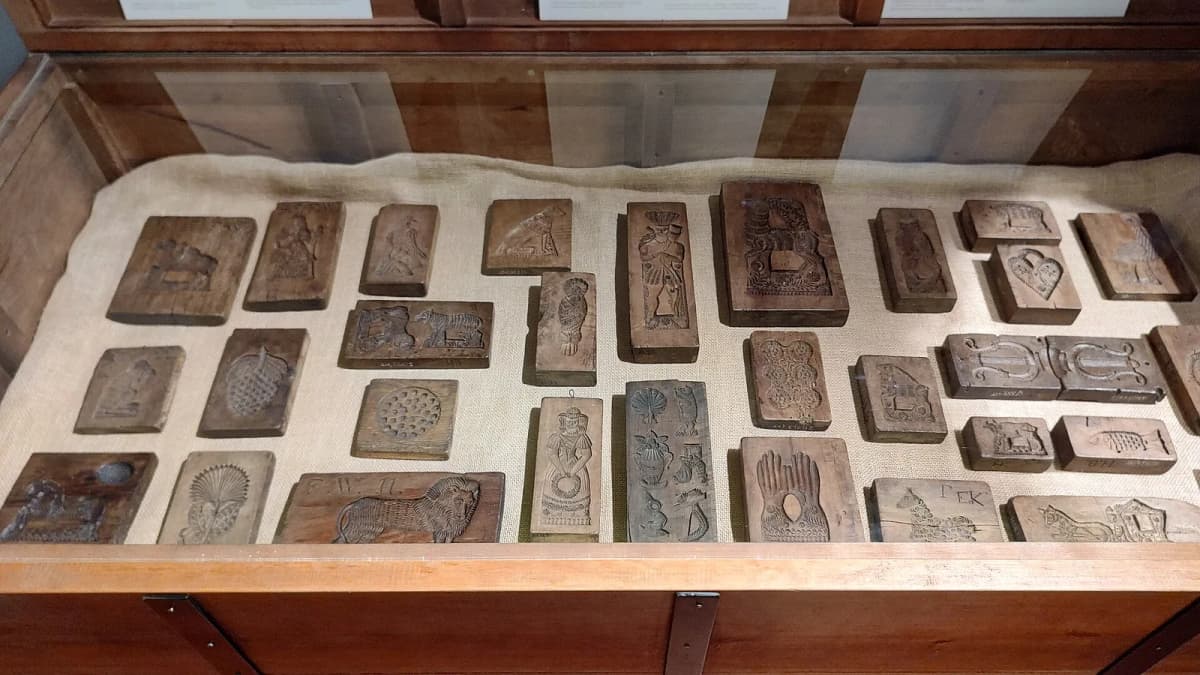
Photo: Ptjackyll, CC0, via Wikimedia Commons.
"The Four Best Things in Poland"
An old Polish saying, quoted on Polish-language Wikipedia, sums up Toruń's reputation: Cztery są najlepsze rzeczy w Polsce: toruński piernik, gdańska wódka, warszawski trzewik i krakowska panna. "There are four best things in Poland: Toruń gingerbread, Gdańsk vodka, a Warsaw shoe and a Kraków maiden." The wording varies from source to source, but piernik always makes the list.
The saying is also a neat grammar lesson. Polish turns city names into adjectives, and those adjectives agree with the noun's gender:
| City | Adjective | Noun and gender | Phrase |
|---|---|---|---|
| Toruń | toruński | piernik (masculine) | toruński piernik |
| Gdańsk | gdańska | wódka (feminine) | gdańska wódka |
| Warszawa | warszawski | trzewik (masculine) | warszawski trzewik |
| Kraków | krakowska | panna (feminine) | krakowska panna |
Masculine nouns take -ski, feminine nouns take -ska. You already know this pattern from surnames like Kowalski and Kowalska, and now you know it from gingerbread too.
Visiting Toruń's Gingerbread Museums
If you visit Toruń, you can learn the history of Polish gingerbread in person. The city has two gingerbread museums with different personalities.
The Museum of Toruń Gingerbread (Muzeum Toruńskiego Piernika) is a branch of the Toruń Regional Museum, located at ul. Strumykowa 4 in the former Weese factory building. It has exhibitions on the history of the craft, including historic moulds, and runs gingerbread-baking workshops, which are ticketed separately.
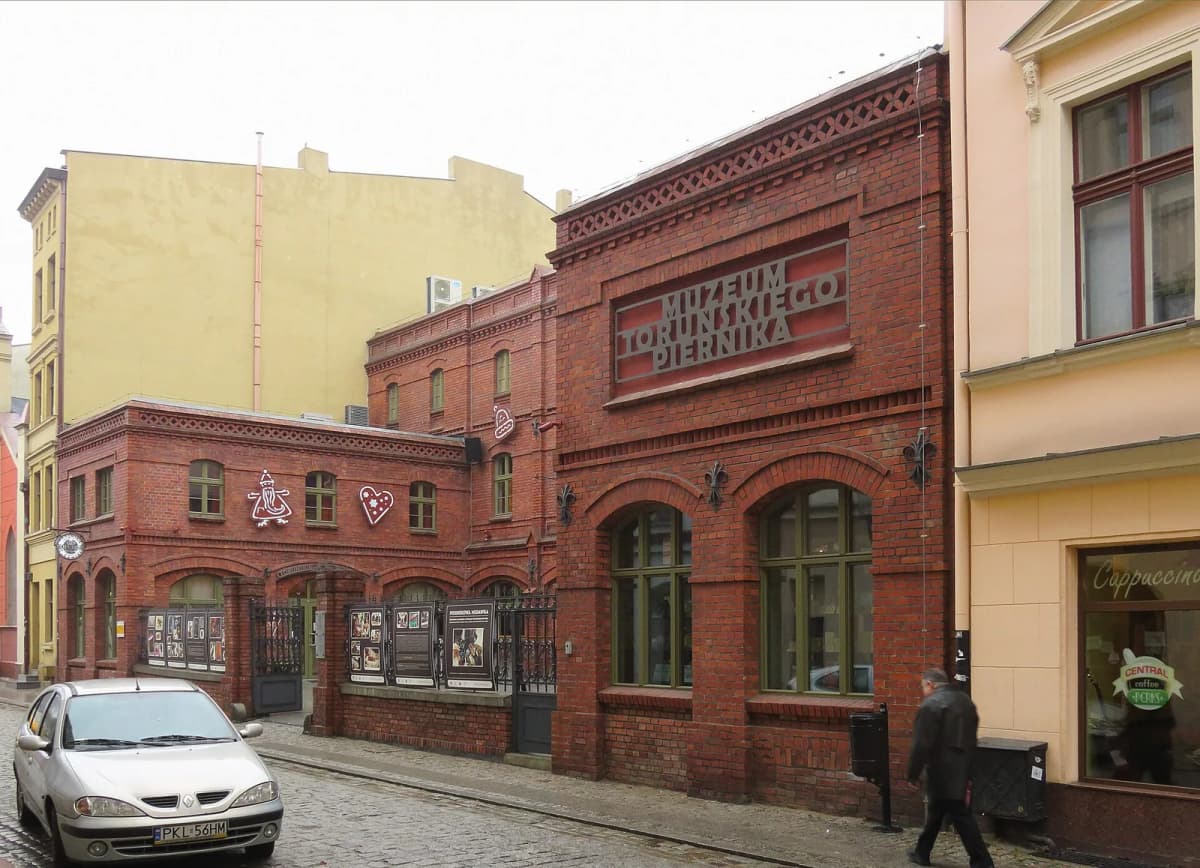
Photo: Аимаина хикари, CC0, via Wikimedia Commons.
The Living Museum of Gingerbread (Żywe Muzeum Piernika), at ul. Rabiańska 9, opened in 2006 in an old granary. It's built around an interactive show where visitors make their own gingerbread with traditional moulds. Opening hours, booking rules and prices change, so check both museums' official websites before you go.
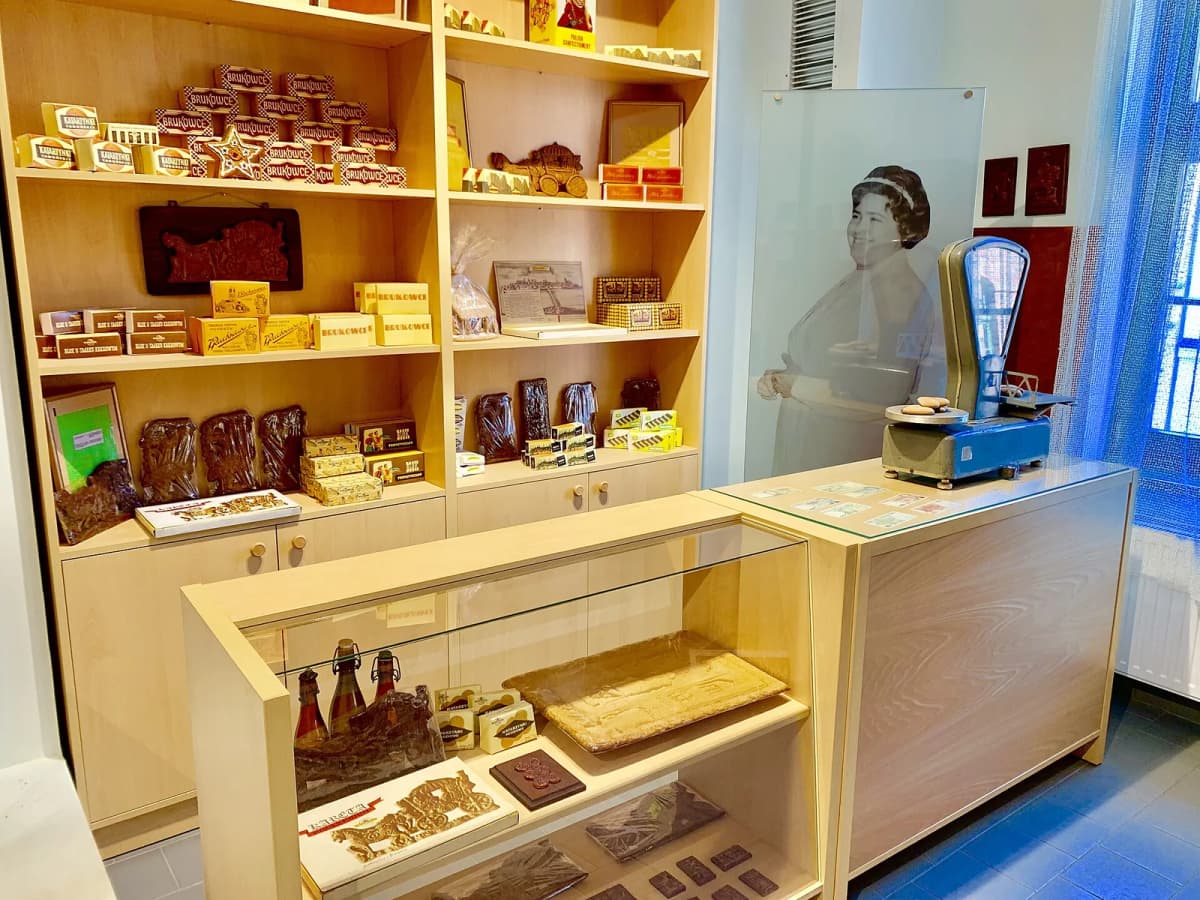
Photo: Maks Siegmund, CC BY-SA 4.0, via Wikimedia Commons.
Toruń's medieval old town is also a UNESCO World Heritage Site, so even without the gingerbread it's one of the most rewarding cities in Poland for a day trip. With it, you'll leave carrying a bag that smells of cloves.
Piernik at Christmas
Gingerbread is eaten year-round in Poland, but December is its season. Families bake small pierniczki early in the month and decorate them with icing; our guide to traditional Polish cookies covers those cut-out gingerbread cookies alongside kołaczki and faworki. Polish-language Wikipedia notes that pierniki start out firm and soften as they absorb moisture, which is why many people bake them weeks ahead.
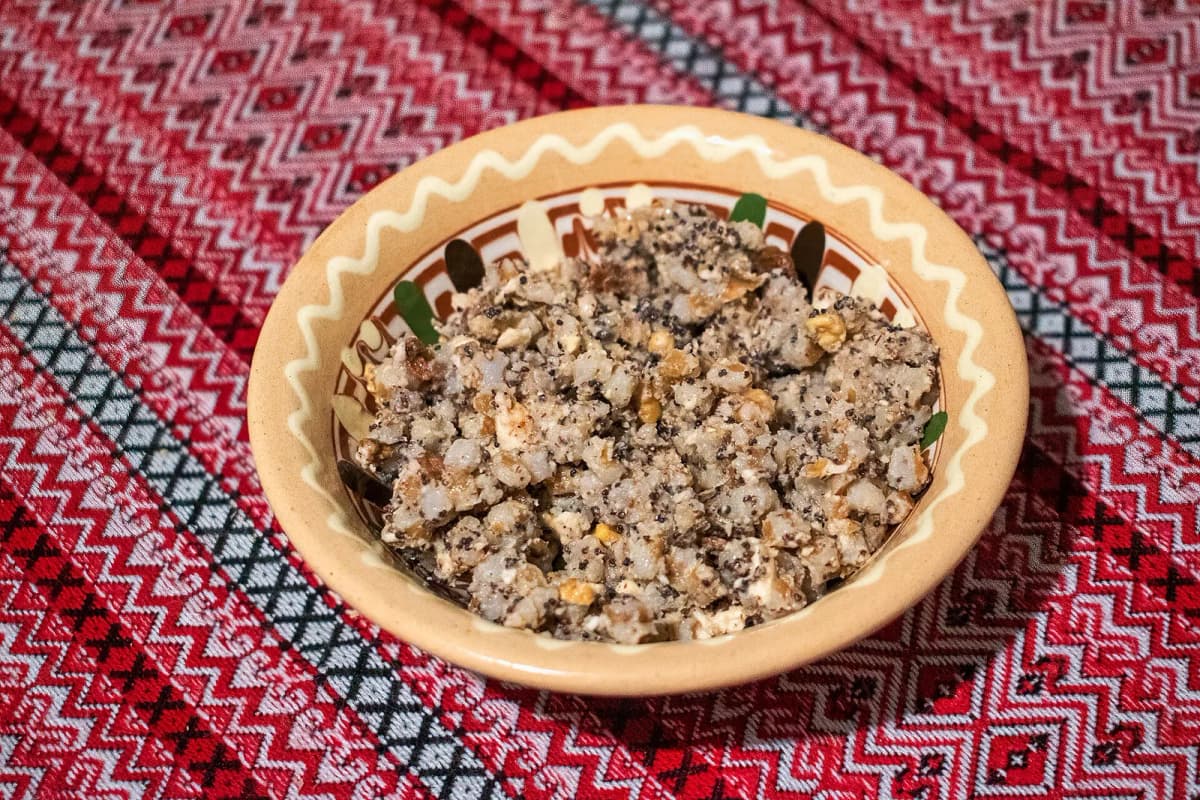
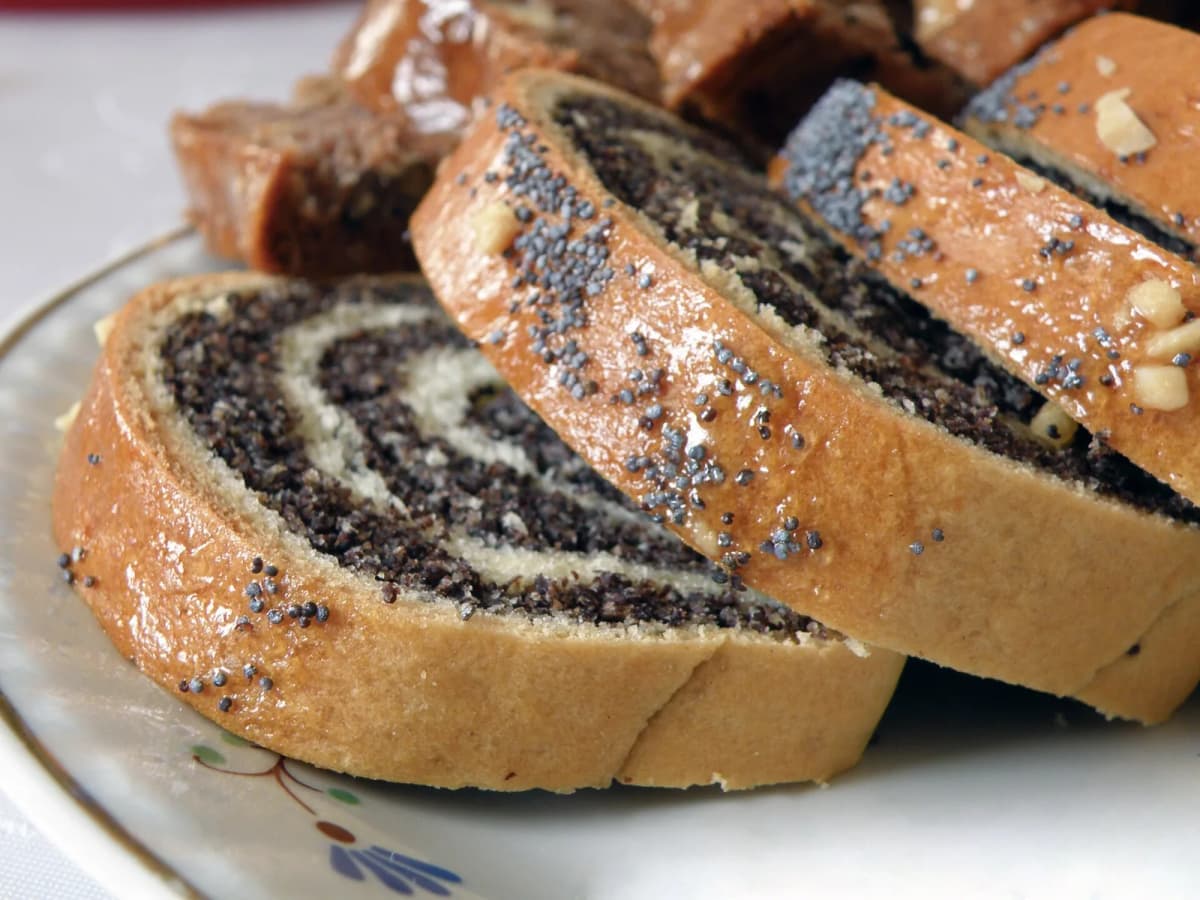
On Christmas Eve, a slice of gingerbread often joins the sweet course with other traditional cakes. The most common companion is the poppy seed roll explained in our guide to makowiec, and in eastern Poland the table may also hold the wheat-and-poppy dish described in our guide to kutia. For the full menu and the customs around it, see our explainer on Wigilia, the Polish Christmas Eve.
Gingerbread also makes a popular gift in December: a box of Toruń pierniki, a decorated heart, or a homemade piernik wrapped in paper. If you're invited to a Polish home over the holidays, it's a safe and welcome thing to bring.
Piernik in Polish Idioms
Gingerbread has found its way into everyday Polish speech, which makes it a fun word to know beyond the kitchen.
Co ma piernik do wiatraka? (tsoh mah PYER-neek doh vyah-TRAH-kah) literally means "What does gingerbread have to do with a windmill?" Polish Wiktionary defines it as an expression of the conviction that two things have no connection at all. It's the Polish way of saying "What's that got to do with anything?" when someone changes the subject to something completely unrelated.
Stary piernik (STAH-rih PYER-neek), "old gingerbread", is a teasing and somewhat rude way to describe an old man, a bit like "old fogey" or "old codger". The PWN dictionary marks this sense of piernik as pejorative, so it's one to recognise rather than use, unless you're joking with someone who'll take it well.
Piernik Vocabulary: Words to Know
| Polish | Pronunciation | English |
|---|---|---|
| piernik | PYER-neek | gingerbread (cake) |
| pierniczki | pyer-NEECH-kee | small gingerbread cookies |
| piernikarz | pyer-NEE-kahsh | gingerbread baker |
| miód | myoot | honey |
| przyprawy korzenne | pshih-PRAH-vih koh-ZHEN-neh | warm spices |
| lukier | LOO-kyer | icing |
| powidła | poh-VEED-wah | plum butter |
| polewa czekoladowa | poh-LEH-vah cheh-koh-lah-DOH-vah | chocolate glaze |
| forma piernikarska | FOR-mah pyer-nee-KAR-skah | gingerbread mould |
| dojrzewać | doy-ZHEH-vahch | to mature, ripen |
If you're ordering in a shop, Poproszę toruńskie pierniki (poh-PROH-sheh toh-ROON-skyeh pyer-NEE-kee) means "Toruń gingerbread, please". Notice that toruński changes to toruńskie to match the plural noun, the same agreement pattern you saw in the saying above.
Frequently Asked Questions
What is piernik in English? Piernik is Polish gingerbread. Depending on the form, it can be a honey-spice loaf cake, individual chocolate-covered gingerbread pieces, or small decorated cookies, which are usually called pierniczki.
Is piernik the same as Polish honey cake? Piernik is a honey cake, since honey is one of its main ingredients, so "Polish honey cake" is a fair description. What makes it piernik rather than a plain honey cake is the strong blend of warm spices.
Why is Toruń famous for gingerbread? Toruń has a gingerbread tradition going back to the 14th century, a historic factory founded in the 18th century that still produces it, and two museums devoted to it. The Kopernik factory is named after Copernicus, who was born in the city.
How do you pronounce piernik? Say PYER-neek. The ie sounds like "ye", and the stress falls on the first syllable because the word has only two.
What does "co ma piernik do wiatraka" mean? It means "What does that have to do with anything?" Literally, "What does gingerbread have to do with a windmill?"
A Sweet Way into Polish
Piernik packs a surprising amount of Poland into one cake: medieval trade routes, a city of brick Gothic churches, a factory named after an astronomer, a legend about a baker's daughter, and an idiom you can use the next time a conversation goes off the rails. Learning its vocabulary is a good reminder that Polish words often carry a story, if you look at where they came from.
Toruń, Gdańsk, Warszawa, Kraków: city names change form constantly in Polish. To practise them, try our reference on Polish cities:
Polish Cities: Names and GrammarFeatured photo: Marcin Floryan, CC BY 2.5, via Wikimedia Commons.