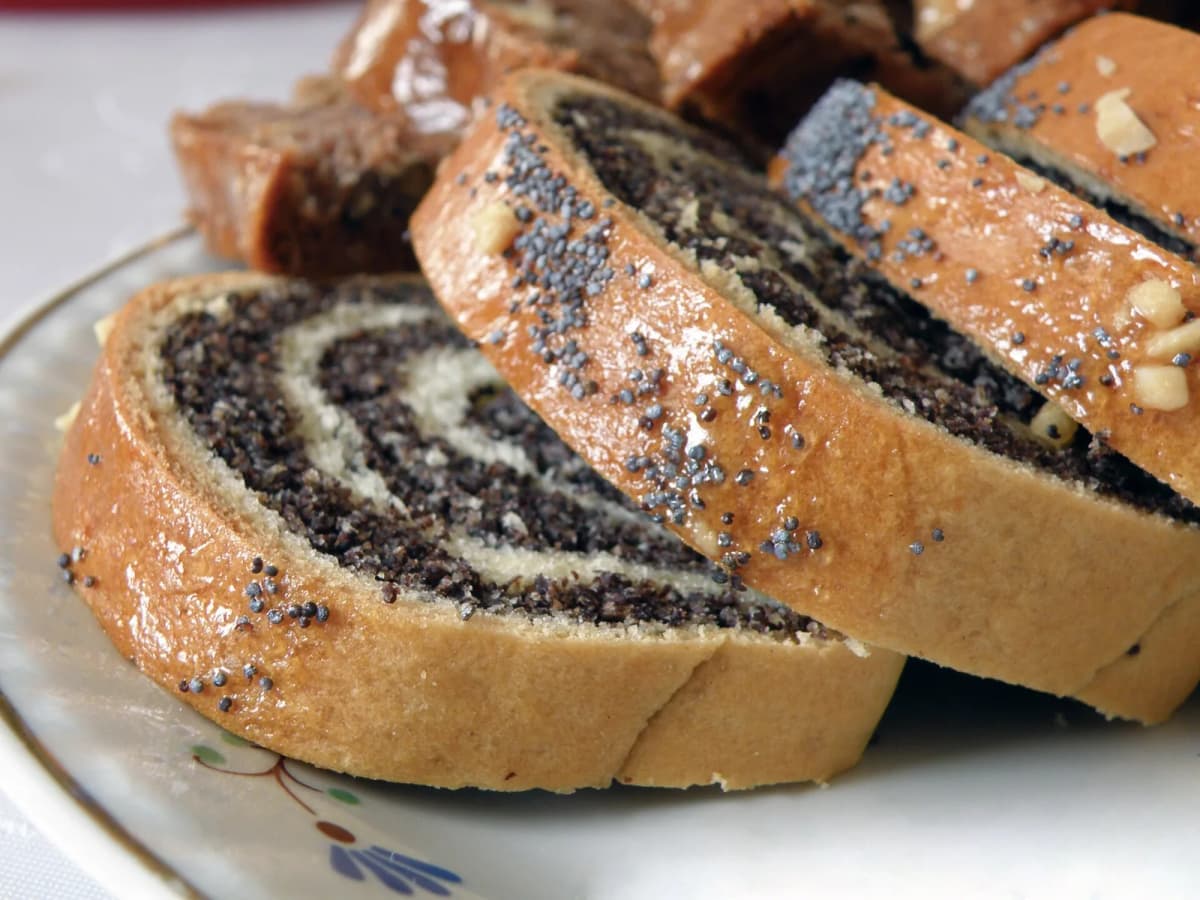
Makowiec is the Polish poppy seed roll: a soft, sweet yeast dough rolled around a thick, dark filling of ground poppy seeds, honey, raisins and nuts, then sliced to show a striking black-and-cream spiral. In Poland it's one of the cakes that tells you Christmas has arrived. Walk into any pastry shop in December and you'll see whole logs of it stacked behind the glass, glazed with white icing and scattered with candied orange peel.
For many families abroad, this is also the cake that grandma made, the one whose recipe lives on a stained index card and whose filling took a whole afternoon to grind. Its flavour is hard to describe if you've never tried it: nutty, honeyed, a little bitter, and quite unlike anything in a typical American or British bakery.
This guide explains what this cake is, how to pronounce it, what goes into the filling, why poppy seeds matter so much at a Polish Christmas, and how the cake compares with its cousins across Central Europe. Along the way you'll pick up a handful of Polish kitchen words and one very useful grammar trick.
What Is Makowiec, Exactly?
At its simplest, makowiec is a cake built around mak (mahk), the Polish word for poppy and poppy seed. The Polish-language Wikipedia entry describes it as a cake layered with a mass of ground poppy seeds, and notes that a yeast dough is by far the most common base. The English Wikipedia article on poppy seed roll describes the same thing from the outside: a roll of sweet yeast bread with a dense, rich, bittersweet poppy seed filling, eaten at Christmas and Easter across Central and Eastern Europe.
The classic Polish shape is the roll, or strucla (STROO-tslah), so you'll also hear strucla z makiem (STROO-tslah z MAH-kyem), "roll with poppy seed". Flat versions baked in a tray exist too. Polish-language Wikipedia notes that the flat form is sometimes called makownik (mah-KOV-neek), though in everyday speech most people simply say makowiec for both.
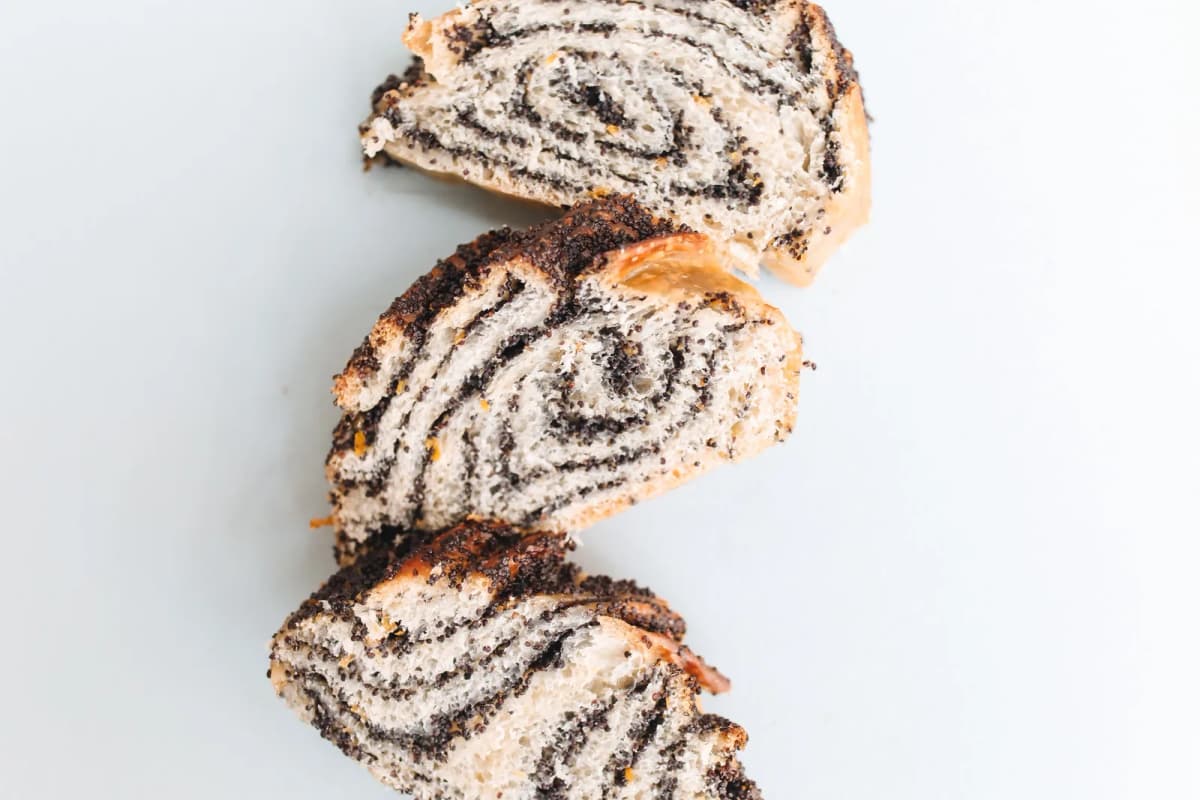
Photo: Polina Tankilevitch on Pexels.
What makes a good one? Ask three Polish bakers and you'll get three answers, but most agree on the basics: a thin, tender layer of dough, a generous filling that's moist rather than dry, and a tight spiral with no big gaps. The ideal slice is more poppy seed than bread.
How to Pronounce Makowiec
Makowiec is said mah-KOH-vyets. Three things to notice:
- The w in Polish is always pronounced like an English v.
- -iec at the end sounds like "yets", with the i softening the consonant before it.
- As with almost every Polish word, the stress falls on the second-to-last syllable: ma-KO-wiec.
A Grammar Bonus: Makowiec Becomes Makowca
Here's where the cake's name quietly teaches you something useful about Polish. It's a masculine noun, and when its ending changes, the e in the last syllable disappears. Linguists call this a "fleeting e", and it shows up in hundreds of everyday words.
| Form | Polish | Example |
|---|---|---|
| Nominative (dictionary form) | makowiec | To jest makowiec. (This is a poppy seed roll.) |
| Genitive | makowca | Poproszę kawałek makowca. (A piece, please.) |
| Accusative | makowiec | Lubię makowiec. (I like it.) |
| Plural | makowce | Babcia upiekła dwa makowce. (Grandma baked two.) |
So if you're ordering a slice in a Polish cukiernia (tsoo-KYER-nyah), a pastry shop, the phrase you want is Poproszę kawałek makowca (poh-PROH-sheh kah-VAH-wek mah-KOV-tsah). The genitive appears after words of quantity like kawałek (a piece), and that same pattern works for any food you'd ask for by the piece or slice.
Inside the Swirl: The Poppy Seed Filling
The filling, masa makowa (MAH-sah mah-KOH-vah), is the heart of the cake. Polish-language Wikipedia lists the usual additions to the ground poppy seeds: walnuts, almonds, soaked raisins and candied orange or lemon peel, with regional versions adding hazelnuts, prunes or even pears. Many recipes also fold in butter, eggs or beaten egg whites, which lighten the mixture.
| Ingredient | Polish | Pronunciation |
|---|---|---|
| Poppy seeds | mak | mahk |
| Honey | miód | myoot |
| Raisins | rodzynki | roh-JIN-kee |
| Walnuts | orzechy włoskie | oh-ZHEH-hih VWOS-kyeh |
| Almonds | migdały | meeg-DAH-wih |
| Candied orange peel | skórka pomarańczowa | SKOOR-kah poh-mah-rahn-CHOH-vah |
| Butter | masło | MAH-swoh |
| Egg whites | białka | BYAHW-kah |
There's also a handy collective word for the dried fruit and nuts: bakalie (bah-KAH-lyeh). It covers raisins, figs, dates, nuts and candied peel, and it's the word you'll see on bags in Polish supermarkets every December.
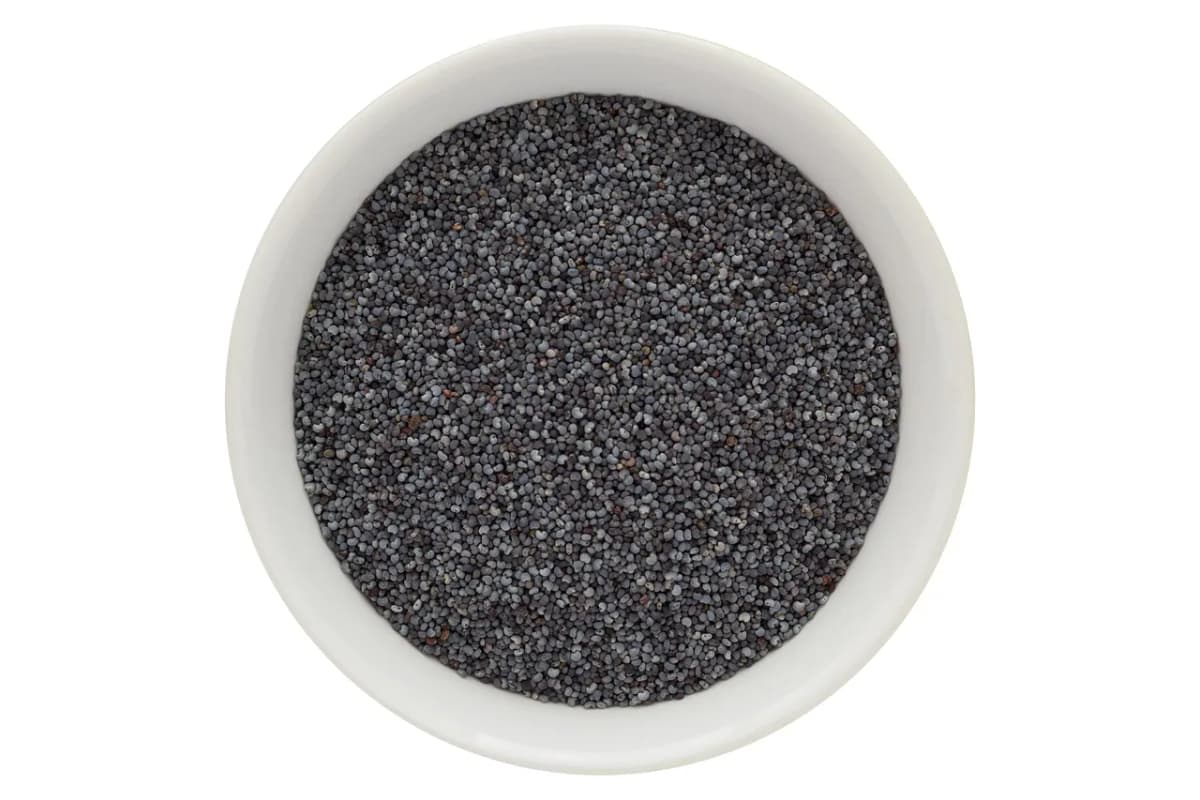
Photo: S-D-Brath on Pixabay.
Why the Poppy Seeds Are Ground
Whole poppy seeds are tiny, hard and slippery, so they won't hold together as a filling. Traditional recipes soften them first, usually by pouring hot water or milk over them and leaving them to swell, then drain them and grind them two or three times. The grinding releases their oil and turns the seeds into a dark, almost paste-like mass with that deep nutty taste.
In older kitchens this was done with a hand meat grinder fitted with a fine plate, or in a makutra (mah-KOO-trah), a heavy earthenware bowl with a grooved inside and a wooden pestle, used for grinding poppy seeds and creaming egg yolks with sugar. Today many home bakers use a dedicated poppy seed grinder or a food processor, and plenty skip the job entirely by buying ready-made masa makowa in a can or jar, a staple on Polish shop shelves before Christmas.
How Makowiec Is Made: A Traditional Outline
This isn't a full recipe, but it shows the stages every classic version goes through:
-
Make the yeast dough. Flour, warm milk, yeast, sugar, egg yolks and butter are worked into a soft, slightly rich dough, then left to rise. In Polish this is ciasto drożdżowe (CHAHS-toh drozh-JOH-veh), from drożdże (DROZH-jeh), "yeast".
-
Prepare the filling. The ground poppy seeds are cooked briefly with butter, honey and sugar, then mixed with bakalie and, often, beaten egg whites.
-
Roll and fill. The dough is rolled into a rectangle, spread with filling right to the edges except one strip, and rolled up tightly like a Swiss roll.
-
Rise and bake. The roll rests again, then bakes until golden. Many cooks wrap it loosely in baking paper so it keeps its shape.
-
Finish. Once cool, it's topped with lukier (LOO-kyer), a thin white icing, and sprinkled with orange peel or chopped nuts.
The famous problem is cracking. If the dough is rolled too thick or the filling is too wet, the roll can split along the top or leave a gap between dough and filling. Every family seems to have a theory about how to prevent this, which is half the fun of baking it together.
Why Poppy Seeds at Christmas?
Poppy seeds aren't on the Polish Christmas table by accident. Polish-language Wikipedia notes that, in folk belief, eating poppy seed on Christmas Eve was thought to bring happiness and protect against evil. The countless tiny seeds also made poppy a natural symbol of abundance and fertility, a wish that the coming year would bring as much good fortune as there are seeds in the bowl.
Poppy also had a quieter, more solemn side. Because the plant was associated with sleep, older traditions linked it to the boundary between the living and the dead. Christmas Eve in Poland has long been a night when departed family members are remembered, and dishes made with poppy seeds, honey and dried fruit carried echoes of that remembrance.
You don't need to believe any of this to enjoy a slice, of course. Today most Poles simply eat it at Christmas because it tastes like Christmas, the way gingerbread or mince pies do elsewhere. But knowing the background makes the cake feel a little richer.
Makowiec on the Christmas Eve Table
Makowiec belongs above all to Wigilia (vee-GEE-lyah), Christmas Eve. The evening begins when families break and share the thin wafer called opłatek, which our guide to the opłatek Christmas wafer tradition explains in detail. Then comes the meatless supper, with fish, beetroot soup, pierogi and, at the end, the sweet course.
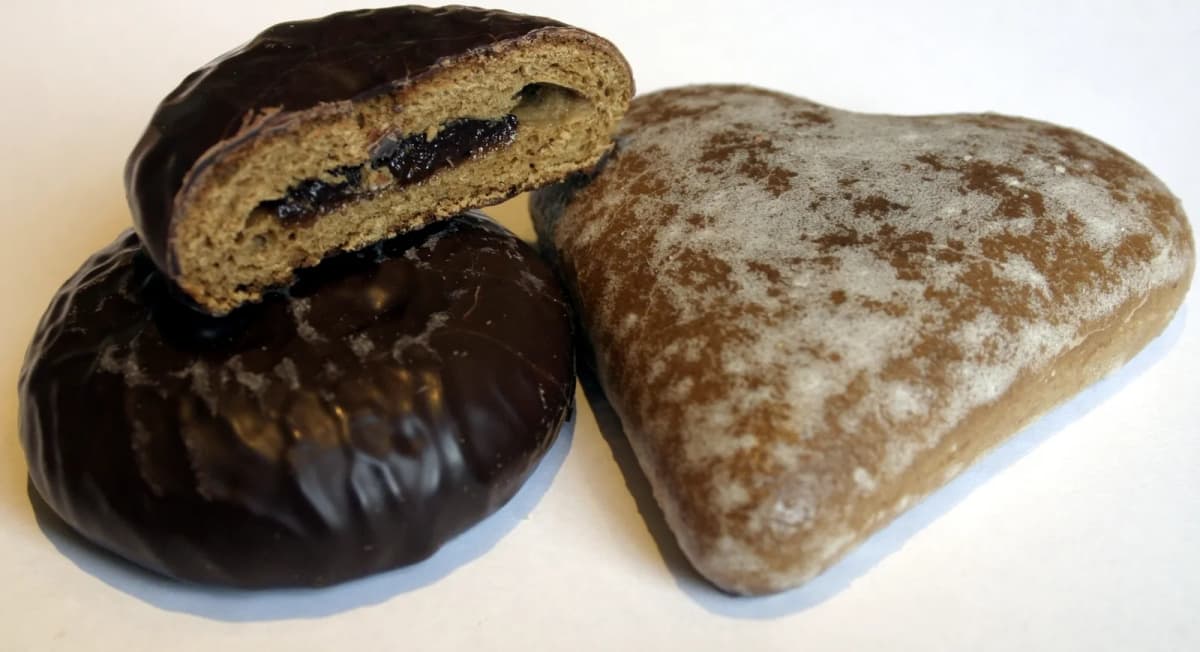
That sweet course is where the poppy seed roll shines. It often sits beside sernik and piernik, and in many homes a plate of small pastries as well; our guide to traditional Polish cookies covers the gingerbread pierniczki and other treats that share the table. For the full menu and its symbolism, see our explainer on Wigilia, the 12-dish Polish Christmas Eve.
Makowiec isn't only a Christmas cake, though. Polish-language Wikipedia notes that it's also traditional at Easter, and it was baked for carnival, Pentecost and family celebrations too. Interestingly, the same source says it was once mainly a dish of wealthier households, and in some regions it only became widespread after the Second World War, carried partly by families who resettled from eastern Poland.
Other Polish Poppy Seed Dishes
Makowiec has company. Poppy seed turns up in several other Christmas Eve dishes, each tied to a different part of Poland:
- Makówki (mah-KOOF-kee): a Silesian dessert of bread rolls or rusks soaked in milk and layered with a sweet poppy seed mixture, honey, dried fruit and nuts. In Zagłębie, Poznań and Łódź the same idea goes by makiełki (mah-KYEW-kee).
- Kluski z makiem (KLOOS-kee z MAH-kyem), "noodles with poppy seed": Polish-language Wikipedia lists this as another name in the same family, where noodles take the place of bread.
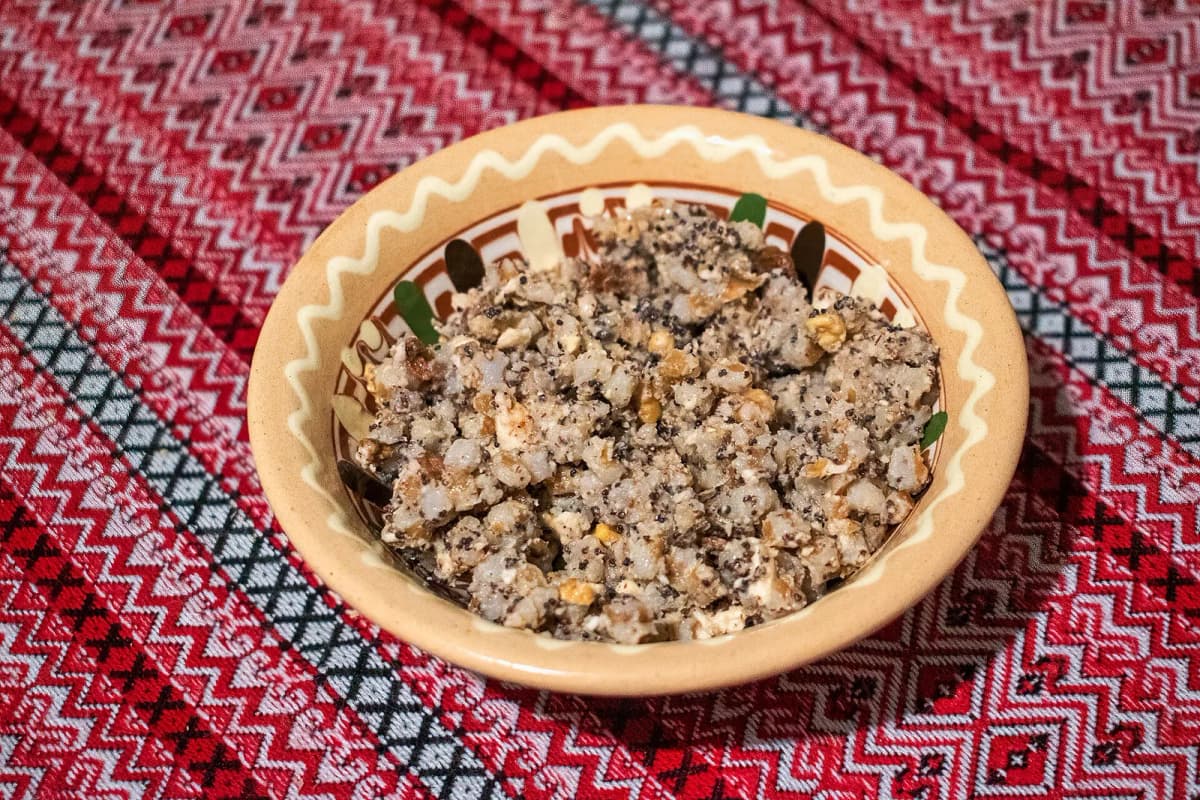
- Kutia (KOO-tyah): wheat berries with poppy seed, honey, nuts and dried fruit, a dish from Poland's eastern regions that's especially common around Białystok and Lublin.
If you only know the roll, these are worth looking out for. They share the same flavour family but feel completely different: makówki are soft and spoonable, kluski z makiem are almost like a sweet pasta, and kutia has a chewy, grainy bite.
Makowiec Variations
Even within Poland, the cake comes in several styles:
- Classic rolled version: yeast dough, a thick spiral of filling, white icing. The version most people picture.
- Flat tray cake or makownik: dough and filling layered in a tray, sometimes topped with crumble, called kruszonka (kroo-SHON-kah).
- Makowiec japoński (yah-POHN-skee), "Japanese-style": a modern home-baking favourite made without a yeast dough. Recipes typically combine poppy seed with beaten egg whites and semolina or grated apple.
- Chocolate-glazed versions: a newer twist, with a chocolate glaze instead of white icing.
Shop-bought versions also vary a lot in how much filling you get. In a good cukiernia, the dough is barely a thin line between thick bands of poppy seed; cheaper versions can be more bread than filling. If you're buying one, look at the cut end before you choose.
Poppy Seed Roll Across Central Europe
Poland isn't the only country that loves a poppy seed roll at Christmas. The same idea runs right across Central and Eastern Europe, with each country giving it its own name:
| Country or language | Name |
|---|---|
| Poland | makowiec, strucla z makiem |
| Hungary | mákos bejgli |
| Slovakia | makovník |
| Czech Republic | makový závin |
| Austria and Germany | Mohnstrudel |
| Croatia and Serbia | makovnjača |
| Slovenia | makova potica |
| Ukraine | makivnyk |
Look at how many of those names start with mak or mák. It's the same Slavic root for poppy, and spotting it is a nice reminder of how closely related many Central European languages are. In Jewish baking traditions, a similar pastry is known as a "mohn roll", from the German word for poppy.
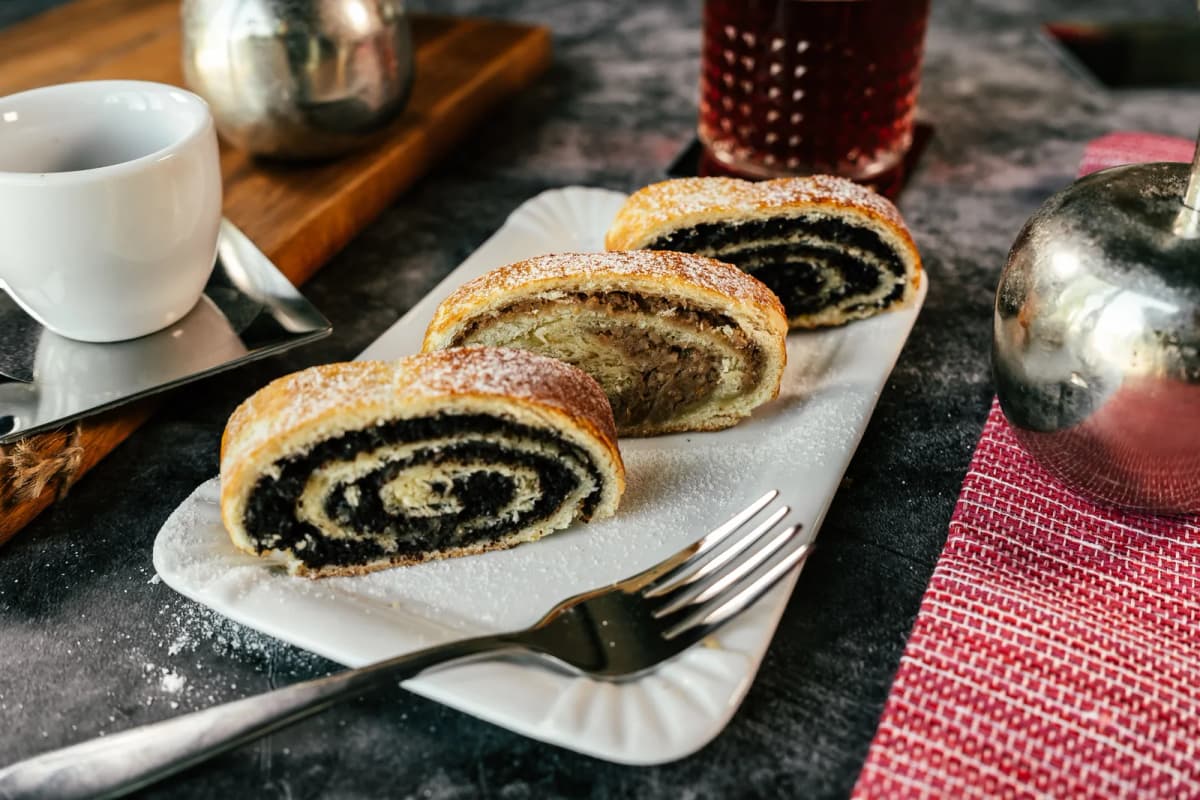
Photo: Kovacs Apor on Pexels.
Many of these countries also bake a walnut version alongside the poppy seed one, and Hungarian bejgli in particular is usually served as a pair. In Poland, a walnut roll is simply strucla z orzechami (STROO-tslah z oh-ZHEH-hah-mee), but for most Polish families the poppy seed version is the one that matters at Christmas.
Buying or Ordering Makowiec
If you're in Poland in December, makowiec is easy to find: pastry shops, bakeries and supermarket bakery counters all sell it, either whole or by weight. Polish shops abroad usually stock it in the weeks before Christmas, along with canned poppy seed filling for anyone who wants to bake at home.
A few phrases for the counter:
- Czy jest makowiec? (chih yest mah-KOH-vyets) "Do you have any?"
- Poproszę cały makowiec. (poh-PROH-sheh TSAH-wih mah-KOH-vyets) "A whole one, please."
- Poproszę pół kilo makowca. (poh-PROH-sheh poow KEE-loh mah-KOV-tsah) "Half a kilo, please."
Notice the genitive again in the last example: after pół kilo, "half a kilo", makowiec becomes makowca. Polish bakeries really do sell cake by weight, so this phrase is genuinely useful. If you're curious how this compares with Poland's other everyday bakery favourite, our guide to sernik, the Polish cheesecake explains how Poles buy and eat that one.
Frequently Asked Questions
What does makowiec taste like? Makowiec tastes nutty, honeyed and slightly bitter, with the poppy seeds giving a dense, almost marzipan-like texture. Raisins and orange peel add sweetness and a citrus note, while the yeast dough keeps it soft.
Is makowiec the same as poppy seed roll? Yes. Poppy seed roll is the usual English name for it, and the rolled form is also called strucla z makiem in Polish. Flat tray versions are still called makowiec by most people.
When do Poles eat makowiec? Mostly at Christmas, especially on Christmas Eve, and also at Easter. Bakeries sell it year-round in smaller quantities, but December is its season.
How do you say "a piece of makowiec" in Polish? Say kawałek makowca (kah-VAH-wek mah-KOV-tsah). After words of quantity, Polish uses the genitive case, and makowiec loses its e to become makowca.
Can you buy makowiec outside Poland? Often, yes. Polish delis and bakeries in cities with Polish communities usually sell it around Christmas, and canned poppy seed filling makes home baking much easier.
Keep Learning with Your Sweet Tooth
Makowiec is a lovely example of how food carries a culture: one cake holds old beliefs about luck and remembrance, regional names from across Poland, cousins in half a dozen neighbouring countries, and a grammar lesson hiding in its own name. The next time you see a slice behind the glass, you'll know exactly how to ask for it, and why it's there.
To get comfortable with the genitive case you used for kawałek makowca and pół kilo makowca, try our quick reference:
The Genitive Case in PolishFeatured photo: Alina Zienowicz (Ala_z), CC BY 3.0, via Wikimedia Commons.