Golabki are Polish cabbage rolls: soft cabbage leaves wrapped around minced pork, rice and onion, then baked or simmered slowly in tomato sauce. In Polish the word is gołąbki (gaw-WOMP-kee), which literally means "little doves" or "little pigeons", and it's one of those dishes that almost every Polish family is quietly convinced it makes best.
If you grew up in a Polish-American family, you may know them as golumpki, galumpki or just "stuffed cabbage". This guide to golabki explains where the name comes from, how to pronounce it properly, why one roll is a gołąbek but a plateful is gołąbki, and how the dish changes from a Sunday lunch to a meatless Christmas Eve version.
Because you'll want to eat them as well as talk about them, there's a full classic golabki recipe in the middle, plus the vocabulary to order golabki in Poland without pointing at the menu.
What Is Golabki?
Golabki is the English spelling of gołąbki, a Polish dish of cabbage leaves stuffed with a mixture of minced meat, a starch and onion. The classic filling is pork (sometimes mixed with beef) and white rice, though older and rural recipes use buckwheat or barley groats instead of rice. The rolls are packed tightly into a pot or baking dish, covered with stock and sauce, and cooked until the cabbage is silky and the filling is tender.
In Poland, golabki sit in the same comfort-food family as bigos, the slow-cooked hunter's stew, and pierogi: home cooking, not restaurant theatre. You'll find them on Sunday tables, at weddings, in the freezer cabinet at the supermarket and on the menu of almost every milk bar in the country.
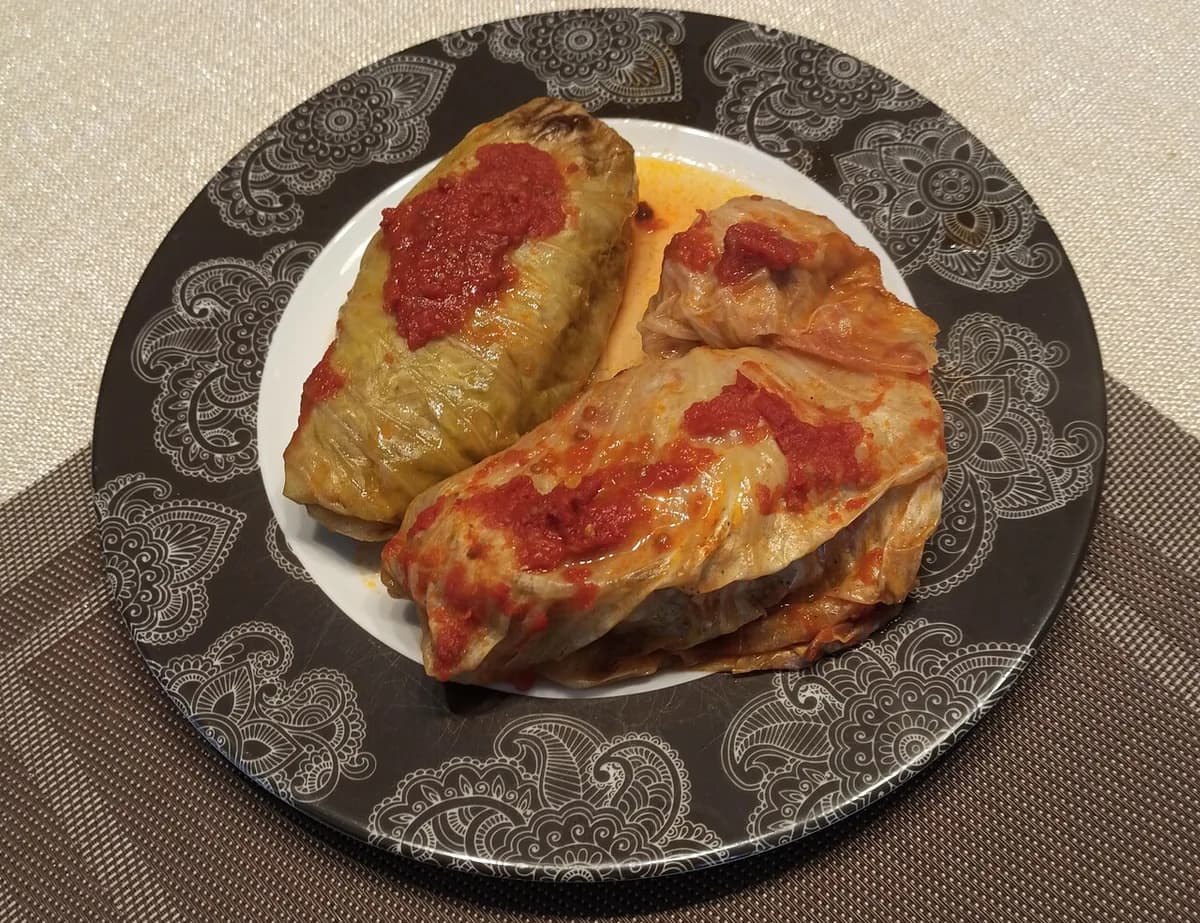
Golabki are served hot, usually in tomato sauce, though a creamy mushroom sauce is a much-loved alternative.
Why "Little Doves"? Where the Name Comes From
The Polish word for a pigeon or dove is gołąb (GAW-womp). Add the diminutive ending -ek and you get gołąbek, "little pigeon", and in the plural, gołąbki. Our guide to Polish diminutives shows how similar endings turn kot (cat) into kotek and Anna into Ania.
The most common explanation is shape. A plump cabbage roll sitting in a dish looks a little like a small bird with its wings folded, and the Russian-German linguist Max Vasmer accepted that bird-shape origin. The Polish linguist Marek Stachowski was less convinced: he argued the bird connection is semantically odd and suggested the word may be an older borrowing, possibly from an Oriental word for cabbage, later reshaped by folk etymology to sound like "little pigeons".
Nobody has settled the question, but the bird is how Poles hear the word today, which is why gołąbek is also an old-fashioned term of endearment, like "my little dove".
The King Kazimierz story: a legend, not history
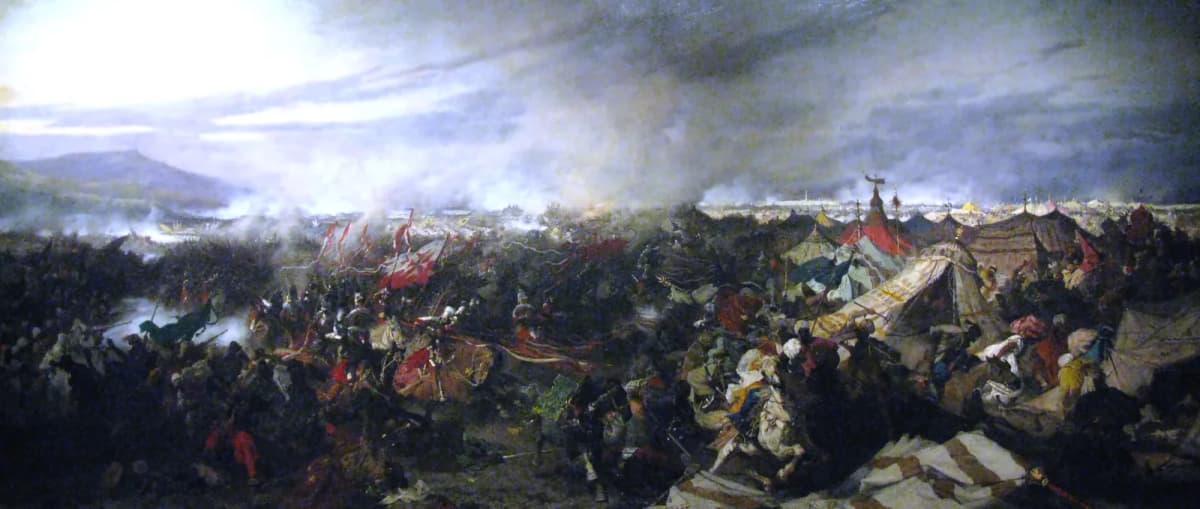
You'll often read that golabki won a war. In the story, King Kazimierz IV Jagiellończyk (Casimir IV) fed his army hearty cabbage rolls before a battle against the Teutonic Knights near Malbork Castle during the Thirteen Years' War (1454–1466), and the soldiers' strength carried the day.
Treat this as legend. There's no historical evidence for it, and retellings don't even agree on which battle it was. Kazimierz did take Malbork in 1457, but he bought the castle from unpaid mercenaries rather than storming it. It's a fun story for the dinner table, not for a history essay.
How to Pronounce Gołąbki (and All Those American Spellings)
The written word looks harder than it is. Two letters do all the work: ł and ą.
Sound by sound
| Part | Sounds like | Why |
|---|---|---|
| go | gaw | Polish o is short, like "o" in British "hot" |
| ł | w | Polish ł is an English "w", not an "l" |
| ą (before b) | om | The nasal ą becomes "om" before b and p |
| b (before k) | p | b loses its voice next to k |
| ki | kee | Short "ee" |
Put together: gaw-WOMP-kee, with the stress on the middle syllable, as almost always in Polish. One roll, gołąbek, is gaw-WOM-bek. The b stays a b there because a vowel follows it.
The most common English mispronunciation is "go-LAB-kee", which reads the ł as an "l" and ignores the nasal vowel. If you've ever wondered why kiełbasa is said "kyew-BAH-sah", it's the same ł; our guide on how to pronounce kielbasa covers that letter in more detail.
Golumpki, galumpki and other Polish-American spellings
Polish immigrants who arrived in the US in the late 19th and early 20th centuries brought the dish but not the alphabet. Typewriters and church-cookbook printers had no ł or ą, so families spelled the word the way it sounded to them. That's why the same dish appears as:
- golabki: the Polish spelling with the diacritics stripped off; it's the form people type into search engines
- golumpki and golombki: closer to the real pronunciation, since they keep the "om" sound
- galumpki and gwumpki: spellings that try to capture the gaw and the ł-as-w
- "pigeons": a direct translation used in parts of Pennsylvania's coal region
- "pigs in a blanket": a regional American name for cabbage rolls in parts of Pennsylvania, Ohio, Illinois and Wisconsin (elsewhere in the US it means small sausages in pastry)
If you hear "glumki" or "globski" at a family party, that's the same word worn smooth by a century of kitchen use.
One Gołąbek, Many Gołąbki
In English we say "golabki" whether we mean one roll or twenty. In Polish the singular and plural are different words, and Polish numbers add another twist.
| Polish | Sounds like | Meaning |
|---|---|---|
| gołąbek | gaw-WOM-bek | one cabbage roll |
| dwa / trzy / cztery gołąbki | dvah / tshih / CHTEH-ry gaw-WOMP-kee | two / three / four cabbage rolls |
| pięć gołąbków | pyench gaw-WOMP-koof | five cabbage rolls |
| porcja gołąbków | POR-tsyah gaw-WOMP-koof | a portion of cabbage rolls |
| leniwe gołąbki | leh-NEE-veh gaw-WOMP-kee | "lazy" cabbage rolls |
After two, three and four, Polish uses the ordinary plural, gołąbki. From five upwards, and after words like porcja (portion) or talerz (plate), it switches to the genitive plural, gołąbków. Notice also that the e in gołąbek disappears in the plural: it's a "fleeting e", the same one that drops out of kotek to give kotki.
One more thing worth knowing: gołąbek is also the Polish name for the Russula family of wild mushrooms, so a Polish mushroom forager talking about gołąbki may not mean dinner at all.
A Classic Golabki Recipe
This is the standard home-style version you'd meet in a Polish kitchen: pork and rice filling, white cabbage, tomato sauce. It makes about 16 rolls, enough for 5 or 6 people, and takes about 45 minutes of hands-on work plus 1 to 1½ hours in the oven or on the hob.

Ingredients
For the rolls
- 1 large head of white cabbage, about 2 kg (4–4½ lb), or a large savoy cabbage
- 100 g (½ cup) white rice, uncooked
- 600 g (1⅓ lb) minced pork shoulder, or half pork and half beef
- 1 large onion, finely chopped
- 1 tbsp butter or oil
- 1 egg (optional; it helps the filling hold together)
- 1½ tsp salt and ½ tsp freshly ground black pepper
- 1 tsp dried marjoram (optional, but very Polish)
For the tomato sauce
- 500 ml (2 cups) chicken, pork or vegetable stock
- 500 g (2 cups) passata, or 3 tbsp tomato purée (concentrate) stirred into the stock
- 1 tsp sugar, plus salt to taste
- 3 tbsp sour cream and 1 tbsp plain flour (optional, to finish)
Step 1: Soften the cabbage
- Cut out the cabbage core with a small sharp knife, carving a deep cone into the stalk end.
- Bring a large pot of salted water to the boil and lower the whole cabbage in, cored end up.
- After 2–3 minutes the outer leaves will turn bright and floppy. Lift them off one by one with tongs and a fork, then return the head to the water for the next layer.
- Stop when the leaves get too small to roll. Keep the small and torn ones for lining the dish.
- Lay each leaf flat and shave the thick central rib with a knife so it's level with the rest of the leaf.
A popular shortcut: freeze the whole cabbage overnight and let it thaw. Freezing breaks down the leaves so they peel off soft, with no boiling at all.
Step 2: Make the filling
- Rinse the rice and boil it in salted water for 8–10 minutes, until it's only half cooked. Drain and let it cool.
- Fry the onion gently in the butter for about 8 minutes, until soft and golden. Let it cool.
- In a large bowl, mix the pork, rice, onion, egg, salt, pepper and marjoram with your hands until evenly combined.
The rice is deliberately undercooked: it finishes cooking inside the rolls and soaks up the meat juices. Fully cooked rice turns mushy.
Step 3: Roll the golabki
- Place a leaf rib-side down with the stem end towards you.
- Put 2–3 heaped tablespoons of filling near the stem end and shape it into a short log.
- Fold the stem end over the filling, fold in both sides, then roll away from you towards the tip of the leaf.
- Don't wrap too tightly. The rice swells as it cooks, and an overstuffed roll will split.
Line the bottom of a large casserole or deep baking dish with the leftover small leaves. This stops the golabki sticking and scorching. Pack the rolls in snugly, seam-side down, in one or two layers.

Step 4: Add the sauce
- Whisk the passata or tomato purée into the stock with the sugar and a pinch of salt.
- Pour it over the rolls until they're almost covered.
- Cover with a lid or a double layer of foil.
Bake or simmer?
Oven: bake at 180°C (350°F, gas mark 4) for about 1½ hours. The tops of the rolls take on a little colour, and the sauce reduces into something richer. This is the easiest method for a big batch.
Hob: bring the pot to a gentle simmer, turn the heat right down and cook with the lid on for about 1 hour. Shake the pot now and then rather than stirring, so the rolls don't unravel.
Either way, the golabki are ready when the cabbage is tender enough to cut with the side of a fork. Ground pork should reach 71°C (160°F) in the centre if you check with a thermometer. To finish the sauce Polish-style, whisk the sour cream with the flour and a ladle of hot sauce, stir it back in and let it bubble for two minutes.
If this kind of cooking appeals, From a Polish Country House Kitchen by Anne Applebaum and Danielle Crittenden is a warm English-language cookbook of Polish home food, written for cooks outside Poland.
Recommended readFrom a Polish Country House KitchenAnne Applebaum & Danielle Crittenden90 recipes for Polish home cookingView on AmazonPaid link · we may earn a commissionTomato Sauce vs Mushroom Sauce
Tomato sauce (sos pomidorowy, sos poh-mee-doh-RO-vih) is the default today, especially in Polish-American kitchens, where a can of tomato soup sometimes stands in for the sauce. In Poland it's usually made from passata or tomato concentrate, softened with a spoonful of sour cream.
Mushroom sauce (sos grzybowy, sos gzhih-BO-vih) is the older-feeling, more autumnal option. It's made from dried or fresh wild mushrooms simmered in stock and thickened with cream. Many Poles say mushroom sauce is the "proper" one for golabki filled with buckwheat, while tomato belongs with rice and pork. Families argue about this the way Americans argue about pizza toppings.
Variations: Kasza, Meatless Wigilia Gołąbki and Lazy Rolls
There's no single correct gołąbki recipe, and the variations say a lot about Polish regions and seasons.
Gołąbki z kaszą
Gołąbki z kaszą (z KAH-shohm) use groats instead of rice, usually roasted buckwheat (kasza gryczana), sometimes barley. This is the older, more rural version from before rice was cheap and everywhere. Buckwheat gives a nutty, earthy flavour that goes beautifully with mushroom sauce.
Meatless gołąbki for Wigilia
The Polish Christmas Eve supper, Wigilia, is traditionally meat-free, so families who serve cabbage rolls that night make them with buckwheat or rice and dried wild mushrooms, sometimes with fried onion or grated potato. In the former eastern borderlands (Kresy), a well-known version wraps a buckwheat filling in whole leaves of soured cabbage and bakes it. Our guide to Wigilia, Polish Christmas Eve explains the rest of that meatless feast.
Young cabbage and savoy cabbage
In early summer, Poles make gołąbki z młodej kapusty (z MWO-dey kah-POOS-tih), cabbage rolls from young cabbage. The leaves are so tender they need only a quick dip in hot water. Savoy cabbage (kapusta włoska, literally "Italian cabbage") is another favourite: its crinkly leaves are pliable and easy to roll, as in the pot pictured above.
Leniwe gołąbki (lazy cabbage rolls)
Leniwe gołąbki (leh-NEE-veh) are for days when rolling sixteen leaves feels like too much. You chop the cabbage, mix it straight into the meat and rice, shape the mixture into patties or meatballs, and bake or stew them in tomato sauce. Same flavours, a fraction of the work. A layered casserole version also exists, and Polish-Americans sometimes call it "unstuffed cabbage".
Cabbage Rolls Across Central Europe
Golabki have many close relatives, and the shared names show how far the bird idea travelled:
- Ukraine: holubtsi, also from the word for "pigeon"
- Czechia and Slovakia: holubky; many Slovak-American families call them halupki
- Lithuania: balandėliai, again "little pigeons"
- Hungary: töltött káposzta, often cooked with sauerkraut and paprika and finished with sour cream
- Romania and the Balkans: sarmale and sarma, usually wrapped in soured cabbage leaves
- Germany: Kohlrouladen; Sweden: kåldolmar

So is golabki Polish or Ukrainian? Both, really. The dish belongs to a whole region, and Polish and Ukrainian versions developed side by side. The Wikipedia entry on gołąbki lists variants stretching from Ashkenazi Jewish holishkes to Finnish kaalikääryleet.
When Poles Eat Gołąbki
Gołąbki are a classic main course for the Sunday obiad, the big afternoon meal that follows a bowl of soup. They take time to make, so they're a weekend or family-gathering dish rather than a Tuesday-night one. They also turn up as one of the hot dishes at Polish weddings and at name-day and holiday gatherings.
You'll find them on the menu of almost every bar mleczny, Poland's old-school milk bar, usually two rolls with potatoes and sauce for a very small price. Supermarkets sell them chilled and frozen, and many delis (garmażerka) sell them by weight.

Ask any Polish grandmother and she'll tell you golabki are better the next day, reheated in their sauce or fried in butter until the edges crisp. Alongside pierogi, Poland's famous filled dumplings, they're one of the dishes Polish emigrants most often learn to make from a parent before leaving home.
Ordering Golabki in Polish: Useful Food Vocabulary
| Polish | Sounds like | English |
|---|---|---|
| gołąbki w sosie pomidorowym | gaw-WOMP-kee f SO-sheh poh-mee-doh-RO-vim | cabbage rolls in tomato sauce |
| gołąbki w sosie grzybowym | gaw-WOMP-kee f SO-sheh gzhih-BO-vim | cabbage rolls in mushroom sauce |
| kapusta | kah-POOS-tah | cabbage |
| mięso mielone | MYEN-so myeh-LO-neh | minced meat |
| ryż | rish | rice |
| kasza gryczana | KAH-shah grih-CHAH-nah | buckwheat groats |
| ziemniaki | zhem-NYAH-kee | potatoes |
| śmietana | shmyeh-TAH-nah | sour cream |
| Poproszę gołąbki. | poh-PRO-sheh gaw-WOMP-kee | Cabbage rolls, please. |
| Czy są bez mięsa? | chih sohm bez MYEN-sah | Are they meat-free? |
| Na wynos | nah VIH-nos | To take away |
Poproszę (I'd like / please) is the most useful word in any Polish food queue. Because gołąbki is a plural that doesn't refer to people, its accusative form is the same as the nominative, so Poproszę gołąbki needs no change at all.
Food, Drinks & OrderingScenario: Ordering Gołąbki at a Bar Mleczny
You're in a busy milk bar in Kraków at lunchtime. The menu board lists gołąbki with two sauces, and you want the mushroom one with potatoes.
Pani przy kasie: Dzień dobry, co dla pana? (Good afternoon, what can I get you?)
You: Dzień dobry. Poproszę gołąbki w sosie grzybowym. (Hello. The cabbage rolls in mushroom sauce, please.)
Pani przy kasie: Z ziemniakami? (With potatoes?)
You: Tak, z ziemniakami. Ile to kosztuje? (Yes, with potatoes. How much is it?)
Pani przy kasie: Dwadzieścia złotych. Na miejscu czy na wynos? (Twenty złoty. To eat in or take away?)
You: Na miejscu, dziękuję. (To eat in, thank you.)
Note z ziemniakami: after z meaning "with", Polish uses the instrumental case, so ziemniaki becomes ziemniakami. The price is only an example; milk-bar prices vary by city.
Frequently Asked Questions
What does golabki mean?
Golabki is the English spelling of the Polish gołąbki, "little pigeons" or "little doves": the plural of gołąbek, a diminutive of gołąb (pigeon). The usual explanation is that the rolls look like small birds with folded wings.
How do you pronounce golabki?
Say gaw-WOMP-kee, stressing the middle syllable. The ł sounds like an English "w" and the ą becomes "om". Avoid "go-LAB-kee", the most common English mispronunciation of golabki.
What is stuffed cabbage in Polish?
Stuffed cabbage rolls are gołąbki in Polish, and one roll is a gołąbek. Poles rarely add z kapusty (of cabbage), because cabbage is assumed.
Is golabki Polish or Ukrainian?
Both. Cabbage rolls are eaten across Central and Eastern Europe, and the Polish gołąbki and Ukrainian holubtsi share a name based on the word for pigeon. Neither country can claim to have invented the dish.
What do you serve with gołąbki?
In Poland, golabki usually come with boiled or mashed potatoes and plenty of their own sauce. A spoonful of sour cream is common, and many families serve them on their own as a complete meal.
Can you freeze golabki?
Yes, golabki freeze very well. Pack the cooled rolls with their sauce so they don't dry out and freeze for up to about three months. Thaw overnight in the fridge and reheat until piping hot all the way through.
Are gołąbki eaten at Christmas?
Sometimes. Meat-filled gołąbki aren't eaten on Christmas Eve, because Wigilia is traditionally meatless, but many families serve a meatless version filled with buckwheat or rice and wild mushrooms that night. Meat gołąbki often appear on Christmas Day and Boxing Day, when the meat dishes return to the table.